An urgent call for Medicare physician payment reform
The flawed Medicare physician payment system is threatening physician practices and patient access to care across America.
By Bruce A. Scott, MD, president of the American Medical Association
December 2, 2024
Americans pay into Medicare their whole working lives. Upon retirement, and after all that investment, they rightfully expect access to high-quality health care when they need it. But without immediate action from Congress, the care for millions of Medicare patients is now at risk because of a deeply flawed Medicare payment system that punishes physicians and patients alike.
It is critical that Congress take up this issue before the end of the year to ensure all who rely on Medicare continue to maintain access to a physician’s care in a time of increasing consolidation and deepening workforce shortages across health care.

The stakes couldn’t be higher. Physicians have seen reimbursement rates for treating patients on Medicare plummet by nearly 30 percent since 2001, with an additional 2.8 percent cut scheduled for January 1 unless Congress intervenes immediately. This two-decade downward spiral of Medicare payment is threatening the viability of our nation’s health care safety net, particularly for physicians like me in small private practice who confront difficult choices about where to scale back operations while limiting the impact on our patients as much as possible.
While Medicare reimbursement rates have fallen dramatically over the last 20 years, the cost of everything else associated with running a physician practice – employee salaries, equipment, insurance, office rent, etc. – has risen significantly, especially in the past two years. If my small, six-person otolaryngology practice in Louisville, Ky., is any indication, this continued drop in reimbursement also has brought greater instability and office turnover as skilled, experienced employees – in this period of high inflation – have left health care altogether for employment opportunities in other industries where they can earn more to support their families.
And, despite our best efforts, patients are feeling the effects. Today, more than 65 million Americans rely on Medicare and more than a third have experienced care delays of a month or more because of operational decisions directly tied to the flawed Medicare payment system.
Making matters worse, commercial health insurance companies, anticipating the annual Medicare cuts, often tie their physician contracts to the Medicare payment schedule. In our case, an insurance company that dominates the private payer market in our region offered to renew our contract with payments based on just 80 percent of the Medicare reimbursement rates – with surgical rates below what they paid us seven years earlier.
My partners and I did everything we could to negotiate with that insurer, without success. In the end, our practice confronted the same dilemma facing private practices nationwide: Sign the contract and suffer the financial consequences or decline to renew and risk harming our patients by further reducing access to care for an in-demand specialty.
A continued threat to patient care
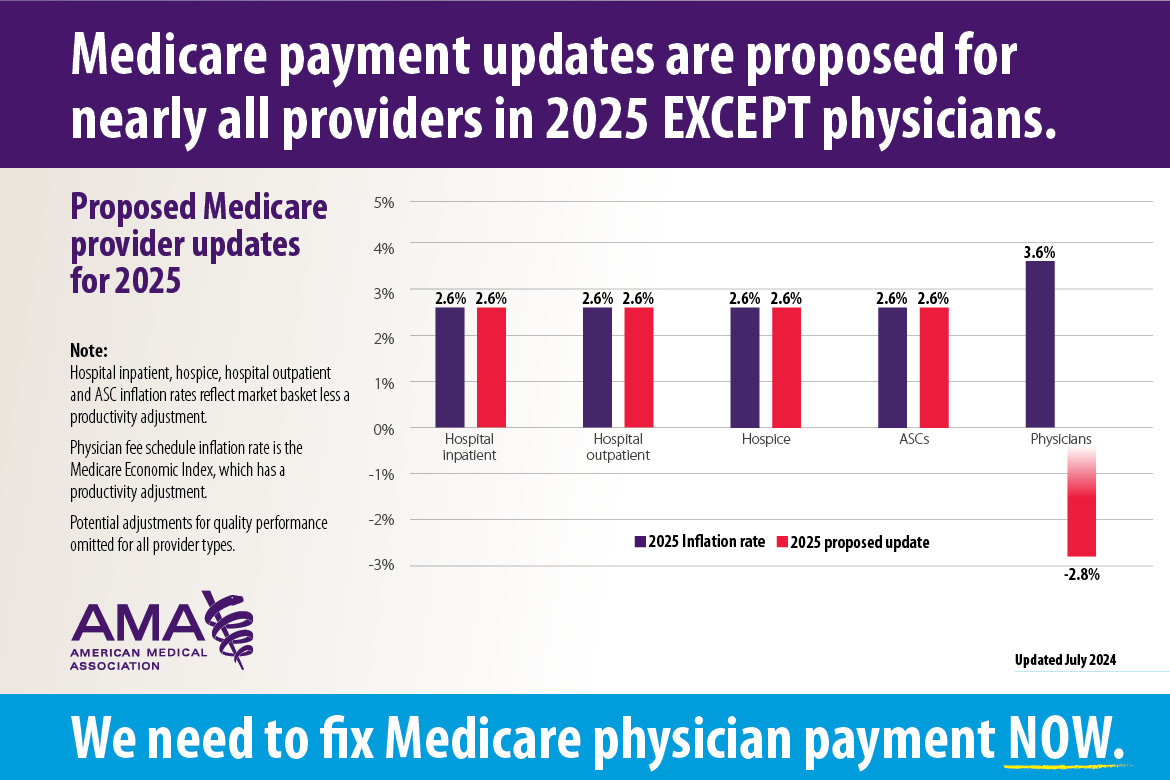
Everyone knows consumer prices and the cost of living have drastically increased over time, so why hasn’t Medicare physicians’ pay kept pace? In fact, physician practices and other providers are the only group that does not receive annual payment increases tied to inflation. This stands in sharp contrast to the substantial boosts routinely awarded each year to hospitals, skilled nursing facilities and others who serve Medicare patients.
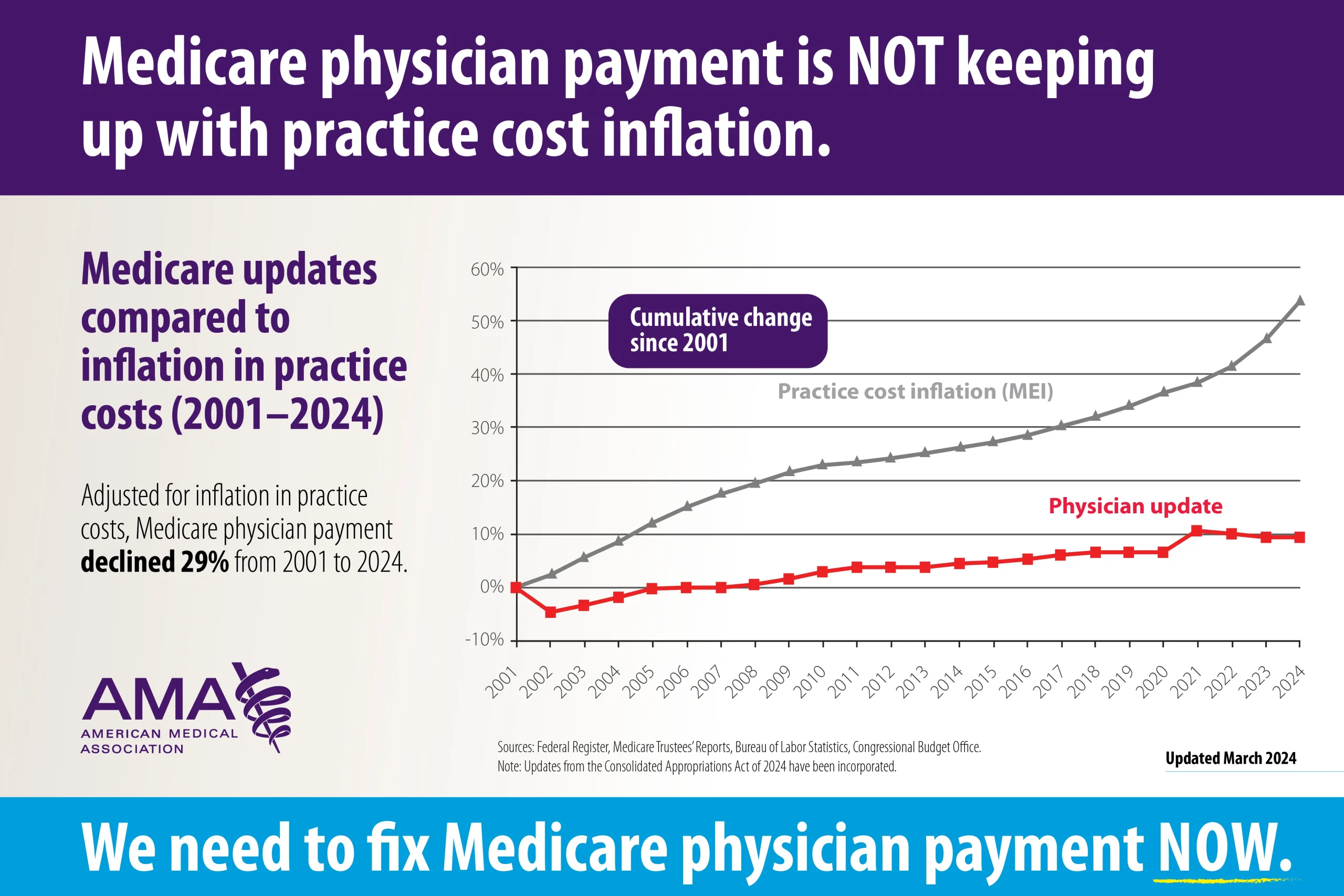
Physician practices have been paying the price for a broken Medicare payment system for far too long. With small margins already, we work to balance our books. But these cuts sometimes force us into difficult decisions to limit the number of Medicare patients, stop accepting new Medicare patients or stop participating in Medicare altogether.
In a national survey conducted by AMA, more than five million Medicare beneficiaries reported having a problem finding a doctor who accepts Medicare, or knowing someone who has had a problem finding a doctor who accepts Medicare. This should raise an alarm for anyone who has a loved one who relies on Medicare for their health care coverage or who plans to use it for themselves in the future.
Over the years, Congress has enacted temporary measures and partial fixes to the Medicare payment system, but ongoing payment cuts, freezes and redistributions have further exacerbated the issue.
An annual, inflation-based update is critical for physicians to maintain the fiscal viability of their practices and to ensure patients have access to Medicare for years to come. However, once again the estimated Medicare provider updates for 2025 propose a Medicare payment update for nearly all providers, except physicians. This would be the fifth consecutive year of cuts for physician practices, this time by 2.8 percent.
The result: A growing gap
When physicians are not properly reimbursed for the services they provide, it hinders our ability to retain staff, purchase new equipment and invest in our practices. Many physicians’ practices, particularly in rural areas, are struggling and, in some cases, giving up.
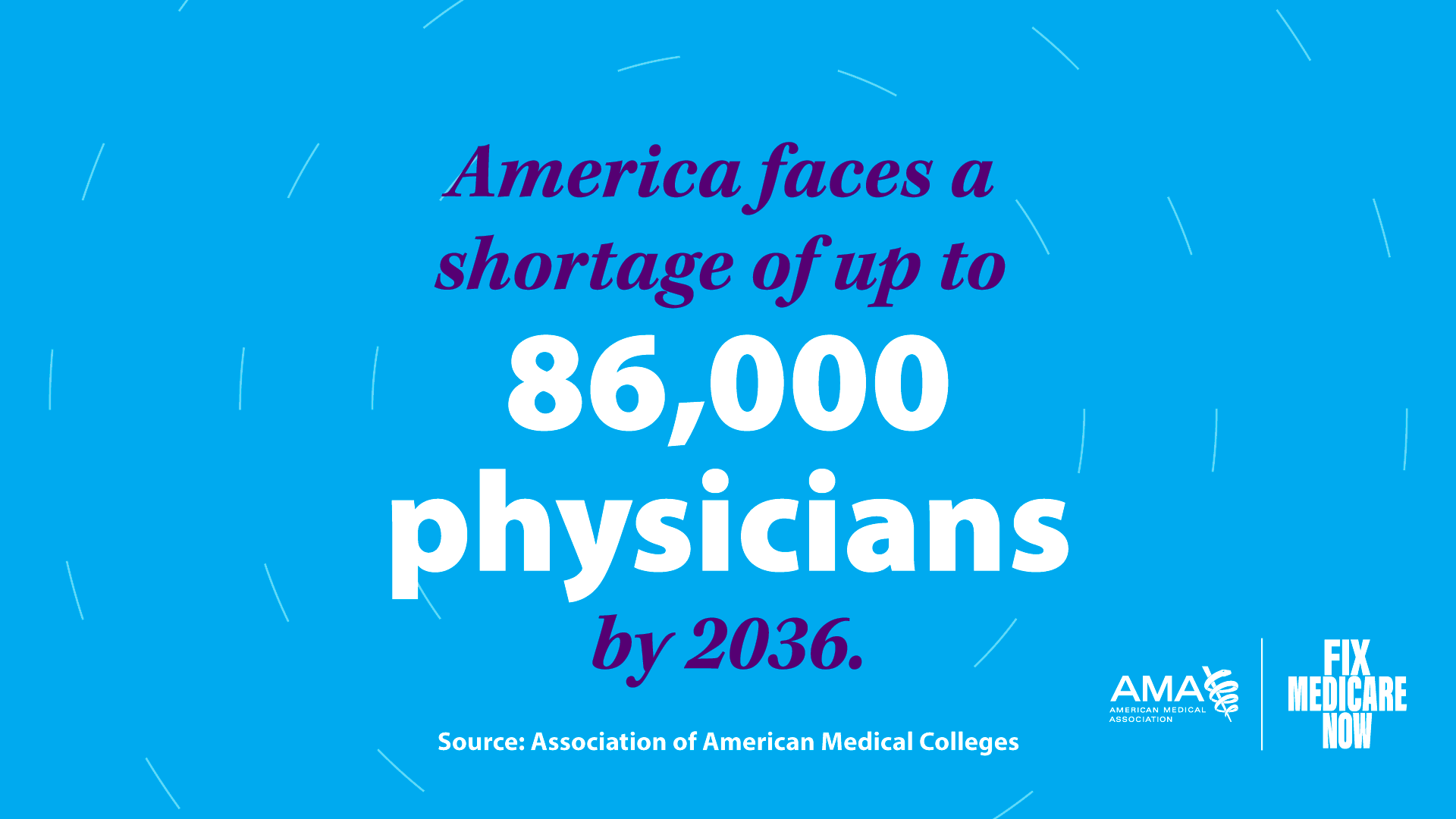
All patients — not just Medicare patients — are put at risk when our flawed and outdated payment system forces physicians to close their doors. In fact, the United States faces an anticipated shortage of up to 86,000 physicians by 2036. But in many rural and underserved communities across this country, the physician and health care worker shortage has already arrived and is limiting health care options for patients. And this shortfall is likely to worsen over time as the number of Americans ages 65 and older is projected to increase by 47 percent by 2050.
Fighting for a reformed system
Reforming Medicare means putting patients back in the center of health care. But how do we get there?
Ultimately, the right solutions will stabilize Medicare reimbursement rates to keep up with the rate of inflation, enabling small and large practices across rural and urban areas to thrive. Overall, a rational Medicare payment system would:
- Ensure financial stability and predictability
- Bolster value-based care
- Safeguard access to high-quality care
- Strengthen the physician-patient relationship
As president of the American Medical Association (AMA), I know that physicians have been fighting for Medicare payment reform for years. We will not stop until meaningful reforms are adopted to put physician practices on a more sustainable path and, most importantly, to ensure that patients on Medicare always have access to the care they need.
While this issue is complex, solutions are easy and, in fact, there are two bipartisan bills in Congress right now that would go a long way to fixing the fundamental flaws in the Medicare payment system. All that’s required is immediate action in Congress.
One newly introduced bipartisan bill. H.R. 10073, the Medicare Patient Access and Practice Stabilization Act, is a temporary solution that would stop the planned payment cut on January 1 and give physicians a partial inflationary adjustment for 2025. Congress needs to pass this legislation now to protect access to care for Medicare beneficiaries in the new year.
A second bipartisan bill, H.R. 2474, the Strengthening Medicare for Patients and Providers Act, would provide a permanent, annual update equal to the increase in the Medicare Economic Index, which measures practice cost inflation. This is not some radical proposal but rather simply pays physicians on an equal playing field with other Medicare providers in the health care system.

Congress must take action today to protect patient access to care and ensure that independent physician practices remain a viable and essential part of our nation’s health care safety net. There is no time to waste.
Physicians and the AMA have been calling attention to this flawed Medicare payment model for years and demanding Congress fix Medicare now. But we need others to join this effort.
Please visit FixMedicareNow.org to ensure patients on Medicare always have access to a physician’s care when they need it.
The content is paid for and supplied by advertiser. The Washington Post was not involved in the creation of this content.
Content From