
Beth Holland has worked at BASF for 27 years — so long that she saw the listing for her first job with the company not online, but pinned to a cork board in Baton Rouge, where she was getting her master’s degree in chemical engineering.
Beth Holland has worked at BASF for 27 years — so long that she saw the listing for her first job with the company not online, but pinned to a cork board in Baton Rouge, where she was getting her master’s degree in chemical engineering. Her career has taken her from Germany to China and now back to Louisiana, where she’s overseeing the $1 billion expansion of a chemical plant in Geismar, just a half‑hour drive south of her alma mater, Louisiana State University.
BASF is a long-term, strategic-thinking company. It does not react short-term. And the Geismar plant shows that we have the commitment to see things through.

For Holland, this project is more than a homecoming. Applying the latest plant design approaches and construction execution models is an engineer’s dream. Even more meaningful is the opportunity to invest in her community and help create local jobs. On an even broader level, the brand‑new plant will deliver essential building block materials that improve the efficiency of homes, buildings and vehicles across the region.
“Our team is leaving a legacy,” said Holland, Vice President and Project Execution owner at BASF. “We’re building a major plant from the ground up in our own backyard, which means that every choice we make has a positive impact on our community as a whole.”
Her career has taken her from Germany to China and now back to Louisiana, where she’s overseeing the $1 billion expansion of a chemical plant in Geismar, just a half‑hour drive south of her alma mater, Louisiana State University.
BASF is a long-term, strategic-thinking company. It does not react short-term. And the Geismar plant shows that we have the commitment to see things through.

For Holland, this project is more than a homecoming. Applying the latest plant design approaches and construction execution models is an engineer’s dream. Even more meaningful is the opportunity to invest in her community and help create local jobs. On an even broader level, the brand‑new plant will deliver essential building block materials that improve the efficiency of homes, buildings and vehicles across the region.
“Our team is leaving a legacy,” said Holland, Vice President and Project Execution owner at BASF. “We’re building a major plant from the ground up in our own backyard, which means that every choice we make has a positive impact on our community as a whole.”
Geismar is one of BASF’s six “Verbund” sites. A German word for “integrated,” Verbund is a core concept within BASF, meaning that a factory has been designed from the ground up to unify every aspect of production: conserving energy, reducing waste and increasing product yields. Not only is the system more efficient, it represents a fundamental shift in how production can minimize waste, conserve resources and reduce carbon impact across entire supply chains. As one of the world’s largest chemical manufacturers, BASF makes products that power industries as varied as agriculture, healthcare, home construction, automotive and more. By embracing sustainability, the company is driving change not just in the chemistry industry but across the global economy.
Geismar is one of BASF’s six “Verbund” sites. A German word for “integrated,” Verbund is a core concept within BASF, meaning that a factory has been designed from the ground up to unify every aspect of production: conserving energy, reducing waste and increasing product yields.
Not only is the system more efficient, it represents a fundamental shift in how production can minimize waste, conserve resources and reduce carbon impact across entire supply chains.
As one of the world’s largest chemical manufacturers, BASF makes products that power industries as varied as agriculture, healthcare, home construction, automotive and more. By embracing sustainability, the company is driving change not just in the chemistry industry but across the global economy.
The redesign at Geismar represents the next stage in BASF’s evolution. One of the plant’s most important products is methylene diphenyl diisocyanate (MDI), a key ingredient in everyday items like car seat cushions, mattresses, home insulation, engineered wood, coatings and adhesives.





Once the expansion is completed, the plant will be able to produce 600,000 metric tons of MDI per year — nearly twice the weight of the Empire State Building.
The redesign at Geismar represents the next stage in BASF’s evolution. One of the plant’s most important products is methylene diphenyl diisocyanate (MDI), a key ingredient in everyday items like car seat cushions, mattresses, home insulation, engineered wood, coatings and adhesives. Once the expansion is completed, the plant will be able to produce 600,000 metric tons of MDI per year — nearly twice the weight of the Empire State Building. Nearly a decade in the making, this expansion isn’t just about increasing scale. Holland believes it will help BASF set a new benchmark for lower-emission, future-ready chemical production.
“BASF focuses on long-term market strategies,” said Holland. “The Geismar site and the MDI expansion project demonstrate our ability to respond to customer needs while balancing BASF’s global strategic plans and investments in the region.”
Nearly a decade in the making, this expansion isn’t just about increasing scale. Holland believes it will help BASF set a new benchmark for lower-emission, future-ready chemical production.
“BASF focuses on long-term market strategies,” said Holland. “The Geismar site and the MDI expansion project demonstrate our ability to respond to customer needs while balancing BASF’s global strategic plans and investments in the region.”
When people ask me about BASF, I tell them, ‘I’m sure you’ve used a BASF product today — you just don’t even know you have.’ Paint, glue, sticky notes — even the car you drive contains materials made from BASF products.
Change through people
Change through people






The Geismar expansion has been in the works since 2018. Since then, the world has changed drastically, but BASF hasn’t wavered in its commitment to the project.
The Geismar expansion has been in the works since 2018. Since then, the world has changed drastically, but BASF hasn’t wavered in its commitment to the project. As the new facilities are expected to come online in 2026, Holland believes they show that staying the course is essential both from a business standpoint and as part of BASF’s dedication to creating positive change.
“Other companies have chosen not to make big investments in isocyanates manufacturing because of recent economic uncertainty,” she said. “BASF chose to commit to U.S. manufacturing and sustainability at the same time.”
As the new facilities are expected to come online in 2026, Holland believes they show that staying the course is essential both from a business standpoint and as part of BASF’s dedication to creating positive change.
In designing and constructing the new facilities, Holland has led a 100-person team spread across Asia, Europe and the U.S. She estimated that her people are split evenly between those at the start of their careers, those just hitting their stride and those for whom the Geismar expansion “will be their swan song.”
“A big key to our success is the talent that we put together,” she said. “The next generation is much more interested in using digital tools and moving away from paper. It’s fascinating to see that adoption, and to see the development of new skills across the entire team.”
“Other companies have chosen not to make big investments in isocyanates manufacturing because of recent economic uncertainty,” she said. “BASF chose to commit to U.S. manufacturing and sustainability at the same time.”

In designing and constructing the new facilities, Holland has led a 100-person team spread across Asia, Europe and the U.S. She estimated that her people are split evenly between those at the start of their careers, those just hitting their stride and those for whom the Geismar expansion “will be their swan song.”
“A big key to our success is the talent that we put together,” she said. “The next generation is much more interested in using digital tools and moving away from paper. It’s fascinating to see that adoption, and to see the development of new skills across the entire team.”
The Geismar expansion has been achieved using next-generation technology like 3D plant renderings and the creation of an immersive computer simulation — Holland compared it to a video game — that allows future plant workers to learn how to operate the new facilities “in a safe space.”
The Geismar expansion has been achieved using next-generation technology like 3D plant renderings and the creation of an immersive computer simulation — Holland compared it to a video game — that allows future plant workers to learn how to operate the new facilities “in a safe space.”
“It’s letting our people develop the skills they’ll need to run the plant in a controlled way,” she said. “It will help us ensure that the facility start-up is safe and smooth.”
More than 20 years into a career that has taken her around the globe, Holland is fascinated by the opportunity that digital tools bring — not as an end in themselves, but to support people who create the products Americans use every day.
“In the age of automation and advanced technology,” she said, “we still need people who love the challenge — people who design, construct and bring complex processes to life. I am proud to be in manufacturing and proud to be at BASF!”
“It’s letting our people develop the skills they’ll need to run the plant in a controlled way,” she said. “It will help us ensure that the facility start-up is safe and smooth.”
More than 20 years into a career that has taken her around the globe, Holland is fascinated by the opportunity that digital tools bring — not as an end in themselves, but to support people who create the products Americans use every day.
“In the age of automation and advanced technology,” she said, “we still need people who love the challenge — people who design, construct and bring complex processes to life. I am proud to be in manufacturing and proud to be at BASF!”
Change through technology
Change through technology










Just 400 miles away, at BASF’s Verbund facility in Freeport, Texas, the company’s digital future is already a reality. After Geismar, Freeport is BASF’s second-largest U.S. site, and it has become a proving ground for digital tools that have the potential to reshape not just the chemical industry, but every sector of the economy that relies on BASF’s materials.
It starts with PlantGPT, a bespoke large language learning model (LLM) designed to answer questions about the inner workings of the site. By accelerating learning and improving operational decision-making, tools like PlantGPT contribute directly to safer, more efficient, and more sustainable production — ensuring meaningful change not just for the plants, but for the people who run them.
Just 400 miles away, at BASF’s Verbund facility in Freeport, Texas, the company’s digital future is already a reality. After Geismar, Freeport is BASF’s second-largest U.S. site, and it has become a proving ground for digital tools that have the potential to reshape not just the chemical industry, but every sector of the economy that relies on BASF’s materials.
It starts with PlantGPT, a bespoke large language learning model (LLM) designed to answer questions about the inner workings of the site. By accelerating learning and improving operational decision-making, tools like PlantGPT contribute directly to safer, more efficient, and more sustainable production — ensuring meaningful change not just for the plants, but for the people who run them.
Pioneered at Geismar, the AI tool has become particularly important at Freeport, a sprawling facility where 26 separate plants create more than two dozen products, which are used in the manufacture of household items like diapers, food packaging, wood finishes — even playing cards.
Because conventional LLMs might not understand the specialized vocabulary of chemical production, PlantGPT was crafted to let the company’s workers ask it questions in the same language they use on-site.
Pioneered at Geismar, the AI tool has become particularly important at Freeport, a sprawling facility where 26 separate plants create more than two dozen products, which are used in the manufacture of household items like diapers, food packaging, wood finishes — even playing cards.
Because conventional LLMs might not understand the specialized vocabulary of chemical production, PlantGPT was crafted to let the company’s workers ask it questions in the same language they use on-site.
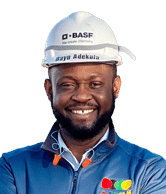
Adebayo Adekola, Senior Director of Site Services at Freeport, has found PlantGPT to be an essential resource. Its LLM has been trained in part on transcripts of interviews conducted with workers retiring after decades with the company, preserving their experience for future generations of employees to learn from. Adekola sees it as a digital representation of BASF’s institutional memory — something to consult on topics as serious as emergency protocol or as straightforward as the most efficient way to get from one building to another.
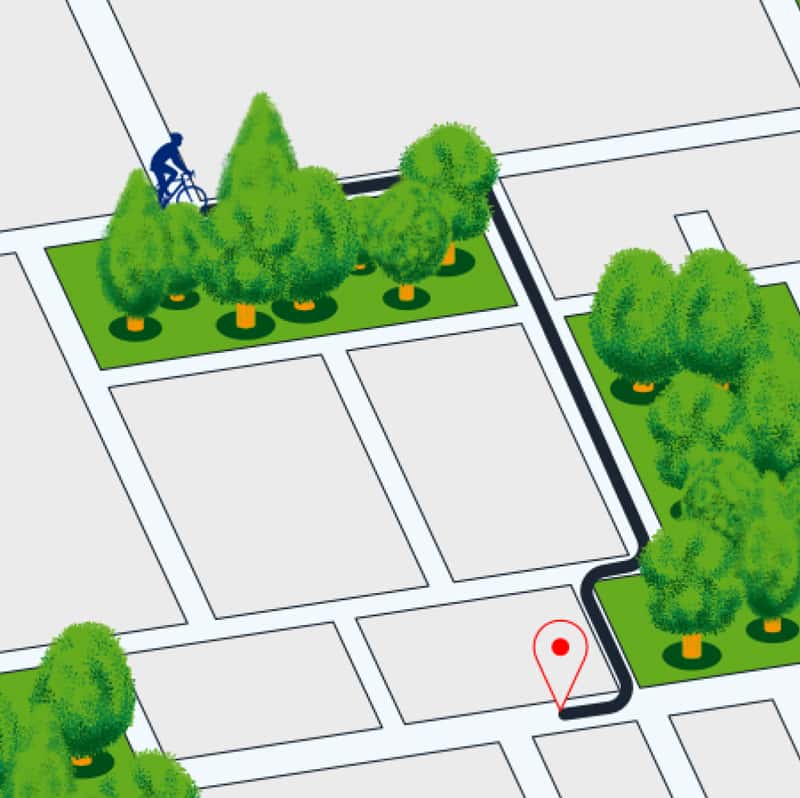
“We did some experiments to test it,” he said, “including asking what should be a simple question: ‘Where am I allowed to use a bicycle on-site?’ Going through traditional channels required checking with people all over the plant, which meant it took an hour-and-a-half to get the correct answer. PlantGPT gave it to us in seconds.”
Born in Nigeria and raised in the United Kingdom, Adekola’s background is in toxicology and environmental management. Today, one of his responsibilities is to oversee Freeport’s digitization efforts, designed to make the site more efficient and environmentally friendly. The result will have an impact on countless products that make up the fabric of everyday life.
“When people ask me about BASF, I tell them, ‘I’m sure you’ve used a BASF product today — you just don’t even know you have,’” said Adekola. “Paint, glue, sticky notes — even the car you drive contains materials made from BASF products.”
“PlantGPT is a game-changer because it speaks BASF,” said Eric Dixon, a digitalization engineer who helped develop the AI-powered assistant. “It’s not just a tool — it’s become a catalyst for better learning and smoother operations.”
Adebayo Adekola, Senior Director of Site Services at Freeport, has found PlantGPT to be an essential resource. Its LLM has been trained in part on transcripts of interviews conducted with workers retiring after decades with the company, preserving their experience for future generations of employees to learn from. Adekola sees it as a digital representation of BASF’s institutional memory — something to consult on topics as serious as emergency protocol or as straightforward as the most efficient way to get from one building to another.
“We did some experiments to test it,” he said, “including asking what should be a simple question: ‘Where am I allowed to use a bicycle on-site?’ Going through traditional channels required checking with people all over the plant, which meant it took an hour-and-a-half to get the correct answer. PlantGPT gave it to us in seconds.”
Born in Nigeria and raised in the United Kingdom, Adekola’s background is in toxicology and environmental management. Today, one of his responsibilities is to oversee Freeport’s digitization efforts, designed to make the site more efficient and environmentally friendly. The result will have an impact on countless products that make up the fabric of everyday life.
“When people ask me about BASF, I tell them, ‘I’m sure you’ve used a BASF product today — you just don’t even know you have,’” said Adekola. “Paint, glue, sticky notes — even the car you drive contains materials made from BASF products.”
PlantGPT is a game-changer because it speaks BASF. It’s not just a tool—it’s become a catalyst for better learning and smoother operations.

Change through systems and infrastructure
Change through systems and infrastructure





At BASF’s Freeport site, digitalization is guided by a clear philosophy: technology should empower the people who perform the work. Every initiative — from evaluating contactless entry protocols that will save truck drivers time to deploying drone systems for fence line monitoring, confined space entries and emergency response — reflects this user-centric approach. Drones equipped with thermal and visual sensors enhance safety and enable early detection of structural issues, reducing downtime and maintenance costs.
At BASF’s Freeport site, digitalization is guided by a clear philosophy: technology should empower the people who perform the work. Every initiative — from evaluating contactless entry protocols that will save truck drivers time to deploying drone systems for fence line monitoring, confined space entries and emergency response — reflects this user-centric approach. Drones equipped with thermal and visual sensors enhance safety and enable early detection of structural issues, reducing downtime and maintenance costs.
Alongside these efforts, the site is implementing or evaluating paper-to-digital conversions, AI-driven monitoring, and advanced connectivity through LoRaWAN gateways, to be complemented by an integrated management system that streamlines processes and ensures consistency across operations. These technologies represent a shift toward proactive, data-driven operations, reducing environmental impact and enhancing safety. Adekola sees this as a reflection of BASF’s commitment to driving change across the industry.
Alongside these efforts, the site is implementing or evaluating paper-to-digital conversions, AI-driven monitoring, and advanced connectivity through LoRaWAN gateways, to be complemented by an integrated management system that streamlines processes and ensures consistency across operations. These technologies represent a shift toward proactive, data-driven operations, reducing environmental impact and enhancing safety. Adekola sees this as a reflection of BASF’s commitment to driving change across the industry.
Looking ahead, Freeport is preparing for fully autonomous drone operations, integrating AI-driven dashboards and pursuing vertical integration of production systems to unlock predictive maintenance and operational excellence. By fostering innovation and upskilling its workforce, the site ensures every digital advancement serves as an enabler rather than a barrier, building a strong foundation for automation and data-driven decision-making across all operations.
Looking ahead, Freeport is preparing for fully autonomous drone operations, integrating AI-driven dashboards and pursuing vertical integration of production systems to unlock predictive maintenance and operational excellence. By fostering innovation and upskilling its workforce, the site ensures every digital advancement serves as an enabler rather than a barrier, building a strong foundation for automation and data-driven decision-making across all operations.
“For digitization to be successful,” said Adekola, “the end user needs to be in the process up front. It’s not about making decisions from the top down.”
In this way, the fully integrated Verbund plant is about more than sustainability and efficiency. It’s a model of collaboration that’s echoed in everything BASF does.
“BASF doesn’t just talk about innovation. It believes in it,” said Adekola.
And from Freeport to Geismar and around the globe, Adekola believes that BASF is proving that when innovation is guided by people and purpose, chemistry becomes a force for real, lasting change — for industries, communities and the planet.
“For digitization to be successful,” said Adekola, “the end user needs to be in the process up front. It’s not about making decisions from the top down.”
In this way, the fully integrated Verbund plant is about more than sustainability and efficiency. It’s a model of collaboration that’s echoed in everything BASF does.
“BASF doesn’t just talk about innovation. It believes in it,” said Adekola.
And from Freeport to Geismar and around the globe, Adekola believes that BASF is proving that when innovation is guided by people and purpose, chemistry becomes a force for real, lasting change — for industries, communities and the planet.