One solution to genuinely improve health outcomes for seniors
By Kate Goodrich, MD, chief medical officer, Humana and Sanjay Shetty, MD, president, CenterWell
October 31, 2024
Our primary care system is broken. Ask nearly any senior and they’ll tell you: They have trouble finding a consistent primary care clinician, have long wait times to get an appointment and often spend only a few minutes with their doctor.
This comes at a time in their life when their health care needs have grown more complex. Nearly 95 percent of seniors over the age of 60 have at least one chronic condition, while nearly 80 percent have at least two or more chronic conditions.
Yet, our current primary care system focuses more on one-off treatments than holistic care. Seniors typically see seven different clinicians in four different practices each year, but their health outcomes aren’t better off for it. We can, and must, do better.
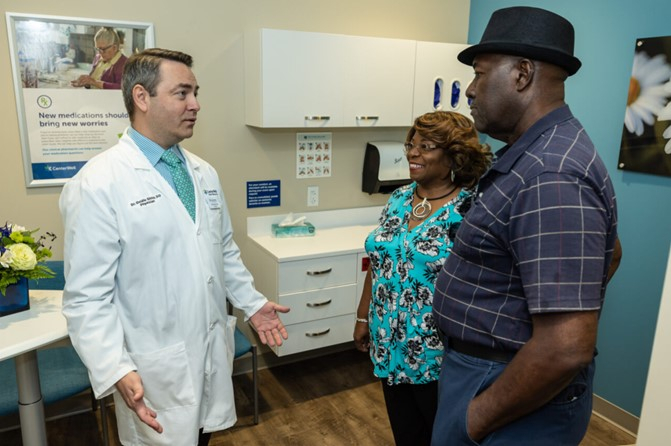
By 2030, every baby boomer will have reached the retirement age of 65. We need to get our senior care system sorted out before then.
The Center for Medicare and Medicaid Innovation (CMMI) – the government organization charged with exploring new healthcare payment and delivery models – has rolled out dozens of new models meant to test and identify potential solutions to these challenges over the last 10 years.
We have seen first-hand how innovation in clinical care can occur in the community. Senior-focused primary care (SFPC) focuses on the unique medical, behavioral and social needs of seniors – many of whom live in historically underserved and disadvantaged communities where there is a higher rate of chronic health conditions and lack of access to primary care. Serving the holistic needs of seniors requires rethinking how clinical care is delivered, upending typical assumptions fostered by our broken traditional system.
SFPC enables patients to have more frequent visits to their primary care provider, get an appointment quickly and experience much longer one-on-one time with their provider. For example, primary care doctors in our CenterWell clinics typically see 10 to 15 patients per day, spending up to 50 percent more time than in a conventional appointment. Contrast this with what we have seen in traditional primary care, where physicians typically see 20 to 30 patients a day at 10 to 15 minutes per visit.
SFPC also leverages value-based care often through partnership with Medicare Advantage plans. Value-based care is a financial paradigm that incentivizes doctors for better quality care and health outcomes instead of the number of office visits, tests or services they provide a patient. This helps remove clinical waste from our system – a major driver of excess health care spending in the United States – and yields better health outcomes for seniors. In practice, value-based care means doctors at these clinics are supported by behavioral health specialists, social workers, nurse care coaches and pharmacists. This allows them to focus not just on medical care, but on mental health, medication management and health-related social needs.
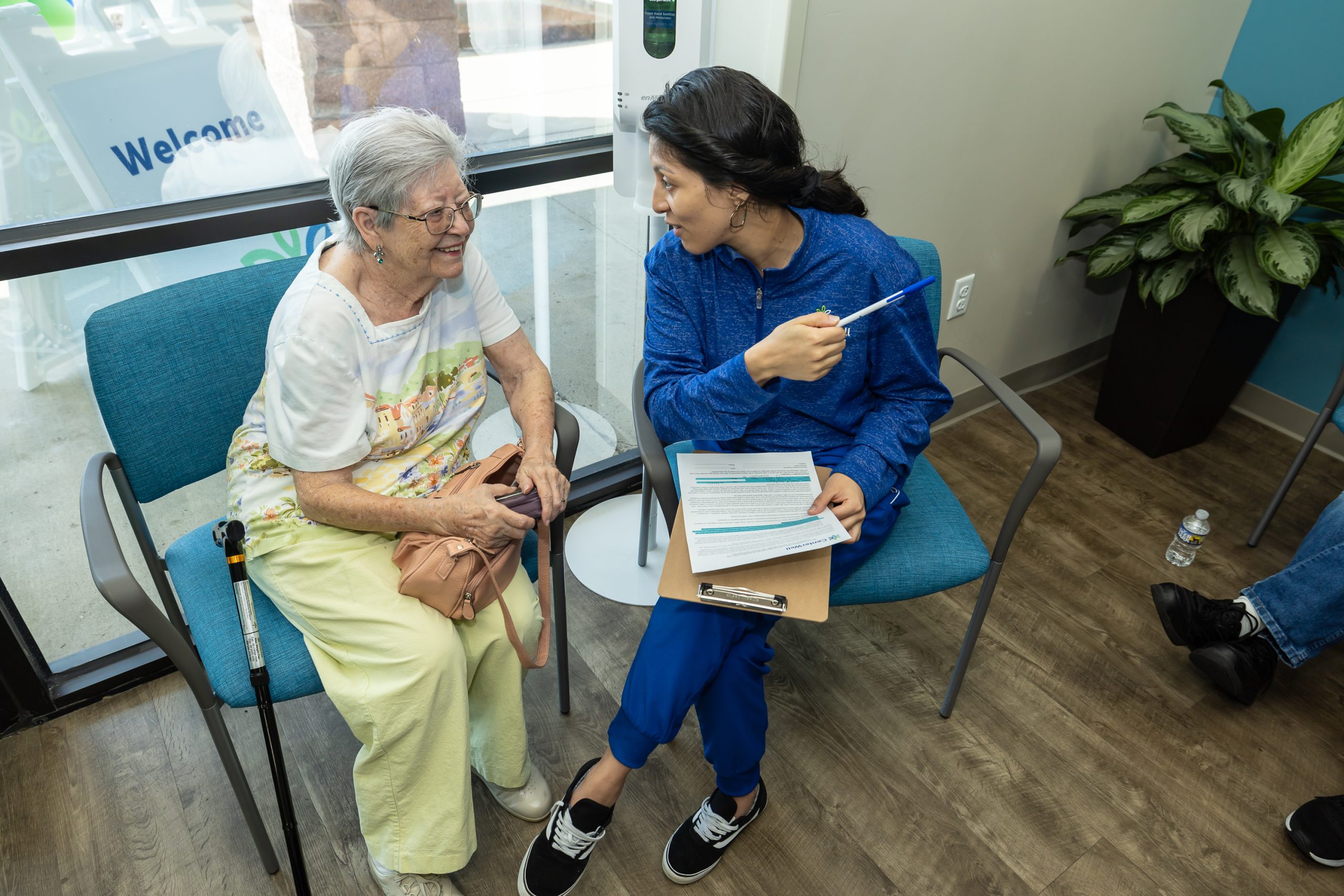
As the chief medical officer of a major healthcare company and the president of its care delivery arm which includes a leading SFPC practice, we wanted to see if this new senior-focused practice was delivering better health outcomes than traditional primary care.
In collaboration with a leading researcher and professor at Harvard University, we recently published a study in Health Affairs that analyzed data across six different senior-focused primary care organizations and on more than 462,000 patients enrolled in Medicare Advantage in 2021 to compare healthcare service use and quality of care between those that were and were not patients of SFPC organizations. We found that seniors who are part of SFPC clinics have 17 percent more primary care visits and were more likely to have better control of blood pressure and diabetes. Additionally, these seniors experienced 6 percent fewer hospitalizations, 11 percent fewer emergency department (ED) visits and were 10 percent less likely to be readmitted within 30 days to a hospital after discharge compared to seniors in non-SFPC clinics. These results on specific health outcomes are promising yet should be confirmed by additional research in the future. While this study didn’t assess costs, the reduction in ED and hospital visits reduces waste in the healthcare system and avoids traumatic, burdensome experiences for patients and their families.
Senior care that relies on the fee-for-service model is expensive, contributes to worse health outcomes and burns out primary care doctors in the face of a growing shortage.
Policymakers should focus on more support, funding and incentives for transitioning our primary care system into a value-based care model that improves health outcomes, reduces unnecessary, costly care and rewards clinicians for doing the right thing. This means that as policymakers consider changes to the Medicare Advantage program, any reforms must continue to support innovation in value-based care and consider the important role of primary care providers. These providers are often inadvertently hurt by insufficient rates or methodologies that do not incentivize longitudinal care. Now would be exactly the wrong time to do anything that destabilizes an already precarious and insufficiently scaled base of high quality, committed primary care. We are heartened to see that CMMI is launching two new models with features similar to SFPC clinics, but we need more of this type of exploration.
Seniors in our country deserve a much better care experience than they currently have. We still have time to drastically improve the system before the majority of baby boomers become seniors, and senior-focused primary care is one solution that can genuinely improve the outcomes for seniors and physicians.
Read the full report.
The content is paid for and supplied by advertiser. The Washington Post was not involved in the creation of this content.
Content From