From AI models to the physical world: How LG is bringing AI into industry
From foundation models and humanoid robotics to AI data centers, LG is connecting technologies across its business to bring AI into industrial settings and keep humanity at the center of its development.
By LG
November 10, 2026
0:00/0:00
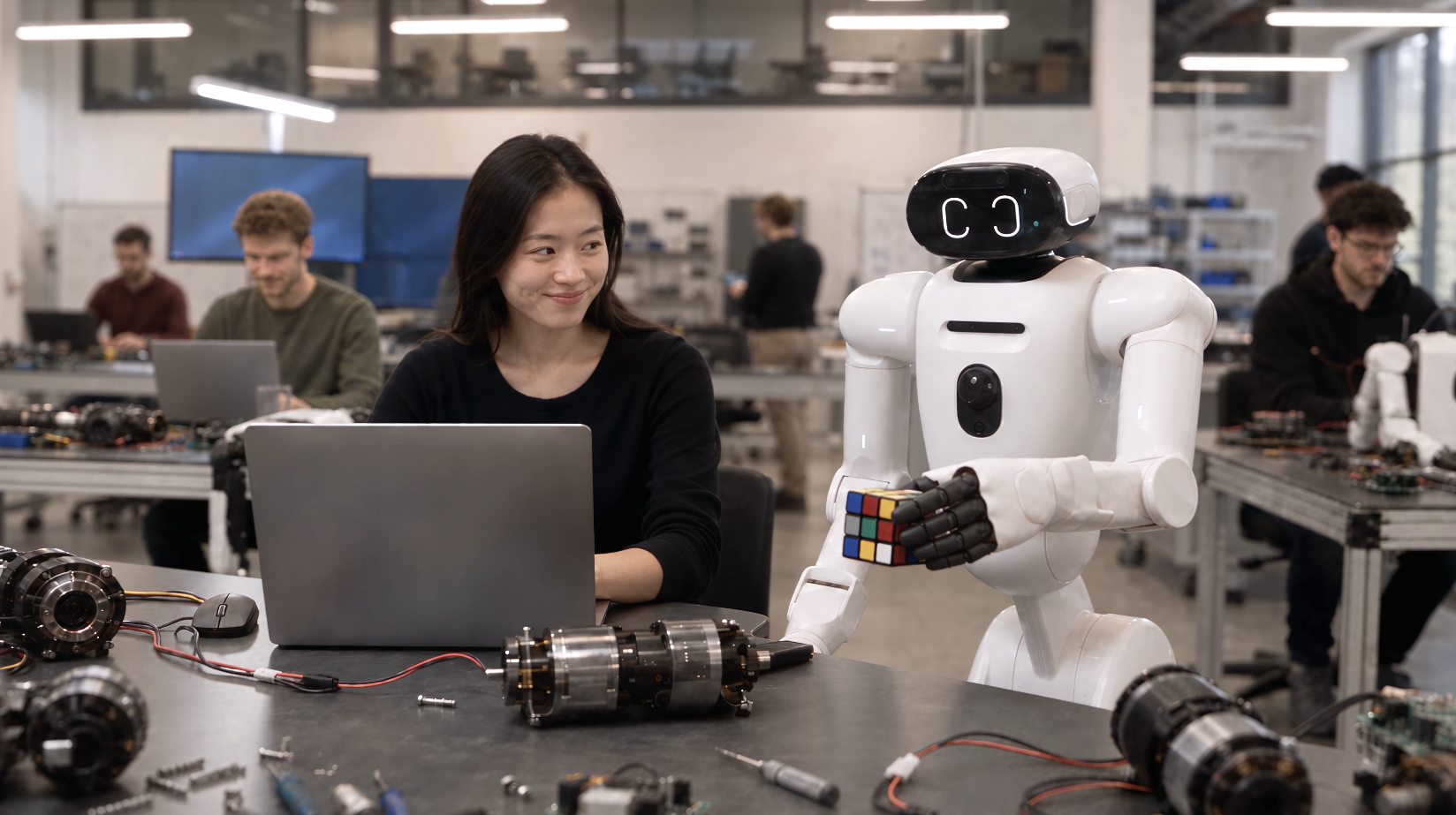
From AI models to the physical world: How LG is bringing AI into industry
Voice is AI-generated. Inconsistencies may occur.
For much of the AI boom, the global race has revolved around a familiar question: Who can build the most powerful model? As AI moves beyond screens and software, another question is becoming just as important: Who can embed AI into machines, infrastructure and services that operate in the physical world — and use it to make people’s lives easier?
LG has been preparing its answer for years.
The LG Group, long known for consumer electronics and chemicals, is now connecting capabilities across its businesses across AI infrastructure — from advanced humanoid robot components to cooling systems for AI Data centers and energy storage systems (ESS) — to build a physical AI ecosystem that brings AI into real-world operations.
That is why technology leaders at the center of the AI revolution, including NVIDIA and Microsoft, are deepening ties with LG. The next challenge is connecting AI to real machines and infrastructure — and bringing it to life at scale in industrial environments.
At the center of this transformation is LG’s broad business portfolio — bringing together capabilities from across the Group to develop technologies and new businesses that no single company could build alone.
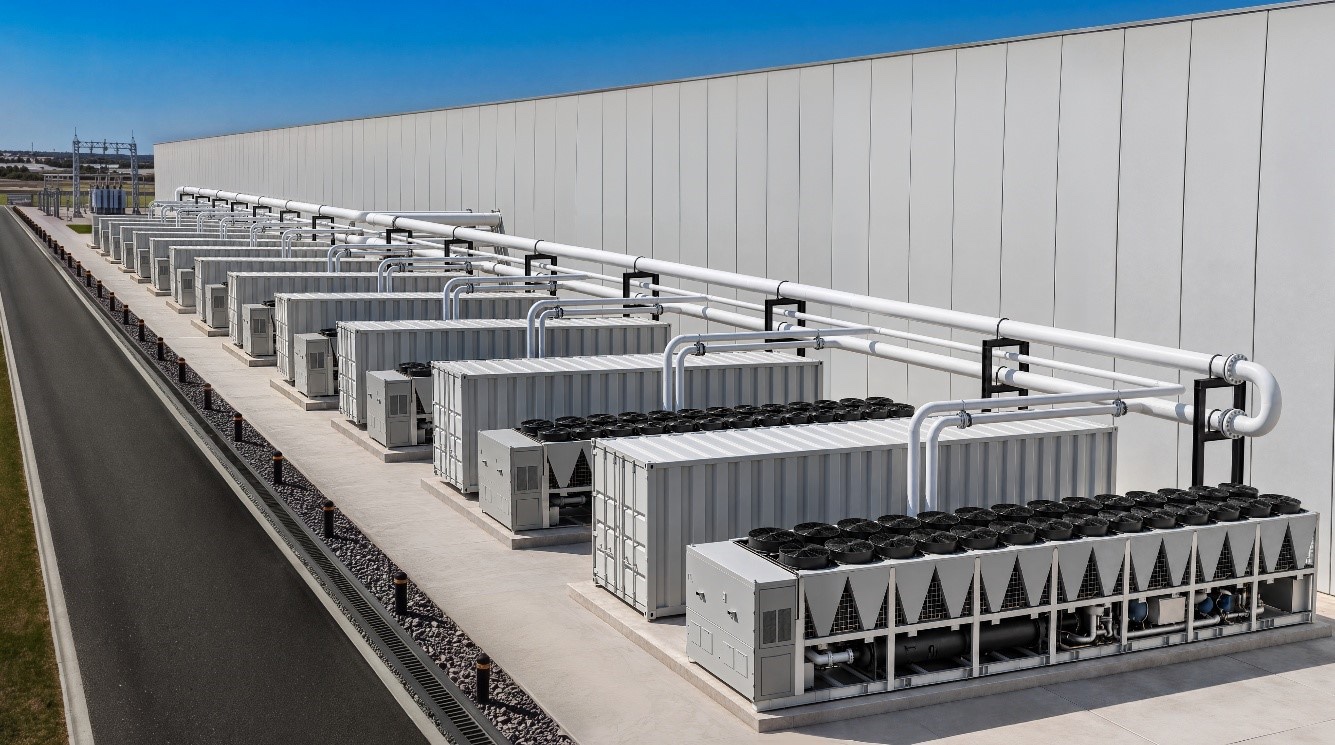
The edge of LG’s industrial portfolio
That principle becomes even more important as AI moves into the physical world.
A humanoid robot, for example, requires far more than an AI model. It needs actuators to move, sensors to perceive its surroundings, batteries for power, interfaces to interact with people, and computing infrastructure to learn and improve.
LG already has many of those capabilities across the Group.
LG AI Research develops AI models, while LG Electronics works on robotics and actuators. LG Innotek brings sensing technologies, LG Energy Solution provides batteries and LG Display develops display technologies that can serve as interfaces between people and machines.
The same logic extends to AI infrastructure. Advanced AI systems require enormous computing power, but they also depend on reliable power management, cooling and data-center operations. LG Electronics brings cooling technologies, LG Energy Solution provides energy storage systems, and LG CNS and LG Uplus contribute expertise in designing, building and operating data centers.
Bringing these capabilities together is the essence of LG’s competitive edge. Rather than treating AI as a standalone product category, LG sees it as a connected ecosystem in which software, hardware, energy and infrastructure work together.
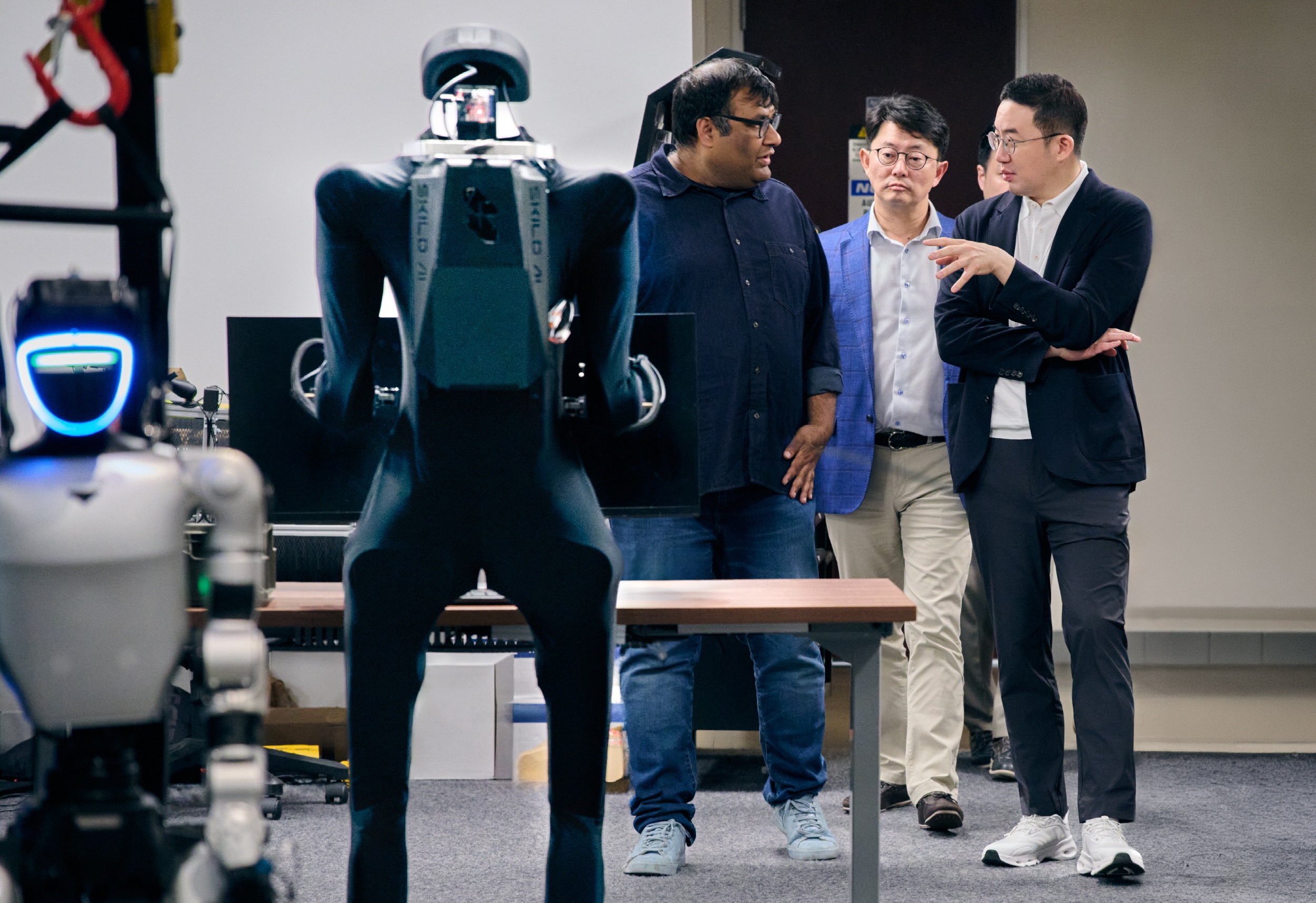
Building an AI ecosystem with global innovators
By combining LG’s strengths in AI, manufacturing, data and hardware with the world’s leading external technologies, LG is working to build a collaborative AI ecosystem — one that accelerates innovation and translates it into new businesses.
With the U.S. leading in AI computing and software and South Korea strong in electronics, batteries and industrial applications, the manufacturing data and know-how accumulated by Korean companies such as LG could help bring AI to real production environments.
LG Corp. Chairman and CEO Koo Kwang-mo’s recent meetings in the U.S. reflect that strategy.1 In August 2026, Koo met with NVIDIA top executives at the company’s headquarters in Santa Clara, California, where the two companies signed a memorandum of understanding (MOU) to expand strategic cooperation. Their collaboration spans areas including humanoid robots and AI factories, combining NVIDIA’s AI and robotics platforms with technologies from across LG, including LG Electronics’ actuators, LG Innotek’s sensors and LG Energy Solution’s batteries.
A month later, Koo met Microsoft CEO Satya Nadella at Microsoft’s headquarters in Washington to expand cooperation in AI infrastructure, AI transformation across the enterprise and physical AI. As Microsoft expands its global AI infrastructure, LG will explore opportunities in cooling, power and IT infrastructure solutions. Microsoft’s high-performance cloud infrastructure will also support LG’s physical AI development, helping robots and intelligent systems learn from real-world data.
NVIDIA and Microsoft are both helping set the direction of the AI industry. For LG, partnerships with the two companies are an opportunity to validate physical AI and AI data-center technologies in real industrial environments and build a proven track record that can serve as a reference for future deployments.
For global technology companies, LG’s value lies not only in its technology, but in the scale and depth of its manufacturing experience.
Over decades, LG has mass-produced world-class hardware across consumer electronics, batteries, displays and automotive components. That experience gives it access to the real industrial environments — and the operational data — that physical AI needs to learn and operate effectively.
Putting humanity at the center of AI
Bringing AI into those environments is about more than making machines work. It also means considering how they work alongside people, how the data behind them is used, and who is accountable for their decisions. As AI moves from screens into workplaces and daily life, those questions become part of its development.
For LG, they lead back to a principle that guides its approach to technology: progress should ultimately serve people. Building more capable AI and developing it responsibly are part of the same ambition — creating technology that people can trust and use to improve their lives.
“Technology should not be an end in itself. Technology must exist for humanity.”
— Koo Kwang-mo, LG Corp. Chairman and CEO
That is the philosophy that Koo has repeatedly articulated. “Technology should not be an end in itself,” he has said. “It should be a warm tool that brings smiles to people’s lives. Ultimately, technology must exist for Humanity.”
The philosophy does not stop at rhetoric. From its earliest days, LG AI Research has treated Responsible AI as a core mandate, operating a dedicated AI ethics function that assesses risk across the full lifecycle of AI — from data collection to model training to deployment.
A representative example is EXAONE Nexus, a compliance agent that helps evaluate the legal risks in training data. The institute has also published an annual AI Ethics Accountability Report since 2023, making its practices publicly transparent, and in July 2026 it co-developed a global AI ethics MOOC (massive open online course) in partnership with UNESCO.
For LG, advancing AI is not simply a matter of building better technology. It is a process of carrying forward, through technology, the values humanity has held dear for a long time — dignity, fairness, trust, and responsibility.
Before AI learns anything, humanity teaches.
[1] LG Corp. is the holding company of LG Group. Its best-known affiliate is LG Electronics, while companies such as LG Energy Solution and LG Innotek are major players in fields including electric-vehicle batteries, energy-storage systems and precision sensing technologies.