A future for agriculture: the next generation of beef sustainability
Three young women represent the next generation of cattle ranching, carrying on their families’ legacies and committing to continuous improvement.
By National Cattlemen’s Beef Association, a Contractor to the Beef Checkoff
April 1, 2024
Allison Fender began her journey as an entrepreneur after her father gifted her 10 head of cattle for her wedding. Although an unlikely gift for most, Fender and her husband were just the right recipients, and so began Flying F Ranch.
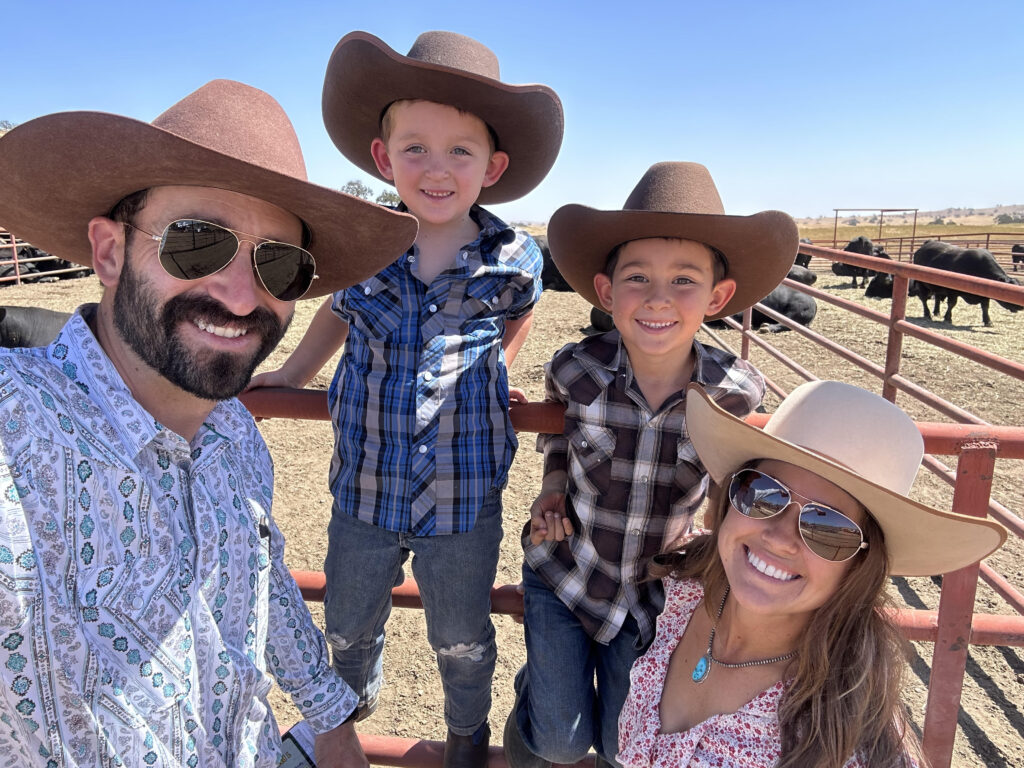
Situated just outside of San Diego, California, Flying F Ranch is where Fender, her husband and their two young sons, ages 5 and 7, care for their cattle and the land they inhabit day in and day out. Their focus on the land and commitment to improvement is both intentional and necessary as they are no strangers to drought, wildfire and the ever-changing weather conditions in Southern California. Those challenges alone would be enough to deter many young families from ranching, but for the Fenders, it’s an opportunity to embrace change and innovation as they work to adapt for the better.
That innovation came to life as the ranch’s proximity to a city known for its love of craft brewing presented an opportunity for the Fenders. In 2021, Flying F Ranch partnered with local breweries on an upcycling program, taking leftover brewers’ grains that would otherwise end up in a landfill and incorporating them into their feed to provide nutrients to their cattle. These byproducts are not edible for humans, but thanks to their unique digestive system, cattle can not only consume them and prevent waste, but the brewers’ grains provide beneficial protein and fiber that the cattle then convert into high-quality protein for people to eat1. Sometimes, in a full-circle moment, their beef even ends up on the menus of the breweries from which they source their grain.
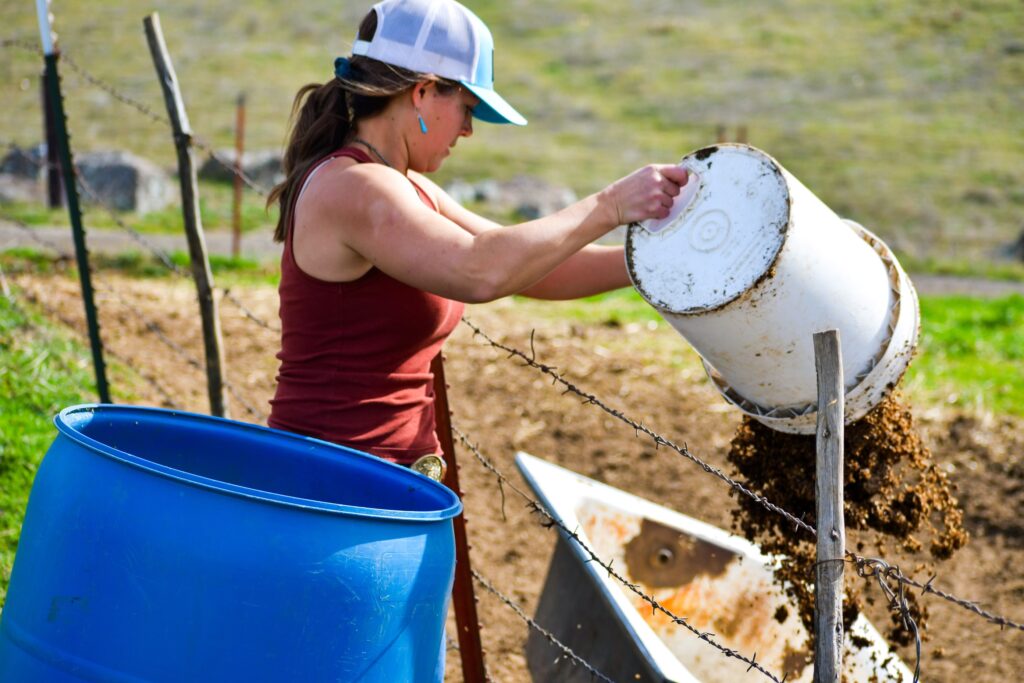
Fender attributes her perseverance and willingness to try new things to her family history. “My dad, my grandpa and my grandma, who started our ranch, taught me my no-quit attitude that has gotten me to where I am,” she says. “Our gritty personalities are why the ranch is still alive today.” By trying new things, she hopes to ensure the landscapes they own just outside of a sprawling Southern California city will still be here for her sons and their children to enjoy one day.
More than 1,700 miles east in Jefferson City, Missouri, 25-year-old cattle rancher, Macey Hurst, has more in common than different with Fender. While she is tasked with managing a largely different climate and landscape, Hurst incorporates similar values to care for her land and animals.
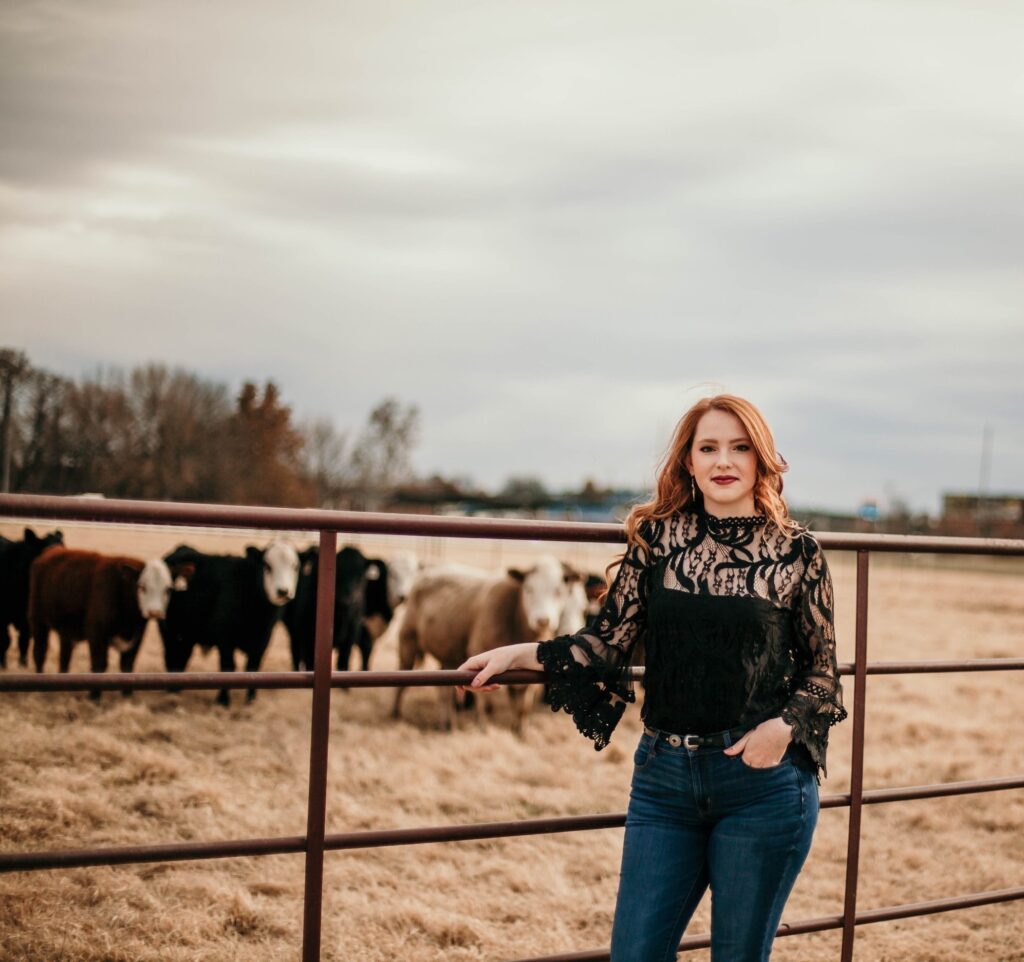
Hurst was born into a multi-generational cattle ranching family and knew she loved the business from a young age. After the family had to sell a majority of their ranch due to her parents’ divorce, Hurst, her sister and her mom decided they were not ready to give up just yet. In 2018, they founded Lady Livestock Company, a women-run cattle ranch that focuses on constantly improving their practices and sharing their story with curious consumers.
Many ranches in the U.S. raise their cattle on land that would otherwise be at risk for development, displacing native plants, endangered animals and water systems2,3,5. Nearly 30% of the land in the U.S. is unsuitable for growing food crops, but it’s perfect for cattle, and through cattle grazing, it remains in its natural state4,6. Hurst accounts that her family works hand-in-hand with nature, maintaining a mutually beneficial relationship that enhances existing ecosystems.
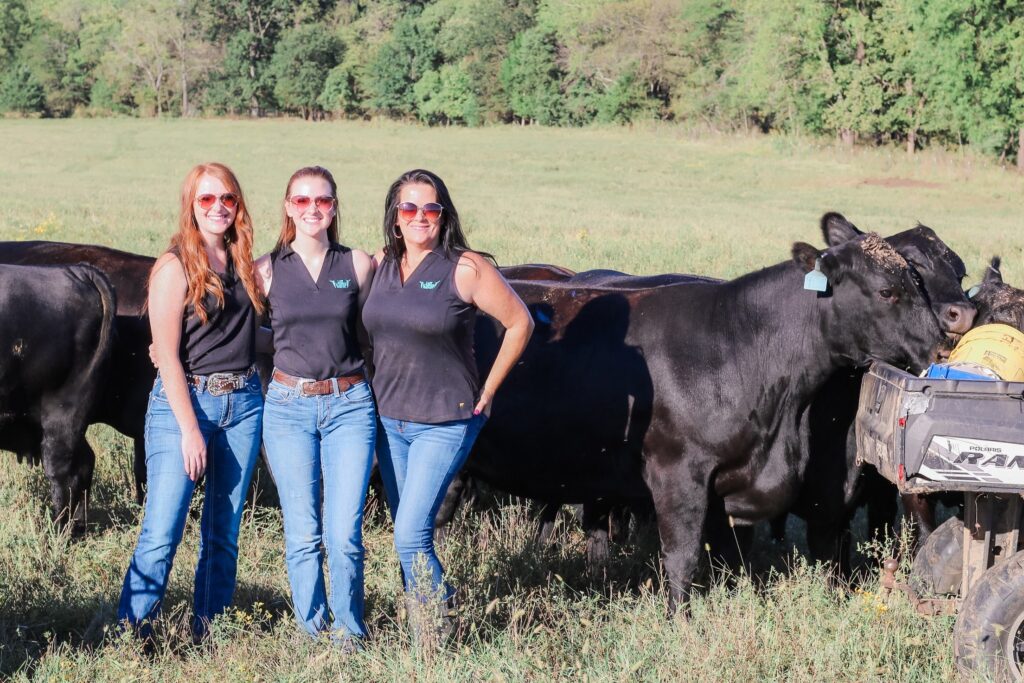
“It is in our best interest as farmers and ranchers to do everything we can do to help the environment thrive. It is a really beautiful partnership between cattle producers and the Earth,” said Hurst.
Her neighbor in Nebraska, Anna Kobza, agrees. Kobza is a second year PhD candidate at University of Nebraska, Lincoln, where she engages in research focused on improving the environmental, social and economic footprint of the industry. “In academia, I spend a lot of time working with established scientists, and I can confidently tell you that the work we do is very heavily focused on ensuring sustainability,” she said. The results of their research have helped cattle ranchers to do more with less.

Kobza didn’t grow up on a cattle ranch and it wasn’t until high school that she became interested in agriculture. Although she does not carry the knowledge of her ancestors with her, Kobza brings a fresh perspective to the field and has focused on her education and learning from experienced experts. She shares that she is not afraid to challenge the narrative but also uses many practices that have been proven to work for generations.
When asked what they hope for the future, all three women said one thing: they hope to see new and eager faces with an interest in agriculture at the table. “Bringing in new ideas and new concepts is going to be essential for moving the industry forward,” said Fender. Hurst quickly agreed. “If you want to be involved, we would love to help you, show you where your food comes from and answer your questions.” Kobza shares that passion for openness and education and shares her story on her social media platforms in hopes of reaching new audiences and inviting them to conversation.
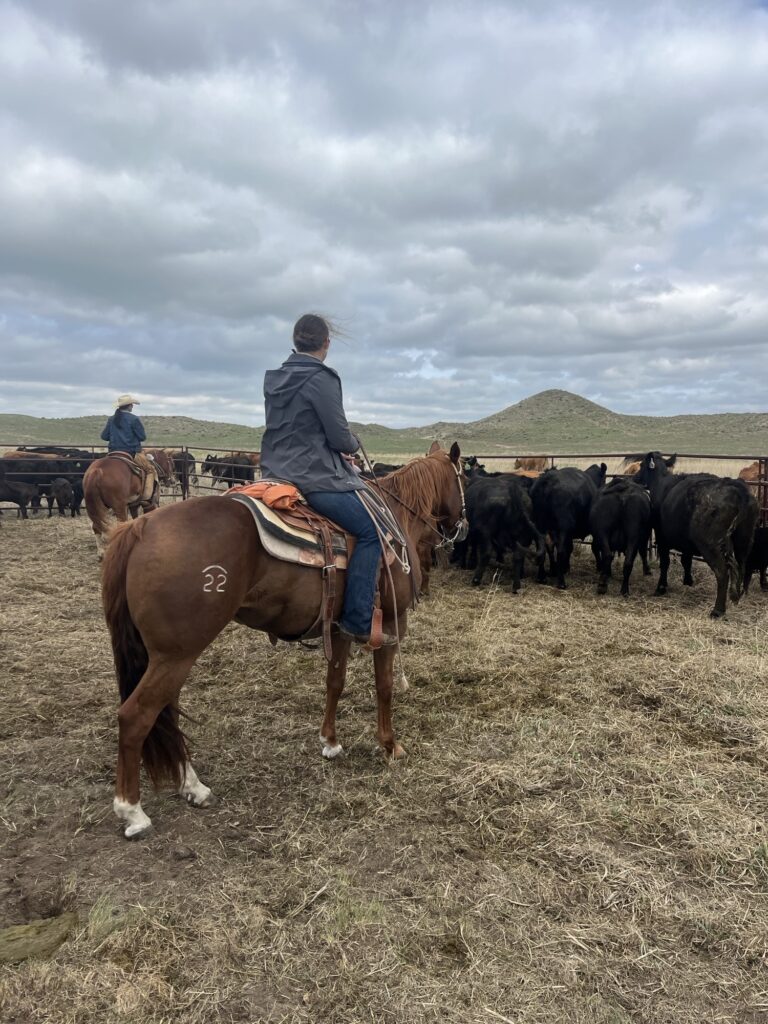
These three women did not arrive here alone. They have the historical knowledge of generations before them who have studied their own land each day and become experts in caring for it. Hurst, Fender and Kobza charge into the future with a strong foundation built by those who have come before them.
Although special in their own right, their stories are not entirely unique. Faces like theirs can be found across the U.S. sharing a common set of goals: to care of cherished ecosystems and animals while providing a high-quality protein source for humans.
Sources:
1. Baber, J.R. et al., 2018. Estimation of human-edible protein conversion efficiency, net protein contribution, and enteric methane production from beef production in the United States. Trans. Anim. Sci. 2(4): 439-450.
2. Barry, Sheila. 2021. Beef Cattle Grazing More Help than Harm for Endangered Plants and Animals.
3. Brunson, MW and L. Huntsinger. 2008. Ranching as a Conversation Strategy: Can Old Ranchers Save the New West? Rangeland Ecology & Management 61(2): 137-147.)
4. Broocks, Ashley et al. 2017a. Carbon Footprint Comparison between Grass- and Grain-finished beef. OSU Extension, AFS-3292.
5. Maher et al. 2020. National and State Economic Values of Cattle Ranching and Farming-Based Ecosystem Services on Federal and Private Lands in the U.S. Sustainable Rangelands Roundtable Publication
6. USDA-ERS. 2021a. Economic Research Service using data from the Major Land Use data series. Available at: https://www.ers.usda.gov/data-products/major-land-uses.aspx
The content is paid for and supplied by advertiser. The Washington Post was not involved in the creation of this content.
Content From