Lessons learned on the journey to help close the global health equity gap
Together with global health leaders and organizations, governments and industry leaders, we can help create a healthier world for all.
By Elif Aral, Access & Accord Commercial Lead, Pfizer Emerging Markets
July 10, 2023
Where you live shouldn’t impact the quality of your healthcare, and your income shouldn’t determine your health outcomes. Yet, systemic inequities persist globally, and today, nearly two billion people still lack access to essential medicines and critical treatments.[i] This disparity is more apparent in low- and middle-income countries, which experience 70 percent of the world’s disease burden, but receive only 15 percent of global health spending.[ii],[iii],[iv]
To help close this health equity gap, in May 2022 with African leaders from Rwanda, Ghana, Senegal and Malawi, Pfizer launched An Accord for a Healthier World (the Accord)—an initiative that is working in collaboration with country governments and key stakeholders in the global health space to enable access to Pfizer’s full portfolio of medicines and vaccines on a not-for-profit basis to 1.2 billion people in 45 lower-income countries. But closing the health equity gap will take more than just the supply of medicines and vaccines. Together with governments, the global health community and multi-sector stakeholders, the Accord also aims to co-create solutions to help increase access to quality healthcare for those who need it the most.
This last year of work through the Accord brought a number of successes, but more importantly, it brought significant learnings. We know that sustainable change requires collaboration, long-term investment, resilience and creative thinking. Looking back, four key themes stand out that we believe are essential to creating lasting impact.
1. Governments must lead the way
In our early engagements, we learned that our initial Accord offering of innovative medicines and vaccines was not comprehensive enough to address some of the most urgent patient needs in many countries including cancers and deadly infections. As a result, we expanded the Accord in January 2023 to include the full portfolio of medicines and vaccines for which Pfizer holds global rights, including chemotherapies, oral cancer treatments and anti-infectives.
But we know there is also no one-size-fits-all approach to making sure medicines and vaccines reach patients. Our collective success requires aligning and integrating with government healthcare strategies and plans already in place or in development, which takes time and close collaboration.
For example, the Government of Ghana is taking considerable steps to help achieve universal health coverage and bring quality medicines and other health technologies to patients across the country. Through our work, we believe the Accord is on a promising path to help accelerate access and support national health priorities in Ghana.
2. More efficient regulatory pathways are essential
Through the Accord we’re working with governments and regulatory authorities to explore simpler and more efficient pathways to supply medicines and vaccines in compliance with each country’s regulations. Right now, many medicines and vaccines can take four to seven years or longer to reach low- and middle-income countries.[v] We can do better, but we cannot do it alone.
There are also shorter-term solutions and cross-sector efforts underway to help accelerate traditional regulatory timelines. The World Health Organization Collaborative Registration Procedure provides a model that relies on reviews using stringent regulatory authorities that can help reduce the burden on national regulatory bodies. The European Medicines Agency has also established a similar pathway for low-income countries—a program called EUM4ALL—which enables its approvals to be adopted nationally, greatly expediting review timelines.
We believe one of the greatest opportunities to address some of these regulatory challenges lies in regulatory harmonization across Africa. The African Medicines Agency (AMA) was established to help create efficiencies and speed up access through the oversight of marketing authorizations. The ratification of the AMA in 2021 marked tremendous progress toward regulatory cohesion across the continent, but it is still a relatively new agency. AMA endorsement and participation by all 55 African Union member states would provide a clear signal of commitment for greater efficiency and shorter access timelines that could benefit the entire continent.
3. Supply chain optimization is an opportunity for innovation
As we saw in Rwanda—the first country to receive Pfizer innovative products through the Accord—delivering medicines and vaccines is just one piece of the puzzle to ensure patients receive treatments and vaccines that meet the highest quality and safety standards. Rwanda’s supply chain is already optimizing what can be a complex journey for manufacturers and the government—from the warehouse floor all the way to patients in hospitals and clinics. But in many cases, once a product is delivered, the information chain stops, which means we cannot always confirm if they are reaching patients.
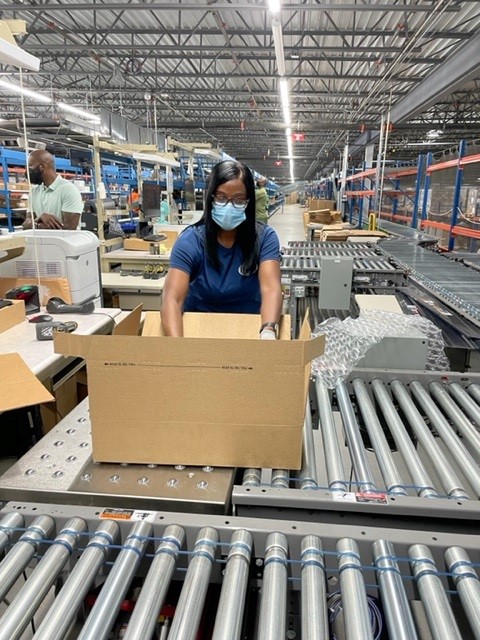

Pfizer products being packaged for delivery (left). Pfizer products arriving in Rwanda (right). Photo credit: Pfizer
As part of a collaboration with the Rwandan Ministry of Health, we developed a track and trace platform to monitor products every step of the supply chain from development to the last mile. By scanning medicines and vaccines, the platform provides traceability using cloud-based applications to chronicle the product’s entire journey which helped to enhance vaccine uptake in Rwanda. We’ve also deployed our first Pfizer Global Health Team in Rwanda to help identify opportunities for supply chain enhancements.
Beyond improving and scaling these types of programs, there are other challenges that require multi-sector collaboration and innovation for meaningful improvements, including cold chain storage, transportation, labor shortages and warehouse management. As we experienced during covid-19, where new shipment and storage solutions were rapidly developed for vaccines requiring cold chain distribution, we will need expertise from others who share our vision for long-term change.
4. Health systems strengthening remains a challenge
We know it is not enough to provide our medicines and vaccines on a not-for-profit basis. We must also address healthcare system barriers that limit and prevent access including additional healthcare worker training and capacity, greater diagnostic capabilities and technical expertise.
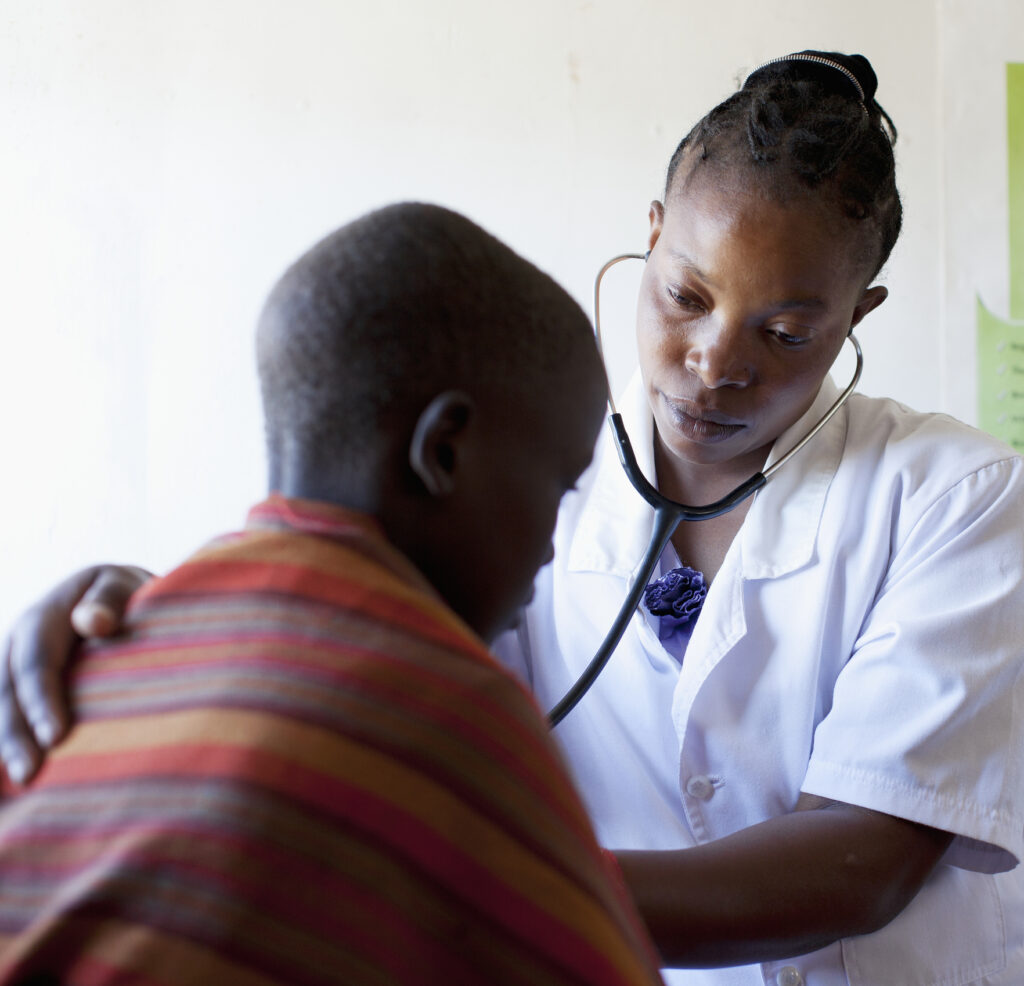
This type of health systems strengthening will require planning and investment, but together we are making headway. In Rwanda, with the Ministry of Health, we have helped conduct medical trainings for healthcare workers and are collaborating with partners on the ground to provide training for nurses on breast cancer screening and diagnosis in line with the Ministry’s strategy to rapidly expand the number of healthcare workers in the country. Many of the innovative therapies offered through the Accord create opportunities for new and unique collaborations with the public and private sector, non-profits and other manufacturing companies who can bring their diagnostic technologies and expertise.
While we are still at the beginning of our journey, we have been adjusting, learning and developing new solutions to address gaps every step of the way. Ultimately, significant investment in long-term infrastructure and dedication from other global health organizations are needed, and we are calling upon their support.
Our commitment stands strong
I am optimistic about the future and believe partnership is key to our success. Our approach is a holistic one, to help address the complex interconnectivity of medicine and vaccine supply, regulatory pathways, supply chains and local health ecosystems, with the goal of achieving impact now and far into the future.
While I am proud of the progress we have achieved, I know we cannot do this alone. We will continue to call upon global health organizations, governments, industry leaders and our peers with expertise and resources that can create a healthier world for all. Because only by working together can we close the health equity gap.
Learn more about the Accord: Pfizer.com/Accord.
Elif Aral is the Access & Accord Commercial Lead, Emerging Markets at Pfizer. She has been with the company for nearly three decades, holding previous roles as the country manager and regional director in Turkey, vice president for emerging markets and vaccines in China and vice president of global marketing for cardiovascular and global brands.
[i] Health Policy and Planning, Volume 34, Issue Supplement_3, December 2019, Pages iii1–iii3, https://doi.org/10.1093/heapol/czz119
[ii] Okereke M, Ukor NA, Adebisi YA, et al. Impact of covid‐19 on access to healthcare in low‐ and middle‐income countries: Current evidence and future recommendations. The International Journal of Health Planning and Management. 2020;36(1):13-17. doi:10.1002/hpm.3067
[iii] Gottret P, Schieber GJ. Health Financing Revisited: A Practioner’s I.e. Practitioner’s Guide. Washington, D.C.: World Bank; 2006.
[iv] World Health Organization. https://apps.who.int/nha/database. Accessed June 2023.
[v] Ahonkhai V, Martins SF, Portet A, Lumpkin M, Hartman D. Speeding Access to Vaccines and Medicines in Low- and Middle-Income Countries: A Case for Change and a Framework for Optimized Product Market Authorization. PLoS One. 2016 Nov 16;11(11):e0166515. doi: 10.1371/journal.pone.0166515. PMID: 27851831; PMCID: PMC5112794.
The content is paid for and supplied by advertiser. The Washington Post was not involved in the creation of this content.
Content From