Pfizer’s Manufacturing and Supply Chain Revolution
A New Age in Pfizer Manufacturing, Distribution, and Supply
By Mike McDermott, Chief Global Supply Officer, Executive Vice President
At Pfizer, the COVID-19 pandemic transformed us. It forced us to reexamine and revolutionize the way we operate at the most fundamental level.
We found opportunities to grow, become more efficient, and innovate like never before. And though the pandemic will one day be over, many of the changes and advancements we made during this challenging time are here to stay.
Investing in U.S. Manufacturing
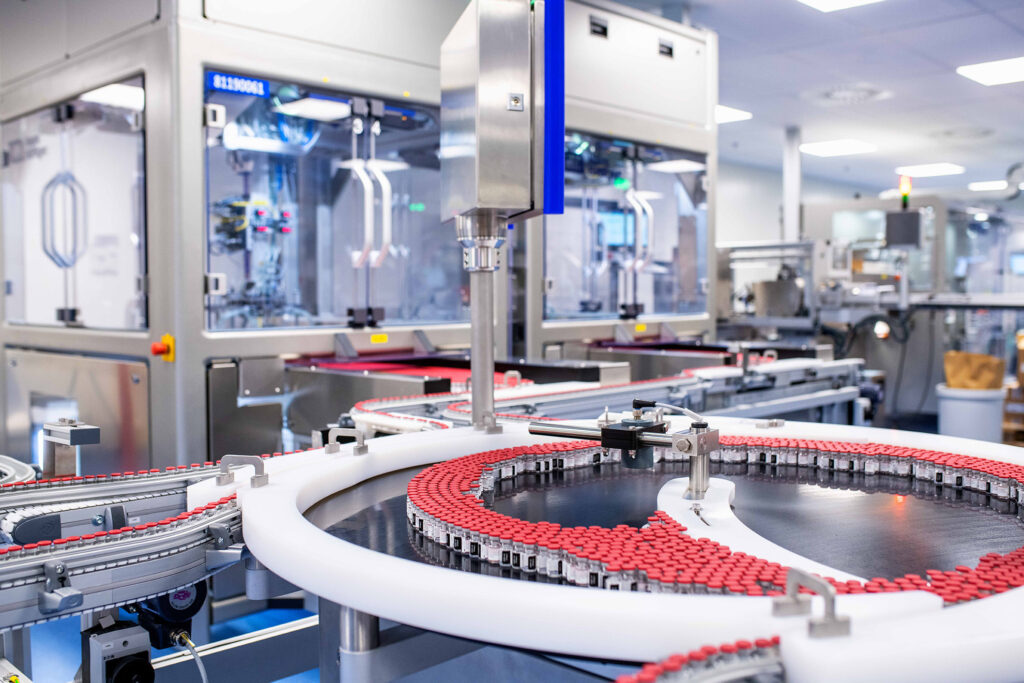
We increased flexibility and reinforced resilience within our supply chain to make sure patients around the world received our authorized COVID-19 oral treatment, vaccines, and additional support care medicines as quickly as the situation demanded.i This included the recent expansion of our manufacturing capabilities at our site in Kalamazoo, Michigan, to include production of the registered starting materials and active pharmaceutical ingredient, or API, for our authorized COVID-19 oral treatment.
The Kalamazoo site is one of the world’s largest producers of API and has already played a key role in the fight against COVID-19, manufacturing nearly 1 billion vaccine doses to date.
With a $120 million investment, our latest expansion will not only bring more key biopharmaceutical manufacturing to the U.S. but also provide over 250 new high-skilled jobs in the Kalamazoo area. The expansion will help bolster the resilience of our supply chain and lay the groundwork for the next generation of manufacturing in the U.S.
The Next Generation of Pfizer Manufacturing
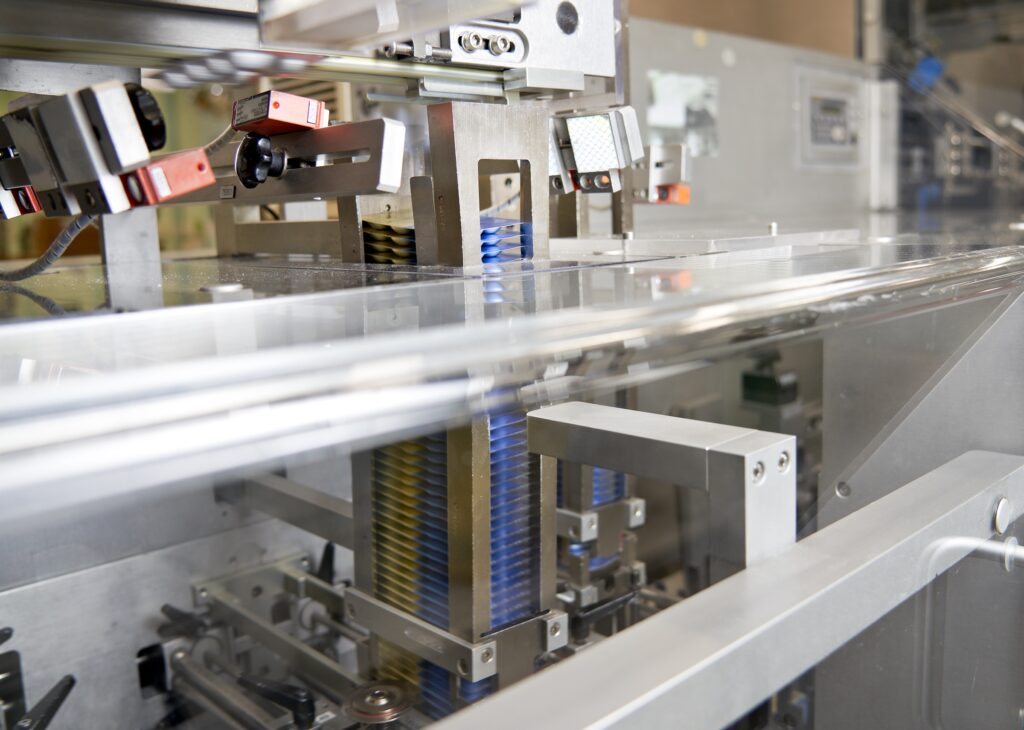
The Kalamazoo expansion represents just one step in our broader vision. Building the next generation of manufacturing requires going beyond one product, one site, and one pandemic.
Throughout the development of the Pfizer-BioNTech COVID-19 Vaccine, our colleagues were empowered to harness the power of science to create new technologies and innovations that wouldn’t have been possible without the urgency and commitment to end the pandemic.ii
For manufacturing, we developed the first large-scale lipid nanoparticle manufacturing system, which unlocked the ability to produce the Pfizer-BioNTech COVID-19 Vaccine and has set an industry standard for all future lipid nanoparticle production.
To ensure the vaccine would be kept at its required temperature, we developed a shipping container that can serve as a temporary ultra-cold freezer, increasing vaccine access in rural and underdeveloped communities.
These innovations, paired with real-time location tracking and temperature monitoring, allow us to intervene quickly and effectively if something goes wrong during transit, giving us oversight of our deliveries like we never had before.
But our innovations won’t stop here. We are deploying solutions identified during the pandemic for other medicines in development, such as gene therapies, oncology treatments, and future mRNA medicines, providing efficiencies we never thought possible.
For example, we are applying the same efficiencies we first uncovered while developing an adaptable vaccine supply chain to our gene therapies. Our new flexible gene therapy manufacturing facilities will initially focus on the production of one product but, in the future, will be able to transition capacity to an entirely new product, providing the flexibility to address shifting patient needs in an instant.
We have also deepened our relationships with ministries of health, trade organizations, and customs agencies. We have always maintained a robust global footprint, but the pandemic pushed us to step even further, leveraging digital tools to ensure the Pfizer-BioNTech COVID-19 Vaccine could get to people as quickly as possible.
These fortified relationships have allowed us to distribute our authorized COVID-19 oral treatment at light speed, finding efficiencies to get this medicine to patients as quickly as possible.
Staying One Step Ahead
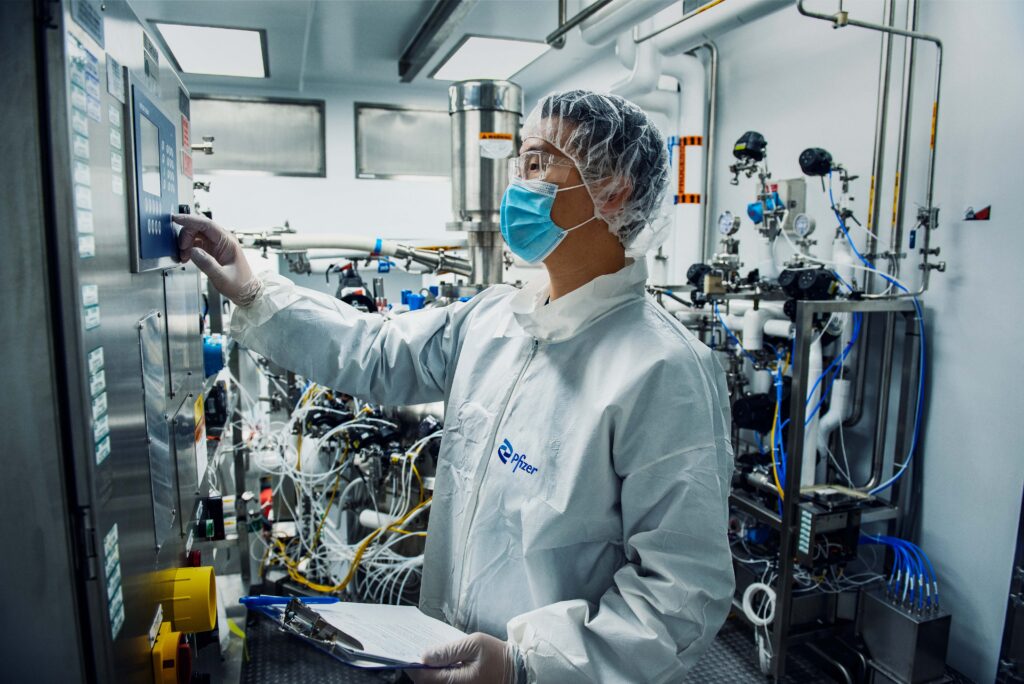
Though we are not out of the woods yet, the COVID-19 pandemic has fundamentally changed our company and culture forever.
Pfizer and the U.S. manufacturing system have evolved to become more agile in our rapidly changing world. We forged critical partnerships within the industry and with governments — setting the stage for even more progress in manufacturing medicines collaboratively and quickly for patients in the future.
We have been put to the test, and we have proven just how vital U.S. manufacturing is to our country and to the world. We have shown that we can deliver when the world needs us most.
As we forge ahead, it is more important than ever to keep learning, growing, and innovating to stay one step ahead of deadly diseases. I am honored to work with Pfizer colleagues at the forefront of this evolution who can surmount any new obstacles — because if we work together, science will win.
The next generation of manufacturing is here. Meet the new Pfizer at Pfizer.com/pgs
i PAXLOVID has not been approved, but has been authorized for emergency use by FDA under an EUA, for the treatment of mild-to-moderate COVID-19 in adults and pediatric patients (12 years of age and older weighing at least 40 kg) with positive results of direct SARS-CoV-2 viral testing, and who are at high-risk for progression to severe COVID-19, including hospitalization or death; and
· The emergency use of PAXLOVID is only authorized for the duration of the declaration that circumstances exist justifying the authorization of the emergency use of drugs and biological products during the COVID[1]19 pandemic under Section 564(b)(1) of the Act, 21 U.S.C. § 360bbb[1]3(b)(1), unless the declaration is terminated or authorization revoked sooner.
ii Emergency uses of the vaccine have not been approved or licensed by FDA, but have been authorized by FDA, under an Emergency Use Authorization (EUA) to prevent Coronavirus Disease 2019 (COVID-19) in individuals 6 months of age and older. The emergency uses are only authorized for the duration of the declaration that circumstances exist justifying the authorization of emergency use of the medical product under Section 564(b)(1) of the FD&C Act unless the declaration is terminated or authorization revoked sooner.
This content is paid for and supplied by advertiser. The Washington Post was not involved in the creation of this content.
Content From