


A novel strategy
for safeguarding
the seas
This article reports on the impact of Rolex’s Perpetual Planet initiative, which supports outstanding individuals and organizations that are implementing novel solutions to the world’s most pressing environmental challenges. The initiative includes the Rolex Awards for Enterprise, a program that for over four decades has recognized changemakers from around the world, including Kerstin Forsberg, who is featured in this story.
Kerstin Forsberg became enamored with giant manta rays for all the obvious reasons, seduced by the way they glide through the water, as well as their sheer size. But the Peruvian environmentalist was also drawn in by a less-evident attribute: The fish serve as something of an early warning system for ocean well-being. Giant mantas like to travel. Each day they swim between the surface and the ocean floor; they can also migrate vast distances to different areas of the sea. Deleterious changes to a given area of the ocean—whether from climate change, severe pollution or another source—would quickly affect giant mantas because they simply move across so many different habitats. “They have the capacity to be indicators of ocean health,” said Forsberg. “If you are seeing giant manta rays, this could be showing you that that ecosystem is in good shape.”
A leading voice for ocean conservation in her native country, Forsberg is the founder and director of Planeta Océano, a nonprofit organization that works to safeguard marine ecosystems and the animals that live in them. Although the organization is committed to ocean conservation broadly, it places a particular focus on giant mantas. The waters off the coast of Peru host one of the world’s largest regional population groups of giant mantas, estimated at over a thousand individuals. Yet the animal is under threat from fishing practices in shoreline communities. This challenge—matched with the animal’s special capacity to be a wellness barometer for the sea—spurred Forsberg to make manta protection a pillar of her environmental mission. As a result of these efforts, Forsberg has been honored with a range of prestigious awards, most notably the Rolex Award for Enterprise, which supports individuals making groundbreaking contributions that improve the planet.


Forsberg accomplishes her goal with an innovative conservation approach—one that relies on collaboration with the very people that are putting pressure on mantas. She and her team implemented a community-based strategy that braids research, education and ecotourism; each of these core pillars is specifically designed to encourage locals, including fishermen, to be active partners in the mission to save mantas.
The outcomes have been transformational. The interventions have not only helped to legally protect the majestic marine animal, but also inspired an enduring ethos of local conservation leadership.

How to design a manta
protection program
When Forsberg first launched Planeta Océano in 2007, her focus was on sea turtle protection. Yet in working closely with coastal fishing communities, she began to learn more about the giant mantas. “I was just mesmerized,” she said. “These huge animals were so charismatic and so important, but at the same time, so little known in Peru. The general community didn't even know that giant manta rays existed in the country, and neither scientists nor the government were paying much attention.”
Forsberg also bore witness to the particular challenges facing the fish. Giant mantas are highly vulnerable to population loss, in part because of how slowly they reproduce. On average, females give birth to one pup every few years, making it difficult to regrow a population reduced by capture or other hazards. In Peru, however, where the animal is no longer part of the local diet, there’s a different challenge. Giant manta rays easily get tangled in nets meant for other fish, what is known as incidental catch. And because they are so large, with wingspans of up to 25 feet, it can be easier for fishermen to kill them rather than to try to free them from the net.
listen
CLIP 1
Kerstin Forsberg explains what it’s like to swim with giant mantas.
CLIP 2
Kerstin Forsberg discusses the collaborative nature of her work.
These clips were taken from Episode 4 of Planet Visionaries, a podcast that delves into the extraordinary work of a range of Change Makers supported by Rolex. Episode 4, which features a conversation with Forsberg, is available for download now
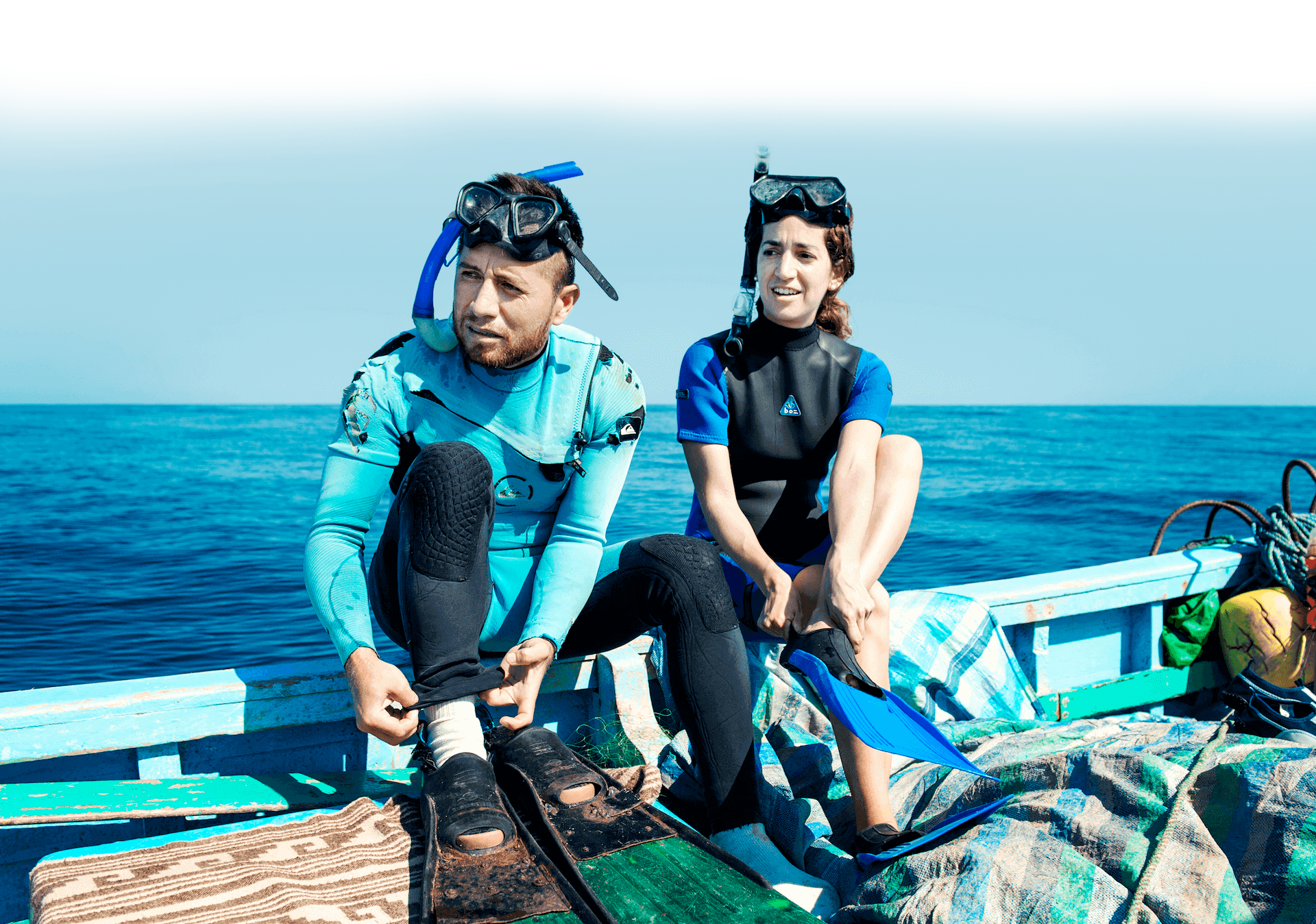
Explore the SeriesAround 2012, Planeta Océano began developing a range of programs to address this challenge. Yet knowing that any effective manta protection plan would require buy-in from coastal communities, Forsberg and her team placed an early emphasis on community engagement. They designed collaborative research projects, not only with professional scientists but also locals; fisherman, for example, would report incidental catches or even seeing a manta in the water, helping Planeta Océano to monitor the population. Forsberg has worked with over 300 of these citizen scientists to better document and understand the enormous animal. The goal of the effort is to encourage fisherman to be more careful in their interactions with mantas, as well as to ensure that instances when the creatures are accidentally caught in nets don’t threaten the overall population. The organization also focused on raising awareness on the issue, educating locals about the threats to the endangered species and the value of ocean biodiversity. They worked directly with more formal educational institutions, as well. Forsberg established the Marine Educators' Network of Northern Peru, which has brought together teachers from dozens of Peruvian schools to expand ecological education in classrooms. In all, Planeta Océano has trained some 3,500 teachers, engaged roughly 15,000 students and helped start over 20 youth environmental initiatives in Peru. And now the organization is working to impement its education programming in other countries.


“I love seeing people engage not only their minds, but also their hearts on the issue of conservation,” Forsberg said. “You could really see a change in ocean literacy and marine awareness in these communities.”
The Impact
of Ecotourism

Lara Jackson
Zoologist and
conservation biologist
Kerstin Forsberg’s ecotourism efforts in Peru are indicative of a global movement. The industry has grown massively in the past few decades and now supports roughly 22 million jobs around the world and contributes tens of billion of dollars to the global GDP annually. We spoke with British zoologist and conservation biologist Lara Jackson about how holiday travel can help support environmental protection.
What is the role of ecotourism in the conservation movement?
Fundamentally, it’s about the communities that host the tourists. In some of these areas, people have traditionally been forced into actions like poaching or overfishing due to poverty; they don’t do it by choice. So when you have a lot of visitors going to a place because they want to see the wildlife and natural wonders, it gives value to the environment—and financial incentive for locals to safeguard it. So on some level the industry has been a massive enabler of conservation simply because it gives communities alternative opportunities.
What is an example of a particularly effective ecotourism project?
One of the places I've been lucky enough to work is at the Lewa Wildlife Conservancy in Kenya. It started off as a rhino sanctuary in the 1980s, and then later started bringing in tourists. Part of why I think it’s so successful is because it’s based on true community engagement—locals are involved at every level, employed as rangers, cooks, educators, you name it. They've been so effective at reaching out that if there were ever any rumors of poaching, the community would actually turn in the person. It was an incredible level of trust.
Are there examples of unsustainable tourism practices?
Yes, unfortunately tourism can also go very wrong. Here’s one example: There are loads of dolphins off the coast of the island of Zanzibar, so dolphin tours have become massive there. But it’s not always ethical. In the area I visited, there were no rules about how to approach the animals or how many boats could be in a given zone, and human activities were causing the dolphins a lot of stress. I began working with a group to educate local boat operators about dolphins and how to appropriately interact with them. Ultimately, we helped the boat operators start a business that took a more ethical approach to dolphin tours.
How can ecotourism inspire more people to play a role in keeping the planet perpetual?
As I mentioned, changing the views and incentives of communities is a critical benefit. But the other large part of ecotourism is the fact that you actually change the opinions of the tourists themselves. I saw it myself while doing research in Lewa—travelers who may come with no understanding of the environmental challenges in Africa and leave completely engaged with the issues, ready to be a part of the solution. When you have people go to these places and forge a connection with nature, then they're more likely to fight for it. Beyond personal vacation choices, one way to support ecotourism is through the organization Sustainable Travel International, which works collaboratively with governments, businesses and local nonprofits to advance green travel.
The tourism solution
In 2016, Forsberg was named a Rolex Awards for Enterprise Laureate, which had a profound impact on the trajectory of her conservation efforts. “There's been a before and after of my work with the Rolex award,” Forsberg said. “It catapulted what we had been doing in terms of visibility, as well as opened up doors and opportunities to participate, engage and share my voice in other spaces globally. It’s also allowed us to pursue new projects.”
In addition to supporting research and awareness, the award allowed Planeta Océano to expand the third key pillar of their environmental approach: ecotourism. Forsberg and her team had been working on a small ecotourism pilot program, but they knew that building out the industry could provide an incredible opportunity to both protect mantas and support low-income communities. Manta watching is big business; an estimated $140 million is spent annually around the world to travel and dive with these elegant animals. In Peru, bringing tourists to see the creatures would bolster coastal economies, offering a real alternative to the type of unsustainable fishing practices that have harmed mantas.
Collaboration Spotlight
The Rolex Awards for Enterprise has created a network of environmental changemakers, many of whom have collaborated on groundbreaking conservation projects. For example, Kerstin Forsberg teamed up with a fellow Laureate Barbara Block to better understand giant manta migration. The duo implanted the animals with tracking tags, which allowed the environmentalists to trace the movements of mantas, as well as better understand their behaviors. The information can be invaluable in recognizing — and protecting
against — the types of human-driven activities that most disrupt mantas.
A Checklist for Traveling Sustainably
By 2030, there will be 1.8 billion international tourists. This amount of travel could present myriad environment challenges for countries that host these visitors. But every traveler can make choices that contribute to a more sustainable tourism industry. Here are a few tips to consider when planning
your next trip:


“Through the Rolex award, we were able to work with the fishermen to consolidate a proper association of tour guides,” she said. “We provided resources to equip their boats so that they could take out tourists. We also helped with training.” Forsberg and her team began hosting workshops that educated hundreds of local fisherman on all the basic aspects of ecotourism; the trainings touched on everything from how to navigate government bureaucracy to first aid to how to talk to visitors. That technical backing has been invaluable in bolstering the nascent industry, which has gradually developed in recent years. Forsberg reported that prior to the pandemic, coastal communities would get travelers from all over the world. And fisherman-turned-boat operators aren’t the only ones who benefit. People who come to see the mantas are also visiting craftswomen in the community and boosting the local culinary scene. The success of the effort has ensured that locals have a reliable income, which only creates more incentive for all stakeholders to work to safeguard mantas.

For Forsberg, it’s another example of how environmentalism begins with community engagement. “A lot of our work is developing relationships with fisherman and other locals. They really become our friends and our partners and who we connect with when we're out in the field,” said Forsberg.
And through these grassroots partnerships, she sees progress towards better stewardship of marine life.
“Witnessing small changes gives me hope that conservation efforts can grow,” she said, “and to really develop on a much larger scale.”

Images © Rolex/Franck Gazzola, François Schaer and JMccarty