Africa’s ‘Father
of Turtles’
on how saving
one species
saves many
mission to preserve every threatened species of
turtle, tortoise and terrapin in Africa. Here, he
explains why his work has serious consequences
for the continent he calls home.
This article reports on the impact of Rolex’s Perpetual Planet initiative, which supports outstanding individuals and organizations that are implementing novel solutions to the world’s most pressing environmental challenges. The initiative includes the Rolex Awards for Enterprise, a program that for over four decades has recognized changemakers from around the world, including Tomas Diagne, who is featured in this story.
“You are not going to turn my house into a zoo,” Tomas Diagne recalled his father admonishing him as a teenager.
But, as is the wont of teenagers, Diagne didn’t listen. Now 51, he is known as Africa’s “Father of Turtles.” But back then, he collected any animal he could get his hands on, turning his family’s home in the suburbs of Dakar, Senegal, into a mini menagerie comprising dogs, chicks and even a venomous snake.
Eventually, Diagne began collecting turtles. Defeated, his father gave Diagne one rule. “The animals you want to have, have requirements,” he told his son. “They’re living species, and you need to take care of them.”
It was the beginning of what would become a one-man, continent-wide mission to preserve every threatened tortoise, turtle and terrapin species in Africa. But, as Diagne is eager to point out, his work is about more than just chelonians (the umbrella term for turtles and tortoises). Because for every species that is conserved, an entire ecosystem — upon which a variety of flora and fauna, including humans, depends — is preserved, too. In many ways, the fate of these species is intimately entwined with ours.
The ‘motherland of turtles’
Diagne’s long-held passion for turtles has seen him go from being something of an amateur zookeeper to a world-renowned leader in the study of Africa’s endangered turtle populations. He also serves as director of the African Chelonian Institute, dedicated to the protection and conservation of Africa’s 46 native species of freshwater chelonians.
All these species, Diagne explained, face manifold challenges to survival. “If you are a turtle, you don’t want to be born on this continent, because being a turtle in Africa is really not a pleasant matter,” he said, estimating that, “In at least 80 percent of cases, if a human finds you, you will be eaten.” Turtle meat and eggs are popular across the region, while turtle fat, bones, blood and organs are often used in traditional medicine.
Other common threats include being captured and sold into the global illegal wildlife trade, or getting poached for their shells, which are sold as tourist trinkets. Still more turtles die in fishing nets, are caught by hooks, or lose their habitat to urban development.
It seems especially cruel that so many of these species are under threat, Diagne said, because “Africa is the motherland of the turtle.” The turtle's earliest ancestor, Eunotosaurus africanus, lived around 260 million years ago in southern Africa’s swamps. Over millennia, chelonians have proven remarkably adaptable to drastic environmental changes, and that resilience lives on today.
“They’re just incredibly creative in terms of adapting to the environment,” Diagne explained. “Freshwater turtles bury themselves under roughly one foot of mud and stay there for months to survive the dry season. Mammals like us couldn’t handle that.”
And yet, it is mammals like us who are threatening their very existence.
“It was so difficult for me to see Africa being the motherland of turtles and yet see turtles being decimated by poaching, being decimated by bushmeat consumption,” Diagne lamented. “All these things dragged me towards conservation.”
Main story continues below Q&A“Turtle” is often used as an umbrella term for turtles, tortoises and terrapins. Tortoises are land-based; turtles live in marine environments; and terrapins live in freshwater.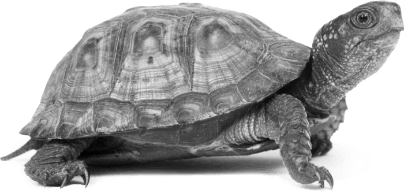
The Laureate Questionnaire
Tomas Diagne explains how Rolex helped him transform a localized project into a continent-wide mission.
-
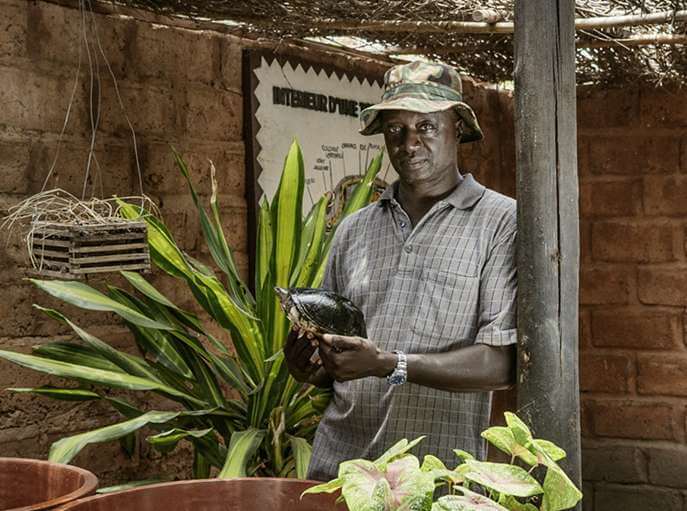
You were awarded the Rolex Award for Enterprise in 1998. What did winning the award mean to you?
I feel I am one of the dinosaurs of the laureates because I won this 24 years ago. It was my first international prize. I was just so excited to be a Rolex Laureate. First of all, it gave me the sense that I was heading in the right direction. And despite the challenges I encounter in my work, it helped me realize, “somewhere people appreciate what I’m doing,” and I just need to keep doing it.
-
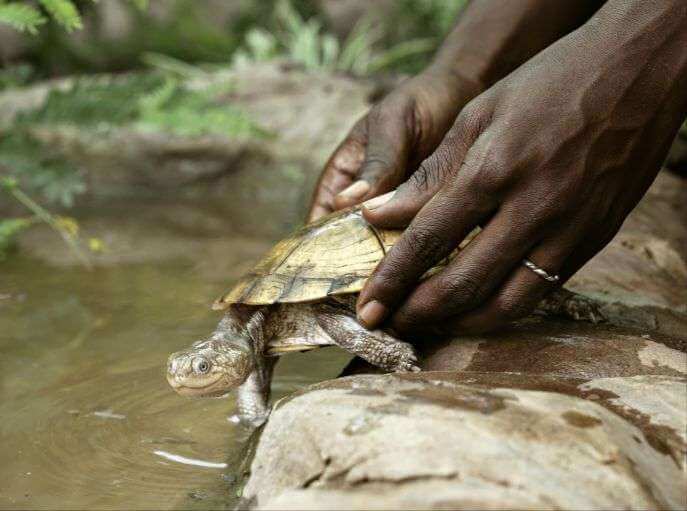
What was the impact of that realization?
It gave me some power, some confidence to tackle even more challenges. For a while, I was feeling a little bit alone in turtle conservation. Now, I want to be open and I want to be strategic and try to help more people to make a career out of it. We want to run more scholarship programs and, little by little, build a community of people who can have careers in turtle and tortoise conservation in Africa.
Hear Tomas Diagne in conversation with rock
climber and “Free Solo” star Alex Honnold
in season 2,
episode 3 of “Planet Visionaries.”
Honnold hosts this podcast series,
which explores the extraordinary
work
of pioneers who are safeguarding our planet
for future generations.
Understanding
‘the ripple effect’
Over the years, Diagne has grown his one-man mission into something much broader and ambitious.
In the beginning, his efforts focused on the sulcata, or African spurred tortoise, a colossal creature that routinely weighs in at between 70 and 200 pounds. The sulcata became a popular pet in the 1990s and, even today, there are more of them living in captivity than in the wild. After winning a Rolex Award for Enterprise in 1998, Diagne established the Villages des Tortues at Noflaye-Senegal, a center dedicated to breeding rare tortoises, including the sulcata, for reintroduction to their natural habitats in the country.
The success of Villages des Tortues spurred Diagne to launch the African Chelonian Institute in 2009. Now, his work encompasses not only breeding programs, but the scientific study of tortoises and turtles, habitat conservation, and conservation training that seeks to involve local communities more deeply in the work. His projects have sought to save everything from the sea turtles of Guinea Bissau to the forest tortoises of the Ivory Coast.
But, as Diagne admitted, his biggest — and most important — challenge is getting people to truly care about saving turtles and tortoises.
The Tocc-Tocc Community Wildlife Reserve in northern Senegal. Tomas Diagne helped establish the reserve to preserve local flora and fauna.
One way to help people appreciate what is at stake is to talk about the “ripple effect.” Case in point: the wetlands of northern Senegal. “Turtles are not alone in this habitat,” Diagne explained. “You have different migratory birds who share the same habitat, you have different types of fish that share the same habitat, you have threatened primates who share the same habitat.” Humans are also a part of the equation. “This habitat provides drinking water for the main city here in Senegal,” Diagne added. The disappearance of turtles could have severe ramifications for all concerned, starting with the water-quality problems that would result from removing a vital scavenger and aquatic plant-eater from the ecosystem.
There are more than 300 species of chelonians worldwide, and more than half are threatened with extinction. Worse, more than a third are categorized as “endangered” or “critically endangered.”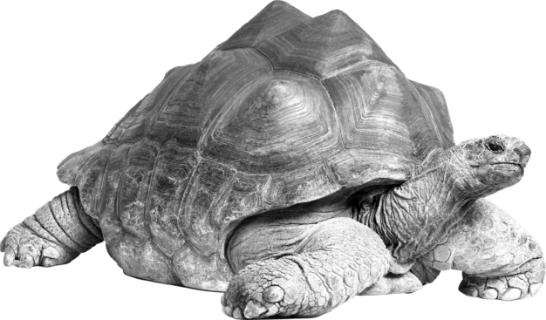
Ultimately, Diagne argued, his work is not about one tortoise or turtle. It is about the fact that humankind’s most important provider is nature. “We need to take care of the provider.”
For Tomas Diagne, education and awareness is a crucial element of conservation. Diagne often gives presentations in schools to inspire the next generation.
Training for
the future
Taking care of the provider is the wider aim of the African Chelonian Institute’s first-of-its-kind African Scholarship Program, which completed its first cohort in February of this year. The training course, a long-held ambition of Diagne’s, took 12 students from Senegal and other Western African countries and taught them about turtle conservation techniques and strategies. Diagne hopes the program will encourage others to start their own conservation efforts back in their hometowns.
Research shows sea turtles use the Earth’s magnetic field to navigate. Their magnetic sense, a sort of in-built GPS, helps them work out their latitude and longitude and swim in the right direction when migrating for hundreds, and sometimes thousands, of miles.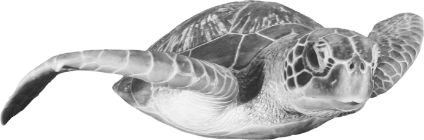
Tomas Diagne and his assistant Awa Wade tag a sea turtle before releasing it into the ocean.
The scholarship also feeds into Diagne’s greatest hope for the future, which is to popularize conservation among the next generation. Producing scientific papers, breeding rare species and introducing new laws is all well and good, he said. But making a real, lasting impact depends on people, and winning their hearts and minds. “Conservation needs to be popular,” he said. “We need to make conservation accessible for everybody.”
And by “everybody,” Diagne really means everybody. We can all play our part. “Taking care of nature is something you can do worldwide. Even just asking questions — ‘Is that shrimp on sale at the local supermarket caught using sustainable practices that limits the accidental capture of turtles and dolphins? Is that turtle shell for sale in the artisan’s market certified as cruelty-free?’— can go a long way.” So do charitable contributions, he added, even if they seem small.
After all, everybody stands to benefit. As Diagne is at pains to point out, “Conservation isn’t about trying to steal from human luxuries. Conservation is about trying to put together good practices for standards of living that can last.”
The shell is the rib cage, sternum and vertebrae of a chelonian, having evolved over millions of years to become one cohesive unit. The shell performs different functions for different species, from camouflage to protection, and even a weapon.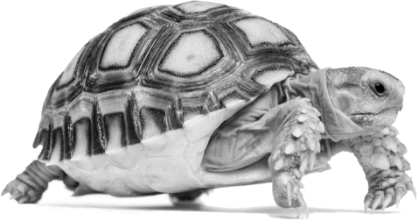
Tomas Diagne’s work is just one example of innovative wildlife conservation happening around the world. Everyone has an opportunity to help safeguard the planet by taking steps in their own community.
Share your own inspirational stories about environmental conservation with the world by using the hashtag #PerpetualPlanet.