Conservation
through
coexistence
been pioneering an insurance-based approach to protecting
both the snow leopards of Pakistan and the local economy
they threaten — one he hopes can provide a model for
balancing wildlife resilience with community livelihood.
This article reports on the impact of Rolex’s Perpetual Planet initiative, which supports outstanding individuals and organizations that are implementing novel solutions to the world’s most pressing environmental challenges. The initiative includes the Rolex Awards for Enterprise, a program that for over four decades has recognized changemakers from around the world, including Shafqat Hussain, who is featured in this story.
One morning in January 2009, Professor Shafqat Hussain and his assistant, Ali, decided to take a tea break from setting cameras along the game trails above northern Pakistan’s Satpara Lake. The pair were mounting the cameras in hopes of capturing footage of the region’s elusive snow leopards. They’d never forget what happened next.
Hussain was arranging stones for a fire ring and Ali was collecting firewood when they both heard a growl.
“This was a snow leopard growl: low-pitched and at short intervals,” Hussain recalled. Tea was forgotten as they grabbed their binoculars and spent the next two hours scanning the valley for the creature. And yet, despite its obvious proximity, they never saw it.
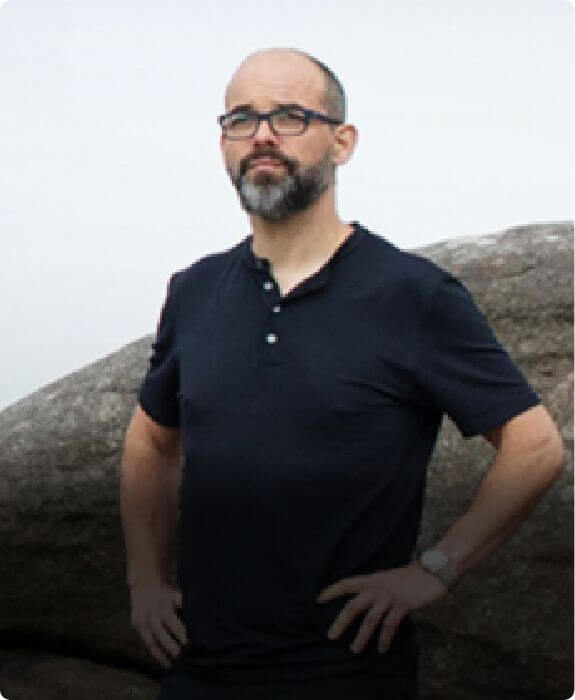
An internationally recognized champion of snow leopard conservation since 1999 — who has pioneered an innovative economic approach to balancing the needs of the local human and leopard populations — Shafqat Hussain has yet to see a snow leopard in the wild.
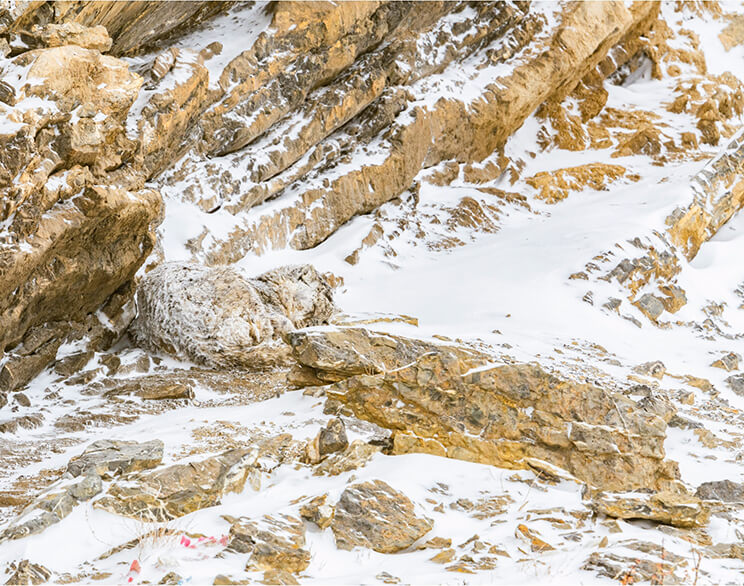
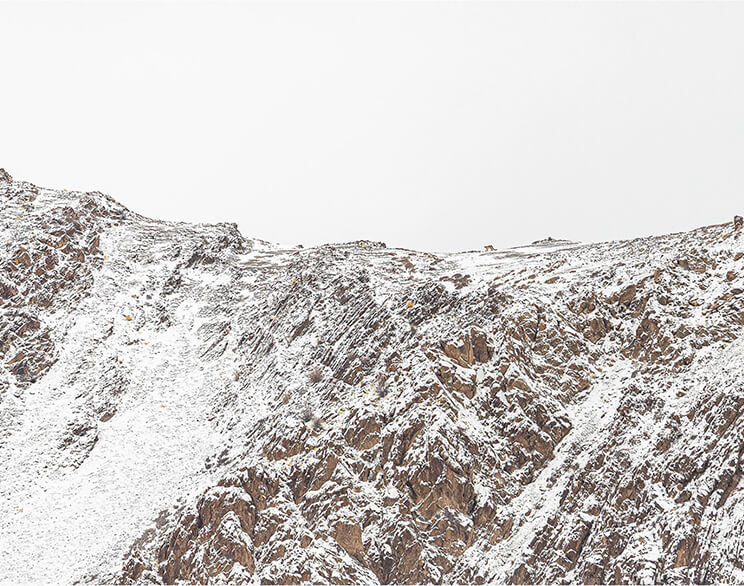
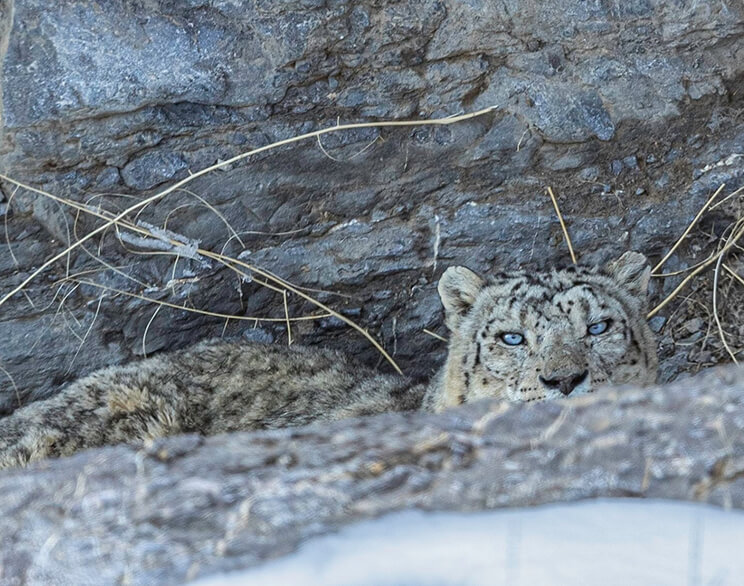
There’s a reason some call these big cats the ghosts of the mountains.

A species threatened — and a threat
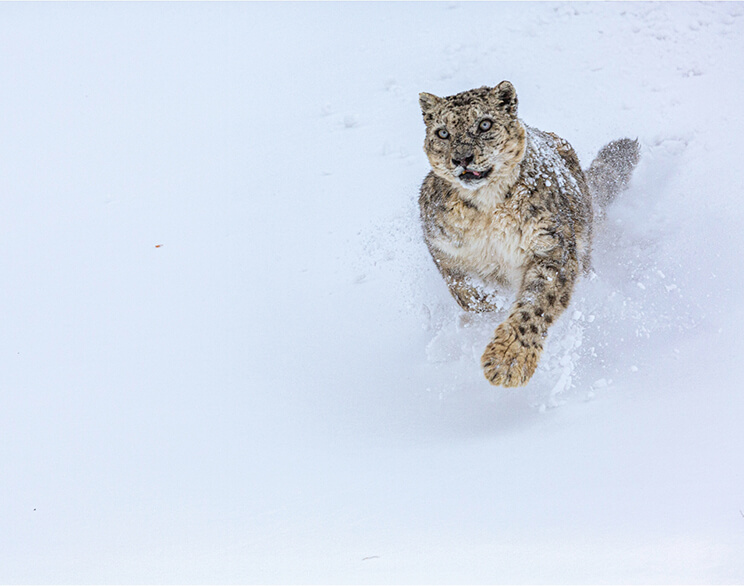
Snow leopards evolved as top predators in some of the world’s harshest environments. Their range extends across 12 mountainous Central Asian nations and covers close to two million square miles. Ranging from two to five feet in length and weighing in at 60 to 120 pounds, they can leap up to six times their length, using their long tails to help them balance and navigate icy, rocky terrain with ease.
How many snow leopards are there left in the wild? It’s hard to know for sure. The International Union for Conservation of Nature took them off its “endangered” list in 2017 but still categorizes them as “vulnerable.” Most estimates put the global population at 4,000 to 6,500.
Some of the threats to their continued survival include poaching by trophy hunters, loss of habitat and dwindling wild prey populations, but Hussain says one of the biggest threats they face comes from farmers and others who live in the region.
“Snow leopards kill domestic livestock, and local people rely heavily on domestic livestock for their subsistence,” he explained. “So, when they lose their livestock to snow leopards, they retaliate and they go after them.”
When a snow leopard gets into a corral full of goats, they kill indiscriminately, sometimes taking as many as 20 to 50 goats in a single attack. “That’s what really makes local people very angry,” he added, “because they say, ‘Well, why can’t they just eat one animal and leave the others alone?’”

Project Snow Leopard’s groundbreaking approach
Hussain, now a professor of anthropology at Trinity College in Hartford, Connecticut, became interested in this human-snow leopard conflict in the late 1990s.
A Pakistani native, he went to work on a rural development project with an NGO in the sparsely populated northern region of Gilgit-Baltistan in 1998 — but as an anthropologist, he soon realized that their philosophy of animal conservation overlooked an important component: the livelihood of humans who coexisted in the mountains.
“The implicit logic behind most wildlife conservation policies is that the only part of nature worth protecting is that which is wild and untamed,” he wrote in his 2019 book, “The Snow Leopard and the Goat.” “But this image of snow leopards as completely wild…becomes difficult to maintain in light of evidence from the field. An often overlooked fact in literature on snow leopards is that they kill domestic livestock even when their natural prey is not depleted.”

Informed by his background in economics and anthropology, Hussain realized a more creative approach was needed. He knew the farmers and goat herders of the Balti were not acting irrationally when they set out to kill a snow leopard that destroyed part of their herd; they were simply removing a legitimate threat to their economic well-being. There was no financial benefit in allowing the predator to live to eat another day. Farmers needed an economic incentive.
Hussain has said that the idea of creating a livestock insurance program started as a somewhat tongue-in-cheek suggestion, but it soon developed into a serious possibility.
Because they live on the economic margins, poor farmers are generally risk-averse, he explained, preferring options that reduce the potential for loss. An insurance plan would take much of the economic sting out of losing livestock—and eliminate much of the rationale for killing the snow leopards in response.

The Laureate Questionnaire
Shafqat Hussain explains how Rolex helped him transform his snow leopard insurance experiment into a replicable conservation model.
-
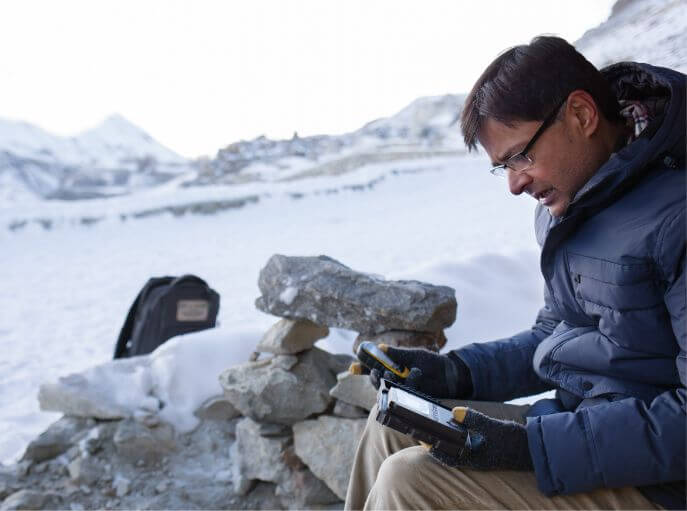
You were awarded the Rolex Award for Enterprise in 2006. What did it do for your work that might not have otherwise been possible?
We used the Rolex Award to extend this [insurance] model in more villages, going from 10 in 2006 to 22 in recent years. It also connected us with other partners and players in snow leopard conservation. In fact, one of our main partners is also a Rolex Award winner — Rodney Jackson, who also works on snow leopards, and he’s kind of my guru. So, the award helped us come into contact with each other, and since then, we have developed a very good partnership and collaboration. They provide us funding for camera trapping. And through them, we collaborate with geneticists and molecular biologists to do our diet studies and population assessment studies.
-
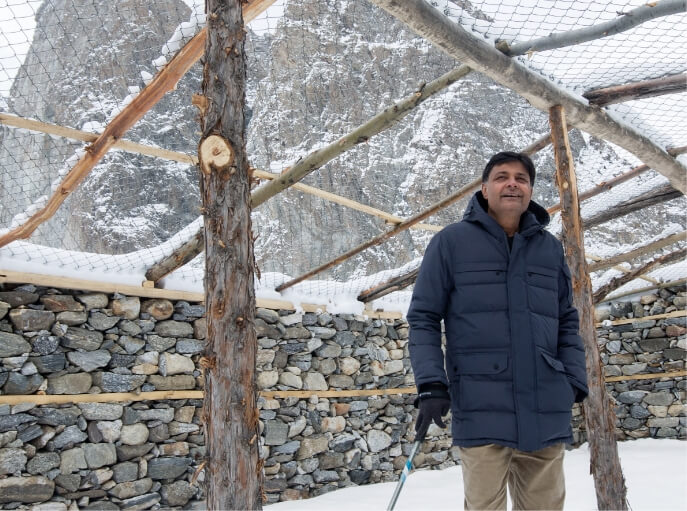
Are there other Rolex Laureates you would like to work with?
Brad Norman. He’s using digital technology to identify killer whales because killer whales have these spots on their skins. We also do camera trapping, and our snow leopards also have spots on their bodies. So, we would love to engage and collaborate with him because he has developed a technology to count and identify these marks. And based on that, you can tell one individual animal from another. I wish we could do that for snow leopards and use our thousands and thousands of images to assess exactly how many leopards are there in that population.
Hear what happened when Shafqat Hussain met Brad Norman in “Planet Visionaries,” season 2, episode 1. The podcast, hosted by rock climber and “Free Solo” star Alex Honnold, explores the extraordinary work of pioneers who are safeguarding our planet for future generations.
LISTEN NOWPhotographing the Ghost of the Himalayas
What is the value of a goat?
Project Snow Leopard launched in 1999 in one village. With no model to follow, it took several years to work out how the program could be implemented and monitored.
Hussain said the most difficult part of setting up the program was figuring out how to value livestock for insurance purposes without a precedent.
“These are very rural areas,” he explained. “You don’t have an established market for livestock there. One goat may fetch 100 bucks, but the next day may not fetch 50 bucks. You’re not dealing with established commodity prices.”
The prices are set by village conservation committees. “Usually, depending on the animal, it’s about 50 to 55 percent of the sort of established value that the owner has claimed that is paid out,” he said. “That is something the villagers decide themselves.”


As the insurance model began to find success, Hussain worked to introduce other on-the-ground tactics in cohort with local community members, including incentivizing farmers to install predator-proof corrals to better protect livestock from attack and working with young people to install “camera traps” — that is, cameras mounted in the wild that are triggered to turn on and record when wild animals pass by — and associated monitoring stations, which are essential to be able to track existing populations. Locals also help with research projects, exploring new ways to protect snow leopards and safeguard their habitat from environmental degradation.
While Hussain’s economic model was the project’s genesis, it’s this grassroots collaboration that fueled its success, he said.
“What I do is not really an individual effort,” Hussain said. “There are lots of people who make this work possible, and those people hardly ever get credit.”
By the time Hussain was honored with a Rolex Award for Enterprise in 2006, the project was ready to expand, and the funds and additional support from Rolex helped bring the program to 10 more villages. Today, his efforts have spread to about two dozen communities within the region, and the livestock compensation fund is now generated from small premiums paid by farmers and donations from philanthropic and conservation groups.
Over time, Hussain has seen the grassroots collaboration woven into his conservation method help shift local attitudes towards snow leopards. Some locals, he said, have seen their skepticism fully transformed into appreciation.
“They say, ‘Look at us! Ten years ago, we kind of hated this animal! Now we are here to protect it,’” he said.

A new conservation paradigm
Today, the snow leopard population in Baltistan seems relatively stable. Like anything involving this stealthy, solitary species, it is difficult to assess the impact of the insurance program. In a 2014 interview, Hussain, who still spends most summers engaged in field work in Pakistan, estimated that the program had saved between 25 to 40 leopards from retaliatory killing — a major accomplishment for an area that has only an estimated 400 leopards remaining in the wild.
Based on his success so far, Hussain hopes his trailblazing economic model of wildlife conservation could be replicated in other areas of the world, especially rural areas where basic issues of survival continue to prove challenging for humans and animals alike. In such circumstances, a little financial incentive may go a long way toward maintaining ecological harmony.
“I think we have successfully shown that if you work with local communities, if you gain their trust, and if you value their concerns and try to address them in a meaningful way, conservation projects can be successful,” he said.
After more than 20 years of growth, Hussain said that he’s focused on the next iterations of Project Snow Leopard.
“Our aim is to provide these innovative and different kinds of models and approaches to conservation,” he said — adding that a major hope of his is that both local and national governments will take up the conservation charge.
To keep the momentum of Project Snow Leopard going, Hussain also believes the general public needs to change their perception of human-wildlife interaction. Rather than continue to operate within the confines of what he has called the “fortress” philosophy of conservation, where humans and animals are walled off from one another, he insists we need to adopt a more holistic view of how humans actually interact with the natural world.
“People should think about [conservation] multidimensionally — there are always these human costs and human dimensions involved,” he said. To achieve true progress, Hussain encourages interested members of the public to support any grassroots organizations that explicitly strive to find ways to help both local communities and wildlife live together, harmoniously.
“I think that is really the future of conservation — popularizing the work outside of protected areas and national parks and making it a more democratic effort, spreading it into areas where we had conventionally not carried out conservation work,” he said. “I think the general public should become a more active and proactive partner in conservation.”
Shafqat Hussain’s work is just one example of innovative wildlife conservation happening around the world. Everyone has an opportunity to help safeguard the planet by taking steps in their own community.
Share your own inspirational stories about environmental conservation with the world by using the hashtag #PerpetualPlanet.