How an extreme expedition could help a continent adapt to climate change
A team of conservationists is canoeing 40,000km of under- explored African rivers. Their formidable journey hopes to solve food and water insecurity concerns for millions.
Rolex’s Perpetual Planet Initiative supports individuals and organizations developing solutions to today’s environmental challenges.
Did you know that a team of explorers has discovered a new landscape that could be the key to finding climate solutions in Africa? It spans an area the size of England and, until recently, was completely unknown to science.
This newly discovered terrain of peatlands and lakes in Angola is believed to be the main source (known as a “water tower”) of Africa’s major river systems — the Zambezi, Congo, Nile, and Niger — on which 400 million people and two-thirds of Africa’s economy depend.
This environment has never been photographed or documented. No scientists have been here. This is real, 21st-century exploration.
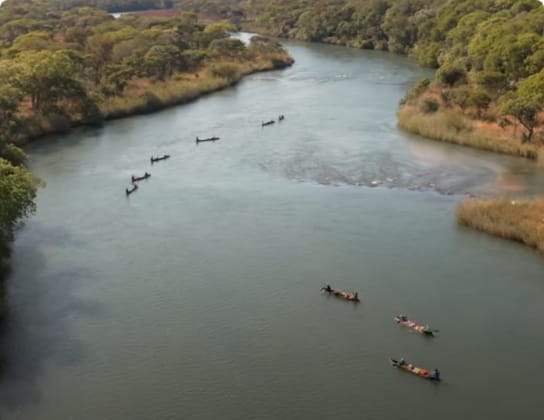
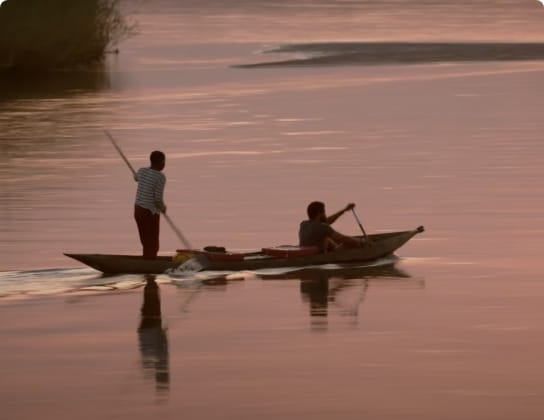
Through the support of Rolex’s Perpetual Planet Initiative, Boyes’ “Great Spine of Africa” expeditions are now probing more than 40,000 kilometers of unexplored river tributaries that are fed by this water tower. His team are making the epic journey via hand-paddled canoes. Distance-wise, it’s equivalent to a journey around the circumference of the planet.
What we are undertaking will be the largest expeditionary mobilization for good in Africa’s history.
The expeditions are physically grueling, involving six to eight hours of paddling a day, in waters teeming with wild animals like hippopotamuses and crocodiles. But this strenuous process is necessary to gather never-before-collected baseline data from Africa’s remote river tributaries.
By collecting this data, Boyes (pictured here, measuring water quality) hopes to build the first comprehensive picture of these rivers’ unique ecosystems. This will help determine the main threats to their survival — and form strategies for how to protect them.
Boyes recruits local fishermen and villagers with experience of the rivers to his expedition teams (pictured here, measuring river flow), forging connections with communities living in these remote areas. The project ultimately aims to empower these communities to restore and preserve the ecosystems on which they depend.
The extreme challenges of these expeditions are worth it, Boyes says, because they’re the only way to accrue crucial information from this vital but under-researched landscape. Once equipped with this baseline data, Boyes can make the case to local governments for protection and preservation that will help keep 400 million people water and food secure.