Meeting the demand for national security
How the Virginia Tech National Security Institute is working to develop security-related technology advancements
By Eric Paterson, Executive Director of the Virginia Tech National Security Institute
August 29, 2024
The intersection of technology and autonomy has the potential to make dreams come true, but it could also enable the stuff of national security nightmares.
If you work in the national security business long enough, you’re bound to hear countless “doomsday” scenarios ranging from uncrewed aerial attacks to remotely guided surface ships sneaking weapons into the harbors of major cities. For decades, these types of horror stories have kept plenty of us up at night, but now they are increasingly shifting into reality, thanks to this crossroads of emerging technology.
For more than a century, we’ve understood how to make machines soar across the sky and traverse below sea level. While these advancements provided the backbone of our security, especially because we had global technological superiority with the first airplane and first nuclear submarine, those advancements also increased our nation’s threat risk. And today, that basic technology is being combined with complex areas such as artificial intelligence, machine learning, data science, sensing and cybersecurity to accelerate threats beyond anything our society has previously seen. From direct attacks on critical infrastructure and our armed forces to clandestine surveillance of a variety of targets, the number of potential vectors and variables is ever expanding.
To counter such diverse potential attacks calls for a pool of expertise that is just as diverse. Protecting against this threat requires talent with an understanding of traditional security platforms and warfare, insights into the breadth of emerging technologies, and the ability to position both within the global context of our defense and intelligence communities.

At the Virginia Tech National Security Institute, this is exactly who we are and exactly the work we do.
We’re bringing together top-tier experts from across the university in our unique facilities and connecting them to mission-focused, real-world research initiatives. We’re working to better understand current threats, identify emerging threats and establish best practices for extinguishing both. And we’re doing this critical work alongside government and industry partners while training undergraduate and graduate students to help secure our nation well into the future.
The Virginia Tech National Security Institute has built deep technical expertise in a number of areas with the flexibility to apply them in ways that match the constantly evolving nature of our threat landscape. Autonomous systems, and the vast emerging technology they encompass, is a cross-cutting theme for our institute, where the research is separated into three divisions: Mission Systems, Intelligent Systems and Spectrum Dominance. Collectively and independently, these researchers are harnessing their expertise to develop successful preemptive actions and countermeasures to potential attacks.
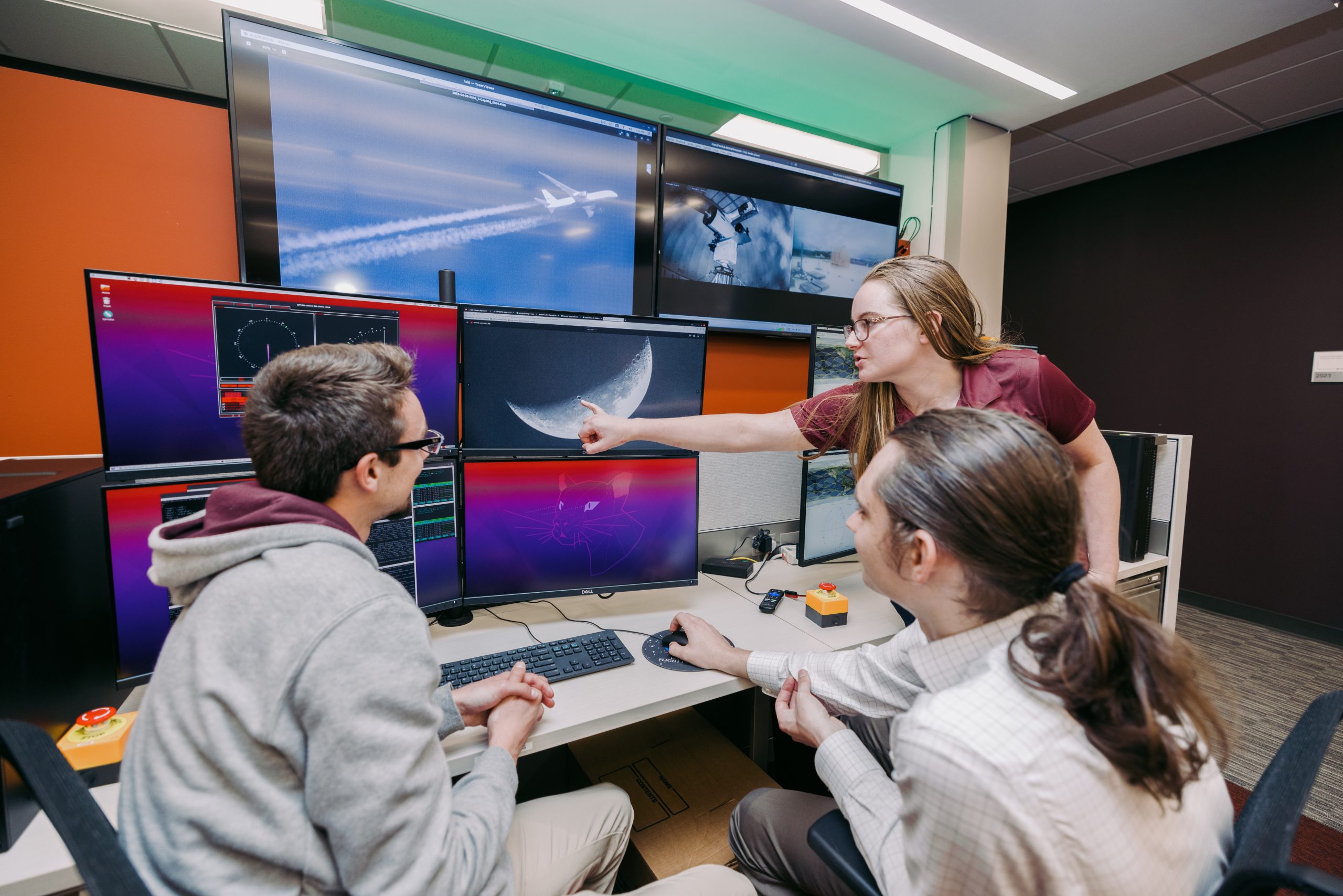
For example, we’re exploring the use of electromagnetic techniques and direct energy to bring down nefarious uncrewed aerial systems (UAS), commonly known as drones. Added to current kinetic methods of shooting down enemy drones, these technologies would greatly increase our defense capabilities against a wide range of new threats while also reaping intelligence-gathering benefits. This work is bolstered by our ongoing collaboration with the Virginia Tech Mid-Atlantic Aviation Partnership, which is an FAA-designated UAS test site, and the accompanying UAS test facilities at the Virginia Tech Drone Park and Kentland Farm in Blacksburg.
Autonomous underwater vehicles is another area where our expertise in emerging technologies is helping our society to become more safe. Through collaboration between our Center for Marine Autonomy and Robotics and sponsors such as the Office of Naval Research and National Science Foundation, we’re working to advance underwater exploration and communication. We’re building teams of underwater robots that work together, communicating acoustically at an extremely low bandwidth, to survey the ocean at rates previously unachievable. Not only will this kind of technology potentially aid defense against bad actors underwater, but it will also help gain a better understanding or natural threats and improve underwater search and rescue missions.
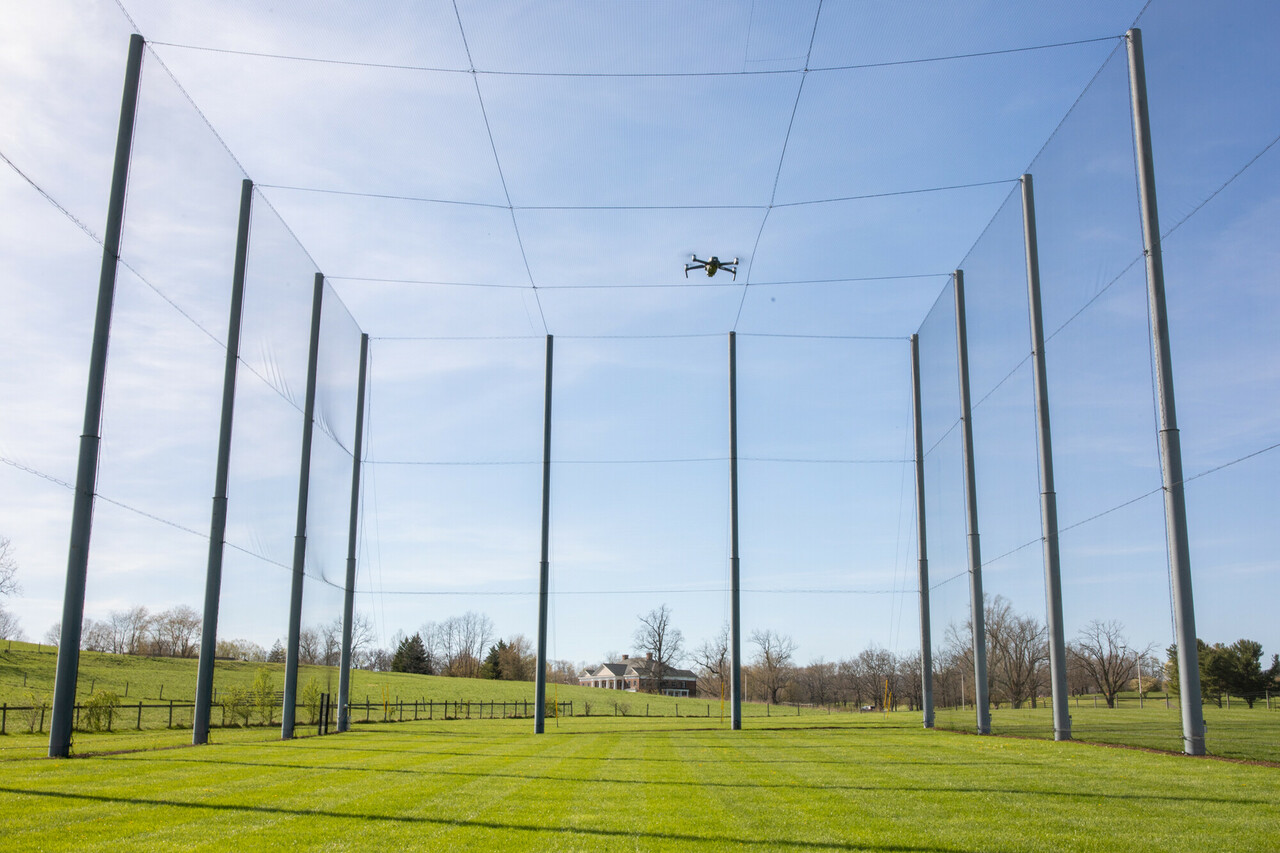
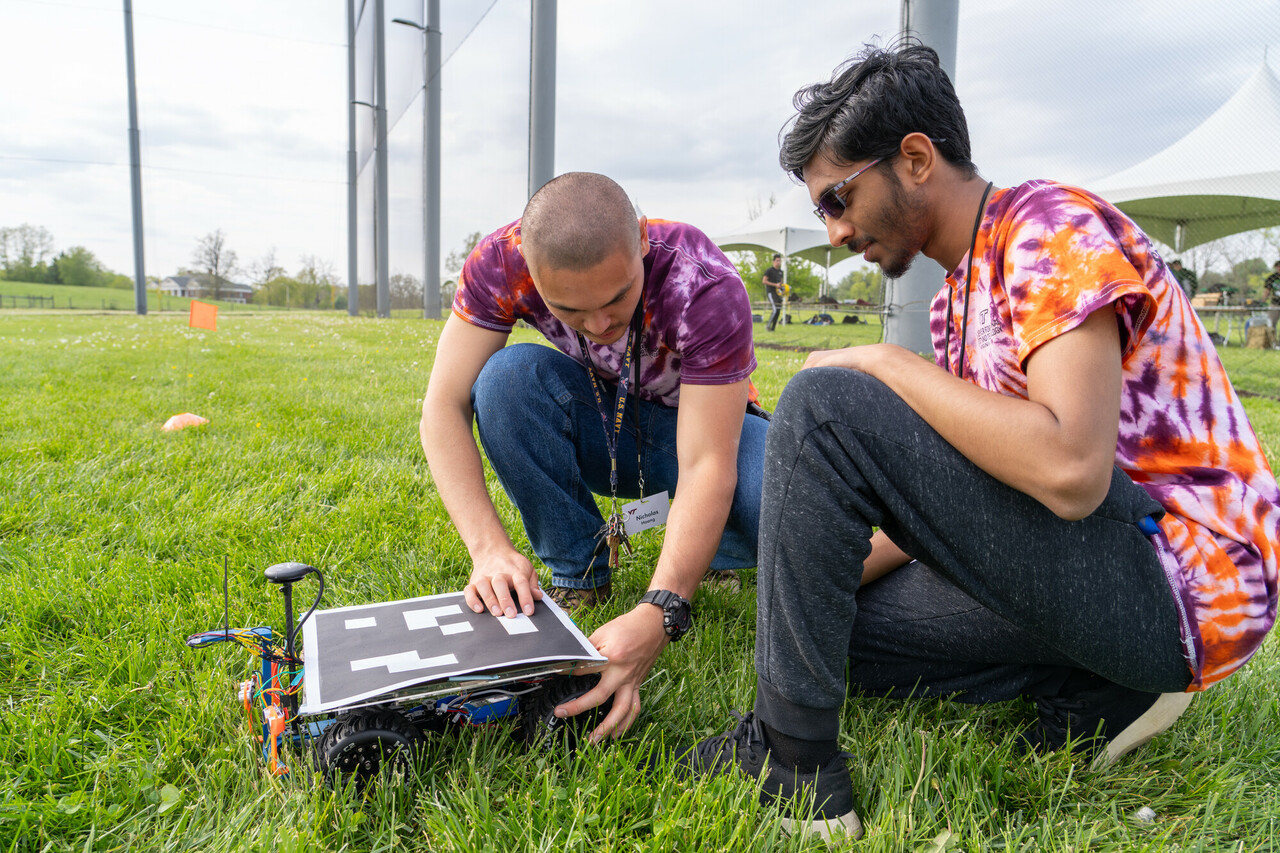
These are just a handful of examples of the type of work that has led the Virginia Tech National Security Institute to receive frequent invitations from government and industry partners to showcase our ecosystem of expertise. We were recently featured at the first AI Expo for National Competitiveness in Washington, D.C., and our facilities were in the spotlight when the Virginia Tech Drone Park hosted the East Coast’s first RTX Autonomous Vehicles Competition this spring. We also often host many of these same partners, such as U.S. Rep. Rob Wittman, who visited this spring, to learn more about how Virginia Tech is leveraging both expertise and facilities to address some of the Department of Defense’s priorities.
As our nation continues to navigate this emerging landscape of autonomous threats, so too will it need to navigate the best technologies and practices by which to counter them. Guided by Virginia Tech’s motto, Ut Prosim (That I May Serve) and built on our vast expertise, unique research facilities and mission-oriented initiatives position our National Security Institute as an ideal partner in this work.
The content is paid for and supplied by advertiser. The Washington Post was not involved in the creation of this content.
Content From
