Your trip, your choice: How Transurban’s Express Lanes strengthen transit
By Transurban North America
March 22, 2024
It’s 1969. Your Dumfries, Virginia home is about to have unprecedented access to Washington, D.C.—a brand-new, first-in-the-nation dedicated busway from your doorstep to your office lobby promising a faster, more reliable commute along the Shirley Memorial Parkway, as I-395 was called then.
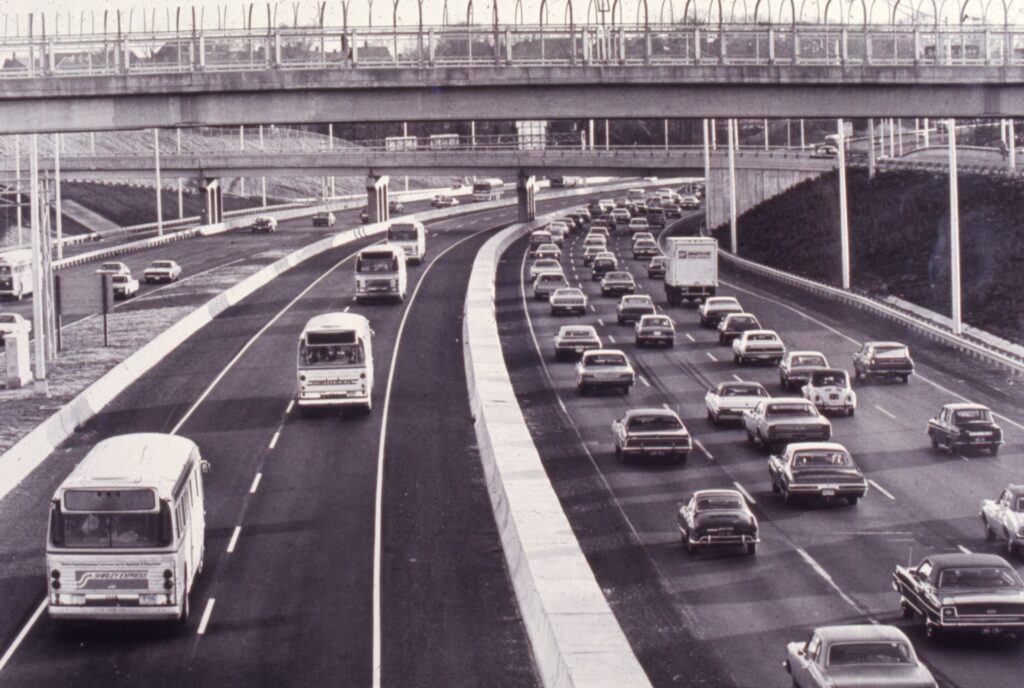
The bus lanes soon welcomed HOV-4 vehicles as well—helping even more people get where they needed to go while encouraging congestion-reducing travel choices. But as the region grew, so did its transportation infrastructure needs.
An early adopter of public-private partnerships across the region, the Commonwealth forged an alliance with Transurban to expand travel options throughout the Capital Region, building the first high-occupancy toll (HOT) lanes in Virginia on I-495 in 2012 and converting the I-95 HOV lanes to add to the network in 2014. Dubbed Express Lanes, these travel options brought cutting-edge technology to trips across the region, keeping travelers moving reliably—and toll-free for HOV-3+ and transit riders.
These options on I-95 and I-495 saved precious time for travelers in the Express Lanes and the general-purpose lanes, reducing congestion through increased capacity and providing a more reliable trip. But I-395 was still plagued with heavy congestion, unreliable travel times and frustrating commutes.
That’s how the 395 Express Lanes were born: expanding the innovative, alternative approach to traditional highway expansion to tackle the ever-increasing problem of gridlock in the nation’s capital. And through all its phases, the corridor has consistently evolved to accommodate the transportation needs of the region—and the 2019 conversion to HOT lanes was no different.
More mobility, stronger communities
To keep to the 395 Express Lanes’ multimodal roots, Transurban teamed up with the Northern Virginia Transportation Commission (NVTC) to use a portion of the roadway’s annual revenue to fund transit projects throughout the I-95/I-395 corridor every year through 2087—bringing more than $2.6 billion in economy-boosting, community-connecting travel options for the duration of the 395 Express Lanes’ contract with the Commonwealth.
In January, Transurban celebrated its fifth payment—this year of $16.5 million—to NVTC’s Commuter Choice Program, which allocates the funds to light rail, commuter rail, bus routes, park and ride lots, and more from Arlington to Stafford and back again.
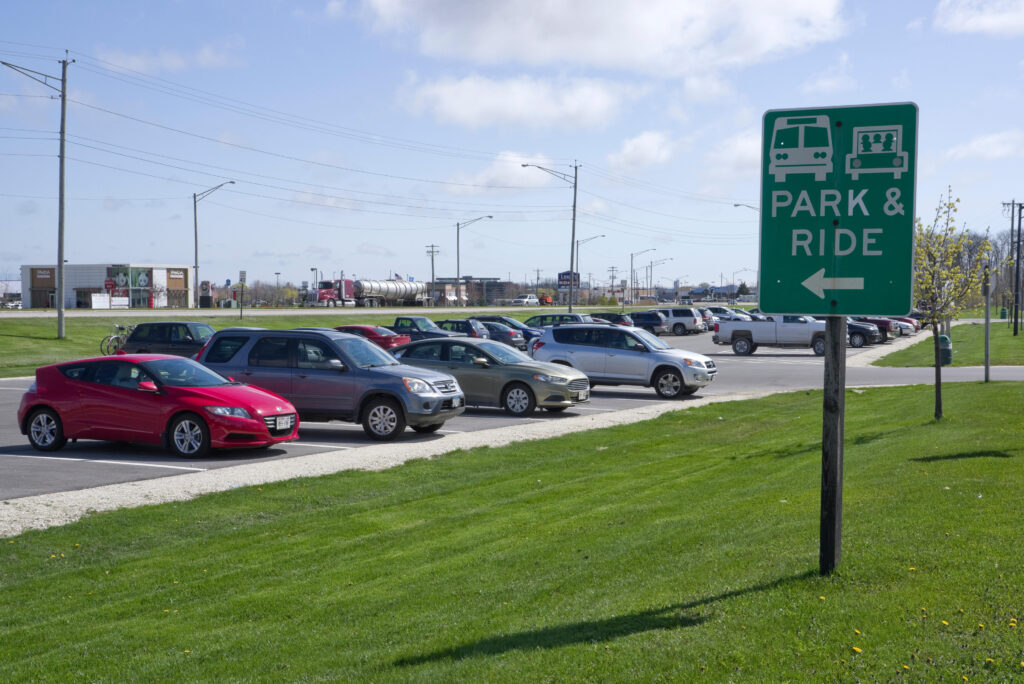
“The I-395 Commuter Choice program has been an innovative extension of NVTC’s mission to advance a robust and reliable public transit network to support communities in Northern Virginia. As NVTC celebrates its 60th anniversary we reflect on the ways we and our partners help improve travel through our congested region, including the support we receive from Transurban for projects that save I-395 and I-95 commuters time and money,” said Kate Mattice, Executive Director of NVTC. “Choices in mobility keep people and goods moving—boosting economies and connecting communities.”
Saving time, money and the planet
The Express Lanes offer a choice for faster, more reliable travel by car—but that’s only part of the region’s traffic answer. In all its forms, transit plays a vital role in solving the puzzle of traffic congestion.
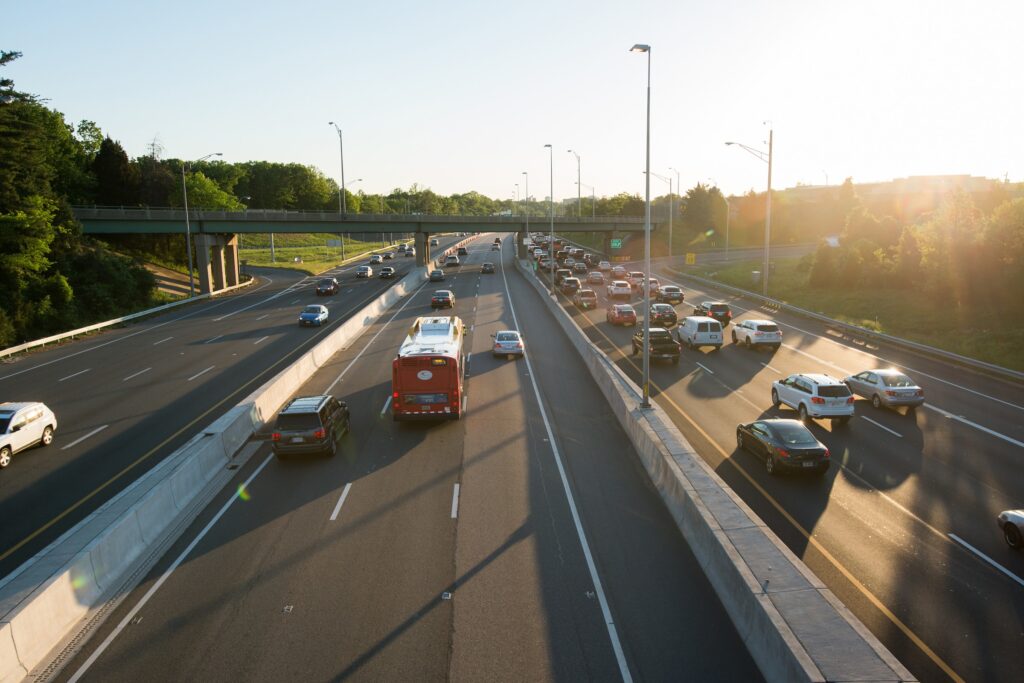
“In an area known for some of the worst congestion in the U.S., transit isn’t just an option—it’s a necessity. The more accessible, convenient and varied mobility options are for Northern Virginia residents, the easier people can get where they want to go quickly and safely,” said Perrin Palistrant, Director of Planning and Service Delivery at OmniRide—one of many recipients of Commuter Choice funding, operating commuter bus lines throughout the region.
Because of Transurban’s investments since 2019, commuters have made billions of trips using public transit—saving time and money along the way. Travelers choosing a bus route or rail line have cumulatively saved 370,000 hours of their time and $5 million in fuel cost savings—not to mention other vehicle expenses. Reducing the cost and time barriers to mobility means greater transportation equity in Northern Virginia.
Multimodality is also a key factor in environmental stewardship and sustainability. Through these investments over the past four years, 35 million vehicle miles were saved—enabling a 69 percent decrease in greenhouse gas emissions versus single-occupancy trips on the 95/395 Express Lanes corridor.
Every ride is a neighborhood investment
More than concrete and steel solutions, investment in all ways people can travel throughout Northern Virginia is vital to continued regional success. Regionally, Northern Virginia transit agencies see 1.5 million weekly riders—people who get to work, visit friends and family, and run errands using the region’s 251 public transportation routes.
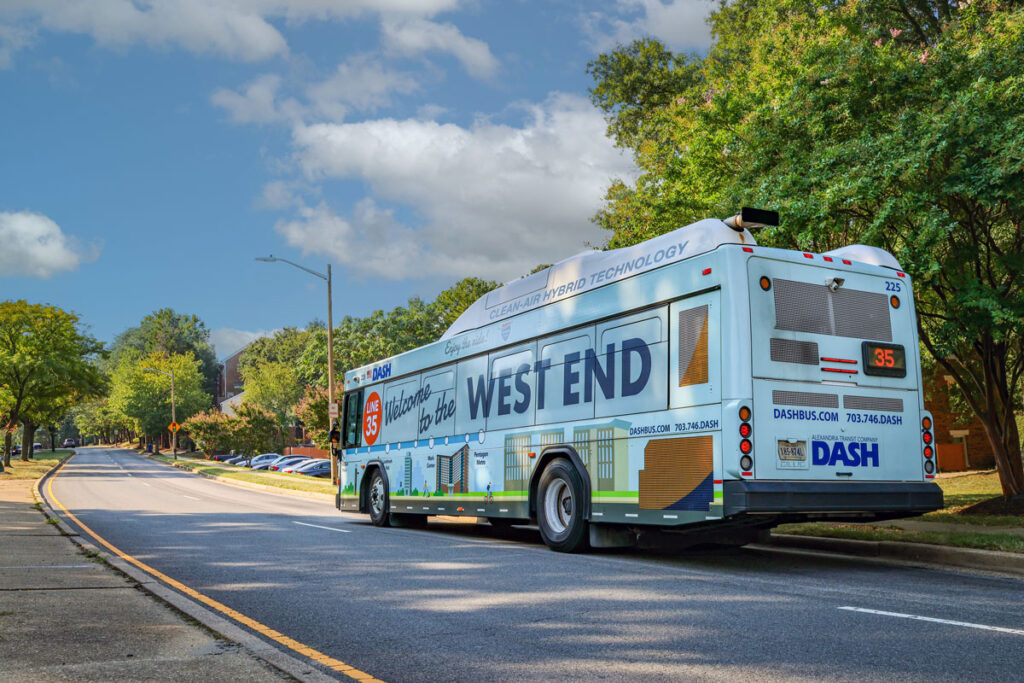
Thanks to the public-private partnership that enabled the 395 Express Lanes and its involvement in NVTC’s Commuter Choice Program, Transurban’s investments have contributed to that economic success brought on by transit—generating $10 million in economic benefit from reduced travel delay since the Program’s inception.
“Transurban’s goal—no matter the mode—is to get people where they need to go faster, safer and more reliably. Transit options are a big part of the mobility puzzle, offering more choices for travel throughout the region,” said Beau Memory, President of Transurban North America. “Economies, communities and families depend on reliably getting from point A to point B. The more choices we can provide to improve mobility will promote economic investment throughout Northern Virginia, bringing the benefit of faster, more reliable travel along the Main Street of the East Coast.”
These wide-ranging impacts aren’t achieved alone. With a bold vision, strong partnership and unwavering commitment, Transurban’s collaboration with Virginia, NVTC and transit operators have amplified the benefits of multimodality. Providing dependable and dedicated transit funding through the public-private partnership will continue to deliver mobility solutions for decades to come.
Read more about Transurban’s local transit investments
The content is paid for and supplied by advertiser. The Washington Post newsroom was not involved in the creation of this content.
Content From
