American University builds bridges through civic discourse
The Civic Life Initiative fosters respectful dialogue on today’s key issues
By Mike Unger, on behalf of American University
April 14, 2025
Civil discourse might not be the phrase that first comes to mind when most people think about Washington these days, but there’s one place in the nation’s capital where it is a daily practice: American University.
When Jonathan Alger became the 16th president of AU in July 2024, he brought with him a deep commitment to the importance of civic dialogue on college campuses. The immediate and timely result of that belief is The Civic Life, a new university-wide initiative that promotes civic engagement through events, research and learning opportunities.
“Civic education and engagement are essential for a strong and sustainable democracy,” he said during his inaugural address in March. “They require skills such as critical thinking, communications, teamwork, leadership, information and data literacy, ethical reasoning and problem solving that are also essential for success in all kinds of careers.”
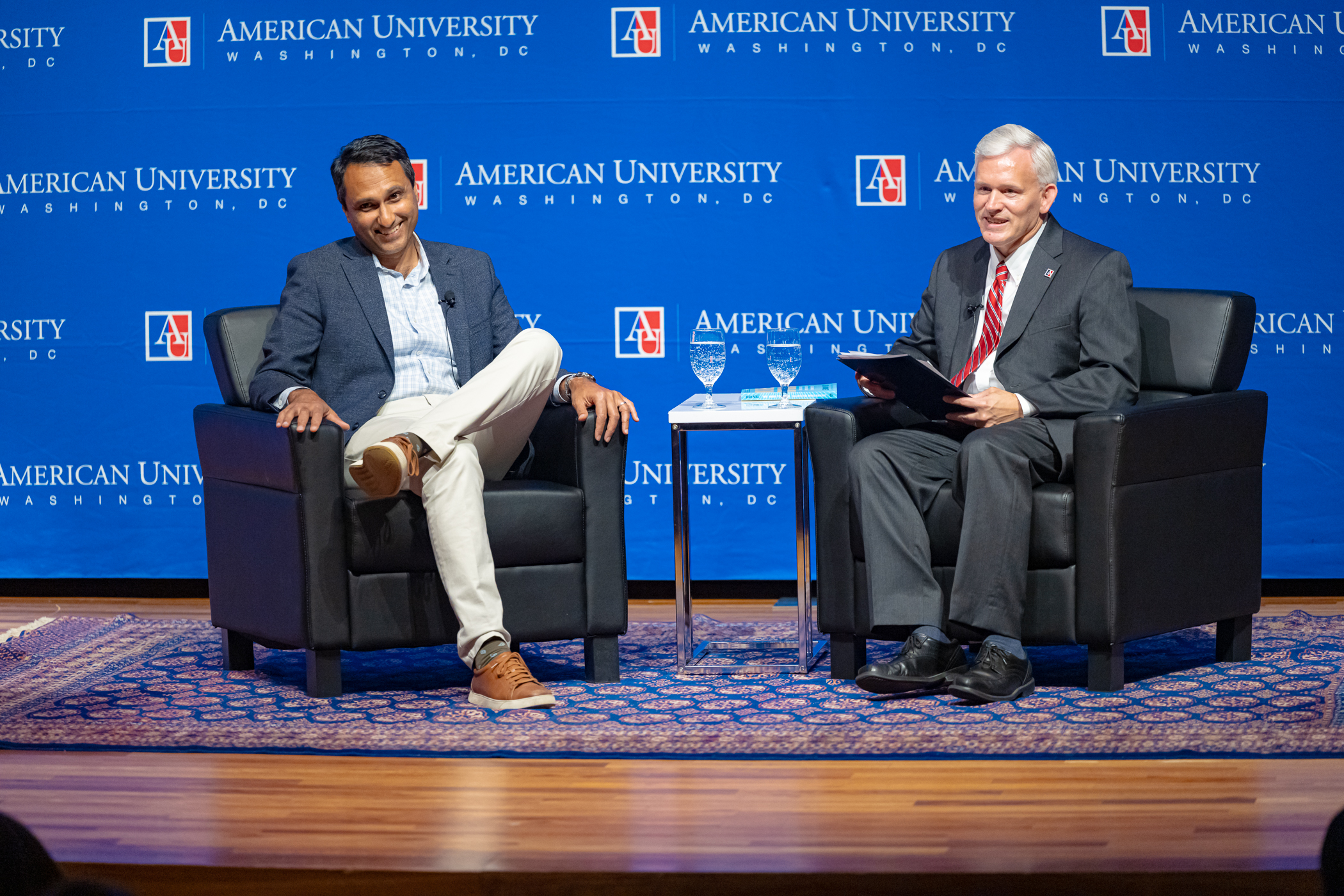
The initiative includes, among other things, a presidential speaker series (Eboo Patel, the founder and president of Interfaith America, was the first, later joined by Representative Sarah McBride and American Enterprise Institute scholar Yuval Levin, both AU alumni), classes and a series of community seminars facilitated by small teams of faculty and student fellows. The seminars explore significant areas of disagreement in today’s environment, such as cancel culture and the use of artificial intelligence in classes.
Thomas Merrill, an associate professor of government and chair of the Civic Life steering committee, said, “This is not a debate. We see this as an opportunity to give members of the community practice in working through a question from different points of view in a productive way, not a destructive or angry way.”
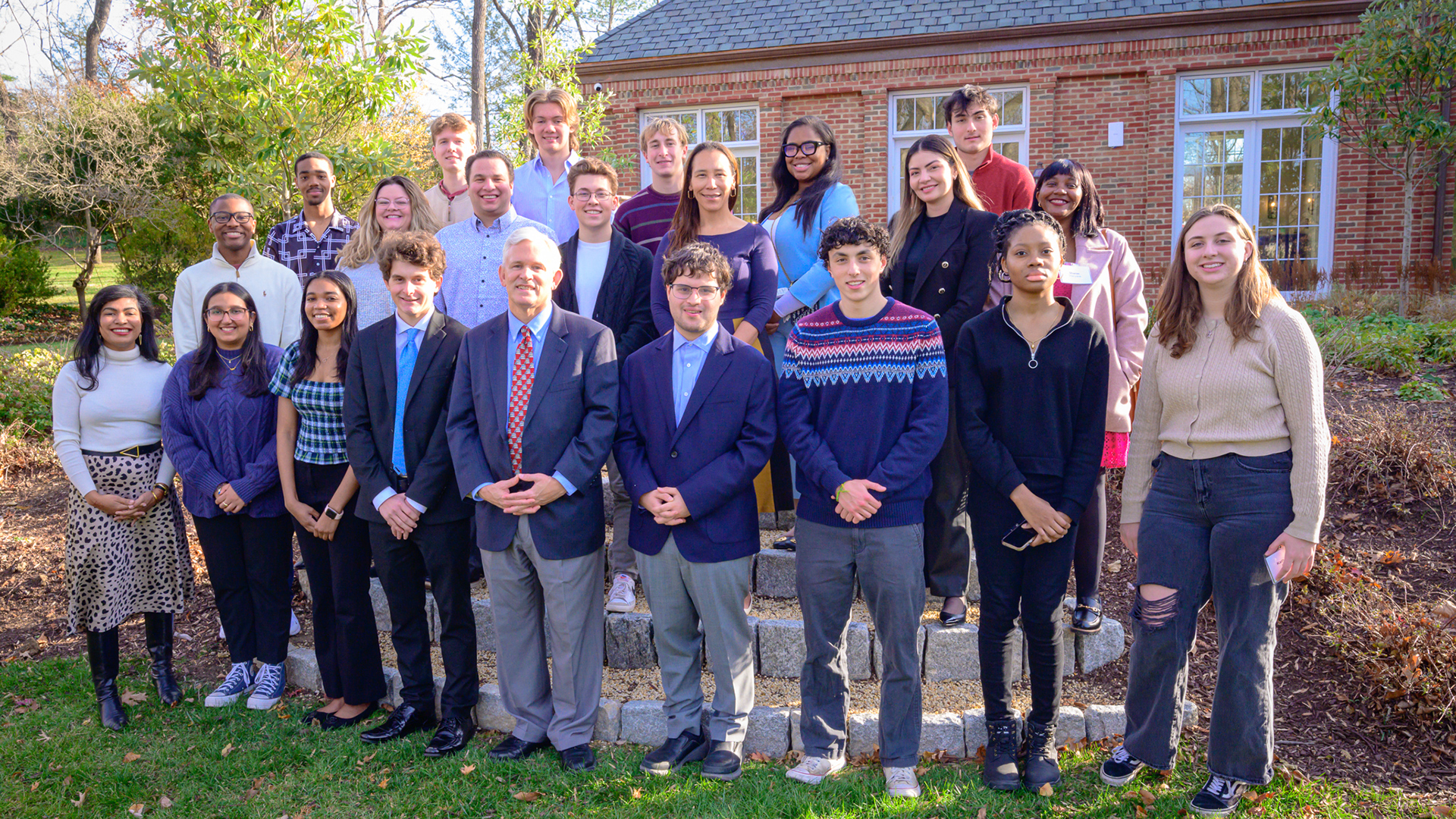
The original cohort of 34 Civic Life student fellows took two weeks of classes in preparation for their participation in the project. Samuel Gilio was among them. A sophomore majoring in political science, he’s from Emmaus, Pennsylvania.
“I believe in the principle that you don’t really grow unless you make yourself uncomfortable,” Gilio said. “When The Civic Life Initiative came around, I thought, ‘Wow, what a great opportunity for me to get involved in promoting something that is so important to me.’”
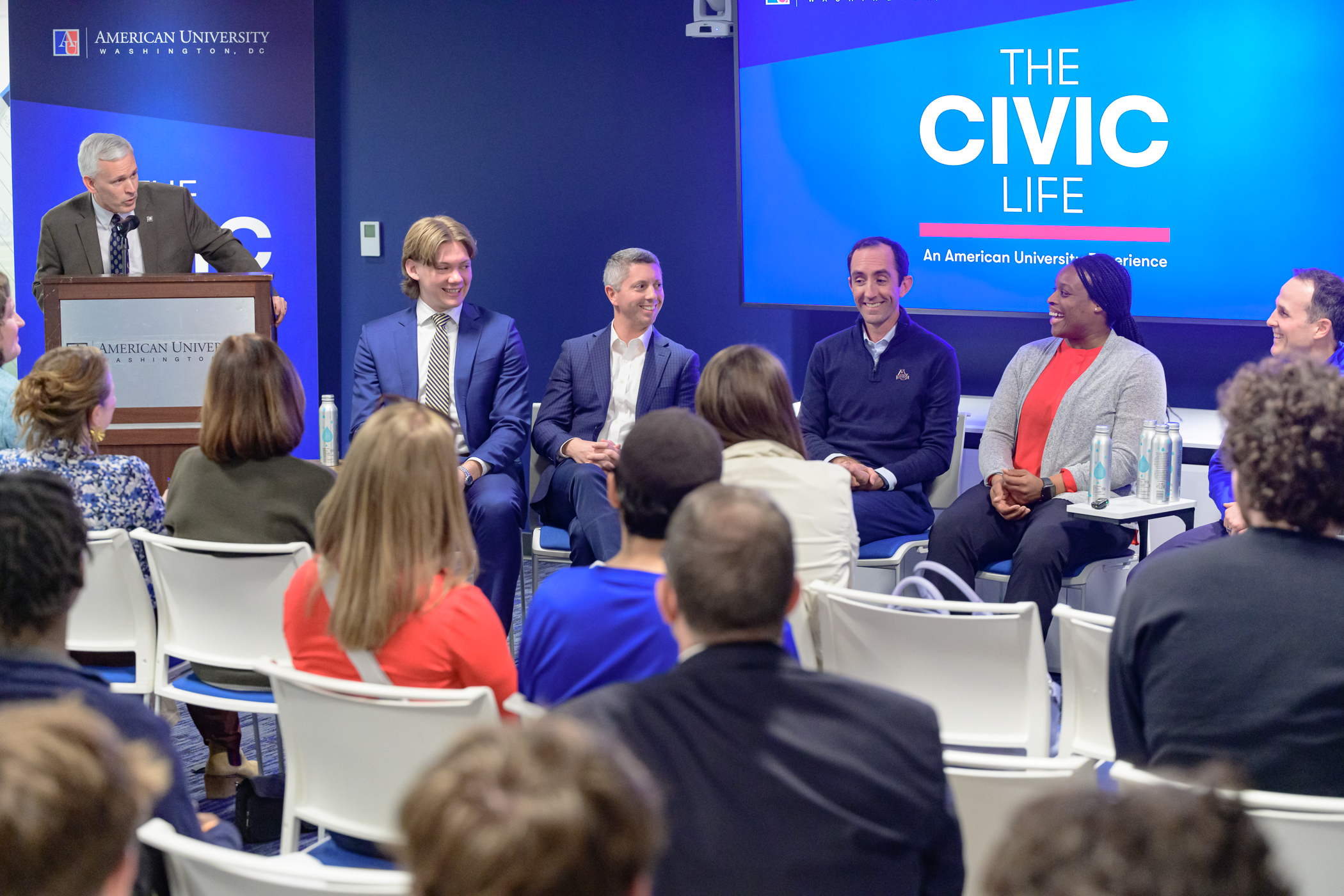
Gilio served as a moderator on a panel that explored how athletics can intersect with civil discourse. The speakers included AU Director of Athletics and Recreation JM Caparro, track and field coach Sean Graham, wrestling coach Jason Borrelli and women’s soccer coach Marsha Harper. Through that experience and others in the initiative, he believes that AU’s campus has become more welcoming of people’s viewpoints across the ideological spectrum.
“The Civic Life Initiative, for me, represents exactly the kind of change that I want to see, which is the creation of an environment where we can have productive, thoughtful, respectful dialogues with people whom we disagree with but want to learn from,” he said. “I was happy with how many people, both faculty and students, seem to share the passion for civic discourse and civic dialogue.”
Claire McCafferty agrees. The junior, who is double majoring in political science and philosophy, was drawn to apply to the program because she admires its mission. Her seminar focused on striving for deeper understanding even while discussing differing viewpoints. Among the issues discussed were abortion and the Israel-Hamas war.
“I’ve really learned a lot about hearing other perspectives, sitting with them and understanding them deeply,” she said. “Being around so many motivated people who want to have those difficult conversations and are really passionate about democracy, even though they don’t see the same issues the same way, has been really inspiring. We could go for so long not talking about anything that’s going on politically and allow the political state of the world to kind of barrel us over. But being an active part of that, while it’s painful and feels tough a lot of the time, is a really important thing.”
Cady Borum is an associate professor in American University’s School of Communication and executive director of the Center for Media and Social Impact. Her work, both in academia and the private sector, has met at the intersection of media and social good, which is why she became one of the Civic Life’s six faculty fellows. She’s worked with students planning seminars and has come away impressed.
“Academic institutions are the perfect places for us to experiment with finding our voices as citizens and hearing our students’ voices from lots of different walks of life,” she says. “One of the things that I love the most about American University is that our students are so civically engaged. They’re politically savvy and astute. One of the big reasons that students come to AU is because they want to be engaged in civic and social and political issues. They want to dig in.”
The ultimate goal of The Civic Life Initiative, Merrill says, is to create a culture in which people feel more comfortable talking about difficult things without feeling judged.
“We’re trying to lower the temperature in terms of talking about some difficult topics because we think that that’s going to make it easier for people to think things through,” he said. “It’s going to make people happier to be in the community no matter what their opinions are, which is an important thing. But it’s also easier for people to find some kind of common ground or recognize, ‘Hey, I might actually have more in common with the person I’m disagreeing with than I realized.’”
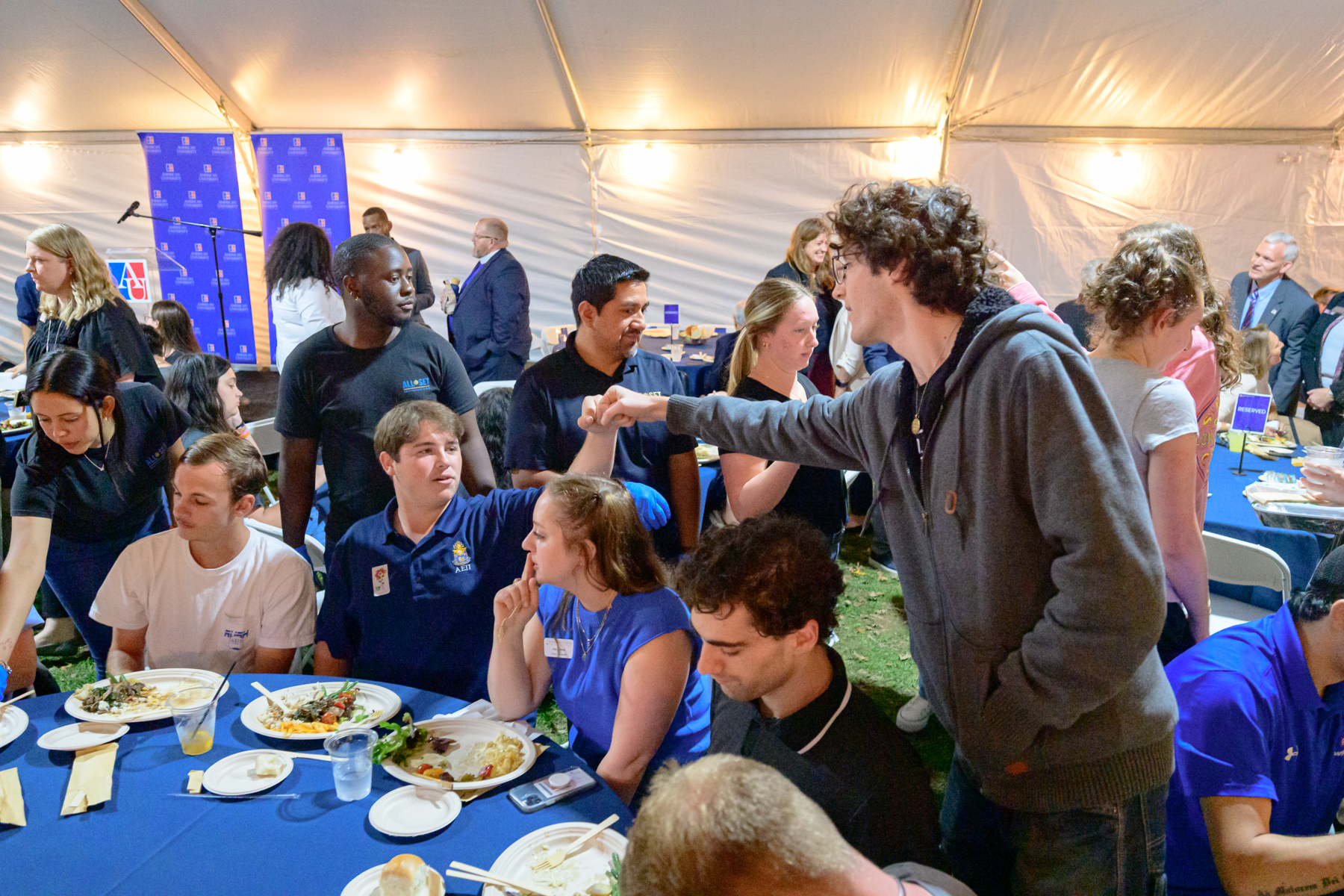
To create more opportunities for connection across the AU community, President Alger introduced Unity Meals, an invitation to everyone from campus to come together as one and break bread. The first drew 300 people on the one-year anniversary of Hamas’ Oct. 7 attack on Israel; subsequent meals took place the day after the presidential election and the day after the inauguration.
“Food is—and has always been—a great uniter,” he said at the first event. “I’ve learned one of AU’s greatest strengths is that we are a community made up of many different backgrounds, lived experiences, perspectives, opinions and ideas. But that strength needs to be thoughtfully nurtured with intentional efforts to get to know one another. In other words, to listen and to learn.”
In his inaugural address, President Alger quoted Supreme Court Justice Lewis Powell Jr., who said, “It is not too much to say that the nation’s future depends upon leaders trained through wide exposure to the ideas and mores of students as diverse as this nation of many peoples.”
Today, that future is being forged through The Civic Life Initiative at American University.
The content is paid for and supplied by advertiser. The Washington Post was not involved in the creation of this content.
CONTENT FROM
