Cloud, digital transformation hold key to sustainable business
Here’s how technology innovation can help companies across all industries reduce their carbon footprint and operate more sustainably
By WP Creative Group
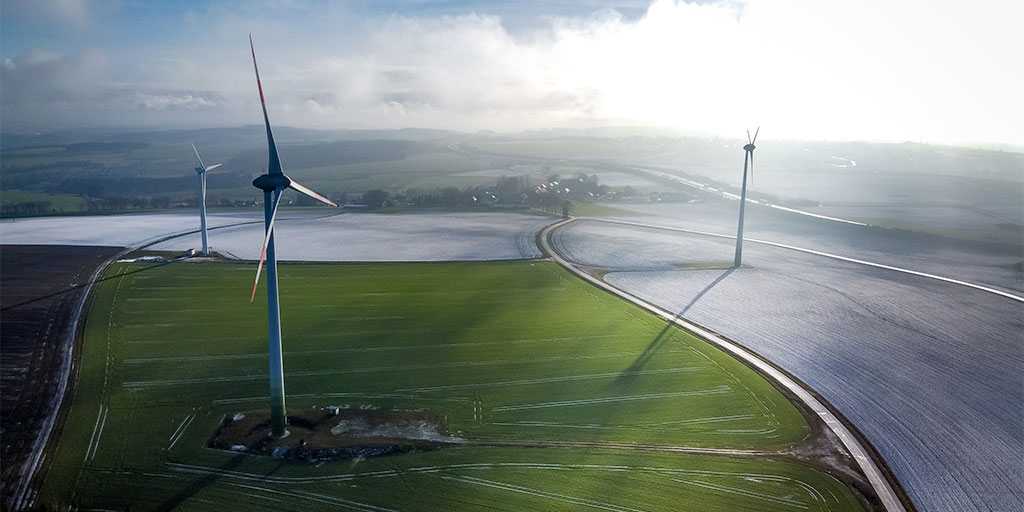
Businesses are facing increasing pressure from regulators, shareholders, customers and employees to operate more sustainably, and are turning to technology and digital transformation to enable innovative ways of reducing their carbon footprint. “We’re seeing our customers in every industry and region telling us that sustainability is a top priority,” said Christopher Wellise, director of worldwide sustainability at Amazon Web Services, adding that it’s now rare for customers of the cloud computing giant to “not want to talk to us about sustainability.”
Beyond wanting to do right by their stakeholders, companies are also motivated by the fact that they are beginning to see the impact of climate change on their own operations. Extreme weather can threaten supply chains and other operations, Wellise said, in a video presentation at a recent Washington Post Live event.
Indeed, 67 percent of business leaders say their organizations plan to achieve net-zero emissions by 2030, according to a recent survey. But having a goal is one thing, achieving it is another. Less than half of those surveyed have yet to take “needle moving” climate actions. The good news is that breakthroughs in business technology should make it simpler and more cost effective for large enterprises to meaningfully reduce their carbon footprint going forward. “The low hanging fruit is the opportunity that the cloud offers our customers,” said Wellise.

The wisdom of the cloud
Moving corporate computing functions from on-premises servers to cloud-based AWS systems can lead to energy efficiency gains of up to five times, and a reduction in workload carbon footprint by nearly 80 percent and up to 96 percent once AWS is powered with 100 percent renewable energy—which it is on pace to meet by 2025. Those gains come in the form of greater capacity utilization, services that can be turned on and off as needed, and the fact that cloud providers like AWS typically use the most state-of-the-art, energy efficient systems and infrastructure. In a further nod to sustainability, an Amazon official said during a February call with analysts that AWS would reduce e-waste by extending the life of the servers powering its cloud systems from four years to five, and networking equipment from five years to six.
But moving to the cloud is just the beginning. By tapping breakthroughs in areas like artificial intelligence, machine learning and predictive analytics, all of which can run natively in the cloud, organizations can take sustainability efforts to the next level. “When you go beyond just that migration opportunity, the other opportunity is the power that our services and the cloud offer our customers around innovation,” Wellise said, noting several examples:
- GE Renewable Energy is using AWS cloud technology to create digital twins of its wind turbines. These models help the company’s engineers and field technicians optimize operations for a variety of real-world weather conditions, allowing the turbines to increase output of reliable wind energy.
- Volkswagen has created an AWS industrial cloud that collects and analyzes data from all of the company’s machines, plants and systems. Among other benefits, this improves production efficiencies and provides real-time status of overall equipment effectiveness on the company’s cylinder production line–increasing efficiencies by 30 percent while eliminating wasteful practices.
- CropX has developed an AWS-based sensor network for soil and fields that lets farmers reduce water use by up to 40 percent while increasing crop yields by 10 percent. This is critical as the planet enters an era of more frequent droughts even as the world’s population is on track to increase from about 8 billion today to almost 10 billion in 2050.

“It’s really this combination of digital transformation and sustainability-related transformation, and the lines are becoming blurred,” said Wellise, speaking at the AWS-sponsored WP Live event. “At the core of both is the need for data and data insights. That drives what our customers are seeking to do from a digital transformation perspective as well as helping them to become more sustainable.”
It’s early days for enterprises in terms of how they view their roles and responsibilities when it comes to reducing carbon footprints and tackling climate change, but Wellise said he expects progress on these fronts to accelerate. “We really are just beginning to understand the challenges that things like climate change present,” he said. “What excites me are the abilities and insights that customers are now able to gain through the use of technology to improve things like circularity, improving energy efficiency and also how they are consuming energy.”
Click here for more information about how technology can help businesses operate more sustainability.
The content is paid for and supplied by advertiser. The Washington Post newsroom was not involved in the creation of this content.
Content From