Expanding the possibilities of space-based intelligence
How AI-powered software is delivering fast and actionable data when it counts
By WP Creative Group
April 12, 2024
When it comes to matters of intelligence, the stakes are high. As malicious activity becomes more sophisticated — from security issues that can disrupt global supply chains to national security threats — governments and other organizations need sophisticated methods of monitoring operations for potential challenges.
Better yet, they should be able to anticipate issues and even deter attacks before they happen. This requires access to real-time intelligence that can offer fast, actionable insights.
In 1960, the United States took its first successful images from space and unlocked something big: the ability to know exactly what’s going on a lot sooner than previously possible. Overhead observation informed vital government decision making, but this era of static mapping was slow, needs were served by a limited number of satellites, and imagery could be weeks or months old.

Today, commercial space-based intelligence firms like BlackSky collect high volumes of complex data and rely on AI-powered software to quickly digest that data and predict what’s coming so action can be taken in time.
BlackSky is building a new paradigm in how government agencies and corporations can use intelligence to monitor activities and make confident decisions based on specific insights. This shift is far-reaching, and new technological advances are changing expectations surrounding space-based intelligence, and the accessibility of the field.
In turn, this is disrupting how the entire industry works — and we’re only at the beginning.
The need for actionable insights — fast
As security threats become more advanced, the need for real-time geospatial intelligence becomes increasingly urgent. To meet this growing demand, commercial providers are changing the way traditional business models operate, and how the international market is adopting space-based intelligence.
BlackSky has accelerated a client’s ability to receive actionable insights from years to days. By leveraging BlackSky’s existing commercial satellite and analysis capabilities instead of attempting to build their own, clients can access information much faster and for a lower cost.
“[Organizations] can now be in the space intelligence business within hours and days.”
– Brian O’Toole, CEO of BlackSky
Space-based intelligence provides a major strategic advantage for countries defending their borders, and for businesses that need to understand if current events might affect their operations.
“This is game-changing for even a very small country that didn’t even have a space program a few years ago,” said Brian O’Toole, CEO of BlackSky. “There’s a rapid adoption curve for organizations looking to get into the game quickly. They can now be in the space intelligence business within hours and days.”

BlackSky can capture dawn-to-dusk imagery and provide insights on activity that no one else sees. The data is granular: It can detect buildings, vessels and aircrafts. It can also measure the speed and heading of moving objects, and track activity at ports, airfields and border crossings.
Implementing space-based intelligence is prohibitively expensive for many countries, and getting a program up and running can be a lengthy process. Countries that could afford an overhead monitoring program might spend three to five years developing it, and then decades fine-tuning its capabilities.
“For the longest time, it was an advantage disproportionately used by state governments to acquire knowledge, enable action or deter aggression before it happened,” said Sue Gordon, a career intelligence officer and the former Principal Deputy Director for the Office of the Director of National Intelligence.
However, because BlackSky’s adoption model is subscription based, customers get immediate scalability. Additionally, the cost is much cheaper than if customers attempted to develop these products themselves due to the existing architectures in place and shorter procurement cycles.
Space-based intelligence is software first
As it’s become easier for governments and other organizations to collect an immense amount of data, the challenge lies in managing it, and being able to process millions of observations of activities around the world on a daily basis.
“It’s not just being able to see; it’s being able to see and understand so you can be the first to act.”
– Brian O’Toole, CEO of BlackSky
“The volume and speed of the data is outperforming the ability of the end users to deal with it,” said O’Toole. “Software and AI-enabled software is the key to the future.”
Because the volume of data has outpaced traditional systems’ ability to keep up, BlackSky has tapped into the power of AI, which enables it to scale and grow its space-based capabilities.
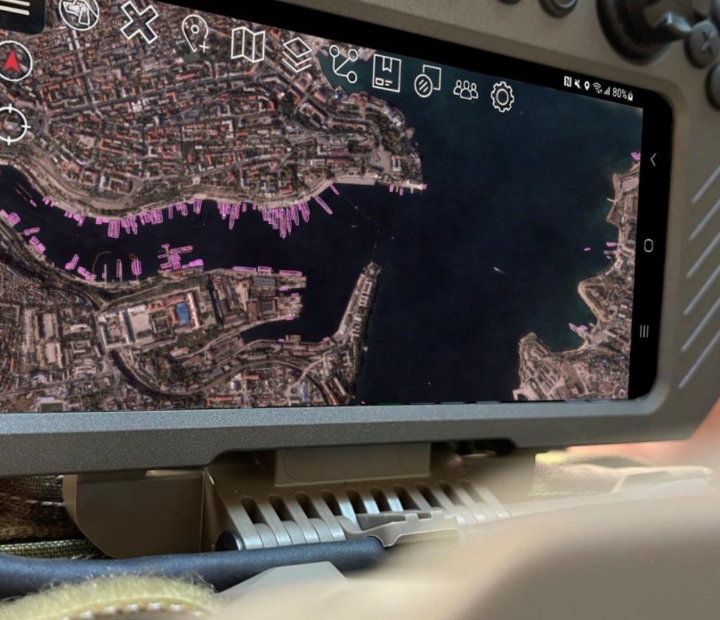
BlackSky’s AI-powered software analyzes data in two ways. First, the technology can process any number of data sources, including multiple types of satellite data, ground sensors, OSINT or news and media sources to automatically collect relevant information and get it into the hands of those who need it.
Secondly, BlackSky’s AI-powered software helps analyze the data itself. Instead of having humans look at pictures, which is time-consuming and tedious, AI can quickly analyze the images and determine what type of ship or aircraft is in the shot, or how many cars are lined up at a border.
“It’s not just being able to see; it’s being able to see and understand so you can be the first to act,” said O’Toole. BlackSky’s platform provides detailed insights in an easily digestible dashboard where users can apply the intelligence that’s been collected to different sets of problems based on their needs.
Today’s space-based intelligence software offers dynamic monitoring from above that’s both customizable and accessible. As a growing number of countries are looking at space as a strategic area of investment, the industry is drawing higher budgets.

Launching at will
To collect the robust amounts of data that can inform decisions, satellites must be launched on demand. Government launches are notoriously time-consuming, and many organizations are on a long schedule. That’s a huge problem. The need for real-time data can only be obtained by having the ability to put satellites into orbit at will. This is made possible by leveraging commercial companies, where the launch process can be sped up from many years to a few days, and governments can gain creativity, agility and flexibility in addition to strategic advantage.
“You see such innovation and pace from commercial companies because we’re all competing with each other to be the winner.”
– Peter Beck, founder and CEO of Rocket Lab
Launch service providers like Rocket Lab, one of BlackSky’s partners, are driven by innovation — both to serve its customers and to ensure the business survives in a competitive industry.
“Whereas if you are a pseudo government organization or cost-plus contractor, there’s no incentive to innovate from a commercial standpoint,” says founder and CEO of Rocket Lab, Peter Beck. “You see such innovation and pace from commercial companies because we’re all competing with each other to be the winner.”
Rocket Lab has launched six satellites for BlackSky — all on the customer’s timeline. When fighting began in Ukraine, BlackSky was able to adjust its flight path in less than a month — an unprecedented timeline in the space world. Prior to that, the company was able to launch six satellites in three launches in just three weeks.
“When the customer is ready to fly, we are ready to fly,” said Beck. “When the customer wants to go to a particular destination, that’s exactly where we go.”
According to Gordon, this combination of commercial launch services and spacecraft availability creates the powerful opportunity “to launch on demand in response to crisis” and other unexpected challenges.
Expanding spatial capabilities
In the early days of the internet, the ride-share and food delivery apps we use today weren’t even a glimmer on the horizon. The same thing is true for space: the possibilities in this realm are likely far bigger and more life-altering than we can even imagine today.
Geospatial intelligence is still in those early days, but we’re already seeing what the rise of commercial innovation can do in a quickly expanding market. Technological advances, AI-powered analytics and increased competition drive capabilities forward in the national security realm, offering the international community capabilities that are similar to that of a great power and creating new insights and new markets for the civilian community.
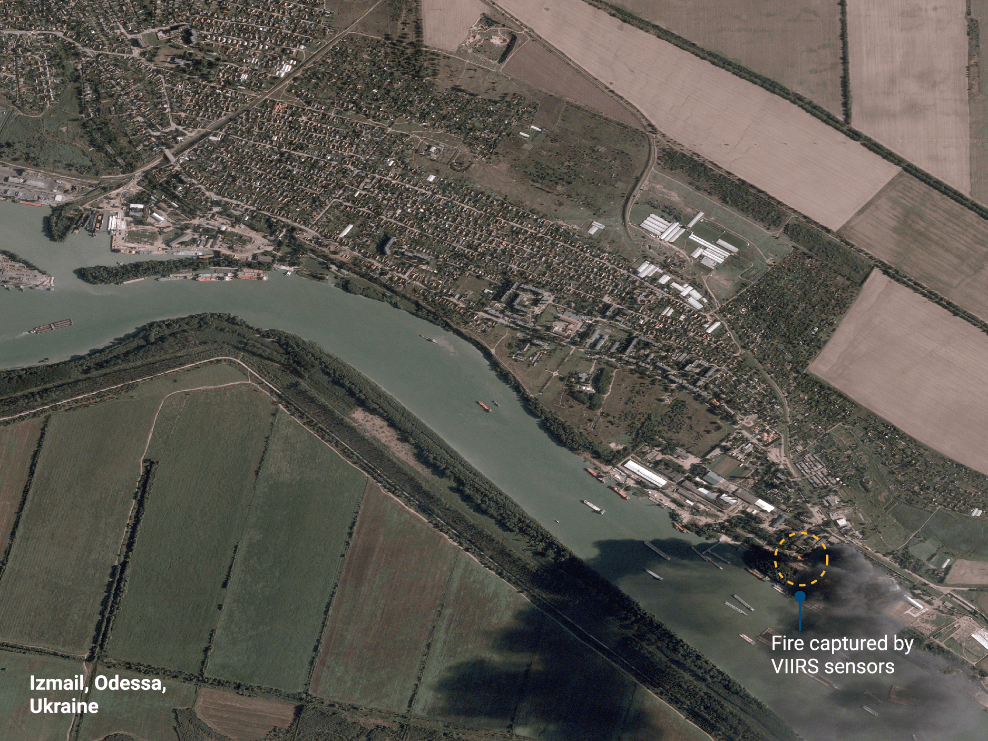
“Imagine what kind of applications are going to be developed when thousands of sensors are looking at Earth in real time, and what developers can do with that capability for supply chain intelligence and navigation and mapping,” said O’Toole. “The volume of data and the breadth of data of what’s happening around the world is going to change all kinds of industries.”
Gordon says she sees the potential for space-based intelligence to expand beyond traditional intelligence to other dimensions of national economic security like assessing the impact of climate changes and events, and buttressing economic activities “with the ability to continuously collect data and return it in an operationally useful timeframe.”
Real-time space based intelligence allows organizations to not only act fast, but act first and make decisions based on solid information. As threats continue to get increasingly sophisticated, BlackSky is defining the pace and providing industry-leading solutions that drive the market forward.
Learn more about how BlackSky takes a smarter approach to space