Local seafood, authentic ramen and craft cocktails
One day in D.C. with chef Tobias Dorzon

By WP BrandStudio
Washington, D.C. is brimming with culture. There’s a thriving live music scene, nationally recognized cuisine and a community of inventive artists. The hardest part for a visitor is deciding where to start. In this series, inspired by the idea to Discover the Real D.C., washington.org and WPBrandStudio will profile some of the capital’s coolest locals across three creative industries, taking tips on how they spend a day in the city. This is #MyDCcool.
Former pro-football player Tobias Dorzon is bringing his own flare to the D.C. cooking scene; in lieu of non-slip kitchen shoes and puffy hats, he opts for high-end sneakers from DTLR, shiny jewelry and t-shirts from clothing designers he considers friends—even when he’s in the kitchen. Not exactly standard, but that’s the point.
“I do things in my own lane, my own way,” he says.
He also does D.C. his own way. As a culinary pro, he knows which restaurants are truly good. And as a D.C.-area native, he’s deeply plugged into the scene— Dorzon went to high school with people behind some of the city’s best dining and nightlife spots, which he often frequents.
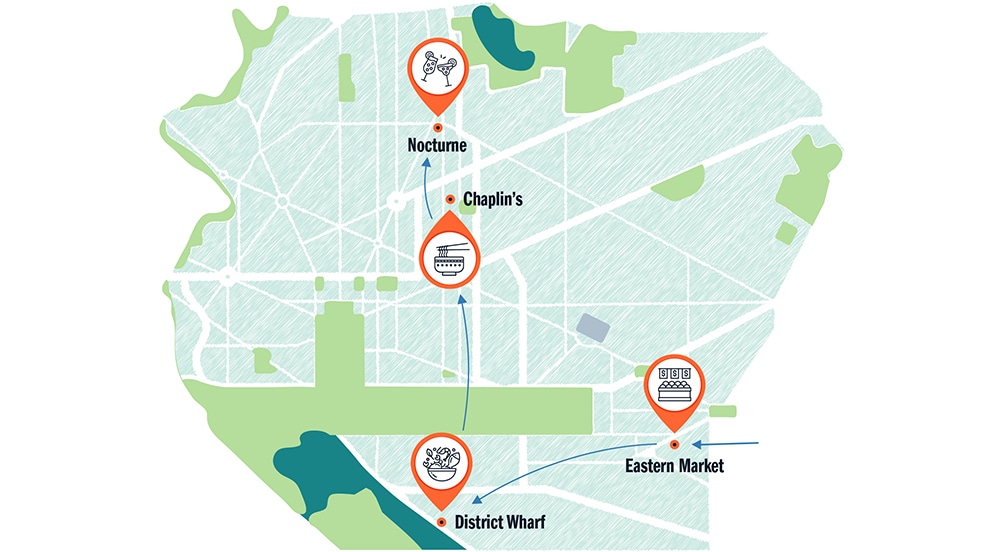
Here’s how Tobias does a day in DC.
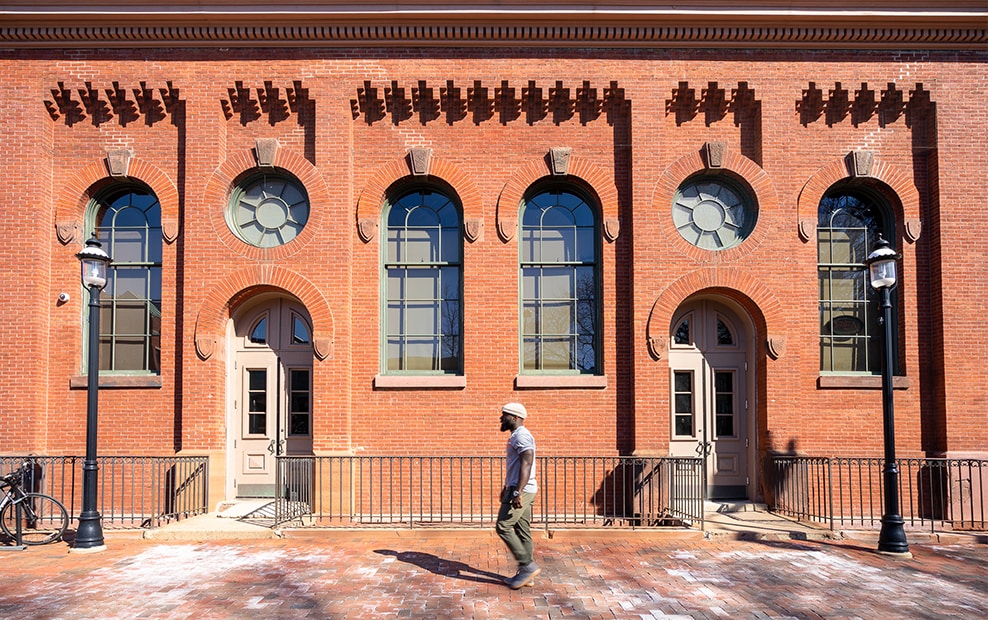

10 am: Food shopping and snacks at Eastern Market
Tobias doesn’t really go to grocery stores. They’re fine, he says, for everyday shopping. But for professional-degree cooking? No way. He likes to feel the produce, to see the dirt on it. To get that experience, he goes to Eastern Market near Capitol Hill.
The market has been a destination for local vendors to sell and trade their goods since the day it opened up in 1873. Today, Eastern Market hosts 13 fresh-food merchants, including ones Tobias frequents, like the long-running Calomiris Fruits & Vegetables and Asian market Capitol Hill Poultry & Paik Produce.
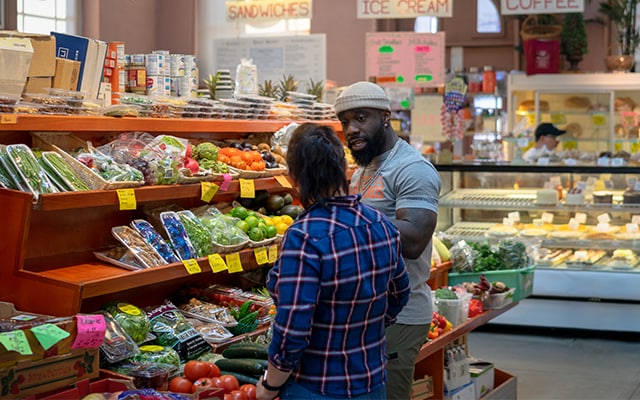


In the warmer months, the sprawling patio outside the market hosts over one hundred of additional vendors, offering an even wider selection of foods—an ideal spot to pick up groceries, or grab an early lunch and stroll through the bustling crowd.
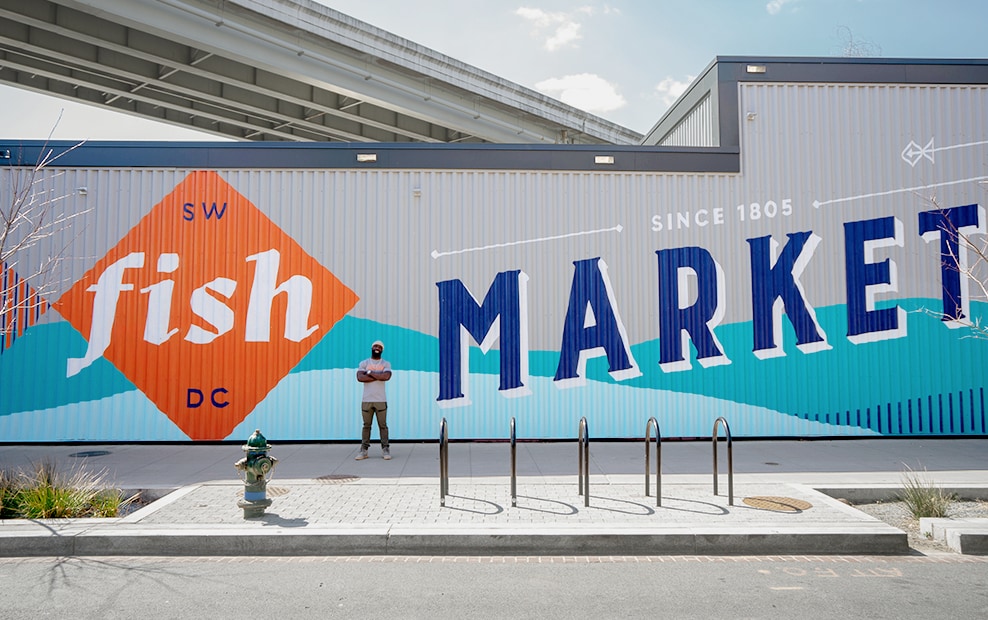
12 pm: Perusing seafood options at the Municipal Fish Market
In addition to loving fresh produce, Tobias is staunchly dedicated to cooking local seafood. Even when he prepared a dinner at the James Beard Foundation in New York City, he carted all the shellfish for the event up from D.C. in a giant cargo van. A good chunk of it came from the Municipal Fish Market at The Wharf, Tobias’s favorite place in the city to get oysters, crabs, lobsters and more.
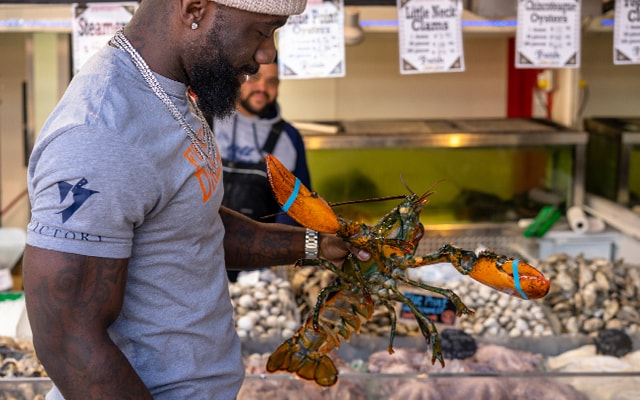
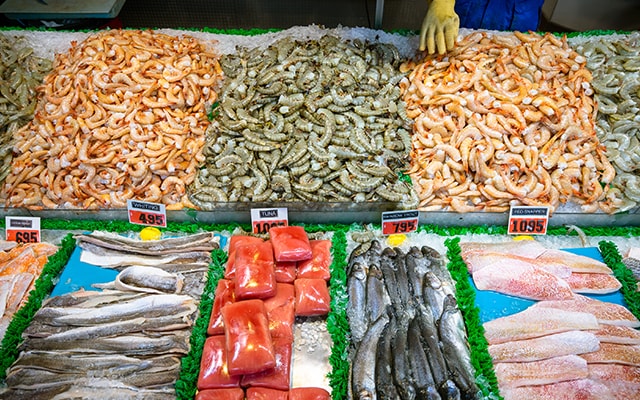
It’s the oldest continuously operating open-air fish market in the country, offering locals a bevy of raw and cooked seafood to choose from. Within the market, Jessie’s Cooked Seafood boasts spiced shrimp and hot cooked crab that you can eat on the go, while Captain White’s Seafood offers bushels of live crabs and local fish fillets. Growing up, Tobias often went there with his dad, who’s also been a chef in the D.C. area since he came to the U.S. from Liberia 40 years ago.
“You want to be able to see the grittiness,” he says. “I don’t want to go get conch and octopus from a marble glass tank. I want to be able to see the ice and seaweed.”
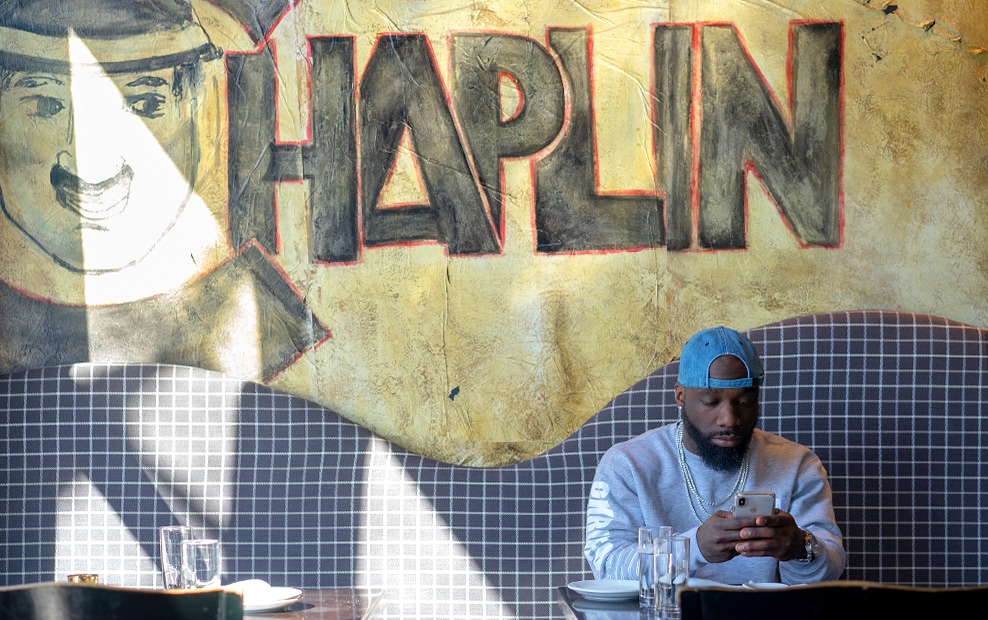
3:30 pm: Chowing down on Japanese food at Chaplin’s
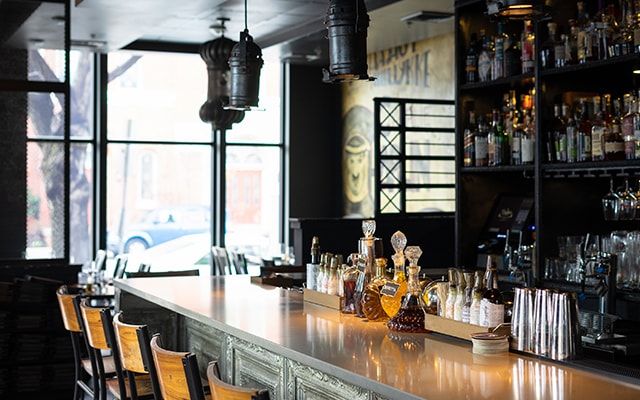
If Old Bay-seasoned shrimp and organic fruits haven’t filled him up, Tobias will eat a late lunch at Chaplin’s in Logan Circle. The red leather chairs, metal accents and dark wood makes it reminiscent of a prohibition-era bar, where only moonshine and bar snacks are available; but in fact, it’s home to some of the city’s best ramen and hand-crafted cocktails. It’s that under-the-radar feel that Tobias likes—he’s drawn to places like this, or Oohh’s & Aahh’s in U Street Corridor, where the excellent food surprises you.
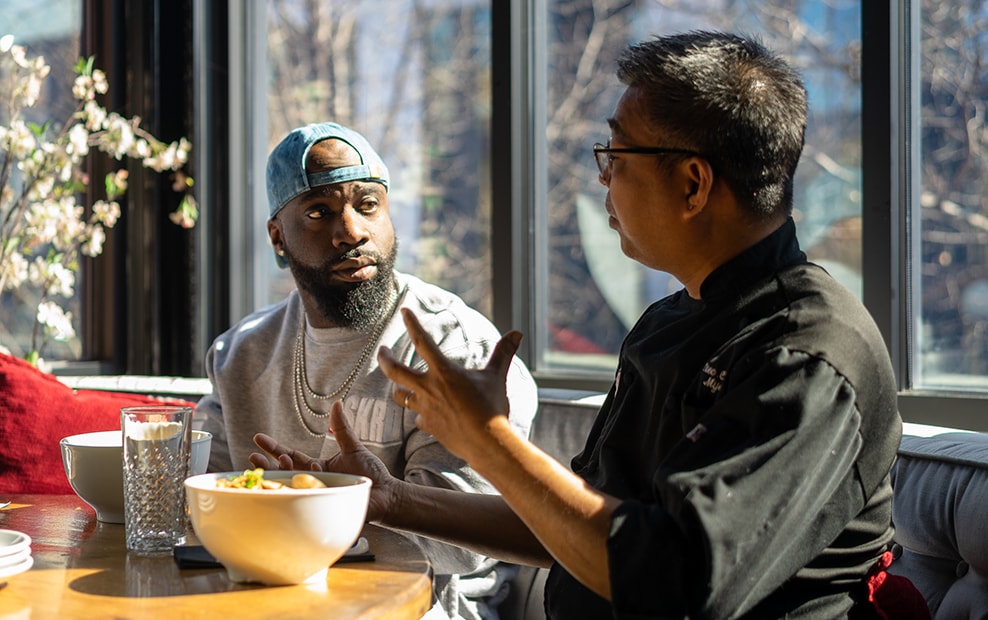
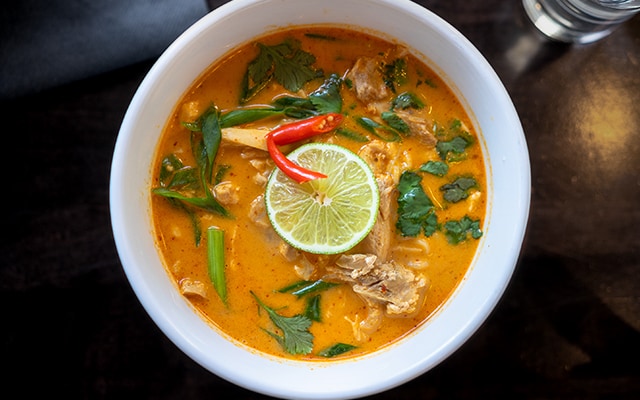
At Chaplin’s, Tobias sits down with chef Myo Htun, who’s behind the restaurant’s menu. As they chat over two bowls of spicy chicken ramen, Tobias asks chef Myo questions about how he put the dish together. Does he taste miso? Is that cilantro, wasabi, soy he’s picking up on? Asking questions, he says, is the only way to learn.
“I find myself every day wanting to be a better chef,” he says. This inspiration comes from Tobias’s family, which includes his 10 siblings, his parents and his two daughters, 4-year-old Tori and 13-year-old Riley. In particular, he’s motivated by the memory of his late sister, who died suddenly almost 15 years ago. He has her name tattooed on his arm, and when he’s feeling a little lost, he taps the tattoo to wake her up, to talk to her and remember why he’s doing what he’s doing.
7 pm: Enjoying drinks and a mellow vibe at Nocturne
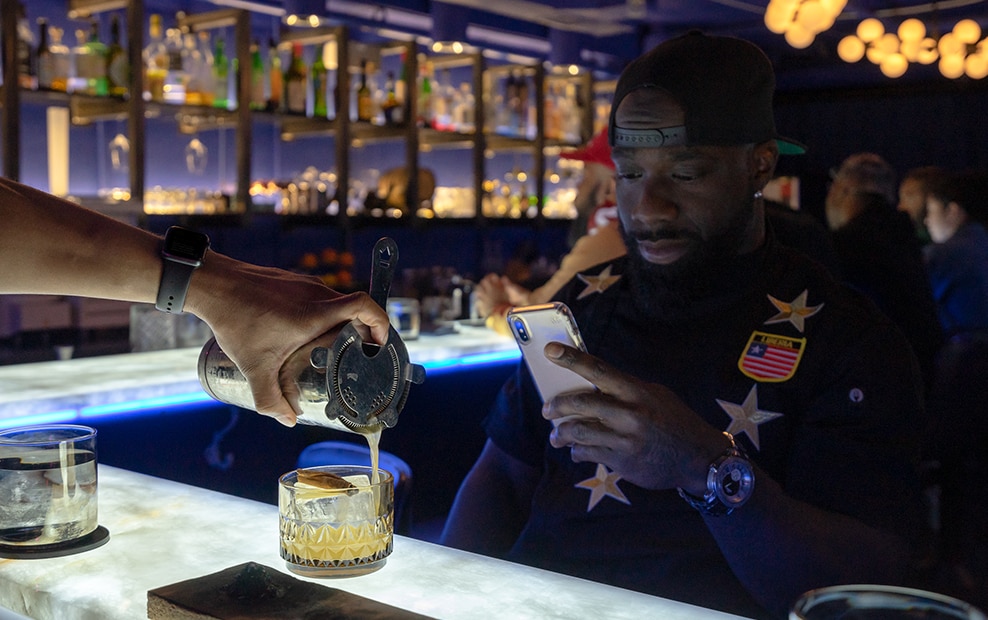
When Tobias wants to have a low-key night out, he heads to Nocturne in Shaw. The 15-seat, reservation-only cocktail bar is located in the basement of a donut shop and is run by Tobias’s childhood friend, Hakim Hamid. The goal of the space, Hakim says, is to make visitors feel like they’re inside an abandoned apartment in Paris; the bar’s smooth blue lighting is meant to emulate the night sky, and the cozy-yet-industrial space makes you feel like you’ve stumbled on some kind of fantastic secret.
The conceptualism behind the place doesn’t stop with the Parisian theme. Nocturne’s interesting menu of craft cocktails are organized by different regions. The “Pacific Rim” section offers up the “Sakasama,” which blends sake, shōchū, lychee, wasabi and seaweed. And the “Middle East” options include the Zahrat Jamila, which is made of champagne and vodka, as well as traditional Middle Eastern flavors like cardamom and orange blossom.
Part of the reason Tobias loves to visit is because it’s a uniquely intimate setting; there’s no shouting over music to order a drink or staring at a television screen. (Not that he doesn’t love a good sports bar—he loves going to Stan’s in McPherson Square with his friends on game days.) But he also likes going to Nocturne to support Hakim. He’s big on lifting up the people around him, every chance he gets.
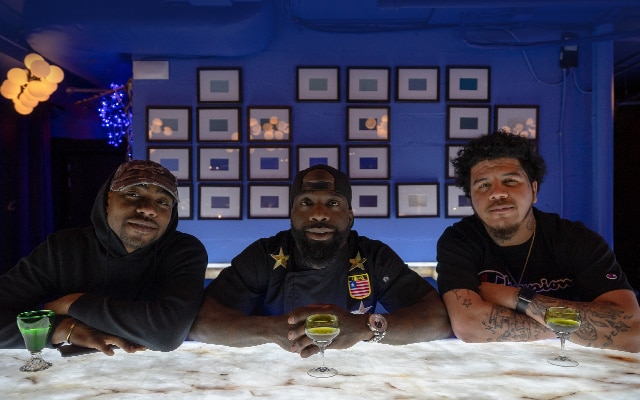
On this particular evening, he’s alongside five of his friends, all of whom he’s known for years and wound up working in the food scene, too. No matter how disparate their approaches to the work may be, or what kinds of experiences they have along their professional journeys, they have always stuck together. And that’s what makes the scene feel like home.
Hakim pours up a line of shots, and the group of friends raises them up for a toast.
“Let’s continue to inspire, continue to be great and make food that literally changes the game,” Tobias says. They can all drink to that.
Culture abounds in the capital city. Book your trip today and define what it means to do D.C.