Changing the Way the World Views Dairy
By Krysta Harden, Executive Vice President, Global Environmental Strategy, Dairy Management Inc.
The U.S. dairy industry is on the mission of a lifetime: to be part of the environmental solution.
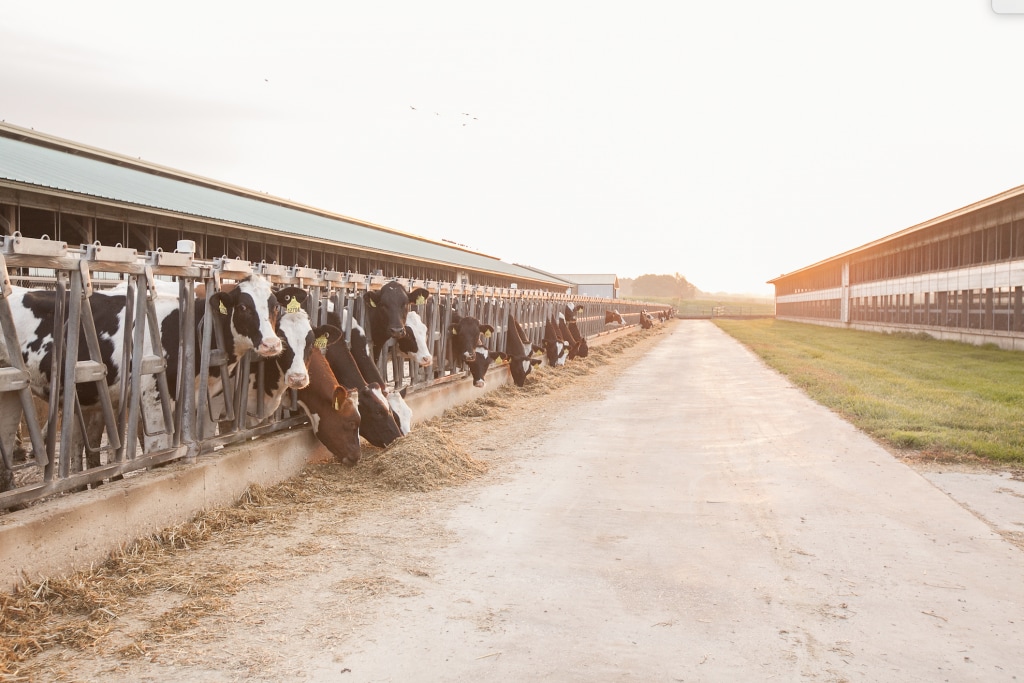
The perception, though, is that dairy is part of the problem. But that does not meet the day-to-day reality on a dairy farm. Being a dairy farmer means caring for the land. Generation after generation, dairy farmers are connected to their land and communities in ways that make caring for natural resources central to everything they do. They understand more than anyone that for future generations to thrive, they must always find ways to give more than they take.
The dairy community today is a diverse, complex sector made up of 37,000 farms and hundreds of dairy companies across the country. Every state has a dairy, and each dairy is unique. What is universal, however, is our commitment to doing more with less, and we know that small changes are adding up to big wins for the environment.
These core values are the driving force behind the U.S. dairy industry’s vision. Earlier this year, The Innovation Center for U.S. Dairy—a forum that convenes industry stakeholders across the value chain to align on shared social responsibility priorities—announced aggressive new sustainability targets to advance dairy’s role in building a sustainable future:
- Become carbon neutral or better
- Optimize water use while maximizing recycling
- Improve water quality by optimizing utilization of manure and nutrients
These goals are built on a decades-long commitment to responsible dairy production. Due to innovative practices in cow comfort, improved feed and genetics and modern barn design, the environmental impact of producing a gallon of milk in 2017 shrunk significantly, requiring 30% less water, 21% less land and a 19% smaller carbon footprint than it did in 2007. Today, the dairy industry accounts for less than 2% of the country’s total greenhouse gas emissions.

And we’re committed to taking these reductions even further. In fact, we’re accelerating dairy’s efforts through the Net Zero Initiative, an industry-wide program designed to help U.S. dairy farms of all sizes and geographies leverage new technologies, adopt economically-viable practices and create new markets and products. The initiative will break down barriers to make even more environmental progress and improve farmer livelihoods.
Already, dairy farms across the country are implementing some amazing examples of innovation that prove dairy will hit its marks, like Royal Dairy in Washington state, which uses an ingenious manure-processing system that separates out water that can be used to irrigate their farm. Or Oregon’s Threemile Canyon Farm, which has has developed a sophisticated closed-loop system—including a methane digester that helps power farm vehicles—to produce almost zero waste. And it’s not just happening on the farm. Dairy processor Leprino Foods has reduced its energy consumption through LED lighting enough to light about 500 homes for a year.
These are not only a celebration of the progress U.S. dairy is making toward its sustainability goals, but also a lesson in how the industry will collectively lead agricultural practices into the future and help nourish a growing population.
Our collective work is well underway, but it’s far from done. It will take a combination of ingenuity and drive for U.S. dairy to succeed—qualities we know dairy farmers have in abundance. We have set firm, meaningful standards and developed powerful guiding strategies, committing wholeheartedly to this collective effort. We’re in this together and we’re optimistic about the future.
Learn more about U.S. dairy’s role in building a sustainable future.
—
Sources:
- usdairy.com
- commitment.usdairy.com
- Capper JL, Cady RA. J Anim Sci. 2020 Jan 1.
- Inventory of U.S. Greenhouse Gas Emissions and Sinks: 19902015. EPA 430-P-17001
The content is paid for and supplied by an advertiser. The Washington Post newsroom was not involved in the creation of this content.
Content From