

Rethinking the role of the animal shelter
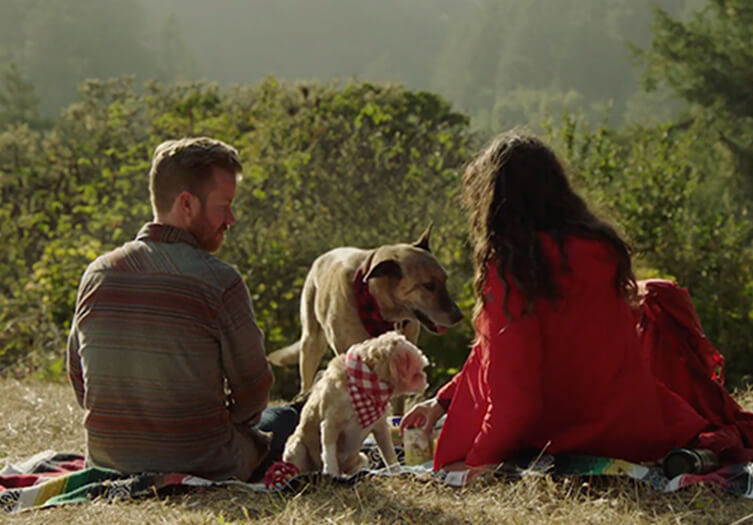
Gary Weitzman can’t sleep at night unless he’s near his dog, Betty Crocker. Betty, a 70-pound pit bull mix, is his “bud,” and he can’t imagine life without her.
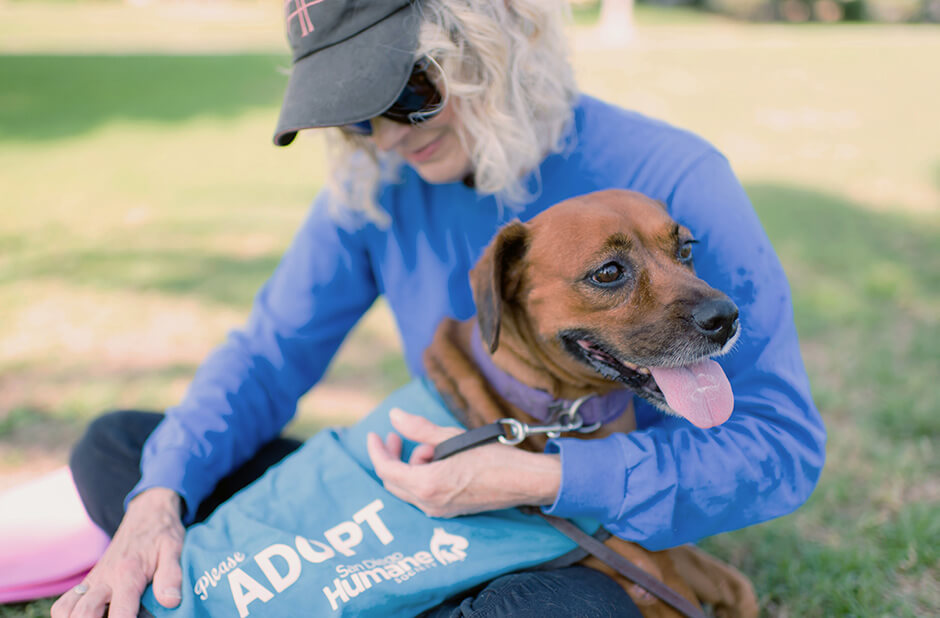
Weitzman—who is the president of San Diego Humane Society (SDHS), an open-admission animal shelter in Southern California—is like a lot of Americans in this sense. Pets are often considered family, and people’s attachment to companion animals is more pronounced than it’s ever been. As attitudes about pets have become more positive over the last 50 years, an increased number of people have been adopting animals (which is how Weitzman was first united with Betty.) It’s now one of the most common ways to get a pet, thanks to a number of factors, including expanded spaying and neutering efforts and a rise in organized animal rescue awareness campaigns.
But there are still issues plaguing adoption centers nationwide. At least 6.5 million dogs and cats enter animal shelters in the U.S. every year, but only about 60% of them are adopted or returned to an owner. This leaves shelters with an untenable burden: most lack enough resources to help every animal in need, let alone find them long-term residences.
At least 6.5 million dogs and cats enter animal shelters in the U.S. every year, but only about 60% of them are adopted or returned to an owner.
Progressive shelters like SDHS, which has five campuses and serves 14 cities in San Diego County, are finding solutions to these issues. They take a more holistic approach that includes caring for the emotional, behavioral and physical well-being of pets. And instead of handling everything themselves, they partner with cities, local veterinarians and brand partners, like Purina, to maximize the resources they can use to help animals. (Purina supplies nutritious food for the pets in SDHS’s care, since an animal’s welfare is directly tied to their health; they also sponsor community adoption events for SDHS throughout the year.)
Following this model, SDHS sheltered over 33,000 domestic pets last year and found homes for almost 90% of them. Most shelters are lucky to adopt out 50% of their pets.
SDHS's approach sets an example for shelters nationwide who are also looking for ways to overcome their biggest hurdles. After all, they can be more than a place to take in homeless animals. According to Weitzman, they can help pets and people stay together by giving owners the tools they need to best take care of their animals.
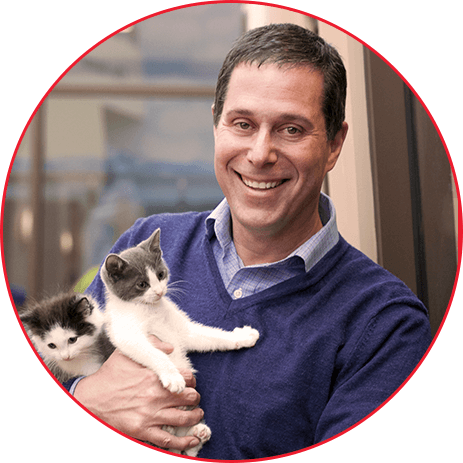
Gary Weitzman explain the meaning of holistic pet care
Following this model, SDHS sheltered over 33,000 domestic pets last year and found homes for almost 90% of them. Most shelters are lucky to adopt out 50% of their pets.
SDHS's approach sets an example for shelters nationwide who are also looking for ways to overcome their biggest hurdles. After all, they can be more than a place to take in homeless animals. According to Weitzman, they can help pets and people stay together by giving owners the tools they need to best take care of their animals.

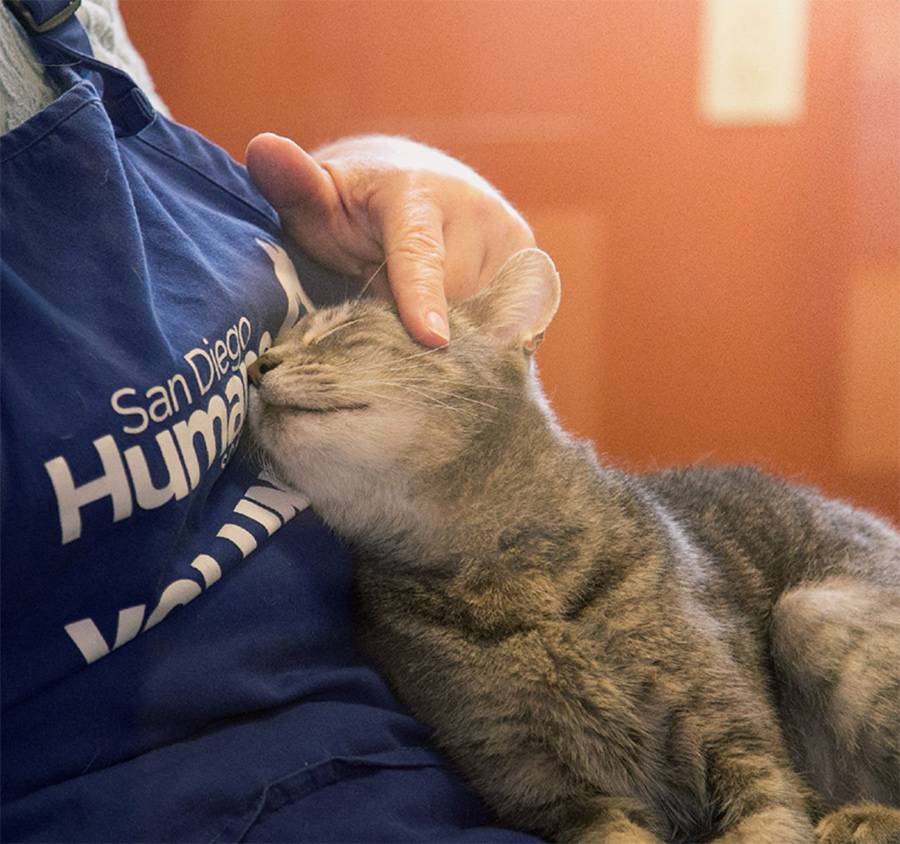
SDHS handles those challenges across their five campuses, one of which has a teaching hospital for veterinary students called the Pilar & Chuck Bahde Center for Shelter Medicine. Within these facilities, about two dozen veterinarians and more than 100 other medical staff members work collaboratively to solve difficult cases and move pets into adoptive homes faster, according to Dr. Zarah Hedge, vice president of shelter medicine and chief medical officer for SDHS. Spacious "habitats" and an isolation area for sick animals keep pets healthy and happy, which improves their chances of being adopted. Hedge does rounds—just like a doctor in a hospital would—to check on individual pets and keeps in mind how the shelter’s animal population is faring overall. The entire staff, from kitten nursery caregivers to pet trainers and veterinary interns, is alert to how pets are doing, as well. They know when an animal's behavior changes, for example, or when they show symptoms of an illness.
“Everybody in the organization plays a role,” said Kowalski. “From the moment an animal comes through our doors, all of our staff and our volunteers have the ability to positively impact that animal’s experience with us.”
Caring for
the whole pet
Those tools are being created at the SDHS San Diego Campus, where comprehensive shelter medicine—which involves caring for individual animals as well as an entire shelter population—is merged with pet behavior research.
At traditional shelters, systemic issues like overcrowding and a lack of funding make it hard to give animals the help they need, even under the best of circumstances. Without enough staff to regularly check on pets, animals living together in such close quarters are more likely to get sick and experience anxiety. A stressful shelter experience can also have lasting effects: one in 10 pets are relinquished by their families within six months of being adopted, often because of unexpected "problem behaviors" that could be corrected, according to Amanda Kowalski, director of the Behavior Center at SDHS.
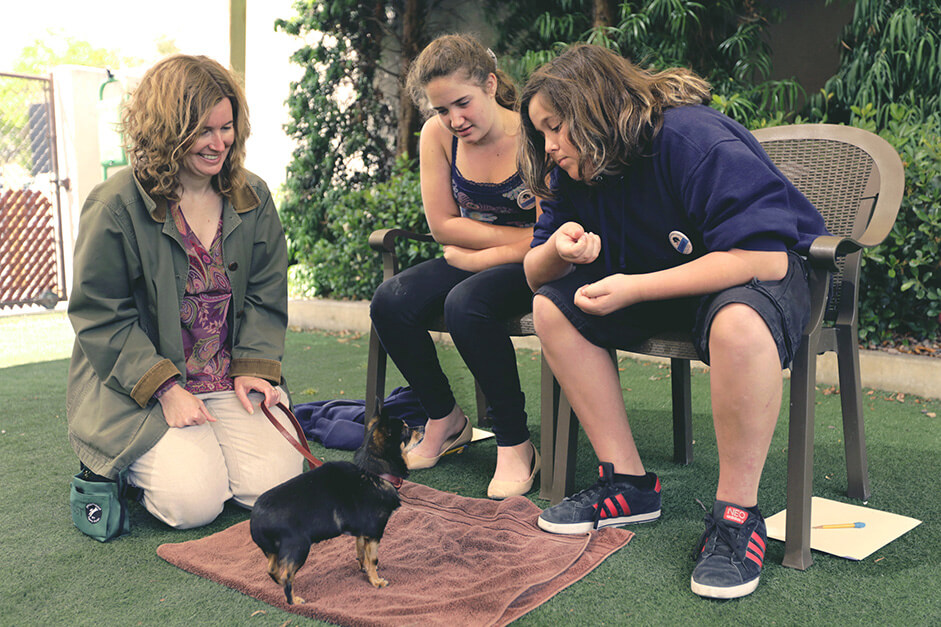
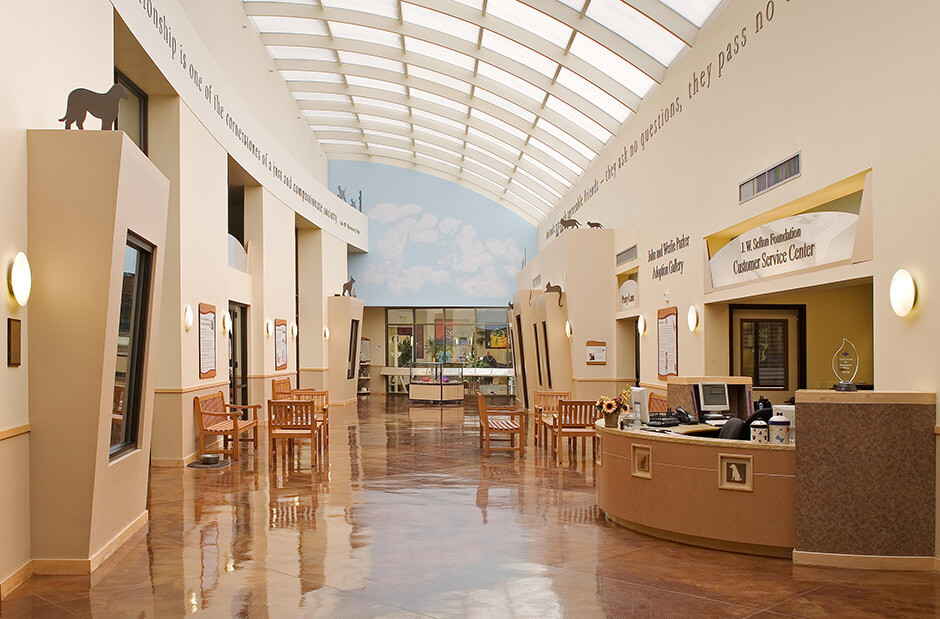
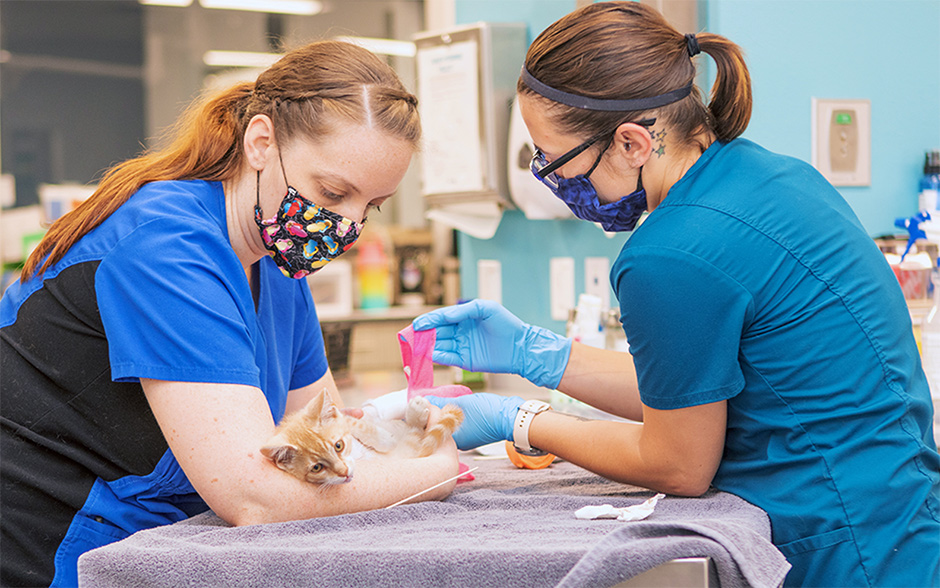
SDHS handles those challenges across their five campuses, one of which has a teaching hospital for veterinary students called the Pilar & Chuck Bahde Center for Shelter Medicine. Within these facilities, about two dozen veterinarians and more than 100 other medical staff members work collaboratively to solve difficult cases and move pets into adoptive homes faster, according to Dr. Zarah Hedge, vice president of shelter medicine and chief medical officer for SDHS. Spacious "habitats" and an isolation area for sick animals keep pets healthy and happy, which improves their chances of being adopted. Hedge does rounds—just like a doctor in a hospital would—to check on individual pets and keeps in mind how the shelter’s animal population is faring overall. The entire staff, from kitten nursery caregivers to pet trainers and veterinary interns, is alert to how pets are doing, as well. They know when an animal's behavior changes, for example, or when they show symptoms of an illness.
“Everybody in the organization plays a role,” said Kowalski. “From the moment an animal comes through our doors, all of our staff and our volunteers have the ability to positively impact that animal’s experience with us.”
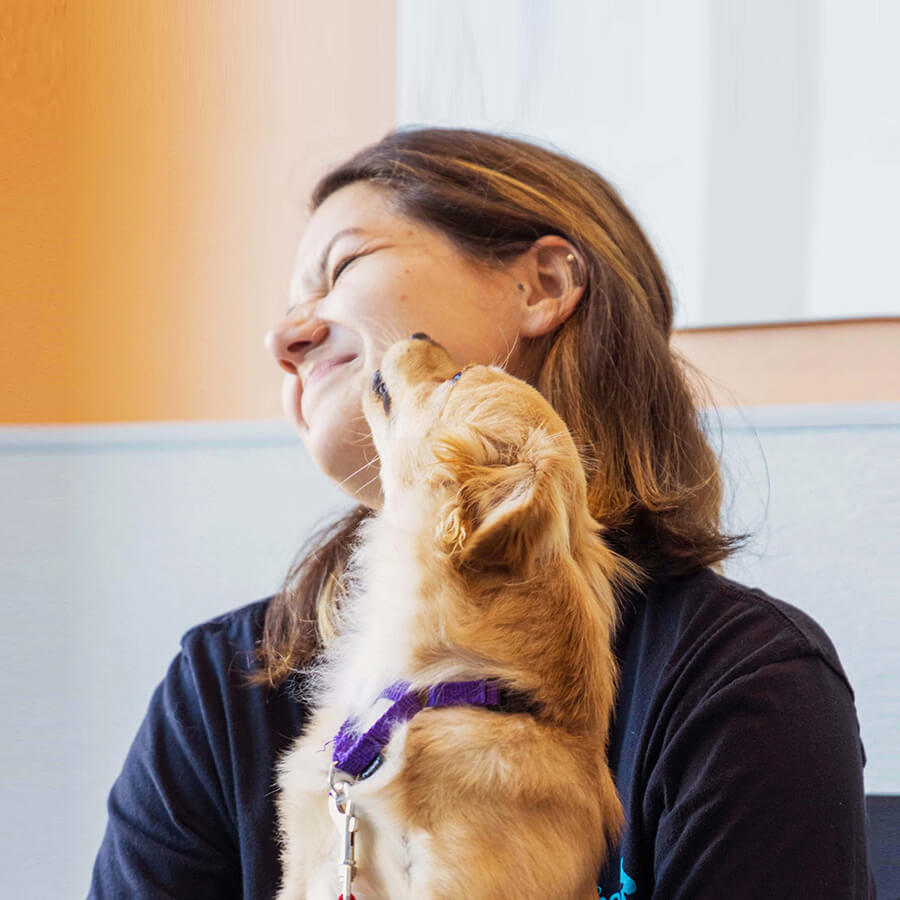
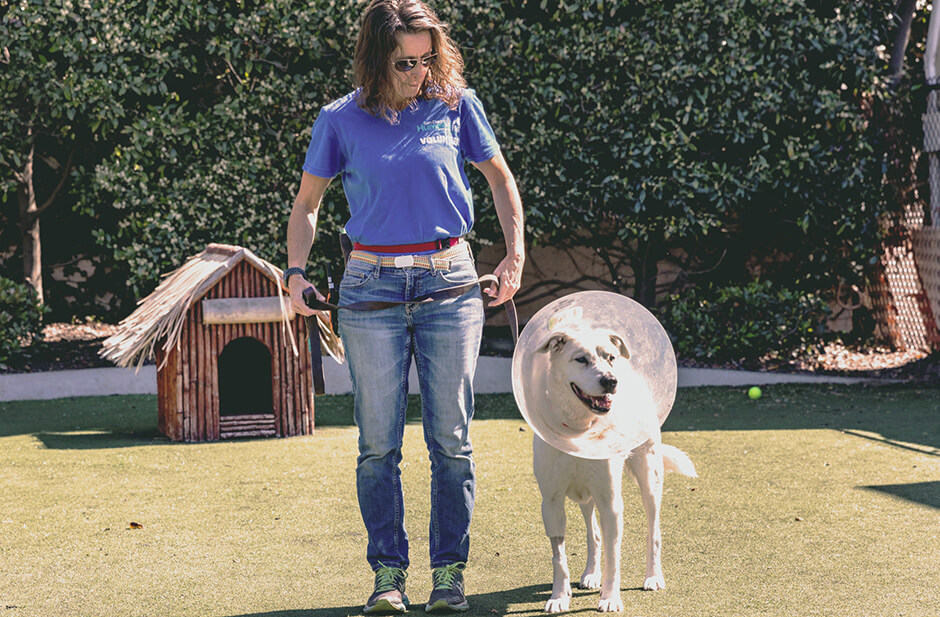
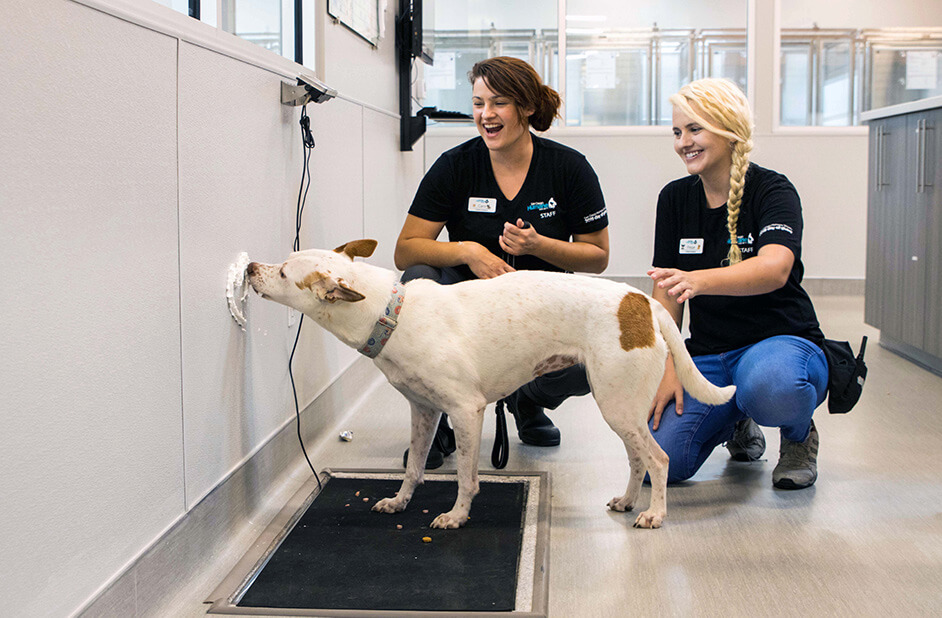
At the Behavior Center, which opened in 2019, a quiet outdoor training area helps nervous animals learn new skills, like walking on a leash, without interference. Many pets have experienced trauma that makes them sensitive to sound and fearful around people and other animals, according to Kowalski. Trainers at the Behavior Center draw on research—including collaborative work they've done with Purina’s pet behavior scientists—to help correct problematic conduct, which can improve pets' quality of life and make them “more adoptable,” Kowalski said.
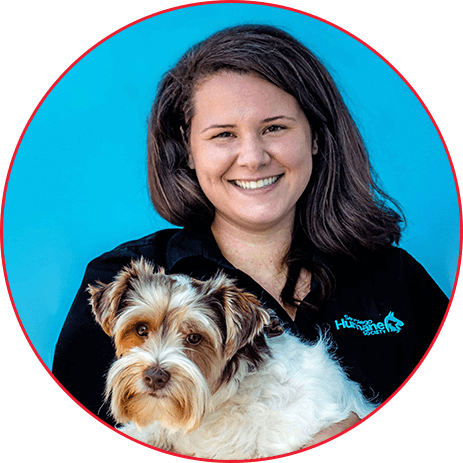
Amanda Kowalski describe the mission of SDHS’s behavior center
We’re trying to find new ways to improve care for animals in the shelter [and] keep them with their families [once they’ve been adopted]
Adoptive families then get a full report on their new pet's medical and behavioral history, which is built throughout a pet's shelter stay. Those details, along with post-adoption support and affordable training from SDHS, can help make an adoption stick. And because good nutrition helps pets thrive in and out of the shelter environment, adoptive families receive a free bag of the same healthy Purina food that their pet was served at the shelter.
“We’re trying to find new ways to both improve care for animals in the shelter but also help prevent relinquishment of animals to the shelter by keeping them with their families,” said Hedge.
Bringing shelter
services
into communities
SDHS’s tactics for improving adoption success extends beyond the four walls of their facilities—they also offer resources to pet owners throughout the areas they serve.
Local communities host some of the biggest challenges facing the shelter industry, like broad misunderstandings around pet health and a lack of resources for low-income pet owners. Almost one in four people struggle to access preventative veterinary care, most often because of cost, but also because of not knowing where to receive the care or lacking the transportation to get where they need to go.
SDHS began tackling these entrenched issues about a decade ago, including by taking on more than a dozen municipal animal service contracts. This allowed SDHS to "provide services well in excess of what a government agency could do,” said Weitzman, because they can augment city funding with private donations, including those from corporations like Purina.
“It’s really just a part of our DNA to make sure that shelters and rescues have what they need to operate,” said Jessica Arnold, marketing manager of the pet welfare team at Purina. Purina’s Petfinder directory, which is the largest online resource for finding homeless animals and adoption organizations, "is a big way that we drive people into our shelters for adoptions," Weitzman said.
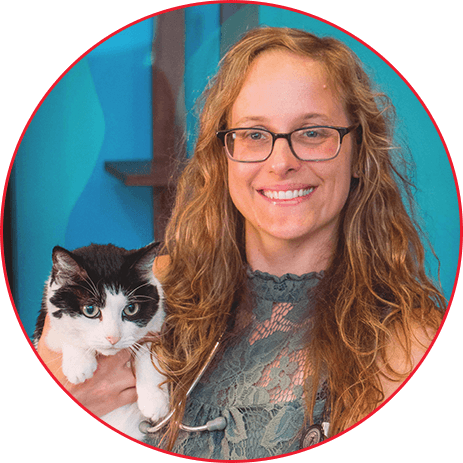
Zarah Hedge talk about how shelter care can keep pets with their families
SDHS began tackling these entrenched issues about a decade ago, including by taking on more than a dozen municipal animal service contracts. This allowed SDHS to "provide services well in excess of what a government agency could do,” said Weitzman, because they can augment city funding with private donations, including those from corporations like Purina.
“It’s really just a part of our DNA to make sure that shelters and rescues have what they need to operate,” said Jessica Arnold, marketing manager of the pet welfare team at Purina. Purina’s Petfinder directory, which is the largest online resource for finding homeless animals and adoption organizations, "is a big way that we drive people into our shelters for adoptions," Weitzman said.
1 in 4 people struggle to access preventative veterinary care, most often because of cost.
Post-adoption, pet owners can drop by a mobile food bank or SDHS campus for free pet food and supplies. Anyone can call the behavior helpline for exercises to try at home, whether their dog barks at the doorbell or dislikes being leashed. Locals can attend classes that are helpful at every stage of their pet's life, from first-year vaccinations to behavioral changes as pets age. But sometimes, all it takes is a conversation with a humane officer to set people at ease about their pet's behavior issue, and "avoid that animal coming to the shelter," said Weitzman.
In the coming months, SDHS will redirect even more resources toward locals in need. They are looking to ramp up free and low-cost spaying and neutering services. Additionally, plans for mobile pet-care vehicles and partnerships with local veterinarians are underway, which will allow people to access SDHS’s amenities in their own neighborhoods, rather than having to travel far to get them.
It’s really just a part of our DNA to make sure that shelters and rescues have what they need to operate
Post-adoption, pet owners can drop by a mobile food bank or SDHS campus for free pet food and supplies. Anyone can call the behavior helpline for exercises to try at home, whether their dog barks at the doorbell or dislikes being leashed. Locals can attend classes that are helpful at every stage of their pet's life, from first-year vaccinations to behavioral changes as pets age. But sometimes, all it takes is a conversation with a humane officer to set people at ease about their pet's behavior issue, and "avoid that animal coming to the shelter," said Weitzman.
In the coming months, SDHS will redirect even more resources toward locals in need. They are looking to ramp up free and low-cost spaying and neutering services. Additionally, plans for mobile pet-care vehicles and partnerships with local veterinarians are underway, which will allow people to access SDHS’s amenities in their own neighborhoods, rather than having to travel far to get them.
Even for shelters that lack the resources to replicate Southern California's efforts, the SDHS vision could provide inspiration. Ultimately, the approach centers around taking care of the whole pet, in shelters and in neighborhoods—while supporting pet owners and adoptive families throughout their pets’ lives.
“This is what excites me about this organization,” said Kowalski. “We are truly there every step of the way, for pet parents and for the people and animals in our community.”