Archaeological research educates and entertains at Colonial Williamsburg
Thanks to collaborations between archaeologists, historians, curators, chefs and designers, history is embedded into every aspect of this living museum.
By WP Creative Group
At Colonial Williamsburg, the largest outdoor living museum in the country, it’s not uncommon for visitors to witness a team of archaeologists, hands in the dirt, actively discovering history.
These discoveries – long forgotten ceramics, animal bones and even items of clothing – feed directly into the museum’s authentic 18th-century experiences and programming.
“We’ve been doing archaeological excavation and research here for almost 100 years,” said Jack Gary, Director of Archaeology at Colonial Williamsburg. “A lot of the information generated from those excavations has gone into interpreting the Historic Area, from the buildings that are there, to the type of clothing people are wearing and the activities they’re engaging in.”
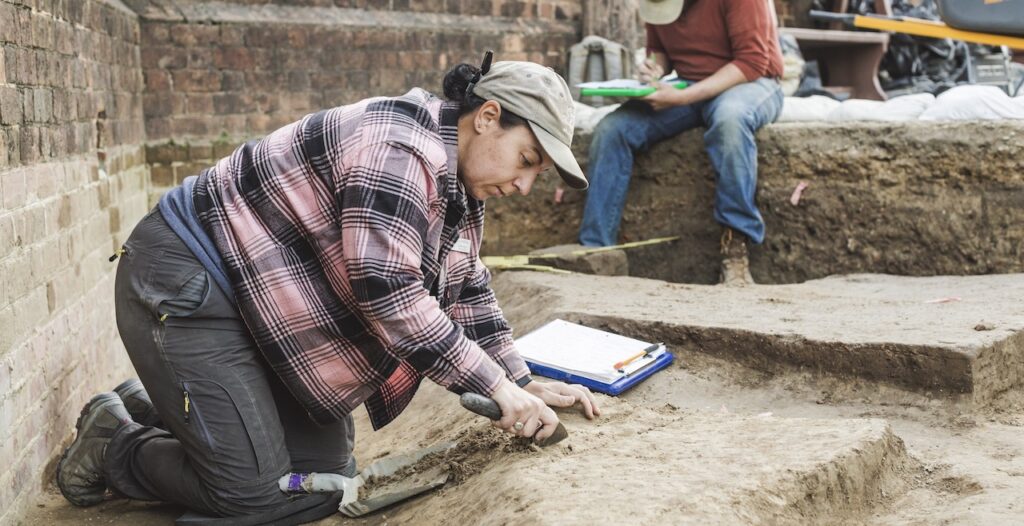
One such excavation project, the Custis Square Archaeology Project, hopes to uncover the remains of long-hidden landscapes where enslaved men and women lived and worked for 18th-century tobacco farmer and politician John Custis IV (1678-1746).
“We first excavated a portion of that site in 1964 and 1968 and were able to find the foundation for John Custis’s house, as well as an amazing assemblage of artifacts from the 18th century,” said Gary. “Now, we have two more questions: What did the garden look like, and how can we weave the contributions of enslaved people and their stories into this property?”
Once pulled from the earth, artifacts are thoroughly studied and used to interpret daily life at Colonial Williamsburg. The site hopes to reopen research labs to public tours this summer, allowing guests to witness artifacts being washed, sorted and cataloged.
Uncovering the past to inform the present
Even visitors who aren’t the biggest research buffs can still experience colonial times through the site’s historic accommodations, dining and evening events. Some families, for instance, might decide to stay in one of the 27 colonial guest houses on site, all meticulously designed to mirror Colonial America while offering modern amenities.
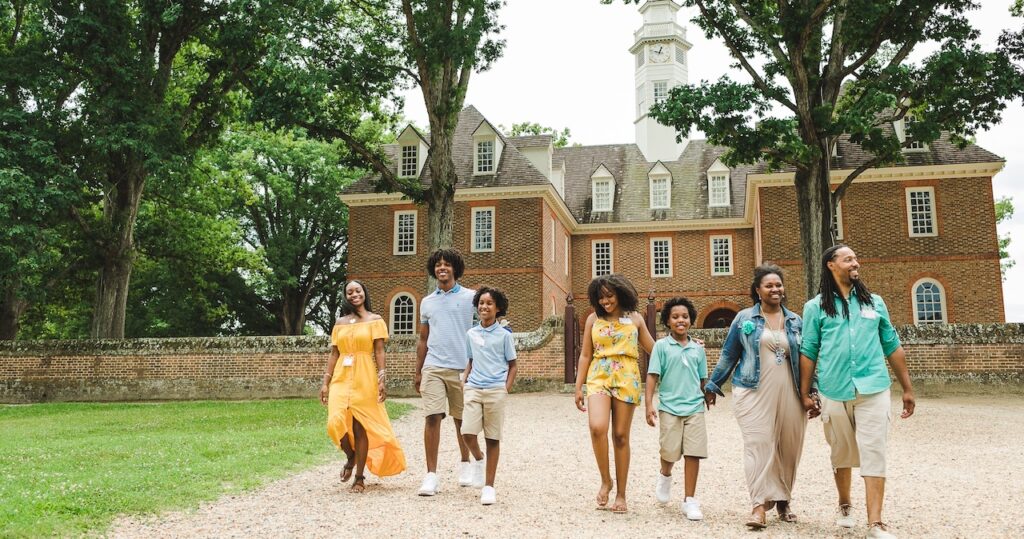
“The same research used to derive the best interpretation of the 18th century, I use to ensure guests are experiencing what it was like to stay in an 18th-century home or tavern,” said Cheryl Griggs, the Director of Interior and Exterior Design. “That includes carpets or any kind of floor covering, the finish of the wood, period reproduction furniture, document fabrics, artwork reproduced from period print sources and paintings and electrified light fixtures adapted from period forms such as candlesticks and ceramic storage vessels.”
Modern paint analysis, for instance, has revealed that colonial homes were often painted with bright, vibrant colors, versus the muted colors associated with Colonial Revival. Colonial Williamsburg partnered with Benjamin Moore & Co. to create 144 paint colors authentic to the period; now visitors will enjoy a wide variety of colors from this palette when staying in the guest homes.
The decor of each guest home differs depending on the social status of who occupied the house or building – from (tradespeople) woodworkers to wealthy merchants to doctors.
“Cooking was done in separate buildings in the 18th century, and many of these kitchen buildings now serve as guest houses. We furnish these guest accommodations with simple but period-correct furniture, artwork and textiles. The artwork in these spaces is often botanical or culinary in nature, as cooks were using the herbs and vegetables from the gardens, and the kitchen fireplaces might be outfitted with iron cooking tools,” Griggs explained. “In the guest homes occupied by someone of wealth in the 18th century, we typically furnish with more formal furniture and a finer grade of fabric such as silk damask and, perhaps, use brass chandeliers versus those made of tin or wood and iron. The overall feel of each accommodation is meant to provide the guest with an experience reflective of how the building was used in the 18th century.”
Colonial Williamsburg’s Art Museums, featuring a collection of about 70,000 objects in storage, such as 18th century decorative arts, fabrics and clothing, also serve as a source of information and inspiration for Griggs. Visitors can stop by the Museums’ Restoring Williamsburg exhibit. The collection includes “architectural fragments” from existing structures and buildings lost to time. It includes everything from nails, bricks, framing and doors to wallpaper, plaster and paint samples.
F. Schumacher & Company is reproducing a new line of licensed fabrics for Colonial Williamsburg called Homecoming, with patterns developed from textiles in the museum or taken directly from fragments of clothing. The Homecoming line will be available for purchase in June of 2022.
A taste of history
Research also plays an important role in the dining experience at Colonial Williamsburg. The site features three taverns – King’s Arms Tavern, Chowning’s Tavern and Shield’s Tavern – that offer historically inspired cuisine.
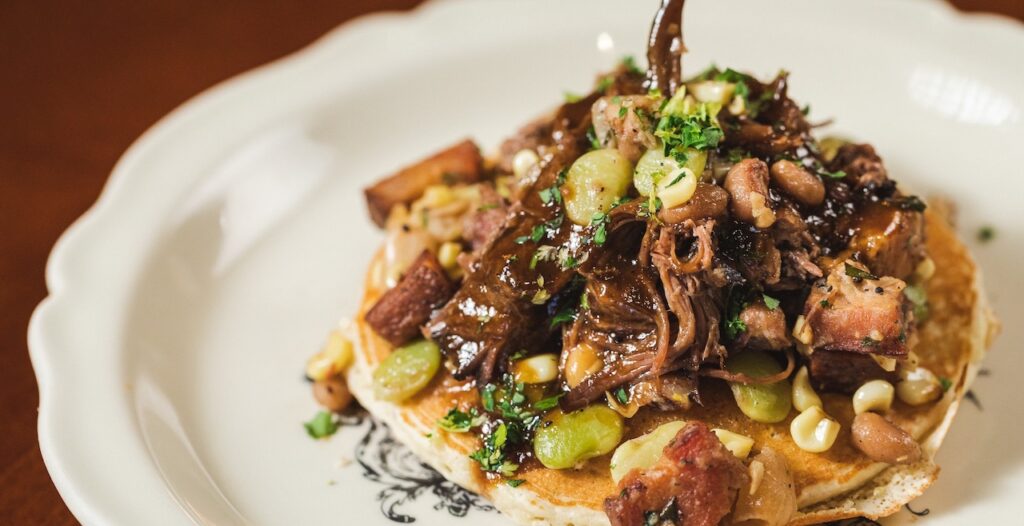
“For a guest to truly have the immersive experience, the dining needs to be in line with the rest of what is provided,” said Chef Stephen Perkins, Director of Historic Taverns Culinary Operations. “Guests need to see, touch, taste, smell and hear all that is available to gain the value of Williamsburg.”
Most recently, Colonial Williamsburg launched a new menu at Chowning’s Tavern that incorporates historically accurate dishes from leading cookbook authors of the period, including Martha Washington, wife of President George Washington; Hana Glasse, cookery writer of the 18th century; and most notably James Hemmings, a classically trained chef who was enslaved by Thomas Jefferson.
“When we say historically accurate, we mean dishes designed with ingredients that were available in the colonial period,” said Chef Perkins. “For example, our macaroni and cheese with field mushrooms takes its inspiration from Hemmings yet incorporates Locatelli cheese and porcinis.”
The full immersive experience
After dinner, guests should be sure to grab tickets to Colonial Williamsburg’s variety of evening events. Robert Currie, Director of Evening Programs and Special Events, has the unique challenge of translating research into entertainment, such as the site’s two interactive trials: Cry Witch and To Hang a Pirate.
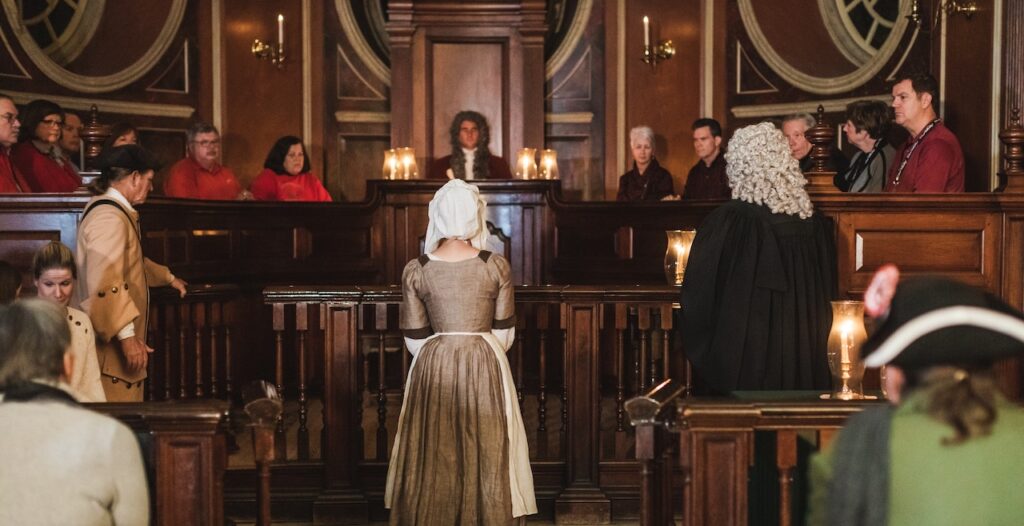
“Our trial programs are some of the most popular evening experiences that we have,” Currie said. “The audience is sitting in the courtroom and can actually participate in the voting. It’s drama and entertainment, but it’s also historical interpretation, giving guests an opportunity to see how law and order took place in the past.”
Another popular option after dark is Haunted Williamsburg, an hour-long walking ghost tour that gives guests access to historic sites, while costumed storytellers share 18th-century colonial ghost stories as well as creepy modern-day encounters.
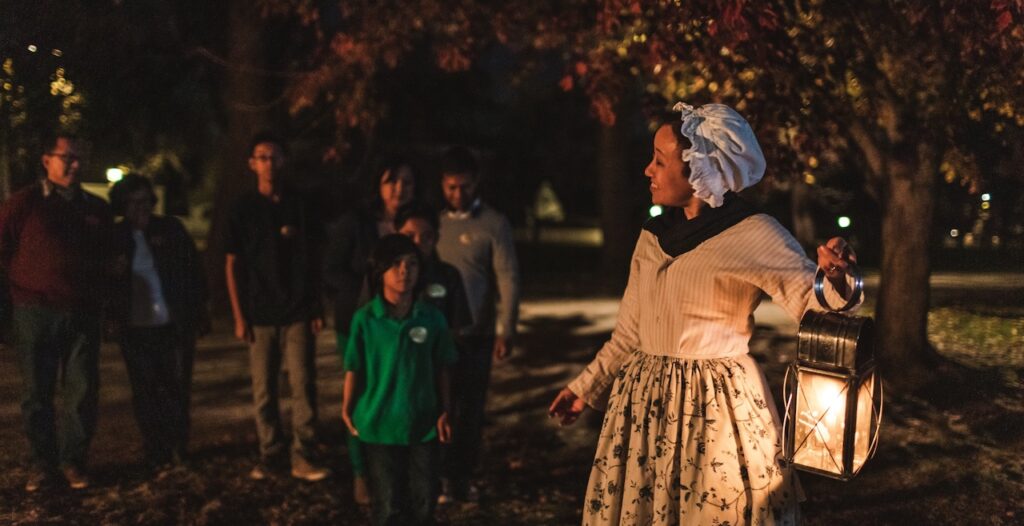
“The ghost tours are interesting because you’re hearing stories that have been passed down from generation to generation,” said Currie. “Although they are ghost stories and should be taken with a grain of salt, we always source our material, tying stories back to the Virginia Gazette for example.”
With more than 300 acres to explore, Colonial Williamsburg is an immersive and authentic adventure that brings the 18th-century to life in a way that is both fun and educational. In addition, experiences like staying at a Colonial House, partaking in a court case or enjoying a tavern meal support the educational mission of the Colonial Williamsburg Foundation – and provide funding and support needed for expert research and preservation.
“The best way for folks to learn is when they’re having a good time,” Currie said. “All of our programs are heavily researched, so even when having fun, guests leave saying, ‘Oh, I learned something new tonight.’”
The content is paid for and supplied by advertiser. The Washington Post newsroom was not involved in the creation of this content.
Content From
