
By Exact Sciences
December 4, 2025
Text size
Display theme
Our pages are responsive to your system settings and browser extensions for optimal experience
Colorectal cancer remains one of the most preventable — yet least prevented — cancers in the United States.[1] When found early, it’s highly treatable.[2] But millions of Americans still miss colon cancer screenings, often because of inconvenience, fear or limited access to care.[3],[4] This means annually more than 50,000 people will lose their lives from colon cancer.[5]
For years, health systems and plans have conducted mail-out colorectal cancer screening programs using fecal immunochemical tests, or FIT, which detect hidden blood in stool.[6],[7],[8] These tests typically have low participation rates,[9]must be repeated annually,[10] and are less sensitive to early-stage disease.[11]
Now with the Cologuard test, care gap programs are evolving, and helping the first step in cancer prevention arrive where people live.
How the program works
Health plans and systems generate lists of overdue, average-risk members for mail-out screening. Licensed clinicians further review eligibility and issue Cologuard test prescriptions. Exact Sciences conducts additional quality checks before sending educational materials and Cologuard kits to patient homes. Participation is always optional, and most insurance plans cover the full cost.[12]
If the test result is negative, the person is due for colorectal cancer screening again in three years.[13] A positive result requires a follow-up colonoscopy to complete the screening evaluation. Under the Affordable Care Act, a follow-up colonoscopy after a positive stool-based screening test is covered with no cost‐sharing for most commercial plans.[14]
MVP Health Care, a regional insurer in New York and Vermont has worked with Exact Sciences to implement care gap programs. “At MVP Health Care, we believe prevention is the foundation of better health,” says MVP Health Care’s President, Dr. Richard Dal Col. “By partnering with Exact Sciences to deliver Cologuard® directly to our members’ homes, we’re breaking down barriers that have kept too many people from screenings. This is more than convenience; it’s a commitment to equity, innovation and empowering individuals to take charge of their health. Early detection can save lives, and programs like this help our members take a proactive step toward better health outcomes.”
A test built for convenience — and accuracy
The Cologuard test, developed by Exact Sciences, uses a combination of molecular biomarkers to flag potential signs of colorectal cancer from a single stool sample.[15]Kits are mailed to patients’ homes, collected privately at home and sent back for processing — no clinic visit required.
That simplicity matters. More than 60 million Americans age 45 and older are behind on colorectal screening.[16]To get more patients screened, health plans and health systems run “care gap programs” that identify average-risk eligible people overdue for screening and, through partnerships with Exact Sciences, mail educational materials and Cologuard kits.
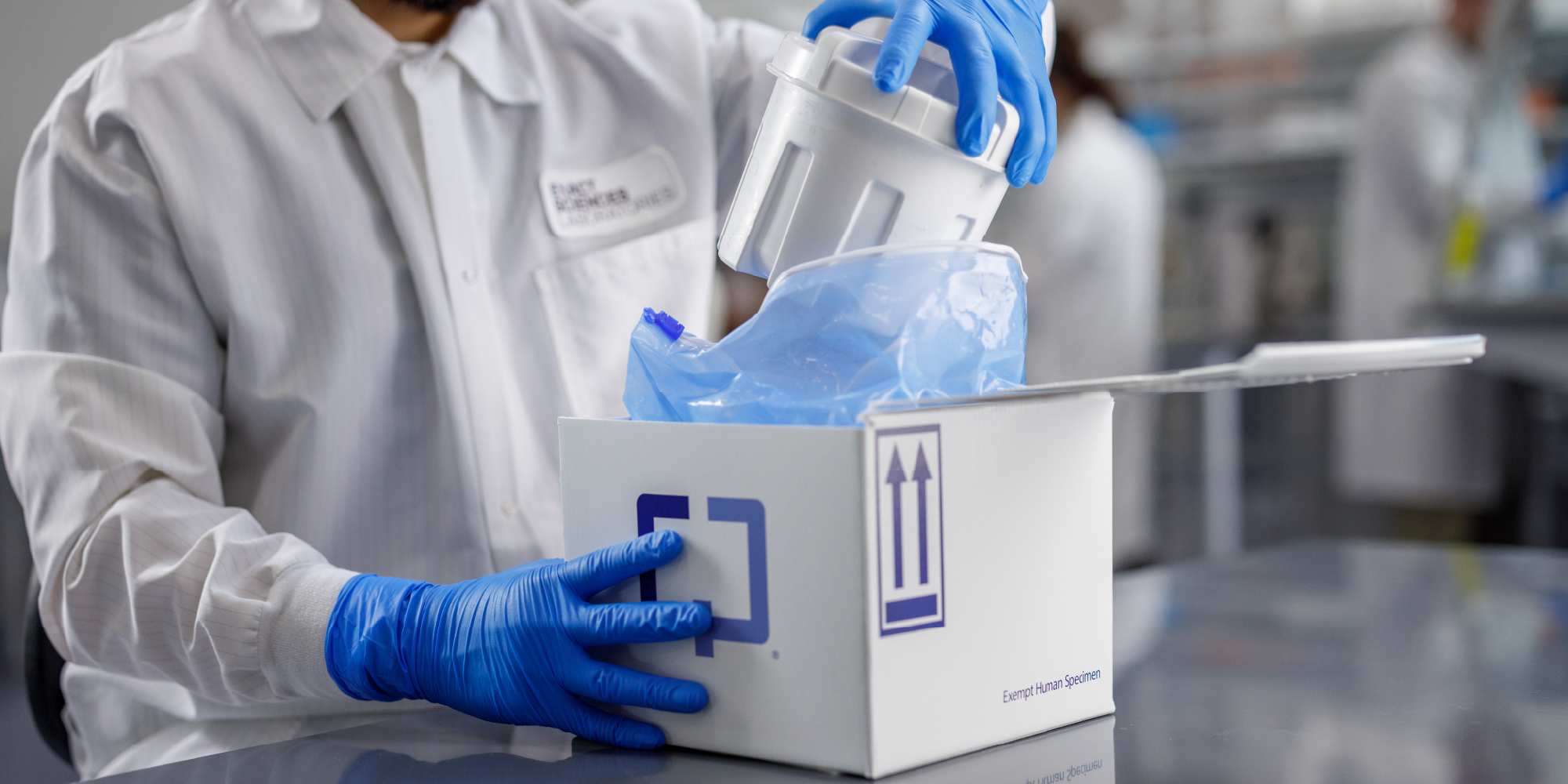
“These programs remove logistical barriers,” says Paul Limburg, MD, MPH, and chief medical officer of screening at Exact Sciences. “They help people take charge of their health, on their own time, in their own home.”
Science that earns trust
The Cologuard test is FDA-approved and built on more than a decade of collaborative research. In a clinical study involving more than 10,000 participants, average risk aged 50 to 84, the test detected 92 percent of colorectal cancers and 42 percent of advanced precancerous polyps.[17]
For many people, peace of mind is the most powerful motivator,” says Dr. Christopher R. Cogle*, author, oncologist and professor of medicine at the University of Florida. “A simple test can replace years of worry with a clear next step.”
Dr. Cogle led one of the nation’s largest payer-driven colorectal cancer screening initiatives, partnering with Florida Medicaid managed care plans to mail Cologuard tests to eligible enrollees. The effort brought nearly 100,000 Floridians up to date on their colorectal cancer screenings and helped raise the state’s screening rate by 4.4 percent.[18]
His upcoming book, Public Startup, explores how creativity and science can reshape medicine and public service as Dr. Cogle looks at why programs like these succeed. “Innovation is often mistaken for apps and gadgets,” he says. “But the real breakthroughs in health come from systems that remove friction and anxiety from people’s lives. It’s why at-home screening is such an important step forward. This is not just lists of people who need cancer screenings. They’re people who need healthcare.”
A broader shift in preventive medicine
“I was diagnosed with breast cancer when I turned 50,” says Kalpa Vithalani. “After that experience, I wanted a screening option I could trust. I chose Cologuard because I know it — and I believe in the quality, research and integrity behind Exact Sciences. That gave me complete confidence.”
Use-at-home tests like Cologuard are part of a larger shift in medicine toward bringing preventive care to where people are. From telehealth consultations to wearable heart monitors, new ways of accessing healthcare are shrinking the gap between patients and early detection.
The convenience of use-at-home testing has made screening less intimidating — and more achievable — for millions of Americans.
The front line of cancer prevention
While positive results still require colonoscopy follow-up, Cologuard represents an effective and accessible way to stay current with screening guidelines.
The first step toward cancer prevention may not be found only in hospitals or labs. Increasingly, it’s in homes — and in the hands of people willing to take action.
The Cologuard test brings rigorous science to the doorstep, transforming a routine test into a small but powerful act toward prevention.
* Dr. Cogle was compensated by Exact Sciences in 2023 for consulting services unrelated to this interview.
About the Cologuard test
The Cologuard test is intended to screen adults 45 years of age and older who are at average risk for colorectal cancer by detecting certain DNA markers and blood in the stool. Do not use if you have had adenomas, have inflammatory bowel disease and certain hereditary syndromes, or a personal or family history of colorectal cancer. The Cologuard test is not a replacement for colonoscopy in high risk patients. Cologuard performance in adults ages 45-49 is estimated based on a large clinical study of patients 50 and older. Cologuard performance in repeat testing has not been evaluated.
The Cologuard test result should be interpreted with caution. A positive test result does not confirm the presence of cancer. Patients with a positive test result should be referred for colonoscopy. A negative test result does not confirm the absence of cancer. Patients with a negative test result should discuss with their doctor when they need to be tested again. False positives and false negative results can occur. In a clinical study, 13% of people without cancer received a positive result (false positive) and 8% of people with cancer received a negative result (false negative). The Cologuard test is prescribed by a licensed health care provider. Talk to your health care provider about available screening options and whether the Cologuard test may be right for you. There are potential risks associated with the Cologuard test and it may not be appropriate for all patients. For more information about the risks, talk to your health care provider or visit www.Cologuard.com for more information. Rx only.
CONTENT FROM

- Journal of the National Cancer Institute
- American Cancer Society
- JAMA Network Open
- Prev Med Rep
- American Cancer Society
- BMC Health Services Research
- JAMA Network Open
- Colorectal Cancer Alliance
- BMC Health Services Research
- American Cancer Society
- The New England Journal of Medicine
- Exact Sciences Corporation
- American Cancer Society
- Colorectal Cancer Alliance
- Exact Sciences Corporation
- JAMA Network Open
- JAMA Network Open
- Cancer Prev Res
The content is paid for and supplied by advertiser. The Washington Post was not involved in the creation of this content.
0:00/0:00
When a Cologuard® test shows up on your doorstep: How screening programs are advancing colon cancer prevention
Voice is AI-generated. Inconsistencies may occur.