Giving every child a fighting chance against Type 1 Diabetes
This children’s hospital knows access for all matters
By WP Creative Group
Managing Type 1 diabetes can feel like a full-time job. Drawing blood from a finger, calculating the carbohydrates in every meal and injecting insulin multiple times a day is hard enough for adults, but it can be especially burdensome for young patients who just want to be normal kids.
New medical devices can make all of this easier, but for children who use public insurance, there are barriers to accessing these technologies. To qualify for a continuous glucose monitor, or CGM, they are required to manually check their glucose at least four times a day for 30 days. It’s a barrier that children with private insurance don’t face, and a difficult barrier to overcome, especially for kids without permanent housing. But a collaborative team at Stanford Children’s Health is working to make sure that a child’s income, housing and insurance status are no longer barriers to being a happy, healthy kid.
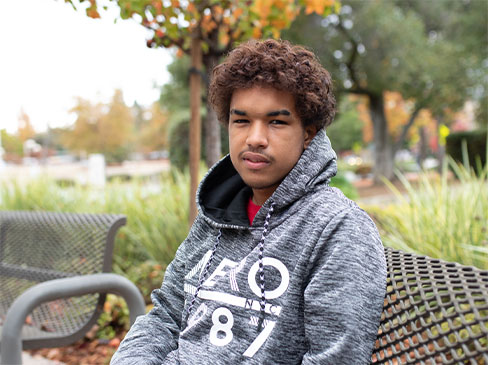
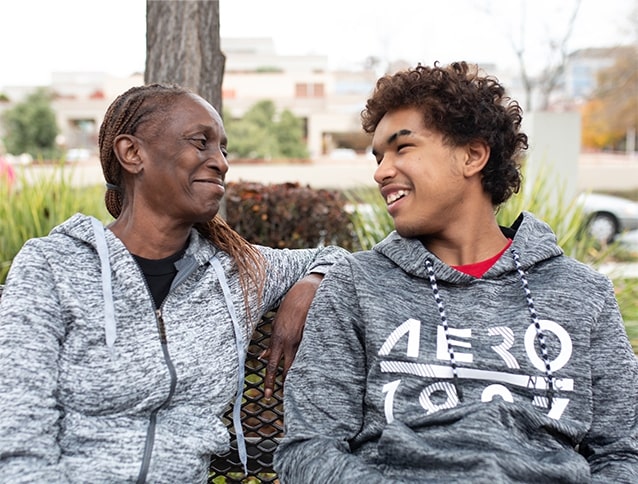
This was welcome news to Dwonya Porsche, who from the age of 10 struggled with symptoms like fatigue, weight loss and hunger. After Dwonya was diagnosed with Type 1 diabetes, his grandmother Ludia Burnett brought him straight to Stanford Children’s Health. Dwonya and Ludia did not have permanent housing at the time, and without a device to manage Dwonya’s diabetes, he continued to struggle.
“I was nervous; in the beginning we were going through a lot of changes because it was new to us, so he kept ending up in and out of the hospital,” Ludia said. “Stanford got involved and helped us out, and they are so much a blessing. He hasn’t been in the hospital for a long time now.”
Stanford got involved and helped us out, and they are so much a blessing.
Ludia Burnett
With funding from the Association of Auxiliaries Endowment for Children — Stanford Children’s philanthropic arm — and a grant from the National Institutes of Health, Stanford Children’s Health has been able to provide technology for kids like Dwonya with public insurance, acting as a stopgap until they can qualify for CGM devices. Starting in 2018, the endocrinology and diabetes experts at Stanford Children’s began providing CGMs for patients as soon as they were diagnosed. A Stanford study provided remote dose adjustments and education based on CGM readings to encourage engagement; the study has already shown that patients given CGMs early in their diagnosis have better long-term glucose control.
For some patients, a CGM can also be the first step toward getting an insulin pump. These two pieces of technology are proving life-changing for many children, including Dwonya.
According to Dr. Sejal Shah, one of the pediatric endocrinologists who has worked closely with Dwonya throughout his treatment at Stanford Children’s, the difference from before and after the CGM has been night and day.
“He has become more engaged with his care,” Dr. Shah said. “That will only help him in the future.”

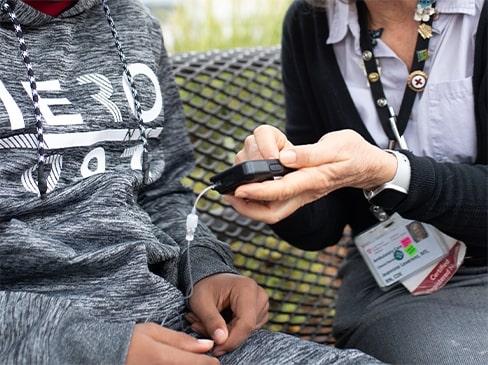
Dwonya is able to keep track of his glucose levels using the CGM provided by Stanford Children’s and an application on his phone. When he needs insulin, he just has to trigger his pump.
“It’s still a little stressful, but it’s better than before,” Dwonya said.
Together, a CGM and insulin pump are known as an artificial pancreas, something Stanford’s pediatric endocrinology team has been researching and working to perfect for decades. Dr. David Maahs, division chief of pediatric endocrinology at Stanford Children’s Health, explained that the two technologies created a “closed loop” system that effectively replaces a normal pancreas.
“If you are able to use diabetes technology, you get much better glucose control,” Dr. Maahs said. “We know that the tighter you control your glucose, the less problems that you’re going to have in the future.”
The team at Stanford Children’s is working to ensure that this less problematic future is available to every patient, regardless of economic status.
Our goal was to kickstart CGM use for our youth with public insurance by providing them with supplies until they could receive approval.
Dr. Priya Prahalad
“For our youth with private insurance, getting a CGM just requires a prescription from us, but people with public insurance have to meet multiple criteria,” said Dr. Priya Prahalad, a pediatric endocrinologist at Stanford Children’s who manages the pilot program. “Our goal was to kickstart CGM use for our youth with public insurance by providing them with supplies until they could receive approval.”
They have done that and much more. As one of the largest pediatric endocrinology programs in the Bay Area, Stanford Children’s Health has already helped 80 children like Dwonya get new leases on life with CGM access and helped more than 250 children newly diagnosed with Type 1 diabetes, with plans to grow in the future.
Type 1 Diabetes
Unlike the more common Type 2 diabetes, Type 1 diabetes typically presents itself in childhood, as patients’ immune systems attack pancreatic cells that produce insulin, a hormone that regulates how the body metabolizes carbohydrates. Without glucose monitoring and insulin pumps, people with Type 1 diabetes must carefully track how many grams of carbohydrates they eat and then calculate how much insulin they must inject in order to keep their glucose levels balanced.
Patients who miss a test or an injection risk having glucose levels that are too high or too low, which can lead to seizures and other serious health problems, including diabetic ketoacidosis, a potentially life-threatening condition.
Before he received his CGM, Dwonya struggled to check his sugars regularly and to give himself insulin when needed. He and his grandmother were without stable housing for many months, making it even more difficult for Dwonya to control his diabetes. According to his medical team, when Dwonya arrived at Stanford Children’s he was only giving himself long-acting insulin once every other day or so, and he rarely took his short-acting insulin, which is used to control glucose levels when eating carbohydrates. He was in and out of the hospital with diabetic ketoacidosis for years.
“There’s a high instance of burnout and distress in youth with diabetes because of how time consuming it is, and how it affects many aspects of life,” Dr. Prahalad said. “It is really hard for kids with diabetes to manage themselves.”
Now, with a CGM, Dwonya only needs to input how many grams of carbohydrates he’s eating into his insulin pump, and the technology does the rest.
“He’s one of our biggest success stories,” Dr. Prahalad said.
Diabetes Education and Data
One of the key pieces of Stanford Children’s youth diabetes program is its diabetes education arm.
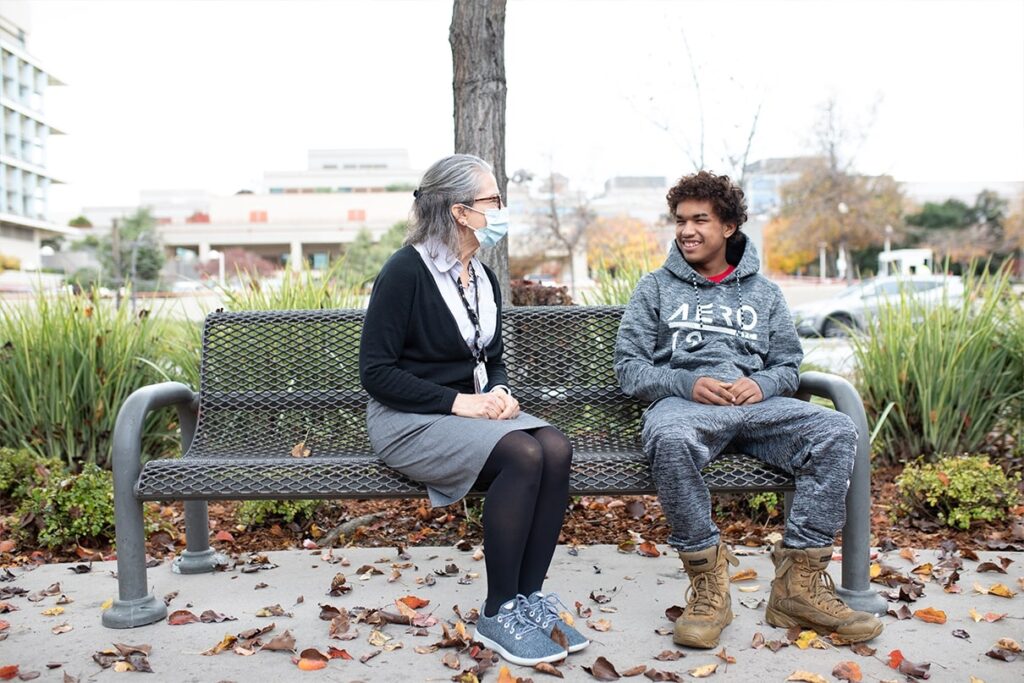
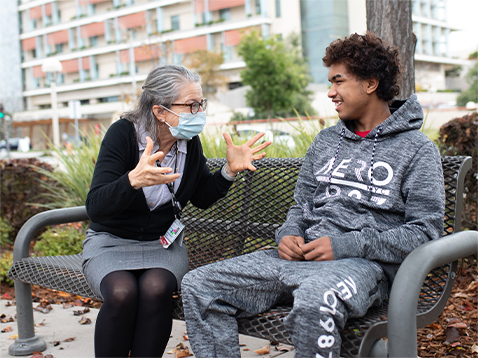
Jeannine Leverenz is a pediatric nurse and diabetes educator at Stanford Children’s Health. She has worked alongside Dwonya from the beginning, meeting him at age 10 when taking care of his diabetes was one of many worries he dealt with on a daily basis.
“It’s really hard for a kid like Dwonya, who is worried about his caretaker, worried about where food is coming from the next day, or if she has enough money to put food on the table,” Leverenz said. When you’re worried about all of these other things, it’s hard to focus on making sure you get your insulin.”

Leverenz and the team of providers and diabetes educators at Stanford Children’s Health gave Dwonya and Ludia a crash course in Type 1 diabetes, the new technology and why it was so important to use it correctly. Once Dwonya began using the CGM, things started to change for the better. His team was able to show that he was monitoring his blood sugar regularly, and he qualified for an insulin pump.
Insulin pumps are not right for every patient and can be difficult for kids to wear and use, so Leverenz started by giving Dwonya a fake pump to keep in his pocket.
“He realized, ‘Gosh, this isn’t so bad. People can’t really tell I have diabetes or that I’m wearing this device,’ so we talked him into going on the pump,” she said.
Now, when Dwonya’s sugars are too high, his CGM notifies his pump, which gives him extra insulin. No more sticking his finger or trying to remember to take his insulin multiple times a day.
“Before we got him on the system, he was this scrawny little teen who couldn’t put on any weight,” Leverenz said. “Over the last eight or nine months that he’s been on the whole system, he’s growing and maturing; it’s made a huge difference in him, and he’s starting to see it also.”
Leverenz checks in regularly with the family and calls if she notices anything concerning in Dwonya’s data. On the phone, Dwonya is soft-spoken, but Leverenz said he has begun to text her with pride about his “time in range,” or the percentage of time a day his glucose levels are within his target range.
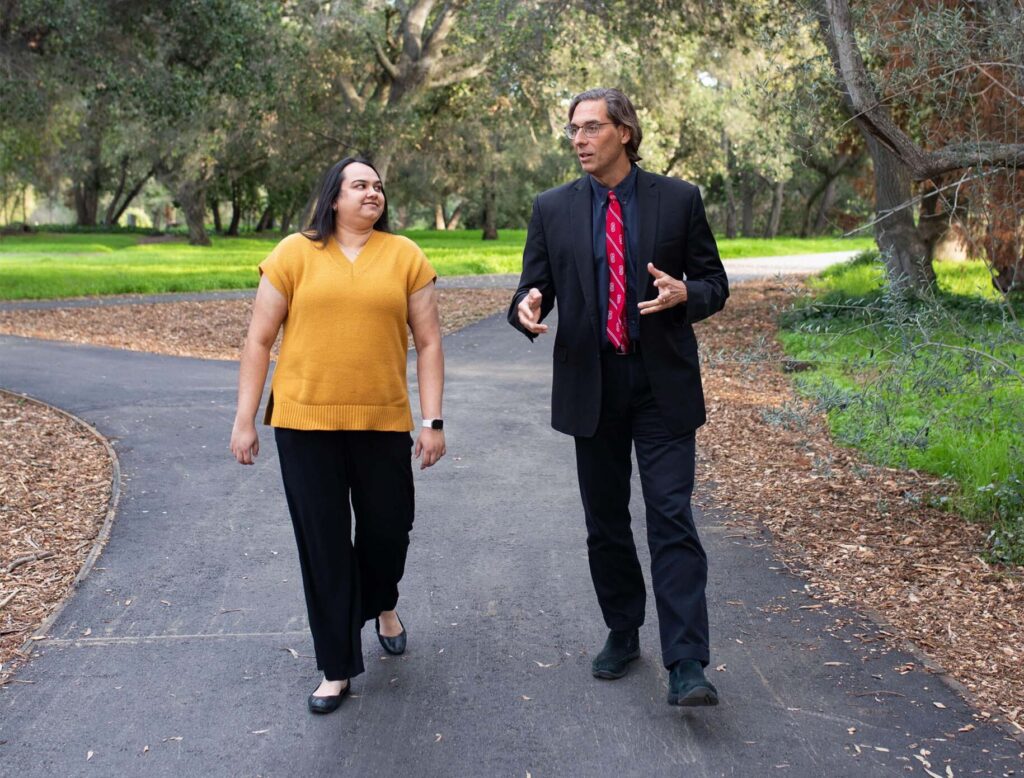
“With these CGMs, and with the work of our engineering colleagues, we can transfer the glucose data into a dashboard and see who needs help with weekly reviews,” Dr. Maahs said. “We can then prioritize who the diabetes educators reach out to, to be able to help make dose adjustments or help with education.”
There are three years left in Stanford Children’s research partnership with the NIH, and the team at Stanford Children’s is committed to decreasing health disparities. Drs. Maahs, Shah and Prahalad and other coauthors have recently published a paper in the journal Clinical Diabetes that emphasizes that tech-enabled health care delivery, such as telehealth, can create more inclusive workflows and minimize health disparities.
The goal, Dr. Maahs said, is to change minds and change policy, so that every child gets the technology they need to manage their diabetes.
Learn more about Stanford Children’s Health pediatric endocrinology program.
Credits: By WP Creative Group