A hi-tech village is working to solve America’s chip shortage
Public-private partnerships are key to revitalizing the U.S. semiconductor industry, ensuring long-term innovation and national security.
By WP Creative Group
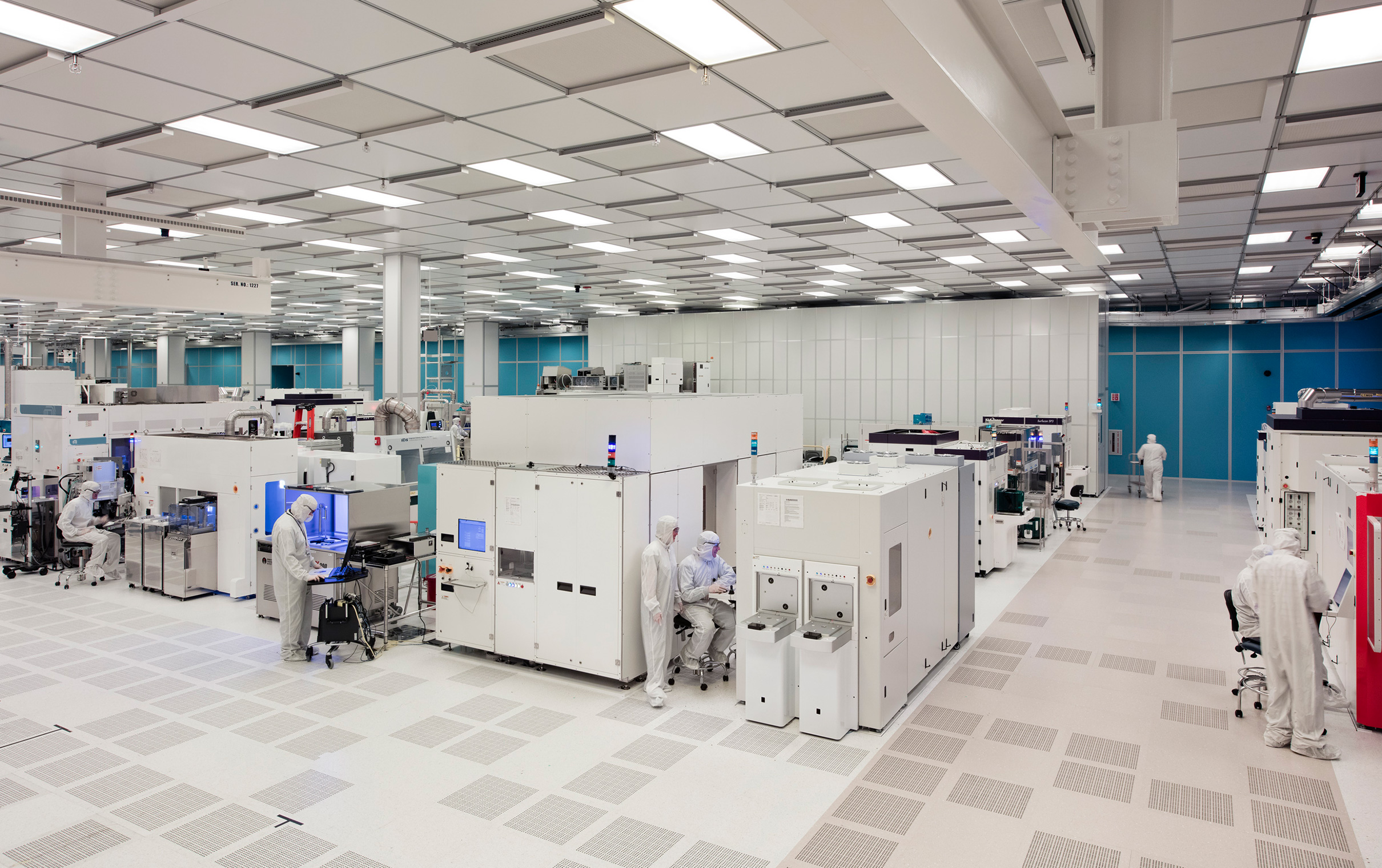
The U.S. is facing a shortage of microchips that power everything from coffeemakers to lifesaving medical equipment. To solve it, industry stakeholders are putting aside rivalries and red tape and embracing public-private partnerships as the model for restoring the country’s leadership in semiconductor research, development and production.
“At this point, we are all rolling up our sleeves and developing the right agenda,” said Mukesh Khare, VP, hybrid cloud at IBM Research. Khare is leading IBM’s role in the American Semiconductor Innovation Coalition (ASIC). ASIC was formed to help revitalize the U.S. chip industry, with members representing private industry, academia and non-profits. In addition to IBM, ASIC’s 70-plus member roster includes notable organizations such as Microsoft, Applied Materials, Siemens-EDA, Cornell University, MIT and Howard University. “No one company, no single state can do this alone,” said David Anderson, president of ASIC member NY CREATES, a state-backed facilitator of high-tech projects in the Empire State.
ASIC’s immediate priority is to persuade Congress to fully fund the CHIPS for America Act. The act sets aside $52 billion for federal investment in semiconductor research and development. With both the House and Senate having passed their own versions, it’s now up to Congress to deliver a reconciled version to President Biden for his signature. Biden has publicly signaled his support for the act. Congress is also mulling the FABS Act, which provides a tax credit for semiconductor investment. The concern is that without Congressional support, the country could fall further behind in the global semiconductor market. Europe, for example, recently passed its own package, known as the EU Chips Act, to fund chip development on the Continent. The U.S. government “has not been involved in really fostering the semiconductor industry, while governments overseas have had no problems in doing that,” said Jesús del Alamo, professor of engineering at MIT.
Overseas rivals dominate
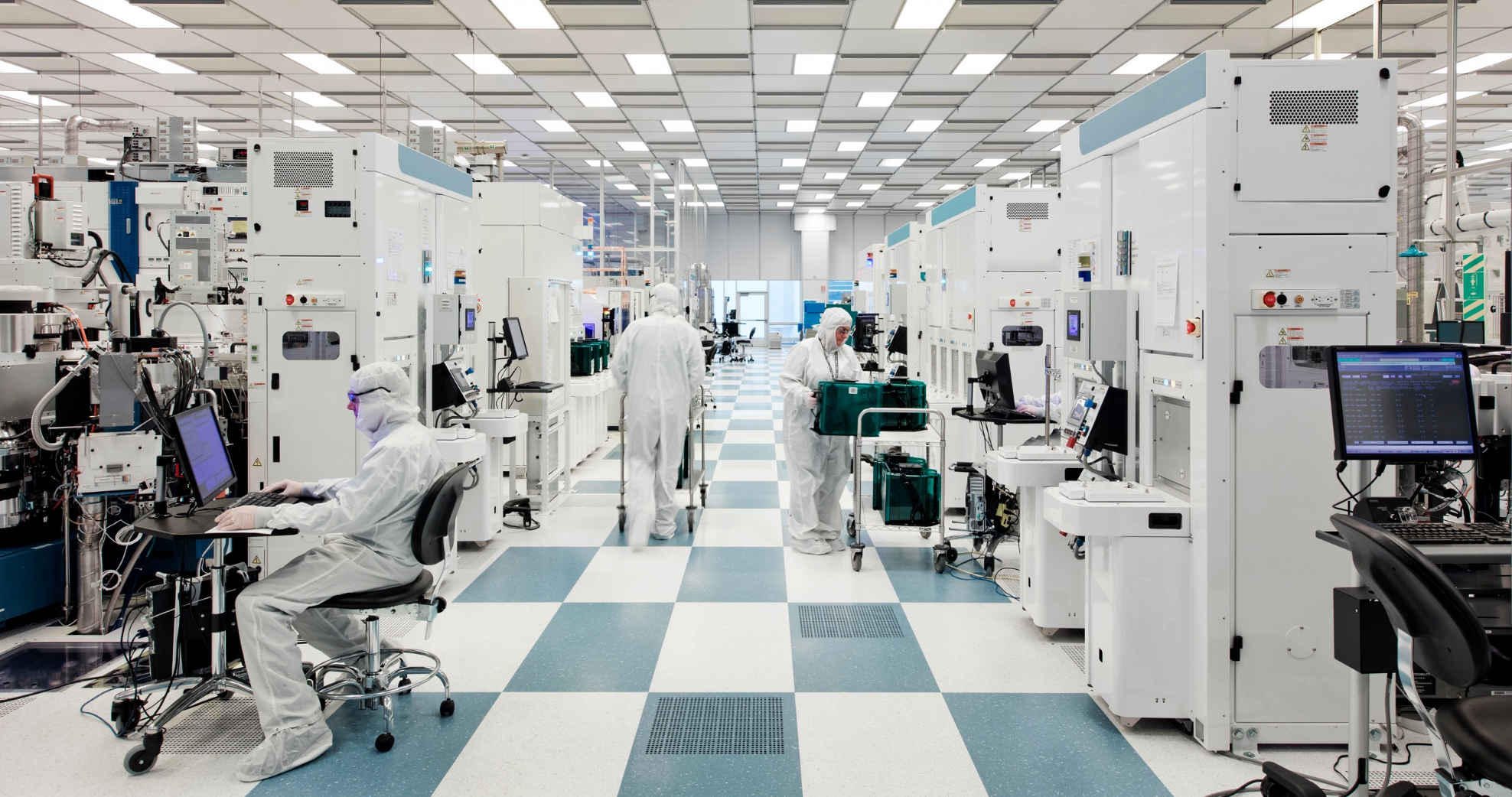
As recently as 1990, the U.S. held 37 percent of the world’s semiconductor manufacturing capacity, according to the Semiconductor Industry Association. That’s now down to 12 percent even as some of the most sophisticated processors continue to be designed by U.S. companies. Meanwhile, Asia has become the dominant producer—with one Taiwanese company in particular manufacturing over 90 percent of the world’s advanced microchips. The U.S. is currently experiencing the consequences of becoming overly reliant on a handful of overseas suppliers. The pandemic boosted chip demand as more consumers and businesses adopted digital-first lifestyles and operations. At the same time, covid reduced shipments as lockdowns disrupted global supply chains. With demand and supply moving in opposite directions, there are now critical shortages for chips that power a vast range of products. One major automaker recently blamed the shortage for a $3.1 billion loss. Meanwhile, medical device manufacturers have warned that the situation could stall production of vital products such as defibrillators and pacemakers.

And with foundries running at full tilt just to meet current demand, some of the larger overseas facilities have cut back on prototyping services. This hurts U.S. startups that need to test chips designed for cutting-edge applications like AI, virtual reality and quantum computing. “Addressing this chip shortage goes beyond just being able to buy the next computer or car. It really is key to fostering future innovation,” said del Alamo.
ASIC is looking to revitalize the American chip industry by focusing on a number of key areas, including infrastructure, innovation and skills development. The CHIPS Act calls for the establishment of a National Semiconductor Technology Center, and ASIC believes it should be distributed across a network of innovation hubs around the country. These hubs would provide “an innovative ecosystem for research, development and prototyping with first-class resources, scientists, facilities and partners who can work quickly and efficiently to demonstrate and transfer breakthrough technology to manufacturing to secure a strong, domestic chip supply chain for the future,” ASIC said in a recent white paper.
Addressing this chip shortage goes beyond just being able to buy the next computer or car. It really is key to fostering future innovation.
Jesús del Alamo, professor of engineering at MIT
A strong candidate for inclusion into the NSTC is the Albany Nanotech Complex, which exemplifies the innovation part of the equation. Last December, IBM and Samsung researchers at the publicly owned facility in Albany, New York announced what’s known as a vertical transistor. This new transistor design has the potential to reduce energy consumption by 85 percent compared to conventional chips in which transistors are arrayed across a flat surface. Potential applications range from autonomous vehicles to smartphones. “You wouldn’t have to charge your phone for three days,” said IBM’s Khare.
The CHIPS Act also supports research into advanced packaging methods that would allow manufacturers to combine a variety of chipsets into one, low cost and energy efficient package.
Skilled workers needed, from all backgrounds
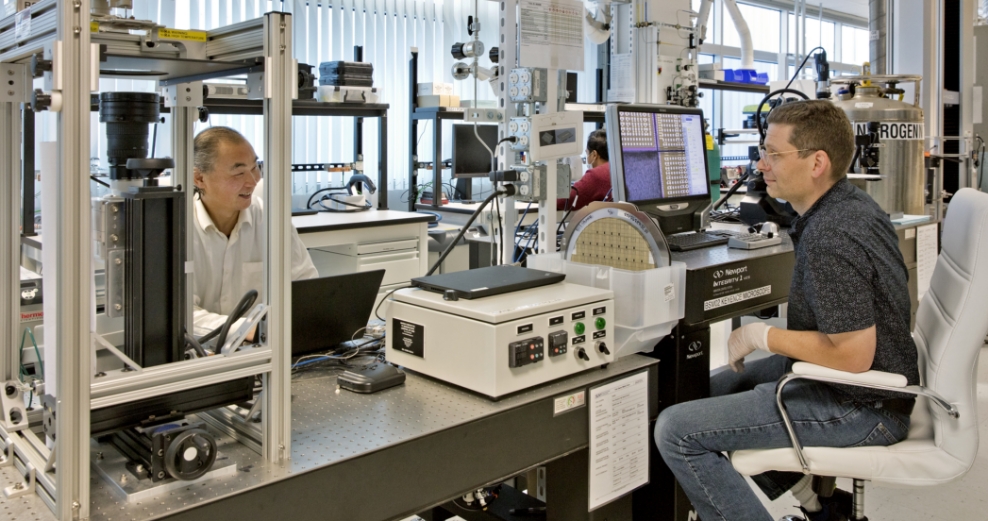
Investments in infrastructure alone won’t restore the U.S. to preeminence in chipmaking. The country is on pace to see a shortage of about 1.1 million STEM workers as soon as 2024, according to the American Action Forum. To help close this gap, ASIC members are working to increase and diversify the supply of skilled labor for chipmaking and related industries.
Officials at Howard University, an ASIC member, note that giving minority students equal access to STEM programs is essential to ensuring that U.S. industry has the technologically skilled workforce it needs. Currently, just nine percent of STEM workers are Black while only seven percent are Hispanic, according to Pew. Those numbers haven’t changed much over the years, despite the fact that both groups are growing as a portion of the overall population. “The country’s demographics are changing,” said Michaela Amoo, an assistant professor at Howard’s College of Engineering and Architecture. Amoo said that progress in diversifying STEM opportunities needs to start well before college. “What we really need to do is get into the whole K-12 pipeline,” she said.
Ripple effect of the CHIPS for America Act:



Restoring America’s chip manufacturing leadership would create a ripple effect of benefits for the entire nation. Every semiconductor job generates 5.7 additional jobs across the economy, according to SIA. Having a more robust, domestic chipmaking industry would also alleviate supply chain shortages and it would strengthen national defense by eliminating U.S. reliance on overseas suppliers for chips that power military assets like ships, tanks and aircraft. “Ultimately it will lead to greater economic and national security for our future,” said NY CREATES’ Anderson.
Click here for more information about how ASIC is working to ensure America’s innovation future.
Credits: By WP Creative Group