Solving Scarcity
AI can prevent covid-style shortages by transforming supply chains, inside and out.
By WP Creative Group
July 31, 2023
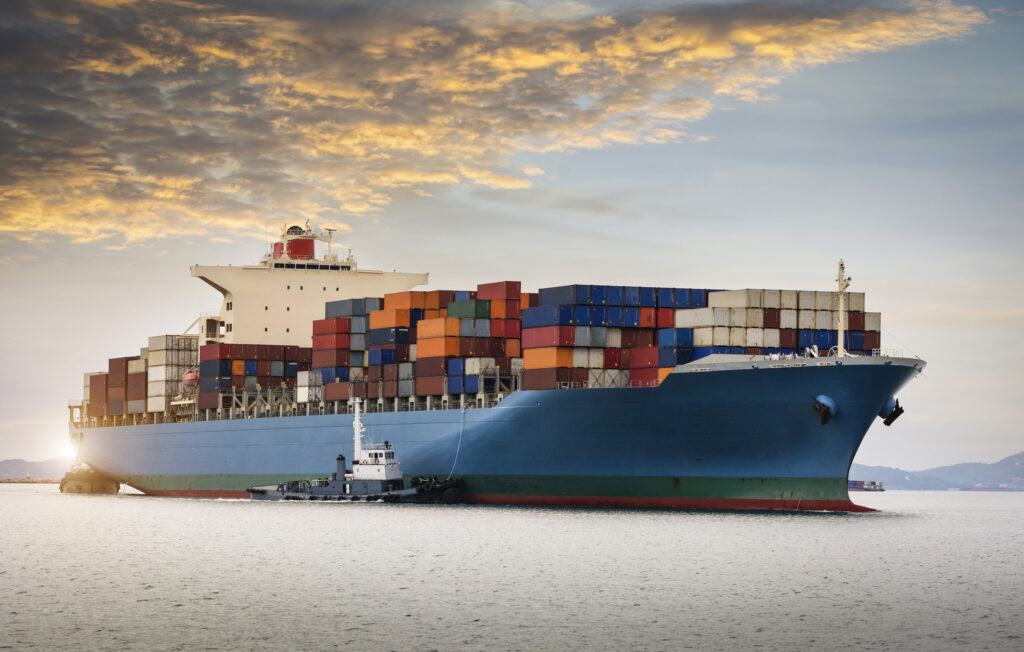
The pandemic broke supply chains worldwide, resulting in shortages of everything from food staples to baby formula. In fact, 72 percent* of companies say covid-related disruptions negatively impacted their procurement and distribution operations. Government supply chains were also hit, impeding distribution of critical goods such as masks and vaccine ingredients.
In response, organizations across the private and public sectors are looking to build supply chain and logistics operations that are more resilient and can withstand the unexpected. Given today’s headlines, that’s just prudent. Events such as the war in Ukraine, more frequent natural disasters caused by climate change and large-scale cyberattacks show that disruptive, “black swan” events are becoming more commonplace.
The good news for both businesses and government agencies is that new technologies, including edge computing, artificial intelligence and digital twins, give organizations the means to build highly resilient supply chains.
One company that is leading the way in developing and enabling these solutions is Intel. Going beyond microchip manufacturing, the company has expanded its core business to create technologies that support a range of critical business tasks, including supply chain and logistics optimization.
Intel inside, and outside
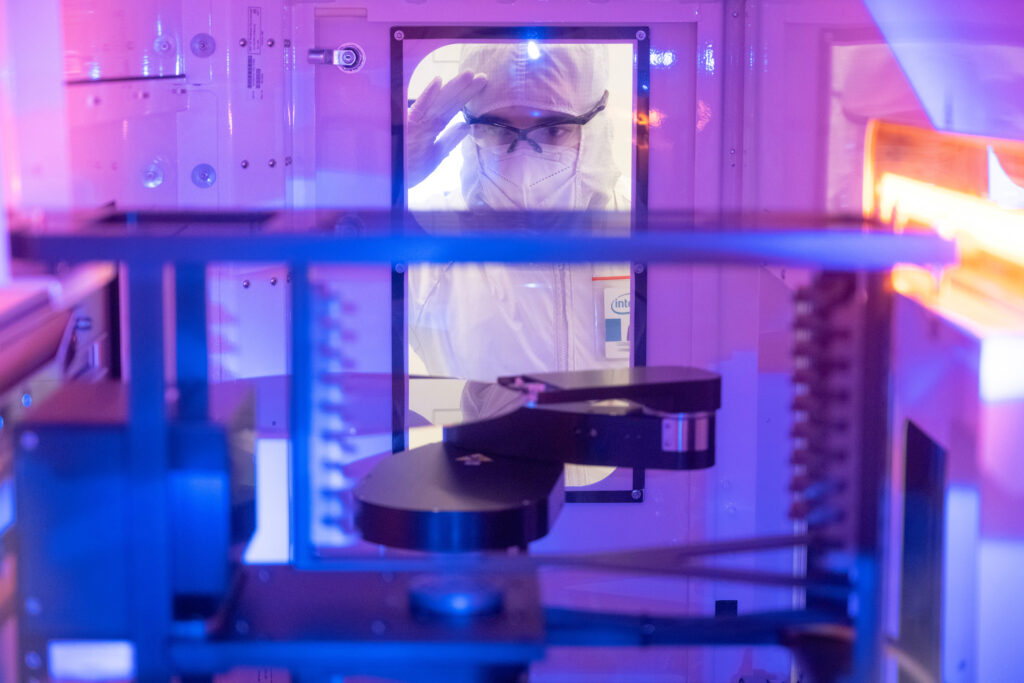
This evolution has led the company to an “inside out/outside in” approach to meeting customer needs and solving their challenges. The “inside out” part of the equation is about ensuring that its own, internal supply chain is robust enough to meet market demand for advanced processors.
“It’s about what Intel is doing to enable a more stable, secure and safe supply chain of semiconductor technologies and manufacturing in multiple theaters around the world,” said Rick Lisa, general manager of Intel’s Government Center of Excellence. “As we look to the U.S., Europe, China and the Far East, Intel is doing an awful lot to build semiconductor capacity.”
“Outside in” is where Intel works with application developers and system integrators to enable solutions that help customers create their own robust supply chains. “There’s a role Intel is playing, together with our partners, in building solutions that take advantage of technology to enable more resilient, more consistent and sustainable supply chains,” said Lisa. “And this is to answer the question, ‘How do we make sure we’re getting goods in and out of the country and onto shelves?’.”
Automation is key
The pandemic exposed organizations’ dependence on manual processes. When workers became unavailable to perform various tasks, things shut down. According to Lisa, the “outside in” solution lies in using technology to automate as many supply chain processes as possible. “What we’re doing now is looking at how the combination of human capital, together with technology, enables a better flow of information across supply chains,” said Lisa. Innovations that can improve supply chain resilience and efficiency include:
- Edge computing extends compute resources closer to the point of data creation to capture, analyze and transmit key information. For example, sensors on a shipping container can give organizations real-time insights on its condition and location. “The product itself can be a data producer,” said Lisa.
This data can be fed into systems such as the Intel® Connected Logistics Platform. Designed for organizations that carry out complex logistics operations, it uses smart, wireless sensors to provide near real-time asset tracking.
- Artificial intelligence promises to radically transform supply chain operations. The technology can help organizations predict inventory needs, match supply with demand and move goods around the world more efficiently and with minimal human intervention. AI can also speed up procurement processes. For example, the Department of Defense has expressed interest in experimenting with generative AI to write acquisition contracts.
- Digital twins use software to virtually replicate machinery and business processes, including logistics operations. Organizations can model their supply chains to identify weak points and take remedial action proactively. “Eventually you are looking at an autonomous environment that is running itself,” said Lisa.
Intel’s “outside in” approach also includes offering supply chain and operational expertise to enterprises and government agencies around the world. As a large organization that operates complex supply chains spanning dozens of countries, it has a wealth of knowledge to share. “Intel is not just a silicon provider; we’re a solutions enabler. I think that’s a story that isn’t often told,” said Lisa.
Intel recently engaged with the Ministry of Agriculture in Poland to make artificial intelligence training available for students from all 61 rural vocational schools in the country. “Locally trained AI coaches worked with students on how to use AI to get better crop yields, better use of water and better use of fertilizers.” said Sarah Kemp, Intel’s VP for International Government Affairs.
Meanwhile, Intel is supporting developers by providing open source software and tools that simplify the creation and deployment of applications that use AI, machine learning, analytics and other processes that have the potential to transform supply chains. Intel® Distribution of OpenVINO™ Toolkit, for instance, is designed to accelerate the development of machine learning solutions.
Inside info
“From an “inside out” perspective, Intel enables such solutions with chips and software designed and manufactured to handle the intense workloads that emerging applications place on computing systems. Its 4th Generation Intel® Xeon® processors have the most built-in accelerators of any CPU on the market. These accelerators are dedicated to specific tasks, offloading them from the main CPU. For example, 4th Gen Xeon uses Intel® Advanced Matrix Extensions (Intel® AMX) to accelerate AI-related tasks such as deep learning inference and training workloads – including natural language processing (NLP), recommendation systems and image recognition.
“Our silicon enables the entire raft of equipment that becomes part of the equation,” said Lisa. “At the root of most supply chain problems is data. So we started looking at how computing technology and networking technology and advanced ideas around AI and software are becoming enabling technologies to an industry set of solutions providers.”
Intel itself was not immune to the supply chain challenges that arose from the pandemic, as it and other chipmakers struggled to meet demand. The result was a global chip shortage. In response, Intel is beefing up its procurement, manufacturing and distribution networks to ensure its government and commercial customers can get the products they need, when needed. “Covid hit and we all figured out that just-in-time just doesn’t work,” said Kemp.
Building resilience
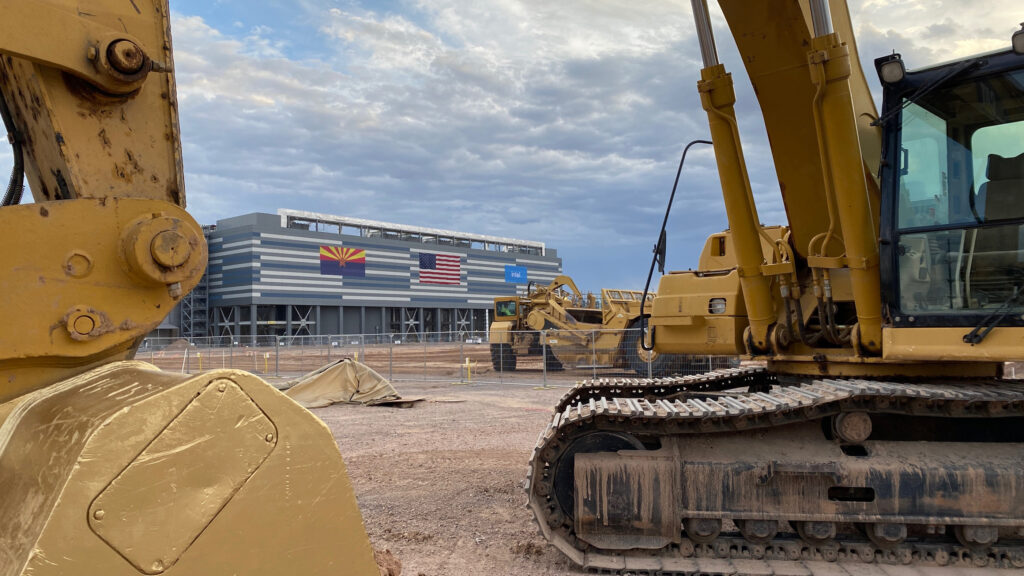
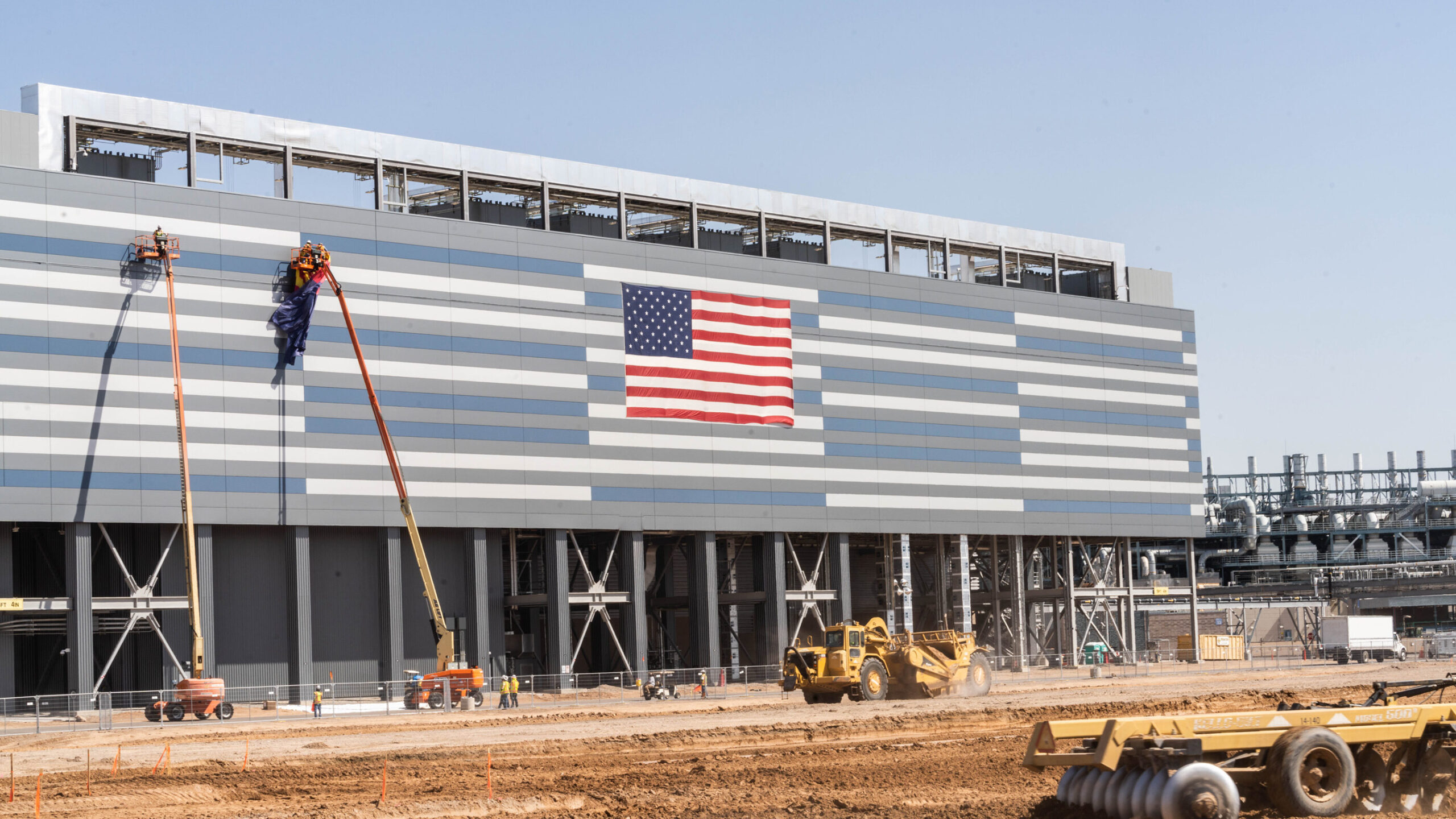
Midway through the pandemic, Intel CEO Pat Gelsinger announced a bold plan, dubbed IDM 2.0, to, among other things, create a more resilient supply chain for chips. Under the plan, Intel is investing billions to expand its domestic manufacturing capacity, including the construction of new plants in Arizona and Ohio. It’s also providing manufacturing services to third parties through the establishment of Intel Foundry Services.


Intel’s ultimate goal is to have half of the world’s semiconductor manufacturing operations – currently dominated by Asia – located in the U.S. or Europe. “It’s about looking at our choke points and looking at how you build resiliency, and de-risking from that perspective,” said Kemp.
In the meantime, it will continue to create “inside out” and “outside in” solutions that can improve supply chain operations internally and for external customers to help ensure that the shortages that afflicted the world during the pandemic are never repeated. “Our raison d’être is to try to use technology to enhance the lives of every single person on the planet,” said Kemp.
Click the links below to learn more about how Intel is transforming government operations.


Notices & Disclaimers
*EY survey, 2022
Intel technologies may require enabled hardware, software or service activation.
Intel does not control or audit third-party data. You should consult other sources to evaluate accuracy.
Statements in this document that refer to future plans or expectations are forward-looking statements. These statements are based on current expectations and involve many risks and uncertainties that could cause actual results to differ materially from those expressed or implied in such statements. For more information on the factors that could cause actual results to differ materially, see our most recent earnings release and SEC filings at www.intc.com.
Any forecasts of goods and services needed for Intel’s operations are provided for discussion purposes only. Intel will have no liability to make any purchase in connection with forecasts published in this document.
© Intel Corporation. Intel, the Intel logo, and other Intel marks
are trademarks of Intel Corporation or its subsidiaries. Other names and brands may be claimed as the property of others.