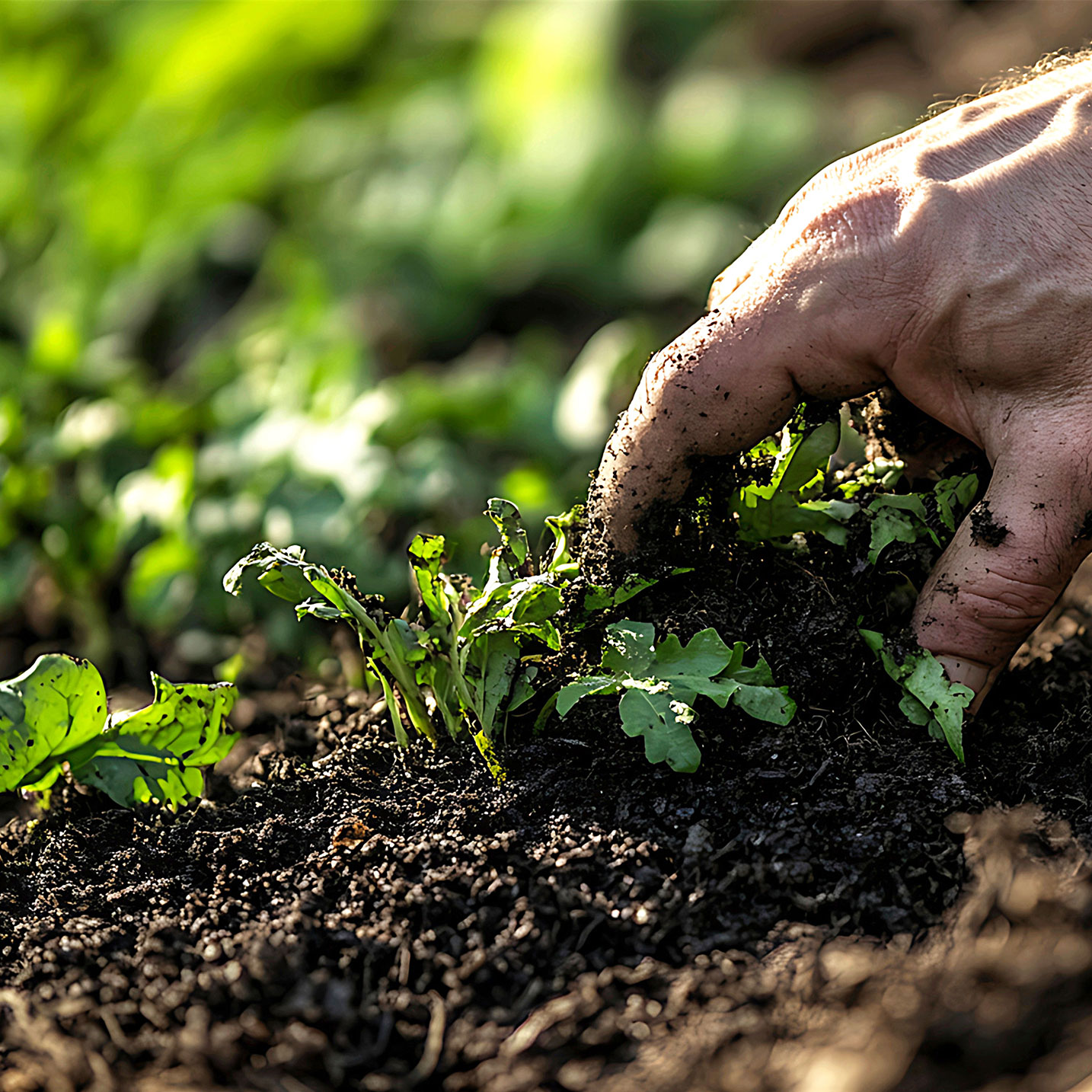
Agriculture’s next season
By Michaila Byrne, Senior International Business Journalist, and Hannah Pall, Project Director
Content from Investment Reports
This content is paid for and supplied by Investment Reports, a media company that generates reports for business leaders.
The Washington Post newsroom was not involved in the creation of this content.



“Buy land, they’re not making it anymore,” Mark Twain once quipped. Today, the remark lands closer to a warning, pointing to a sobering truth facing our modern food system. Earth possesses a finite amount of arable land, much of it degraded, and climate volatility is putting what remains under strain. This need to increase yields to feed a projected population of 10 billion by 2050 has thrust the question of food security firmly to the fore.
About one-third of land is degraded. Water quality is affected by fertilizer runoff and algae blooms, and climate has become a major factor over the past 20 years,” explains Anup Jagwani, Global Director of Farming and Agribusiness at World Bank Group, as the institution moves to double its commitments to agriculture to $9 billion by 2030. Global food production is also highly concentrated, dominated by a surprisingly small number of producers. Six countries — Canada, the United States, Brazil, Argentina, Russia and Ukraine — account for a disproportionate share of globally traded staple crops, particularly the grains and oilseeds that underpin much of the world’s calorie intake. “If you have a disruption in any of those six countries, you’re going to see hunger,” warns Alzbeta Klein, CEO of the International Fertilizer Association.
By 2034, 22% of all calories consumed globally will be traded across borders.
Source: OECD-FAO Agricultural Outlook 2025-2034
While agriculture has always been cyclical, governed by predictable seasonal patterns, climate change is introducing a new layer of volatility. According to McKinsey, extreme weather consistently ranks as farmers’ second-greatest concern after input costs, with the gap between the two rapidly closing each passing year. As Senior Partner David Fiocco explains: “Geopolitics requires shifts in trade dynamics, but extreme weather can take out major percentages of harvests at any given time with no planning. With a trade dispute, you still have the crop and can move it to different markets; you may pay more, and prices may go up, but the physical supply is there.”
The future of food will grow under glass

By combining climate technology, energy efficiency and data-driven cultivation, KUBO Group helps growers worldwide produce fresh vegetables using less water, energy and land. The company designs and builds high-tech greenhouse systems and supports growers with cultivation expertise to enable reliable food production in a changing climate.
That strain is not limited to land. As we flock to cities and away from rural living, farming itself is becoming a rarer vocation. “In the US, roughly 50 percent of the population would’ve been directly involved in agriculture 60 or 70 years ago. Today, that number is about 1.5 percent,” observes Jahmy Hindman, CTO of John Deere.
But these constraints only reveal half the picture. A shrinking workforce has coincided with, and in some cases quietly accelerated, extraordinary efficiency gains achieved through decades of innovation and mechanisation. As Hindman puts it, “You can’t tell the story of modern agriculture without telling the story of efficiency.”
So here is that story: how agriculture is not an industry in decline, but one brimming with innovation, central to navigating a more resource-constrained world.

Emily Rees |
CEO, CropLife International
Today’s average urban dweller would be mind-blown by the level of innovation and what’s in the pipeline.

Brazil’s living laboratory
The defining task for the farmers of the future will be producing more with less. Few places embody that reality more vividly than Brazil, which has successfully transformed from a food importer in the 1970s to a world-leading exporter in 2026. Long considered a north star in agricultural innovation, the country’s tropical climate permits two to three harvests annually, accelerating experimentation and the adoption of technologies, whether it’s no-till farming, regenerative practices, or tropicalised seed varieties.
“In 50 years, we increased our planted area by 140 percent, but our production and productivity by 580 percent,” says Silvia Massruhá, CEO at the Brazilian Agricultural Research Corporation, adding that sustained investment in agricultural science is also responsible for helping propel Brazil’s rise as a global agricultural powerhouse.
Agriculture also hints at another role it may play in the decades ahead: that of energy producer, as seen in Brazil, where sugarcane-based biofuels are increasingly displacing fossil fuels. Ethanol now drives the economics rather than serving merely as a byproduct of sugar production. “Within a circular economy, it’s possible to produce both. As global challenges have intensified, biofuel production has grown, supported by technological advances that make it more viable than in the past,” explains Tomás Manzano, CEO, Copersucar.
That biofuel model is beginning to ripple outward. As Erik Fyrwald, CEO of International Flavors & Fragrances Inc., notes: “The desire for biofuels — nature-based fuels — is strong. Bio-based ethanol grew up in the US with corn and in Brazil with sugarcane, and now Brazil is expanding corn production as well, driving more corn-based ethanol. We’re bringing technology and capability from the U.S. to support Brazil’s expansion.”
Yet this potential is still far from fully realized. “Over the past 20 years in Brazil, corn yields doubled, soybean yields increased by almost 40 percent, and sugarcane yields grew just 3 percent on average. The limitation is not technology, but how slowly sugarcane is planted and scaled, which is why we are investing heavily in seed technologies,” says César Barros, CEO at the Sugarcane Technology Center (CTC). For growers elsewhere, Brazil has become agriculture’s living laboratory, offering a glimpse into the next frontier as innovation moves toward the makeup of the plant itself.
Beyond chemistry
At that level, advances in plant science are unlocking new capabilities, with tools like gene editing giving breeders unprecedented precision. “We are at the beginning of using it in our breeding tools. Innovation is really the DNA of the private seed sector; there’s no industry investing nearly 15 to 20 percent of its annual turnover into innovation. Even the medical or car industry is far lower,” says Michael Keller, Secretary General of International Seed Federation. Beyond genetics, another avenue lies in harnessing the biology surrounding the plant. Indigo Ag, for example, is developing microbiome-based biologicals to complement conventional crop protection, using naturally occurring microbes to improve plant health and reduce reliance on chemical inputs.
Alongside genetics and biologicals, formulation is also evolving to make inputs more efficient. As Guillermo Novo, Chair & CEO of Ashland Inc., explains: “In agriculture, we’re launching technologies like TVO and new wetting agents. The idea is better coverage when spraying and improved performance. With seed coatings, if the coating is stronger, you lose less material during transportation, and there’s less dust when workers handle it. That improves both performance and safety. You also reduce waste and get better use of active ingredients.”

Ashland (NYSE: ASH) is sustainably improving the delivery and performance of agrochemicals for food and non-food crops, in pre-and post-harvest applications. Our scientific solvers are using “new to the world” platform technologies to “tune” ingredients that answer the most complex formulation and delivery challenges. Working with Ashland can lead to greater crop protection and higher yields.
Agrimer™ eco-coat polymer
This innovative ingredient is based on the company’s patented Transformed Vegetable Oils (TVO) technology. It is a nature-based, microplastic-free, inherently biodegradable advanced seed coating polymer:
- FIFRA approved for food & non-food use in pesticide formulations including the U.S.
- Sustainably Soy Certified.
- Superior performing.
- Non-microplastic.
- Nature-based.
- Inherently biodegradable.
- No bioaccumulation.
- Superior dust resistance with lower polymer-use.
- Cost in use benefits.
- Formulation latitude.
- Biocompatibility.
- Low odor.
- No negative germination impact.
Easy-wet™ 300 n wetting agent
Biodegradable, nonionic, silicone-free wetting agent; improves processing efficiency and performance:
- Superior wettability at lower concentrations.
- Reduced spray drift.
- Enhanced coverage of active ingredients across leaf surfaces.
- Non-ionic.
- Silicon-free.
- Biodegradable.
- For vegetables, grains, fruits, florals.
Meanwhile, as water grows scarce and pesticide regulations tighten in regions like the EU, outdoor farming is becoming harder to sustain. According to Wouter Kuiper, CEO of KUBO Group, this is pushing more cultivation under glass: “Going indoors becomes a solution; countries like China and Saudi Arabia are investing in protected crops, glasshouses, and greenhouses to secure supply.” In their current form, however, these systems remain too complicated to scale.“First, we need to simplify them, then expansion can happen very rapidly,” he adds. KUBO is also exploring energy partnerships, using low-grade waste heat from nearby data centres to warm greenhouses, another nod to the growing interplay between food, energy and resource systems.
Beyond the plant itself, water scarcity is forcing farmers to rethink how water reaches it. As Gabriel Miodownik, CEO of Netafim, notes: “Today, about 75 percent of planted agricultural land is not irrigated at all. Of the 25 percent that is irrigated, about 75 percent still relies on older methods like flood irrigation.” By contrast, drip irrigation delivers water and fertilizer directly to the roots, saving about 50 percent of water compared with flood irrigation. Once again, the hurdle is not the technology itself but scaling it.
Food security will increasingly depend on controlled-environment agriculture. The challenge is not the technology, but simplifying greenhouse systems so they can scale globally and deliver predictable, sustainable food production.

Precision at scale
Much still rests on how efficiently the soil itself is worked. Responding to mounting manpower shortages, this year Kubota North America unveiled its autonomous M5 narrow tractor built for mobility within vineyards and orchards. Its CTO, Brett McMickell, explains: “Labor shortages are extremely acute in specialty crops. Some farms cannot harvest because they simply don’t have the workforce.”
At the same time, the scale and sophistication of farm equipment have grown dramatically. Machinery today is two to four times larger than 50–70 years ago, but the deeper shift may lie less in horsepower than in intelligence. As Lodovico Bussolati, CEO of SDF Group, explains: “Electrification is most relevant in segments where sustainability is a high priority, such as premium wine production. For commodity crops, electric tractors or robots have less impact. Across all markets, what truly drives value is digitalization and autonomous guidance.”
While GPS technology has long been used for yield documentation, the next frontier of precision lies in predictability. Decades of agronomic data, combined with advances in computing and connectivity, now allow machinery to process vast streams of information in the field, inferring both what to plant and the optimal moment to plant it. John Deere’s Hindman elaborates: “Now we have abundant computing on the edge, on the equipment, and in data centers. We have nearly ubiquitous connectivity, whether through cellular networks or low Earth orbit satellite constellations, and algorithms capable of taking advantage of both.”
What’s for dinner?
All this progress in the field raises a broader question: what does the world want to eat? Across emerging markets, rising incomes are increasing the demand for protein. “Underlying all of this is strong global demand growth — people want to improve their diets, which generally requires more protein and more cooking oil,” confirms Jim Sutter, CEO of the U.S Soybean Export Council. In developed markets, protein has concurrently taken on new cultural prominence, with high-protein diets, fitness culture, and longevity trends reinforcing demand from the other end of the economic spectrum.
Satiating such appetites depends on healthy animals. While longevity remains the priority in pet care, livestock production is primarily focused on disease prevention. “Around 20 percent of livestock is lost to disease, at $300 billion per year to producers, so focusing on prevention is how we support protein production for a growing global population,” says Jamie Brannan, CCO, Zoetis Inc.
Historically, innovation in animal health has lagged behind human medicine. As Aaron Schacht, CEO of BiomEdit, puts it, “If animal health brings a great product that delivers one-tenth the revenue of a human drug, it immediately sits at the bottom of the investment stack. A blockbuster is $1 billion in human health and $100 million in animal health; R&D budgets follow the same ratio.” That disparity is forcing the sector to pursue answers outside mainstream drug development.
Feed is one example. As explained by Bastiaan van Tilburg, CEO of Nutreco, the way animals are fed, particularly in early life, can dictate productivity, resilience to temperature stress, and environmental impact: “Around 70 percent of a farm’s CO₂ footprint comes from feed, so creating transparency through digital tools and applying precision nutrition — achieving the same or better results with fewer inputs — are key focus areas.” And it’s not just the meat-eaters driving protein demand. “Aquaculture is still a relatively young industry, but it’s growing faster than livestock because fish is a healthy, high-quality protein,” Van Tilburg adds. According to OECD-FAO projections, meeting this demand will require global agricultural and fish production to rise by around 14 percent over the next decade.
At our core, we safeguard cold chain reliability. Maintaining temperature integrity and moving food efficiently already helps reduce waste across the supply chain, and we remain committed to making our facilities more environmentally efficient.

Lost in transit
Producing food is one thing; getting it to our plates intact and fresh three times a day is another. The modern food system hinges on vast behind-the-scenes logistics networks that store and transport millions of pallets daily. These hidden corridors keep our acquired tastes satisfied year-round, whether it’s coffee from Kenya, grapes from Greece, or peppers from Peru.
Like most infrastructure, food logistics is rarely noticed until it falters, as became apparent during the pandemic when consumers were abruptly confronted with bare supermarket shelves. “The broader issue around food production is not whether there is enough, but how it gets to consumers. Thirty to forty percent of manufactured food is wasted because logistics are not in place to move it from where it is produced to where it is consumed,” explains Rob Chambers, CEO of Americold.
Much of the rhetoric around food waste still centers on the farmgate or the point of disposal, where packaging shoulders much of the criticism. Far less attention is paid to preserving quality along the journey.
Enter the cold chain. Food rarely moves directly from producers to retailers, restaurants or consumers, instead passing through multiple refrigerated facilities and distribution points. At every stage, maintaining temperature is critical; if that chain is broken, produce is lost.
To reduce those vulnerabilities, cold-storage facilities are becoming increasingly automated, as conveyors, cranes and robotic systems use AI to handle repetitive tasks while cutting both food and energy waste. As Bram Hage, CEO of NewCold, puts it: “People are the weakest link because they introduce variability or waste. If you have hundreds of people going in and out of a cold store, you lose a lot of energy every time doors open and close.” Given how notoriously energy-intensive such facilities are, every movement inside them counts.
Mary Boote |
CEO, Global Farmer Network
Many of the barriers to access to science-based innovation, technology, and trade are simply because people are not aware of them.

Harvesting talent
For all the advances in automation across fields, farms and warehouses, the industry’s greatest asset remains its people. Yes, technological innovation has delivered remarkable gains in efficiency, helping agriculture lift yields to meet the needs of a growing population. And yes, the myth of farming as an archaic profession may finally be fading. But we’d be mistaken to believe human labor will become redundant.
Agriculture’s outdated stereotypes obscure how rapidly the sector is evolving and how hungry it is for talent. Skills required in 2026 stretch far beyond traditional notions of farm labour. “Agriculture increasingly needs AI engineers, data scientists and robotics specialists alongside traditional mechanical engineering roles. It is a challenging environment, unstructured, outdoors and exposed to the elements, which makes it an exciting area for engineers,” says Kubota’s Brett McMickell.
That talent gap is already acute. “About one in eight jobs in Canada is in the agri-food sector, and it’s about a $150 billion a year business. For every graduate from our college, about four jobs are waiting for them. The sector is growing so quickly, we can’t keep up,” adds Dr John Cranfield, Dean of the Ontario Agricultural College at the University of Guelph.
Public interest in food has never been stronger. In that regard, agriculture offers something few industries can: a direct connection to one of humanity’s most foundational needs. Feeding the world may sound lofty or idealistic, but for many entering the workforce today, that sense of purpose is precisely the draw.
David Fiocco |
Senior Partner, McKinsey
The idea of feeding nine billion people is about bringing the right technologies to the field and solving the challenge of distributing that food across the planet.

Politics of the plate
For much of the past half century, we have grown accustomed to reliable access to abundant food. That reliability has been routinely taken for granted, allowing a degree of complacency to settle in, with food security often treated as a peripheral concern in developed economies. But a steady food supply is not a given.
Recent shocks, from the war in Ukraine triggering the first ever UN Security Council hearing on fertilizers to the growing prominence of food systems in international policy and security discussions, are forcing a reckoning.
In a world of finite land, rising demand and intensifying climate pressures, agriculture is no longer simply about what grows in the field, but about the resilience of the systems that sustain it. The stability of nations, ultimately, rests on the reliability of their food supply.
To explore more of our special business reports from around the world, visit investmentreports.co.
1. World Population Prospects 2022: Summary of Results, United Nations Department of Economic and Social Affairs, accessed March 2026
2. Global Farmer Insights 2024, McKinsey & Company, published October 16, 2024, accessed March 2026
3. OECD-FAO Agricultural Outlook 2025–2034, OECD & Food and Agriculture Organization of the United Nations, published July 15, 2025, accessed March 2026
The content is paid for and supplied by advertiser. The Washington Post was not involved in the creation of this content.