
Beyond the breakthrough: AI’s real impact
By Konstantin Tumanov
Content from Investment Reports
This content is paid for and supplied by Investment Reports, a media company that generates reports for business leaders.
The Washington Post newsroom was not involved in the creation of this content.











We decided to call this report “Beyond the breakthrough” because, three years after generative AI became mainstream, and beyond the euphoria and flood of futuristic predictions, there stood a sobering statistic. One widely quoted study by MIT’s Project NANDA found that 95 percent of enterprise AI initiatives had yet to see a return on investment (ROI). The exact percentage is open to debate, since both the measurement of ROI and AI adoption are not as straightforward. Another study, by Deloitte, found that even among the most successful AI implementation projects, only 13 percent saw returns within 12 months. The broader picture is clear: returns have fallen short of expectations.
Over the course of more than 50 interviews with executives across technology, manufacturing, retail, agriculture and more, we endeavored to identify the characteristics that separated organizations generating tangible returns from those still struggling to do so. In searching for an answer, we were reminded of the Solow productivity paradox. In 1987, Nobel laureate Robert Solow famously observed that “you can see the computer age everywhere but in the productivity statistics.” Computers were already transforming business, yet the productivity gains remained elusive. They arrived only years later, once organizations had redesigned their processes around the technology rather than simply installing it. The same pattern will likely emerge from the current wave of technology adoption. Seeing measurable returns from AI adoption is contingent not so much on selecting the right model, as on preparing the organization around it. Our work suggests that strong data foundations, disciplined governance, workforce preparation, modern infrastructure, as well as patience, are the characteristics that make a difference.
From hype to outcomes
Everybody is talking about AI today, and that is part of the problem. The technology has acquired an almost talismanic status, amplified by the very justified fear of being left behind. Many rushed to adopt AI in a panic, as if it were a trophy to capture and wave at competitors. Yet, as some of our interlocutors point out, deploying AI systems is one thing; unlocking real value from them is another matter.

Elisa Prisner |
EVP Strategy, Industry,
Marketing & Transformation,
Dassault Systèmes
The economy is evolving, and value is increasingly moving from the physical product to the intellectual property behind it: knowledge, know-how, data, and design intelligence. Our platform helps customers generate, protect, trace, and manage new IP.

Francois Giguere |
CTO,Vention
Without a scalable deployment platform, Physical AI never leaves the lab. Software-defined automation provides the foundation to bring Physical AI to the factory floor at scale, and that’s exactly what we’ve built at Vention.

“It is like a carpenter buying all the tools and setting up a beautiful shop, but not making a chair or a table,” says Zapier’s CEO, Wade Foster. Instead of forcefully imposing AI capabilities upon pre-existing structures, successful adopters are those who first commit some time reflecting on what AI can realize for their specific needs. As the President of Siemens’ U.S. Digital Industries, Chris Stevens shares, “The biggest mistake organizations make is starting with the AI model rather than the business problem they’re trying to solve. Many companies approach us with a sophisticated model or an exciting use case, but we always take a step back and ask, ‘What problem are you trying to solve?’” Having first arrived at a clear understanding of the diagnosis, a company can then work backwards, address the data structure and rework workflows in order to achieve measurable outcomes.

AI built for businesses that keep the world running
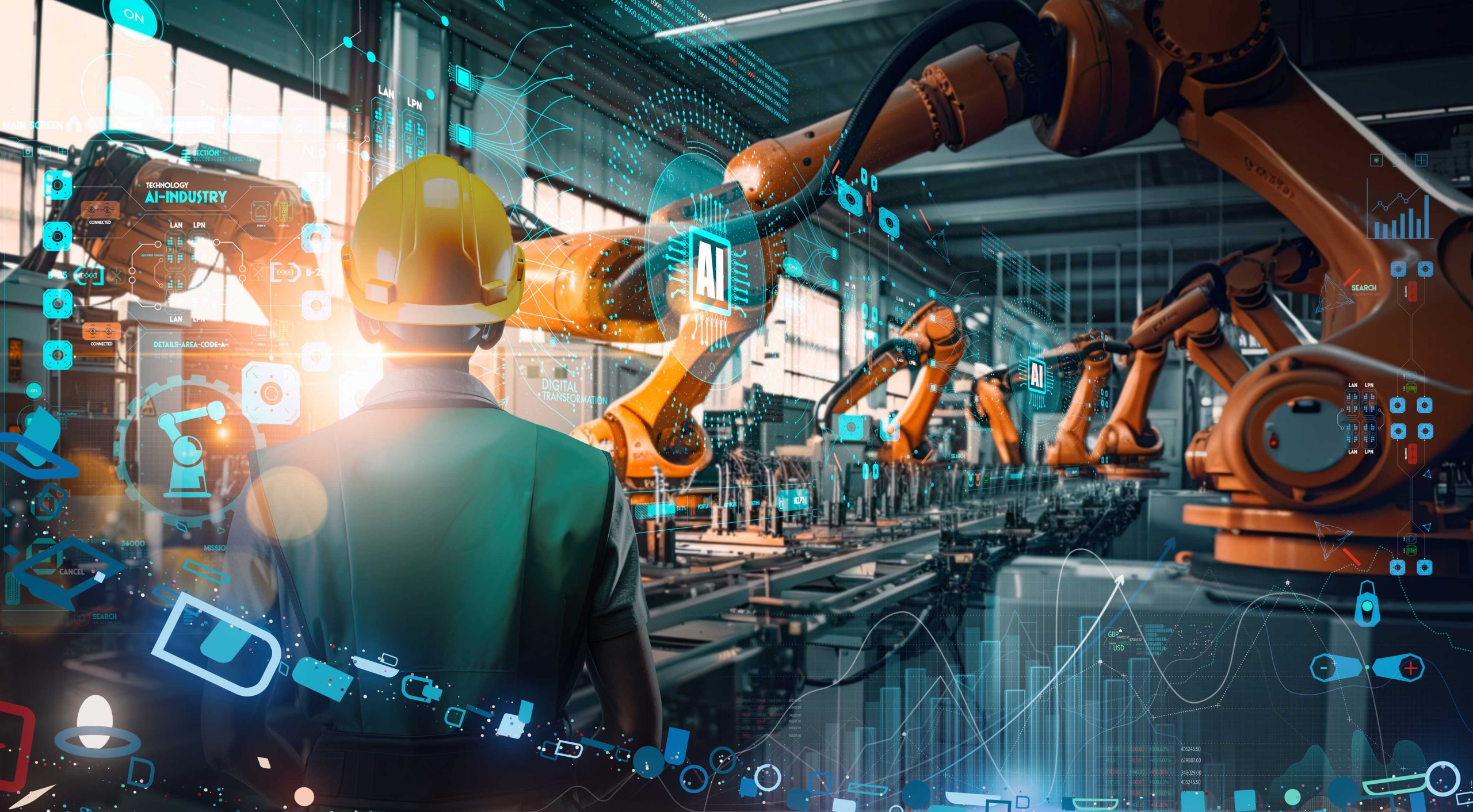
Epicor helps manufacturers, distributors, retailers, automotive businesses and building suppliers put AI to work in practical ways: increasing visibility, improving productivity and helping teams make decisions clearly and confidently.
From managing supply chains to serving customers and optimizing operations, we understand the complexity you face every day. That’s why our agentic AI means your workflows happen while you’re working on other things. And automated processes mean you never have to wonder where things are — only where your business is going.
However, setting up the business case is not always straightforward. Paradoxically, some early adopters may have been the most disadvantaged. “Many early adopters move before the technology and the business case are mature enough. They adopt too soon, results fall short, and then they blame AI, when really the issue is timing and a weak commercial case,” observes Jan Zizka, the CEO of Brightpick, a company that develops autonomous mobile picking robots powered by AI.
Premature adoption frequently leads to fragmentation and the onboarding of a patchwork of systems, which can introduce friction. ServiceNow, which works with a number of Fortune 500 companies, operates with the belief that AI requires a unified approach within an enterprise. “A platform helps organizations manage complexity while focusing on outcomes rather than technology. Many early AI projects failed not because AI failed, but because companies lacked the governance, visibility, and controls needed to deploy it effectively,” ServiceNow’s President, Amit Zavery tells us. The company’s work with CVS Health is a case in point. “Organizations such as CVS Health have used ServiceNow to create a unified front door for employees, allowing them to access HR, IT, onboarding, and support services from one place,” Zavery continues. By consolidating onto a single platform rather than a mix of tools, the company said it reduced technical debt, cut live-agent chats by 50 percent, and now supports more than one million AI-powered conversations.
Oliver Steil |
CEO,TeamViewer
IT issues cost employees an average of 1.3 days each month. That’s why we use AI to create a continuous learning loop: our AI agent Tia learns from every issue to predict, prevent, and automate future incidents. The result is less digital friction and higher productivity.

The same philosophy is emerging inside enterprise software. Rather than treating AI as a standalone product, companies are increasingly embedding it into existing workflows. Epicor, whose Enterprise Resource Planning (ERP) systems serve manufacturers and distributors, began by making enterprise software conversational, allowing users to ask natural-language questions instead of navigating complex interfaces. The company claims that its approach has already saved an estimated 800,000 working hours across thousands of customers. Capturing a key point, Epicor’s President and Chief Product and Technology Officer Vaibhav Vohra emphasizes: “We don’t think about AI as a premium add-on. It should simply be built into ERP so customers can reduce friction immediately and expand their use naturally over time.” The integrative approach is already producing measurable gains. Vohra points to Cornell Pump, which migrated from a competing ERP platform in just two weeks using AI-assisted data mapping, as well as manufacturers that have improved forecasting accuracy and inventory management through AI-supported planning. Rather than promising wholesale reinvention, Epicor’s experience suggests that much of AI’s value lies in making existing processes faster, more accurate and easier to use.

Powering the future
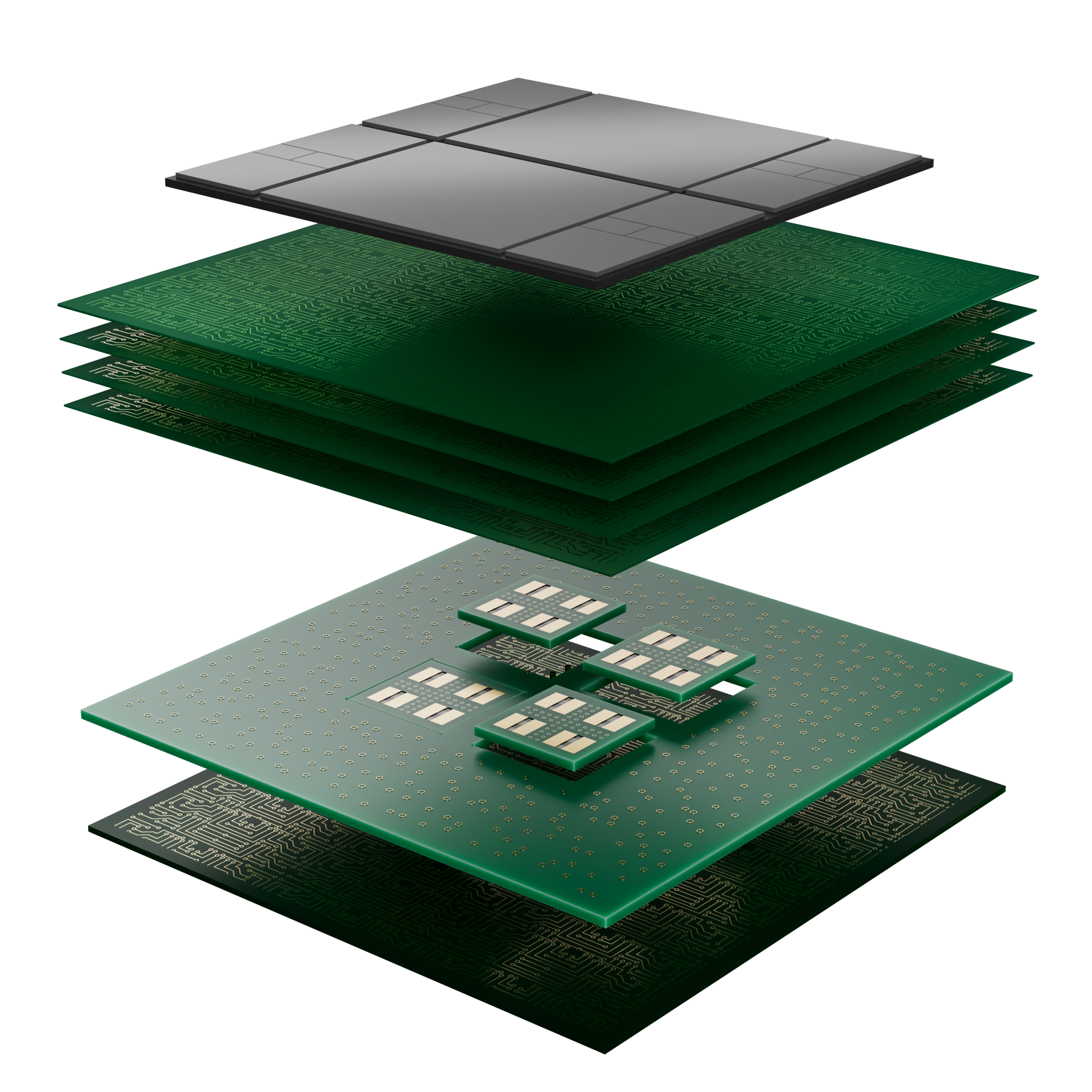
Saras is redefining power delivery for AI infrastructure by moving from distributed, lossy architectures to tightly integrated vertical systems that bring power directly beneath the compute die.
Ron Huemoeller, President & CEO, Saras Micro Devices
Markets served
- Artificial Intelligence & Machine Learning
- Cloud Computing/Data Center
- HPC/ Enterprise & Server
- Automotive
- Networking

Powering the future
Saras is redefining power delivery for AI infrastructure by moving from distributed, lossy architectures to tightly integrated vertical systems that bring power directly beneath the compute die.
Ron Huemoeller, President & CEO, Saras Micro Devices
Markets served
- Artificial Intelligence & Machine Learning
- Cloud Computing/Data Center
- HPC/ Enterprise & Server
- Automotive
- Networking
The solution to inefficient AI integration is sometimes simpler than a full platform overhaul. It may just be about using less. “Today, most organizations are racing to become AI-first, prioritizing speed over efficiency. As a result, many deploy frontier models that are far more powerful—and expensive—than their workloads actually require,” notes ScaleOps’ CEO, Yodar Shafrir. The company helps customers identify which AI workloads don’t require the most advanced models and migrate those use cases to more efficient open-source alternatives. Once those models are in place, ScaleOps automatically optimizes the underlying infrastructure, helping customers run AI workloads 15 to 20 times more efficiently. The point, Shafrir stresses, isn’t simply to cut costs, but to build AI infrastructure that can scale sustainably as adoption grows.
Kapil Jain |
CEO and Managing Director, eClerx
AI alone will not create a lasting moat. Competitive advantage will come from embedding AI into the fabric of the enterprise — combining domain expertise, data, and operational rigor to transform how decisions are made, work is executed, and value is delivered.

Matt Baer |
CEO, Stitch Fix
The biggest opportunity for AI in retail isn’t simply greater efficiency — it’s restoring the level of personal service that shoppers once expected. By combining AI with human expertise, retailers can create experiences that feel tailored to every individual.

Learning from the best
Unsatisfactory ROI cases may partly explain why only about 18 percent of U.S. firms had implemented AI in a core business function as of early 2026, according to the Census Bureau’s Business Trends and Outlook Survey. That said, looking at intra-industry figures is not always useful as the depth of implementation is highly sector-dependent. Raul K. Martynek, the CEO of DataBank, one of the largest American data center operators, highlights that the strongest case for AI adoption has been in software development, where productivity gains are obvious. “Beyond that, we’re beginning to see compelling use cases in areas like healthcare and scientific discovery. However, businesses are still operating complex organizations with existing responsibilities and systems. Integrating AI into those environments will take time.” With that knowledge in mind, we turned toward business leaders who oversaw successful AI rollouts in other sectors of the economy to understand more about their strategies. Remarkably, success stories across retail, enterprise software and finance share a very similar pattern of patience and preliminary work.

Close critical AI skills gaps.
Prove your teams can deliver.

AI initiatives don’t fail because of tech. They fail because the workforce isn’t ready. Pluralsight AI Academy closes that gap by developing organization-wide readiness in literacy, productivity, and agentic AI. Start with skill assessments to benchmark capabilities and get customized
learning paths aligned to roles, departments, and business objectives. Don’t leave AI ROI on the table.

Close critical AI skills gaps.
Prove your teams can deliver.
AI initiatives don’t fail because of tech. They fail because the workforce isn’t ready. Pluralsight AI Academy closes that gap by developing organization-wide readiness in literacy, productivity, and agentic AI. Start with skill assessments to benchmark capabilities and get customized learning paths aligned to roles, departments, and business objectives. Don’t leave AI ROI on the table.

Perhaps the hardest and most recurrent challenge for the transition from proof of concept to scaling has been data. Research from Iron Mountain, an information management and digital infrastructure company, shows that only 47 percent of organizations are effectively making unstructured data accessible for AI.4 Unstructured, inconsistent or unavailable data is a recipe for inefficient, if not ineffective, AI models. “AI learns from data, so if that information is inaccurate, outdated, fragmented, or poorly governed, the outcomes will be unreliable. Many organizations are dealing with decades of legacy records, unstructured content, and inconsistent governance, which creates risks around bias, compliance, and auditability,” emphasizes Iron Mountain’s EVP & General Manager of Digital Solutions, Mithu Bhargava.
Paul B. Prager |
Chairman & CEO,TeraWulf
A year from now, the winners in this industry won’t be the companies that announced the biggest projects. They’ll be the companies that delivered on time and on budget. That’s what customers care about, and it’s what hyperscalers increasingly evaluate when deciding who to work with.

Brian McCarson |
CVP & GM, Data center solutions,
Microchip Technology
AI performance is determined not only by compute, but by how efficiently data moves through the system. Microchip provides infrastructure solutions for connecting compute, memory, storage and networking to help customers build scalable, high-performance AI architectures.

Peter Wawer |
CTO Power Systems, Infineon Technologies AG
Infineon sees data centers adopting Solid-State Transformers (SSTs) for streamlined power. SSTs replace two-stage conversion with direct AC-to-DC output, saving space and materials. This supports the industry’s shift to high-voltage DC, enabling efficient power delivery to server racks.

Conversely, companies that chose to delay scaling AI and instead prioritized preparing their data foundations are beginning to reap the rewards. “As part of our broader digital transformation, we committed early on to putting data at the center of everything we do. We focused on building foundational capabilities such as customer data, product data, and core business processes before layering applications and AI on top,” shares the Chief Digital Officer for IKEA’s largest franchise, IKEA Retail (Ingka Group), Parag Parekh. That foundational discipline is now showing up in the numbers. IKEA’s Home Imagination platform, which lets customers scan a room and receive furnishing suggestions based on their preferences and budget, is now live across nearly 30 countries and driving strong increases in engagement and conversion. The same tool has been adapted for internal use as well. “A room-planning task that previously took a coworker eight or nine hours can now be completed in approximately 30 minutes. That dramatically lowers the cost of providing the service and allows us to help many more customers with the same resources,” Parekh illustrates.
Mastercard has scaled AI in a similarly methodical fashion. “We build solutions internally, test them on historical data, roll them out in a single market, gather feedback, and then expand. We followed that approach with a fraud solution that began in Canada before becoming a global offering. We also apply the same discipline to new technologies such as our large tabular model, starting small, validating results, and only deploying once we are confident in the model’s effectiveness and safety,” says Greg Ulrich, Chief AI and Data Officer of Mastercard. The finance industry, in general, is a useful reference point, since trust and reliability are non-negotiables. As Ulrich puts it: “There is enormous pressure to move quickly because AI capabilities are advancing rapidly. However, we cannot sacrifice trust in pursuit of speed.” The fact that AI can be implemented in such highly regulated, trust-sensitive environments reinforces the point that the key issue is structure and discipline, rather than the technology itself.
Vaibhav Vohra |
President & Chief Product and
Technology Officer,
Epicor
Epicor excels in connecting information across the supply chain. If manufacturers can benefit from insights generated by distributors, retailers, suppliers, or even external events such as weather disruptions, they’ll make significantly better decisions. Our role is to empower people to run smarter, more connected businesses.

Stitch Fix tells a similar story from retail. The company is a personalized online fashion retailer that combines data, AI, and human stylists to help customers find their right fit. Three years into a company-wide transformation, CEO Matt Baer credits the results to groundwork laid well before the AI hype: much of the progress, he says, is built on tools made possible by the company’s history of innovation and high-quality data. “Our clients and stylists interact through multiple touchpoints, and we also collect extensive data on how clients engage with our service. Those billions of data points are aggregated and used throughout the organization to improve recommendations, outfit creation, stylist tools, and the overall customer experience. That continuous feedback loop is a significant competitive advantage. AI is only as good as the data behind it,” Baer highlights. The payoff has been concrete — five consecutive quarters of revenue growth, at a rate more than four times that of the broader U.S. apparel, accessories and footwear market.
In such a context, organizations with rich databases stand to benefit. Iron Mountain has spent 75 years storing other organizations’ records — decades of accumulated data that now give it an unusual head start with AI. The company’s new platform aims to help customers put their data to work more effectively: “At its core, it focuses on three fundamental requirements: organizations must be able to trust the data, govern every action AI takes and prove every outcome,” Bhargava says. “A large media company is now extracting and validating licensing terms from contracts in seconds rather than months while improving copyright compliance,” she adds, noting that the company now serves approximately 95 percent of the Fortune 1000.
That said, when it comes to building those foundations, not all companies are equal. The Census Bureau shows a steep divide by firm size: roughly 37 percent of businesses with at least 250 employees report using AI in their operations, compared with under 20 percent among the smallest businesses. The divide likely sharpens further at the very top of the market. Scale brings the very things IKEA and Mastercard’s approaches require — the capital to build in-house, the data volume to train and validate models properly before rolling them out, and the ability to absorb the cost of moving slowly.
People, trust and “zero trust“
It is becoming clear that businesses will have to devote time and resources to workforce-wide upskilling and education. In the words of the CEO of Pluralsight, Erin Gajdalo: “The challenge is no longer just upskilling technologists. Organizations must now educate non-technical employees as well, which is something many businesses have little experience doing.” Pluralsight is a workforce technology skills development company, with experience across various industries. “Initially, the focus was primarily on engineering teams, but today every employee needs a baseline understanding of AI,” Gajdalo adds. For this purpose, her company offers a three-tiered approach: a first level focused on basic AI awareness and prompt literacy, a second aimed at proficiency with whichever tools an organization has adopted, and a third, reserved for a smaller group, that trains employees to actually build and manage AI agents and oversee their deployment.
IKEA is a good example of early action. The company has committed to training over 160,000 employees in AI. “So far, around 40,000 coworkers have completed AI literacy training. Beyond education, we involve coworkers directly in the development process. We bring AI specialists together with frontline employees, home furnishing experts, and planners to ensure we’re solving real-world problems,” shares Parag Parekh.
Investments of this scale require that an organization’s C-suite sees clear value in upskilling. It is not surprising, therefore, that companies like Pluralsight see growing demand for ROI-related areas of knowledge, such as optimizing token usage and how AI consumption affects business costs.
“This isn’t about incremental automation or marginal cost takeout. It’s about ecosystem transformation,” says Kapil Jain, CEO & Managing Director of eClerx. “It isn’t about point automation but about how we can use technology, especially AI, to improve risk control, accelerate cycle times, and unlock deeper insights in complex, regulated domains.”
But a holistic approach to large-scale transformation requires readiness and in-depth understanding of AI across the highest levels of leadership. “Leaders need to take personal responsibility for understanding the technology, educating themselves, and driving the transformation. They can assign operational leadership to others, but they cannot remain on the sidelines,” says Mike Gianoni, the CEO of Blackbaud.
In other words, delegating all things tech-related to a CTO is no longer a viable strategy. One interesting implication is that this new wave of innovation will force executives from all fields to become tech experts. The CEO of Cornerstone OnDemand, Himanshu Palsule, concurs: “Today, markets evaluate organizations based in part on their AI strategy. Whether the issue involves governance, risk, productivity, or competitiveness, the CEO is ultimately accountable. The CEO must provide the vision, direction, and organizational commitment needed for successful adoption.” Relatedly, instilling trust in their employees, many of whom may feel threatened by AI, should be a part of any organization’s AI readiness kit. “If people believe AI will eventually replace their jobs, they have little motivation to embrace it. Leaders need to be clear about the intended outcomes and how AI will support employees rather than simply threaten them,” Palsule points out.
Upskilling and CEO-driven leadership are perhaps most relevant in the context of cybersecurity and AI. The latter has brought new tools for protection but it has also dramatically increased the cost of a breach: the global average now stands at $4.44 million, and in the United States that figure climbs to $10.22 million, according to IBM’s 2025 Cost of a Data Breach Report.6 The very action of deploying AI agents expands organizations’ attack surface, while cybercriminals are using the same technology to generate malware, phishing and smishing campaigns, and deepfakes. “The technology itself isn’t the biggest problem — it’s that people still trust what they see and hear,” tells us the CEO of ThreatLocker, Danny Jenkins. His company provides “Zero Trust” protection solutions. “Instead of trying to identify everything that’s malicious, we simply allow what’s required and block everything else, dramatically reducing the potential impact if something goes wrong,” Jenkins explains. Such Zero Trust, deny-by-default models are said to have a very important advantage — they bypass the need to predict every new threat, an issue that rapidly evolving AI systems would otherwise pose, by trusting only what’s explicitly required and blocking the rest.
Yet, we are told, many executives still downplay the necessity of a new approach to cybersecurity. ThreatLocker’s CEO shares that tech companies and financial institutions generally internalize cybersecurity as an integral part of their business strategy. “But many manufacturers, airlines, hospitals, and other traditional industries are still led by executives whose backgrounds aren’t in technology, making them less likely to appreciate how quickly the threat landscape is changing,” Jenkins adds. Just as they’ll have to become more familiar with technology themselves, executives from all industries will increasingly need to treat cybersecurity as a core business concern rather than a technical one delegated downward. Veracode’s CEO Brian Roche frames the shift in almost financial terms: “We are seeing a broader shift from cybersecurity as a technical issue to cybersecurity as a business governance issue — and boards and investors are increasingly paying attention.”
The edge year
2026 may be the year in which AI gets hold of physical reality. Until now AI models had to be centralized in the cloud, where power and scale made it more cost-effective. Only recently have processors become efficient and powerful enough to bring that intelligence onto the device itself, or the “edge,” rather than a server hundreds of miles away. That shift is promising to reduce the costs of running these models significantly.
“In many technologies, the pattern is the same: they begin centralized and then become decentralized as the technology matures and becomes affordable,” says the CEO of Axelera AI, Fabrizio Del Maffeo. “One major reason proof-of-concepts have failed is that it is easy to build something that works in a controlled environment, but much harder to deploy it economically at scale. Cost becomes a problem, especially when workloads that should not be centralized are still being pushed into the cloud.” Axelera AI develops the chips and software that let large neural networks run directly inside devices.
Del Maffeo sees agriculture as one of the most promising first adopters of edge solutions. We spoke with Melissa Neuendorf from John Deere to see a real-world use case. “Previously, farmers had to spray entire fields, even when weeds were only present in certain areas. Now the machine targets only the weeds, reducing costs while also delivering environmental benefits.” John Deere is currently partnering with NVIDIA to expand computing power at the edge across its equipment.
Recent developments in chips that run locally are finally making viable an old industry: robotics. “We are seeing everything from enterprise robotics and manufacturing automation to humanoids and consumer robots designed to improve daily life,” shares Kinsey Fabrizio, the President & CEO of the Consumer Technology Association (CTA), citing a dramatic increase of the amount of physical AI and robotics on display at CES 2026, their annual technology trade event. As AI makes robots far more adaptable, many industry leaders expect this trend to continue. “Whether it is 2026 or 2027, we are near a tipping point, and I believe physical AI will be a much larger construct than cloud AI,” says Krishna Rangasayee, CEO of SiMa.ai, which builds AI systems-on-chip to bring power-efficient AI to physical devices. Greg Smith, CEO of Teradyne, says manufacturers have traditionally had to redesign production lines whenever a new product was introduced. “The promise of physical AI and general-purpose robotics is that instead of redesigning the line, you update the automation instructions.” If that proves successful in fast-moving environments, he believes the implications will extend far beyond manufacturing.
Economics has long limited robotics adoption, with automation mainly benefiting the largest manufacturers while smaller companies lacked the capital to participate. Vention, a Canadian industrial automation company, is changing that through a cloud platform that lets manufacturers design, simulate and validate robotic systems before committing to hardware. “Traditional automation often requires highly customized engineering, making smaller projects difficult to justify,” explains CTO François Giguère. “Because our platform streamlines design and deployment, serving 25 customers with two machines each is just as attractive as selling fifty machines to a single large enterprise.” By lowering cost and complexity, Vention is making robotics increasingly viable beyond the world’s largest factories.
Infrastructure as an investment
As businesses and consumers increasingly rely on AI, the question of what it takes to support AI at scale acquires great significance. Behind every AI-related business transformation lies an expanding network of data centers, processors, power systems and communications equipment where costs are becoming strategic considerations.
Nowhere is the infrastructure constraint felt more acutely than in energy. “Without question, the biggest bottleneck is power,” says Paul Prager, Chairman & CEO of TeraWulf, which develops large-scale data center campuses on its own power infrastructure. “The demand coming from AI and data centers is extraordinary, and the country simply doesn’t have enough power-ready infrastructure to meet it.” The arithmetic is sobering. “A GPU draws roughly a kilowatt of power, so that implies a 300-gigawatt-plus build-out for every person to have access to a full-time GPU,” notes Stephen Balaban, co-founder & CTO of GPU cloud provider Lambda, who frames the moment as the next great grid expansion, on par with the electrical appliance boom of the 1950s. “I’ve been in the power industry for 30 years and I’ve never seen anything like it,” admits Risto Paldanius, VP of Energy at Wärtsilä Americas. “Colleagues who lived through the Enron era say even that wasn’t like this.”
It is clear that no single technology will close the gap. “US electricity demand was essentially flat for the past 10 years because efficiency gains offset growth, but that roughly 4,000 terawatt-hours of annual consumption is now starting to climb again,” explains Peter Wawer, CTO Power Systems at Infineon Technologies. “There’s no single source of energy that can cope, so it will be many.” Bosch’s Peter Tadros, regional president of Powertrain Solutions in North America, agrees, describing the market as “a multi-lane highway of energy” in which all sources will be needed.
But the challenge extends beyond simply generating more electricity, argues NetPower CEO Danny Rice. As demand outpaces available capacity, developers are increasingly choosing sites based on where power infrastructure already exists. For NetPower, a natural gas producer, “the real question is whether they can transport the natural gas from the well to where the demand is,” says Rice, highlighting that pipeline constraints, transmission capacity and permitting have become just as important as generation itself, driving a shift towards locating AI campuses alongside major energy hubs rather than in traditional data center clusters.
Making every watt count may prove just as important. “By making data centers more efficient and requiring fewer resources to achieve the same outcomes, organizations can generate better returns from their AI initiatives and improve the overall economics of AI adoption,” says Microchip Technology’s CVP & GM of the Data Center Solutions BU, Brian McCarson. Microchip makes the switches and connective hardware that link GPUs to the memory and storage they depend on — the “nervous system,” as McCarson puts it, that lets AI compute actually communicate with the rest of a data center. By making those connections faster and more power-efficient, the company reduces how much hardware and energy an organization needs to run an AI workload. “In some cases, we have demonstrated power savings of up to 40 percent compared with competing solutions,” McCarson emphasizes.
“Power is no longer just a major bottleneck for the global AI industry, it is a scaling limiter,” says Ron Huemoeller, CEO of Saras Micro Devices. “Rather than pushing power across the system and absorbing losses along the way, Saras brings power to the load with minimal electrical distance, fundamentally improving compute per watt at the device level,” Huemoeller explains his company’s innovation. While technical, the point is that Saras’ work can quickly translate into meaningfully lower operating costs: less power lost in transit means more compute derived from the same energy budget. The company is ready to launch its first commercial product and has engaged with over 15 major global customers.
Similar efficiency gains could disprove some of today’s assumptions about data center demand. “AI today relies heavily on power-hungry GPU architectures, but future semiconductor innovations could dramatically improve efficiency. Those developments will influence how much capacity is needed in the years ahead,” acknowledges DataBank’s CEO, Raul Martynek.
Vicor, a company specializing in power conversion technology, argues that moving from conventional lateral power delivery to next-generation vertical power delivery systems can reduce total power consumption by as much as 15 percent while enabling significantly greater compute within existing power budgets. As CEO Patrizio Vinciarelli puts it, “power availability is now one of the biggest constraints on scaling AI infrastructure,” making improvements in power delivery important not only for reducing operating costs but also for expanding AI capacity without requiring proportionally larger energy investments.
Agents of the future
The next phase of adoption will likely be about delegating entire workflows to AI agents. “Rather than constantly interacting with AI step by step, organizations will increasingly delegate complete tasks and expect meaningful outcomes,” says the CEO of TeamViewer, Oliver Steil. Having evolved from a remote IT support tool into a digital workplace management platform, TeamViewer is already analyzing how employees work, identifying best practices, and turning them into reusable automations. As confidence in those automations grows, Steil expects organizations to begin delegating increasingly complex operational tasks to AI agents.
The transition toward AI agents is also unfolding in industrial environments. As Hexagon CTO Burkhard Boeckem observes: “We’re seeing a clear shift from automation toward autonomy. Traditional automation performs predefined tasks and requires human intervention when conditions change. Autonomous systems can make decisions independently within defined limits.” While adoption varies by industry, he says, the direction is unmistakable, with customers increasingly trusting AI to automate more of the manual elements of their workflows.
Of course, such a degree of delegation requires even more trust in AI. The challenge is compounded by the so-called “non-deterministic” nature of large language models. Unlike traditional software, the same prompt can produce different responses, making AI less reliable when consistent outcomes are required. One side of the issue is that enterprises expect high predictability when it comes to matters like business planning, procurement or customer service. Another is that certain high stakes environments simply cannot tolerate mistakes.
Oshkosh Corporation, a manufacturer of specialty vehicles for industries ranging from firefighting to airport operations, finds a solution in its “moments of autonomy.” Rather than replacing vehicle operators, AI automates only the most repetitive or demanding tasks while people remain responsible for the final decision. Coupa, whose platform helps organizations manage procurement, supplier relationships and business spending, applies a similar philosophy. Its AI agents can review thousands of supplier transactions, identify contractual risks or opportunities for negotiation, and surface recommendations, but human experts remain responsible for supplier relationships and strategic decisions. As Chief Partner Officer Greg Harbor puts it, AI should “augment human expertise, reduce errors, and automate time-consuming work while allowing people to focus on relationships and strategic decision-making.”
That balance between automation and oversight becomes even more important in engineering, where a single mistake may carry significant consequences. “Engineers need solutions that are not just probably right but provably right,” tells us the CTO of Bentley Systems, Julien Moutte. Bentley therefore treats AI as a copilot rather than a replacement for engineering software. AI may capture design intent, automate documentation or explore alternatives, but every recommendation is ultimately validated using established simulation and analysis tools before implementation.
Dassault Systèmes, whose virtual twin platform helps companies design, simulate and optimize everything from aircraft and automobiles to factories and healthcare systems, tackles the same problem one step earlier. Rather than allowing AI to learn directly in the physical world, it relies on virtual twins — high-fidelity digital representations that model not only an object’s appearance but also its physical behavior. “Unlike text-based AI, physical AI must obey the laws of physics,” explains Elisa Prisner, the company’s EVP. By allowing AI systems to train against accurate virtual environments before acting in reality, virtual twins reduce costly mistakes while making autonomous systems considerably more trustworthy.
Ultimately, trust may prove to be AI’s final bottleneck. Throughout our interviews it became clear that many of the technical capabilities already exist. What’s still uncertain is the extent to which people will trust AI enough to make it an integral part of their work, much as they did with the internet three decades ago, and adapt their businesses accordingly.
Sources
- MIT Initiative on the Digital Economy (Project NANDA). The Great Enterprise AI Reckoning: Separating AI Hype from Business Reality, 2025.
- Deloitte. AI ROI: The Paradox of Rising Investment and Elusive Returns, October 2025.
- U.S. Census Bureau. The Microstructure of AI Diffusion: Evidence From Firms, Business Functions, and Worker Tasks, April 2026.
- Iron Mountain & FT Longitude. The Global Data Readiness Report, 2025.
- U.S. Census Bureau. Large Firms With at Least 20 Employees Biggest AI Users, May 2026.
- IBM & Ponemon Institute. Cost of a Data Breach Report, 2025.
- Grand View Research. Edge AI Market Report, 2026.
- International Energy Agency (IEA). Energy and AI, 2025.
The content is paid for and supplied by advertiser. The Washington Post was not involved in the creation of this content.