The Argentine Dream
By Ignacio Louzan, Senior Journalist, and Ladislao Cazes, Project Director, Investment Reports
Content from Investment Reports
This content is paid for and supplied by Investment Reports, a media company that generates reports for business leaders.
The Washington Post newsroom was not involved in the creation of this content.












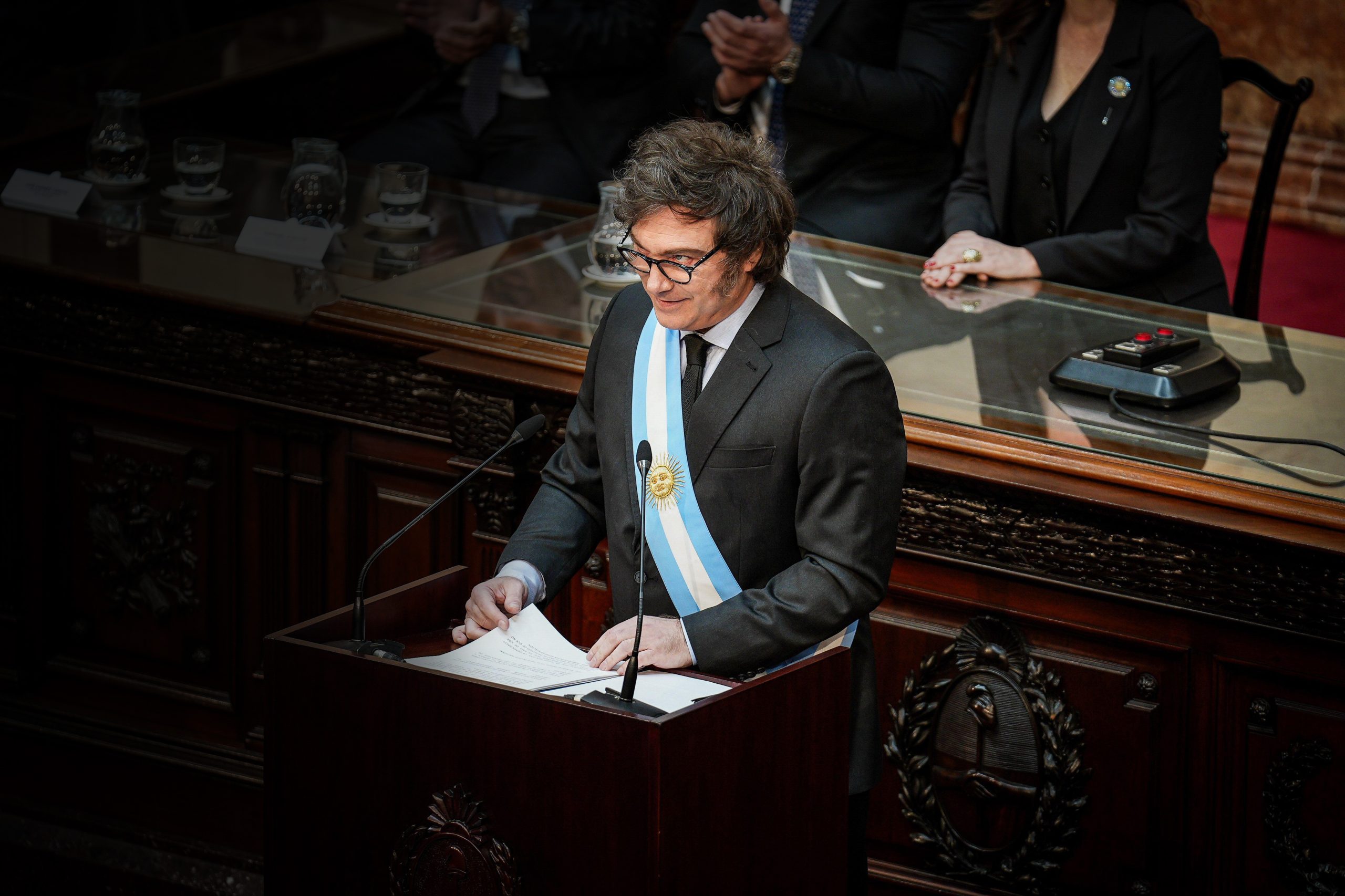
“There is no alternative to a shock adjustment. There is no money.” Thus spoke President Javier Milei in his inaugural address on December 10, 2023. At that point Argentina’s annual inflation had already climbed to 211 percent.1 The non-financial public sector closed 2023 with a deficit of roughly 4.4 percent of GDP.2 With the country shut out of voluntary capital markets and tax collections past their structural ceiling, the new administration truly faced a situation in which, quite literally, there was no money.
“Rich as an Argentine” was a common Parisian boast in the belle époque. There certainly was money then: In 1913, Argentina was richer than France, Sweden or Germany. By 1960, TIME magazine spoke of the proverb in the past-tense: “People across the world wistfully spoke of being ‘as rich as an Argentine.’ All that is changing now.” And indeed, all that changed. In January 2024, the poverty rate was estimated to be 57.4 percent — its highest reading on record and one of the worst in Argentina’s history.3
Eighteen months later, Argentina’s macroeconomic picture is showing some signs of recovery. Annual inflation fell from 211 percent to 43.5 percent year-on-year,4 while the monthly rate eased to 1.5 percent in May 2025.5 The poverty rate declined to 38.1 percent in the second half of 2024.6
Argentina’s inflation dropped from 211% in 2023 to 43.5% in 2025.4
The fiscal correction achieved by the “chainsaw” is even more pronounced — something Milei and his supporters are always eager to highlight. The public sector swung to an overall surplus of 0.3 percent of GDP in 2024 — its first surplus in 14 years.7 Such results were painstakingly achieved. The state shrunk at the expense of subsidies, pensions and public works.
Combined with fiscal discipline, an IMF disbursement in April 2025 placed Argentina’s Central Bank reserves above $38 billion.8 The country that 18 months ago had no money now has some breathing room. Milei’s bet proved temporarily successful, buying him something even more valuable: time.
Under this new landscape, some sectors of the economy are becoming optimistic. Milei often said that “the state should be the last resort in economic matters; it is the private sector that must create growth and wealth.” Investment Reports tested the claim, spending four months talking with the people who would have to make this statement a reality. Their predictions for the future are hopeful — but that hope is tempered by an awareness that rebuilding trust will require time.
Is it different this time?
It is still hard to identify the ultimate forces behind Milei’s historic victory. Argentines found themselves facing insecurity, corruption, picket lines and rising prices on a daily basis. The weariness was enough to seek radical change. Yet, Argentine decay has stretched over several decades, as the nation has continuously drifted in and out of crises. This begs the question: Is it really different this time?

We’ve built a strong advisory and capital markets team, working with most of Argentina’s major corporate issuers. In 2024, we held a 14 percent share of Argentina’s corporate debt issues, rising to 18.5 percent in Q1 2025, underscoring our role in capital markets.

A term we encountered continuously whenever that question was asked was “cultural change.” Speakers claim that the Argentine’s way of thinking underwent a drastic process of “liberalization”(in the classic free-market sense). Eduardo Costantini, Founder of Consultatio and one of the country’s most prominent businessmen, claims that the nation is “witnessing a sociological change, particularly among young people … Remarkably, despite knowing that initial reforms would bring short-term economic pain, the people still voted for change.”
For Claudio Porcel, CEO and Founder of Balanz, “the choice of a liberal president, one who openly campaigned to shrink the state, signifies a cultural awakening. People became tired of inefficient public spending.” His words expose a deeper issue. In 2024, the world was indebted by more than $100 trillion. This amounts to 94 percent of global GDP — a whole global economy of debt9 — and to many, the biggest fault line in the world economy.
Balanz Capital: Your Trusted Partner for Investing in Argentina’s New Era
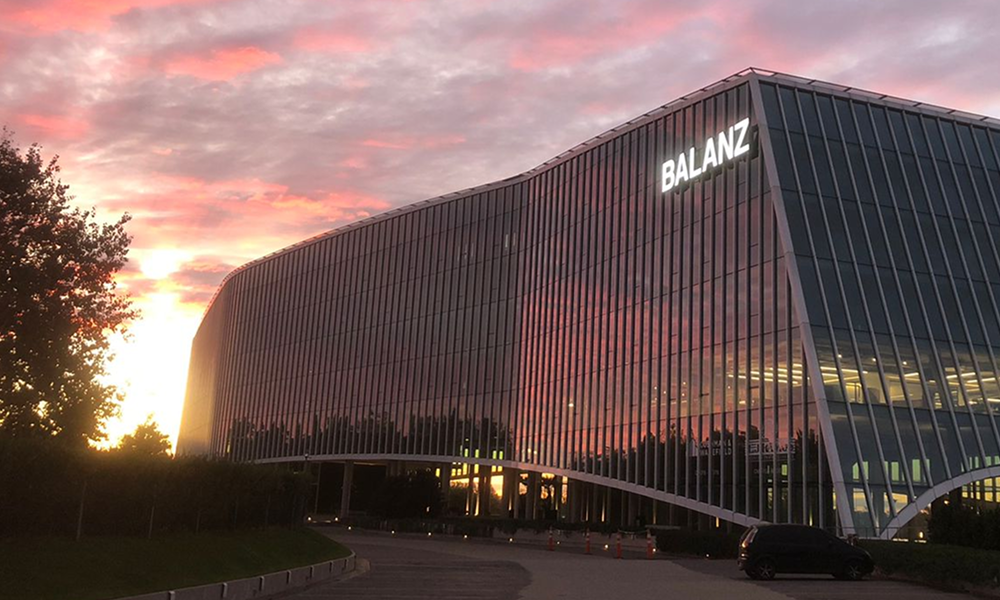
Argentina stands at a pivotal moment. After decades of economic uncertainty and shifting policies, reforms are under way to restore stability and growth. For foreign investors seeking to leverage Argentina’s natural resources, workforce, and strategic position, Balanz offers an unmatched gateway—combining deep local expertise, advanced technology, and global reach.
Our Core Strengths: Corporate Advisory and Capital Markets
Balanz leads the league tables in three key verticals: Capital Markets & Advisory, Sales & Trading, and Asset Management. We recently surpassed $10 billion USD in assets under management (AUM), making us the #1 investment manager in Argentina.
Why Invest in Argentina Now?
Historically known for its resources and entrepreneurial spirit, in recent decades Argentina faced inflation, fiscal imbalances, and inconsistent policies that deterred investment. Today, reforms in fiscal discipline, currency stabilization, and deregulation are creating a solid foundation for renewed confidence and sustainable growth. Supported by strong international backing and rising Central Bank reserves, Argentina is transitioning to a managed currency float that balances stability and flexibility. These changes open significant opportunities for thoughtful investors.
Balanz: Built from Crisis, Evolving with Opportunity
Founded in 2002 after Argentina’s last financial crisis, Balanz was created to find opportunity amid chaos. More than 20 years later, it has evolved from a traditional financial services firm into a full Invest-Tech platform for corporates and individuals focused on investment management. Serving over 1 million clients across five countries—Argentina, Uruguay, Panama, the UK, and the US—with 1,500+ employees, Balanz delivers tailored financial solutions for individual investors, companies, big corporations and institutional clients.
Balanz is an investment tech company. Its proprietary platform offers seamless access and expert guidance for individual and institutional investors in local and global markets.
What Sets Balanz Apart?
- Local Insight, Global Reach: Offices across Argentina, the UK, US, Uruguay, and Panama provide trusted service with deep local knowledge.
- Technology at the Core: Our platform delivers transparency, efficiency, and ease of use, empowering confident portfolio management in complex markets.
- Comprehensive Services: Balanz offers Corporate Finance, Sales & Trading, Asset and Wealth Management, and Macro & Corporate Research. We manage 30+ funds with assets exceeding $2 billion USD, recently crossing $10 billion USD total AUM.
- Commitment to Excellence: Through Balanz University, we provide ongoing education—including courses on fixed income, equity, personal and sustainable finance.
- Market Leadership: In 2024, we held a 14% share of Argentina’s corporate debt issues in the public market, rising to 18.5% in Q1 2025, underscoring our role in capital markets.
Why Choose Balanz?
Navigating Argentina’s emerging market requires a partner who understands its nuances. Balanz offers direct access to Argentine and regional markets, robust risk and compliance frameworks, tailored solutions for international investors, and a long-term partnership through Argentina’s transformation.
The Future Is Bright
Argentina’s potential is vast. For investors ready to engage, Balanz offers the expertise, technology, and perspective to turn opportunity into success. With Balanz, you don’t just invest—you partner with a firm that understands Argentina’s unique challenges and rewards.
Explore Argentina’s investment future. Choose Balanz — your gateway to growth.
Surprisingly, when the global trend is to rely on debt and nurture bloated states, a peculiar character, known by the wider public by his abrupt interventions on national TV and his antagonistic views on the state, rises to the Argentine presidency. Milei’s personality might shock some — but the mere proposal of fiscal surplus in 2023 shocked many more. His critics voice valid concerns when it comes to its impact: Public universities, subsidies, pensioners — they have all felt the blow of these drastic cuts. But Argentina and much of the world have long met social needs by taking out a mega-mortgage — one that nobody knows when and in what form will be repaid.
Political success on such an agenda seemed impossible. Policies that are necessary in the long-term are rarely popular in the short-term. Historian Emilio Ocampo tells us that “historically, Argentine politicians believed fiscal discipline would cost them votes. Milei’s ability to implement austerity without losing public approval is a direct challenge to conventional wisdom.”
For Diego Alvarez Demalde, managing partner at Sophia Capital, the rapprochement of the people toward Milei attests to something unprecedented: “The big difference is that this time, society is demanding fiscal responsibility … Whether Milei is the cause or the result of this shift is up for debate — but what’s clear is that voters asked for radical change.” By grasping the dangers of ever-increasing spending, the Argentine electorate may be the first to confront this dilemma.
Alberto Benegas Lynch Jr. is one of the thinkers who most directly influenced Javier Milei. He observes that “for liberalism to endure, it must not only implement economic reforms but also foster a cultural shift towards valuing individual responsibility and market-driven solutions.” The changes others speak about could well be the acorns of Benegas’ liberal society. But if true, it’s not true for all. As Costantini warns, these ideological movements are happening in the midst of deep division: “Argentina still has a weak and unstable political system. Congress remains unchanged, and the government has a minority in both chambers. When mistakes are made, the opposition is quick to capitalize on them. Politicians are still prioritizing personal dominance over national interests.”
The recent developments strike an emotional chord for Argentines who still remember a more prosperous nation. Lawyer Marcelo Tavarone captures such nostalgia: “I miss the Argentina of meritocracy, where the message across all social classes was clear — if you wanted to progress, you had to study and work hard.” This is a phrase many Argentines heard from a parent or a grandparent — a longing diametrically opposed to the corporatist Argentina of the past decades. Then, Peronism treated capitalism as something to be carefully managed — certainly not unleashed — by blending import-substitution industrialization and tariffs. The status quo born of such a model placed every actor in the economy into circles of state influence.
Marcos Brito, board member of Macro, believes these clientelist networks have been disarmed: “There has been a fundamental shift in mindset, particularly among the working class. For years, a significant portion of the population relied on government subsidies.” In his view, the wider population recognized “continued dependency was no longer sustainable.”
This finds an echo in the higher echelons of economic power. According to Damian Scokin, CEO of Latin America’s leading online travel agency, Despegar, “business groups historically relying on close ties to the government have exploited economic instability to their advantage rather than contributing to real development.” The challenge, he says, is for Argentina to “foster a private sector that competes on merit rather than political connections.”
The relationship between Argentines, markets and the state has clearly changed. Argentina is moving away from a system that, according to Jorge Perez Alati, founding partner at PAGBAM, “secured monopolies, received state contracts and regulations that protected business from competition.” The new direction is articulated by Daniel Sielecki, a low-profile magnate who rebuilt pharma company Elea: “Elea does not seek subsidies or special favors from the government. What we require is to be left to operate without unnecessary interference.” With markets expected to perform tasks once reserved for the state, Sielecki’s plight is close to becoming a reality — and there are several sectors of the economy that are poised to make the most out of it.
Elea: Argentina’s Leading Independent Pharma Innovator
Elea is Argentina’s largest independent pharmaceutical company and uniquely ranks among the top three players across three very different markets: ambulatory care (No. 2), over-the-counter (OTC) products (No. 1), and high-cost specialty medicines—including oncology, autoimmune, and rare diseases (No. 2). This rare triple leadership is almost unmatched globally, reflecting Elea’s versatility and expertise.
Traditionally dominated by multinational corporations, the high-cost specialty segment saw Elea disrupt the status quo by pioneering biosimilars—affordable, high-quality alternatives to original biologics. Over the past five years, Elea’s efforts have doubled patient access to these modern therapies and saved Argentina’s healthcare system more than $1 billion, alongside over $1.5 billion in foreign currency through local manufacturing.
As Latin America’s first biosimilar developer, Elea has broken monopolies on key drugs such as Rituximab, Bevacizumab, Enzalutamide, Pembrolizumab, and Semaglutide—the latter two among the world’s top-selling medications. Elea’s biosimilars cost 50 to 80 percent less than branded originals, delivering $400 million in healthcare savings and $500 million in currency savings just this year, supported by a vertically integrated domestic production.
Reinvesting all profits, Elea employs over 110 R&D specialists and operates advanced facilities that enable rapid product development and launch. Leading clinical trials in Argentina, the company has introduced more than 100 new products in five years, with 23 planned for launch in 2025.
With over $150 million invested in industrial capacity, Elea manages complex technologies spanning hormonal therapies, inhalers, ophthalmics, biologics, and more. Its broad in-house platform drives ongoing innovation and competitiveness.
Elea’s portfolio includes iconic OTC brands like Geniol, Aziatop and Adermicina, securing its status as Argentina’s top TV sponsor. Exporting to over 30 countries, with subsidiaries and joint ventures across Latin America, Elea is pursuing strong international growth.
Elea remains an ambitious, innovative company—driven by efficiency, growth, and an unyielding commitment to advancing healthcare.
From mattresses to markets
“Argentina has a strong fiscal anchor that can help the country endure these turbulent times.” So begins Patricio Supervielle, CEO of Supervielle Group. “If we manage to rebuild reserves, many doubts will likely disappear. Since Argentina is coming from a base of very low credit, there’s substantial room for growth.” However, credit necessitates trust — and once trust is broken, it cannot be repaired immediately. Porcelis clear in this respect: “Trust takes time. We’ve burned investors too many times. Even during Macri’s tenure, expectations were high, but we reverted to old habits. So investors remain cautious.” Those old habits span from default to extreme regulatory measures, inflation and currency restrictions.
Supervielle is poised to grow with Argentina’s economic transformation
Argentina is undergoing a major economic shift, and Supervielle is ready to play a key role. A stabilized economy lays the groundwork for growth. This opens significant potential for the financial system, which is starting from a very low credit base and could grow fivefold in real terms over the next decade. For Grupo Supervielle, it’s a strong opportunity to lead this expansion. We aim to actively support Argentina’s development, especially in the credit, savings, and investment markets. We recently launched daily interest-bearing accounts for SMEs and individuals in both pesos and dollars—a first in Argentina’s banking system. As a financial platform, we focus on dynamic, export-oriented sectors such as energy, mining, and agribusiness.
CEO Edgardo Vázquez of Bagó, a veteran in the pharma space, says that “the ability to invest and create value depends on the trust provided by overall economic stability.” The necessary conditions to make investments secure and attractive, according to Juan Francisco Politi, VP of broker Allaria, “involve implementing deeper structural reforms aimed at increasing productivity and reducing taxes.” A prime example is the proposed reforma laboral — a labor-market reform meant to streamline hiring and boost workforce flexibility.
Bagó views the potential for foreign investment as an opportunity for growth and improvement. We have a long history of successful partnerships with international companies and see new competitors entering the market as a way to foster innovation and improve the sector overall.
Another deficiency the sector has to tackle is that of financial inclusion. As Fabian Kon, CEO of Banco Galicia, puts it: “A large portion of Argentina’s population remains unbanked, and expanding financial services to these individuals presents a significant opportunity for growth.” Some financial actors are trying to get the capital market closer to the wider Argentine population. Ignacio Abuchdid, Founder of Grupo IEB, states that “the economic structure in Argentina has long shown a disconnect between capital market gains and the everyday reality of most citizens.” Abuchdid’s preoccupation hits the mark: Argentines hold about $271 billion bajo el colchón — cash kept outside the financial system — often, quite literally, “under the mattress.”10
At Grupo IEB, we have many requests to enter the Argentine market. The current economic recovery presents an exciting opportunity to build a prosperous and lasting future. For both individuals and companies in Argentina and around the world, our objective is clear: for you to invest and progress alongside our team, the best prepared in the country.

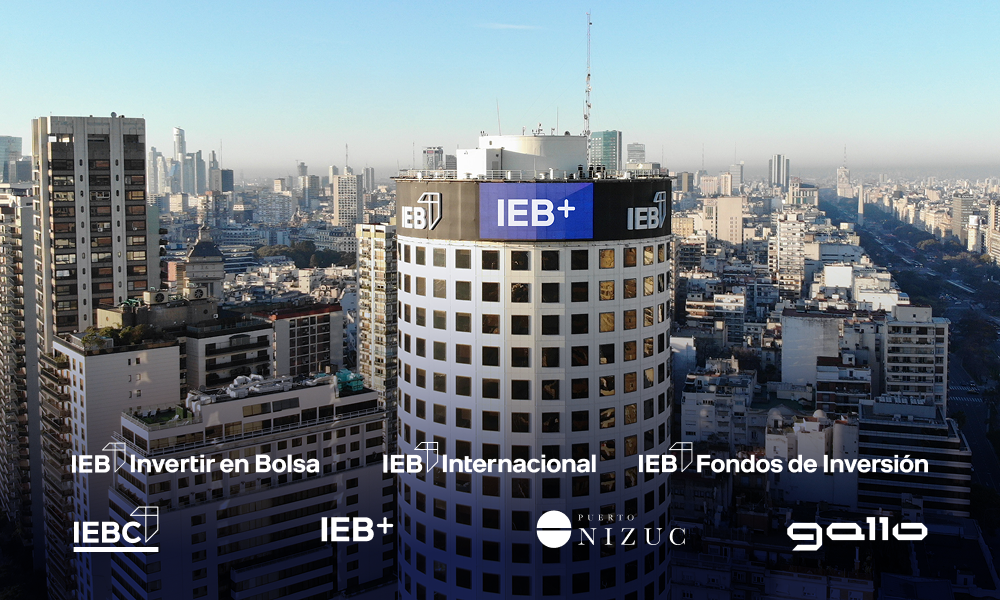
IEB stands as Argentina’s capital markets titan, a brokerage and asset manager excelling firm in corporate, institutional, and private banking services for high-net-worth clients. Its wealthtech app empowers all to invest, while IEB International, based in Uruguay, bridges global markets.
GALLOFINTECH, a group powerhouse, drives cutting-edge technology, supporting IEB and 120 brokerage houses—60% of the market. Generating $100 million in annual revenue and managing $3 billion in client assets, IEB embodies resilience. Its brand captivates: the iconic Torre IEB sign (‘el rulero’), the IEB+ Argentina Open as naming sponsor, and its logo on San Lorenzo’s jersey, reaching 5 million fans per match. In real estate, IEB spearheads Puerto Nizuc, a $200 million-plus development, and owns IEB Construcciones, a construction leader trading as $IEB on Argentina’s BYMA. With 90% of the group’s shares held by founder Juan Ignacio Abuchdid, IEB ensures streamlined leadership. Blending finance, technology, and infrastructure, IEB thrives in a dynamic emerging market. A true Argentine icon with global ambition, IEB is primed to amplify its influence, seizing a rising region’s potential with a bold, profitable vision.
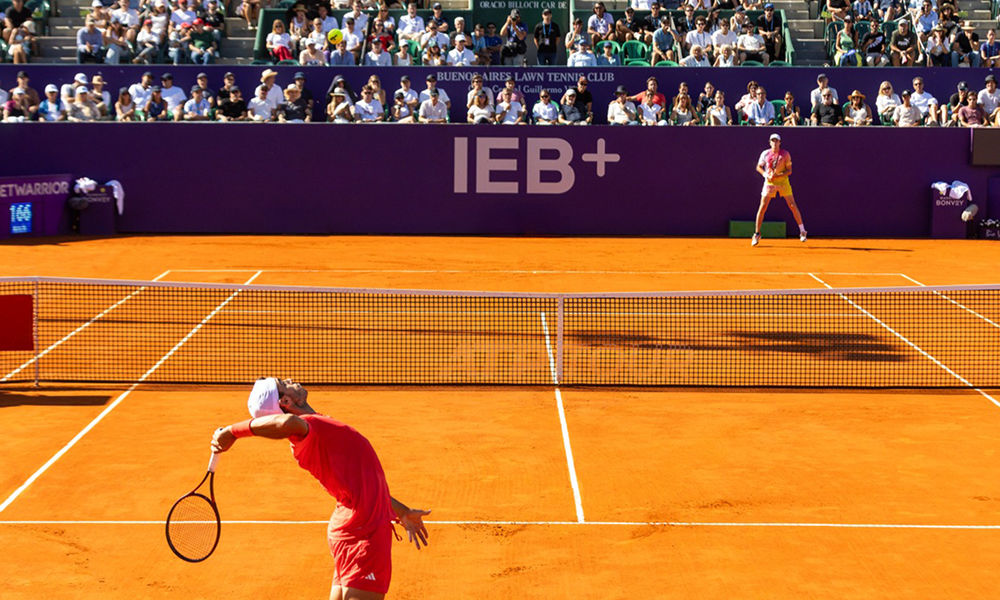

The Argentine stock market has already reflected a change in trend, says Abuchdid. “The robust performance of the capital markets has generated the equivalent of nearly 50 percent of a year’s GDP in financial gains since November 2023.” He believes the potential is where those gains land: “By channeling these profits into the real economy, we are effectively reducing poverty and generating a virtuous cycle of employment and activity. Hence, the financial market is a thermometer of the overall health of our economy.”
There are many uncertain variables that will determine whether this financial renaissance continues. Strong reserves, decreasing inflation and the fiscal surplus are the most important. Separately, national politics have to keep a level of commitment to structural reform, thus regaining long-lost international trust.
Fields of resistance
There are not many landscapes on Earth that are as naturally productive as the Pampas. Such abundance has shaped Argentine history since its independence: Whether farmers should bear the fiscal burden of such riches has been at the center of political debate for the past century.
Today the main controversy centers on export duties. Although the decree of the 27th of January 2025 provided temporary relief, the sector still faces some of the world’s most aggressive commodity taxes. When the decree expires, rates will revert to their previous levels — 33 percent on soybeans, 31 percent on soybean meal and 12 percent on corn and wheat. In the meantime, regions like the United States, the European Union, Japan and Brazil subsidize their agricultural production. Despite this pernicious tax, farm exports remain Argentina’s main source of foreign currency and fiscal revenue — approximately $48 billion, representing over 60 percent of total exports.
Brazil’s agricultural production serves as an insightful comparison. Its soybean output climbed by almost 1000 percent from 1990 to 2025.11 Argentina, despite its naturally richer soils, rose 300 percent in the same period.12 According to Marcos Bradley, regional director of Syngenta LATAM, “per hectare, Argentina has enormous room for improvement. Soybean yields have stagnated here for 15 years, while Brazil’s continue to rise.”
Ignacio Bartolomé, CEO of GDM, echoes Syngenta’s claims: “If the country can improve its economic environment, it could enact significant growth … better access to credit would let producers adopt new technologies and increase productivity.”According to Marcos Pereda, Vice-President of Sociedad Rural Argentina, “If the government can lower the tax burden, agricultural production could increase dramatically. Experts believe that Argentina could easily increase its agricultural output by 30-40 percent with the right incentives and investments.”
Advancing innovation in agribusiness
GDM is a global leader in plant genetics, driving innovation through research, development, and commercialization of proprietary products.
Headquartered in Argentina, GDM welcomes the prospect of greater economic stability in the country and sees strong potential for agriculture to increase investment in genetics and biotechnology.
Present in 15 countries, GDM excels in improving row crops. Its genetics power 45% of global soybean output, lead South America’s wheat market, and are expanding in corn.
With 10 brands and numerous partnerships, GDM invests in cutting-edge technology to accelerate development of high-performance varieties and biotech. It holds the world’s most diverse soybean germplasm bank and employs over 3,400 people.
One characteristic of the sector seems to be particularly dear to producers: that of its human capital. “The real strength of our operations is the young professionals leading them — engineers, technicians, agronomists,” says Mariano Bosch, CEO of Adeco. Indeed, Argentine farmers are among the youngest in the world. In a time where an aging population threatens demographic collapse in the West, such a workforce is a valuable asset.
Across the sector lingers the idea that navigating turbulent times has endowed them with a powerful sense of resilience, patience and audacity. According to José Luis Alonso, CEO of Mirgor, these traits are the sector’s greatest asset in the battles ahead: “If I had to explain Argentina’s strength in one word, it would be ‘resilience.’ Argentines are used to navigating volatility and finding creative solutions to challenges. This adaptability, combined with natural resource wealth, makes the country uniquely positioned for success.”
We have state-of-the-art production facilities, particularly in places like Tierra del Fuego, where international technologists recognize our capabilities. The challenge is to make the local environment conducive to competitive industrial growth.

A New Era of Expansion: Mirgor Strengthens Presence in Latin America
In 2021, we decided to embark on an ambitious regional expansion process that today spans over 12 countries in Latin America. Backed by more than forty years of experience in the production, distribution, and commercialization of leading technology brands, we aim to reach new markets where we previously had no presence, strengthening and developing key partnerships with strategic allies.
In parallel, we have incorporated logistics services under the 4PL (Fourth-Party Logistics) model, offering an integrated solution ranging from storage and transportation to consulting. In these operations, we take on a full role: planning, purchasing, logistics, and delivery of mobile phones for various operators.
Looking ahead, our short- and medium-term goal is to strengthen our presence in each country in the region, with the intention of replicating the business model we developed in Argentina.
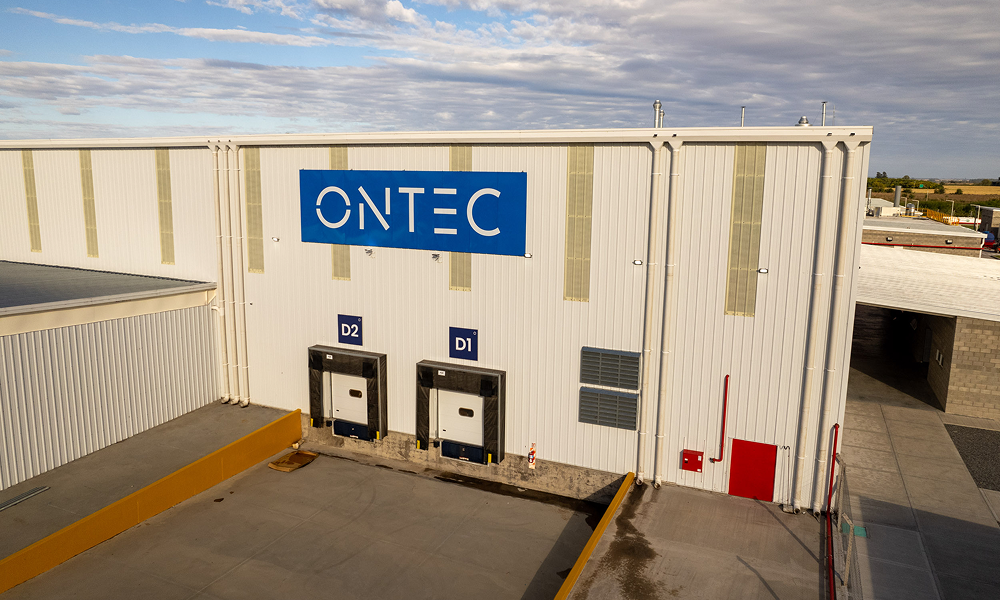
Nationally, we are advancing in the doubling of the production capacity at our ONTEC plant, located in Baradero, Buenos Aires Province. This site, recognized as the largest plastic injector in Latin America, manufactures parts for Toyota, one of our strategic partners.
Vaca Muerta
“The country has world-class oil and gas fields, some of the best in the world,” emphasizes Javier Rielo, Senior VP Americas at Total. Geologically, the Vaca Muerta shale site at Neuquén is estimated to contain about 16 billion barrels of recoverable oil and 308 trillion cubic feet of gas — ranking fourth and second globally, respectively.
But scaling up necessitates capital. State-owned YPF spent nearly $3 billion in 2024, while analysts at Aleph Energy calculate the region needs roughly $58 billion in infrastructure by 2030 to accommodate rising output.13 Domestic capital alone simply cannot bridge that gap. “Argentina must build the necessary infrastructure and establish trust with investors to compete effectively on the global stage,” Rielo adds.
Early movers have already shown what’s possible. Since pioneering shale development at Loma Campana with YPF in 2013, the site “stands as the largest shale development in Argentina, producing approximately 100,000 barrels of oil equivalent per day,” says Javier La Rosa, Managing Director of Chevron Latin America. If planned pipelines and processing facilities come online, Rystad Energy forecasts total production could reach 1 million barrels per day as early as 2030. This translates to around $22 billion in annual revenue with a Brent price of $60 per barrel.14
The Cordilleran vault
Argentina straddles the same copper-rich spine of the Andes as Chile. Yet, it mined only 4,000 tons of copper in 202415 — roughly what Chile’s Escondida can deliver in one single day.16
Argentine deposits are already known to contain over 90 million tons of copper.17 If they were to be developed, they could increase national output to 1 million tons a year in the early 2030s, matching today’s wheat exports in dollar terms.18 As business magnate and IRSA Founder Eduardo Elsztain observes, “Argentina is blessed with abundant natural resources which, with the right investment and political stability, could transform the mining sector.”
What kindled optimism in this previously forgotten sector is the Régimen de Incentivo para Grandes Inversiones (RIGI), enacted in 2024. In simple terms, the RIGI locks in tax and customs rules for 30 years and gradually removes export duties.19 Tristan Pascall, CEO of First Quantum, calls this package “the most underestimated factor” in lowering costs; Rob McEwen, owner of McEwen Mining, has experience with the obstacles set by previous administrations having acquired Los Azules mine in 2007. He is blunt as to the necessity of such easing trends being sustained: “Capital controls must ease so that lenders and shareholders are confident they can repatriate returns. No one writes multi-billion-dollar checks if dividends might be trapped.”
In the words of Fernando Bonnet, CEO of energy giant Central Puerto, “Legislative reforms in labor, taxation and infrastructure are essential to attract and sustain long-term investments, particularly for high-capex, long-maturity projects like mining.”
Exporting complexity
Many may intuitively assume that Argentina is a tech importer. However, exports of knowledge-based services hit a record $9.5 billion in 2024, marking a 15.5 percent year-on-year increase.20 This sector is now the country’s third-largest export complex, accounting for no less than 9.2 percent of its total foreign sales.21
“There’s a misconception that Argentina only imports tech,” says Ángel Pérez Puletti, CEO of Baufest. “In reality, it’s long been a global software development hub. Argentina offers time zone alignment with the United States, strong university programs, cultural proximity and excellent English proficiency.”
Argentina doesn’t just adopt global tech — we help build it, with talent, creativity and world-class engineering.

Baufest, the Digital Product Development Rock Star of Argentina
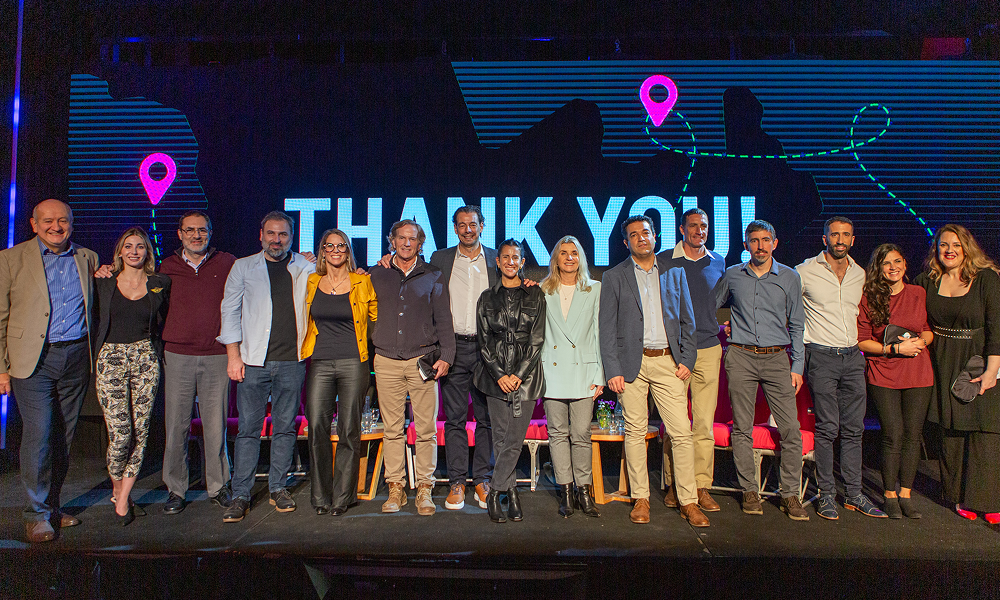
In the midst of Latin America’s growing presence on the global tech stage, Baufest has emerged as one of Argentina’s most consistent and high-performing technology consultancies. Founded in Buenos Aires and with operations across Argentina, the United States, Mexico, Spain, Chile, Peru, and Uruguay, the company serves mid-sized and large organizations with complex digital needs.
Baufest specializes in end-to-end digital product development, delivering tailored solutions that integrate business design, digital engineering, applied AI, data strategy, and cybersecurity. Its multidisciplinary teams are structured to engage across the full product lifecycle — from discovery and architecture to implementation and scale.
With 1000 professionals and over 30 years of experience, Baufest combines design thinking, enterprise-grade delivery, and deep technical expertise. This unique capability mix allows the company to solve critical challenges across industries — helping clients modernize, innovate, and grow through technology that performs.
Argentina is also home to eleven unicorns. Amongst them Mercado Libre — the largest in the region, with a $130 billion market cap — and Tiendanube. Alejandro Vázquez, Tiendanube’s Co-Founder, has aims “to reach one million clients over the next few years,” reflecting the optimism in the industry. This growing tech sector also highlights Argentina’s surprising advancement in fields like digital insurance. As Mauricio Zanatta, CEO of Klimber points out, “our partnership with Mercado Pago allows customers to buy policies from anywhere, from the Amazon to Tierra del Fuego, in just two minutes with three clicks.” Yet, some players believe these impressive ambitions are going unsupported. According to Jorge Silva, Co-Founder of software factory 10Pines, “there is a low recognition of the value that the tech industry brings to Argentina … a more supportive environment would help these companies reach their full potential.”
When you trust people, you can give them real autonomy. Autonomy fosters ownership, which leads to lasting client relationships and tangible technical excellence. That’s how we work at 10Pines.

Gastón Remy, serial entrepreneur and CEO of Nuqlea, adds an unorthodox asset stemming from the country’s human capital: “In a world that’s becoming more transactional, Argentina’s focus on human connection is often undervalued — and it shows in creative industries and client retention.” In a sector that thrives on creativity and is constantly changing, these traits may very well be the key to differentiated success. Argentine talent, according to Eduardo Macchiavello, CEO of Roemmers, “provides a solid foundation for expanding into other Latin American countries.”
Roemmers develops and manufactures pharmaceuticals locally across Latin America, ensuring strict quality control aligned with each country’s regulations. This local focus reduces import dependence, maintains operational control and upholds rigorous compliance standards..
Klimber is redefining the rules of the game in the insurance world. Our goal is for the future of insurance in Latin America to be digital, easy and accessible. We are achieving this with our own technology, talent and the conviction that it is possible to scale inclusive, profitable and purposeful solutions across the region.
Argentina’s growing tech talent pool is shaped by unique circumstances. Veritran’s Founder, Marcelo González, points out that “Argentina has a highly skilled workforce, with strong access to education, particularly through public universities.” The institution of the free and public university González praises is under threat from Milei’s fiscal austerity, and cuts have sparked protests earlier this year. Detractors believe this was one step too far. The administration’s reply: “There is no money.”
As a global tech company and strategic partner to financial institutions and corporations worldwide, Veritran is expanding its U.S. footprint. We provide tailored digital solutions that drive innovation, increase efficiency and create new growth opportunities in a highly competitive landscape.
Why did a country so blessed by resources fail to create a place where its people can thrive? There’s a popular saying: Decades of broken promises mark the nation’s past. The turn of its people — placing their hopes in a chainsaw-wielding political outsider who threatens to “blow up” the central bank — reveals a desire for change from a population fed up with the status quo.
So, is it different this time?
Argentina should not get ahead of itself. Challenges lie ahead, and the damage inflicted over the previous decades cannot be overstated; its social fabric is severely damaged. Politically, whether Milei’s envisaged reforms will come to life depends on success in the October 2025 mid-terms and the 2027 presidential elections. The opposition might now be severely weakened, but it has made stunning comebacks in the past.
Yet this experiment does not stand alone. Argentina can draw strength from its incredibly rich resources. Chief among them lies its own legacy: a nation of immigrants who fled war and poverty in pursuit of the Argentine dream. Their spirit, shaped by hardship, shines forth as an indispensable lifeline.
To explore more of our special business reports from around the world, visit investmentreports.co.
1Argentina: inflation in December rose to 2.7% and 2024 closed at 117.8%, America Economia, accessed June 2025
2From Milei’s zero fiscal deficit towards a stabilisation plan to eradicate inflation: why now?, Real Instituto Elcano, accessed June 2025
3UCA: Poverty in Argentina hit 20-year high of 57.4% in January, Buenos Aires Times, accessed June 2025
4Argentina annual inflation tops 211%, highest since early 90s, Reuters, accessed June 2025
5Índice de precios al consumidor, Ministerio dee Economia Republica Argentina, accesseed June 2025
6Argentina’s Poverty Rate Drops to 38.1% in Second Half of 2024 Amid Economic Reform, The Rio Times, accessed June 2025
7El Sector Público Nacional registró superávit financiero anual por primera vez desde el 2010. El resultado fiscal del 2024 fue de $ 1.764.786 millones (0,3% del PBI), Ministerio de Economia, accessed June 2025
8Argentine peso recoups lost ground after FX control ease, Milei rules out intervention, Reuters, accessed June 2025
9Global Public Debt Is Probably Worse Than it Looks, IMF Blog, accessed June 2025
10Milei quiere que los argentinos se fundan los dólares del colchón, Cinco Dias, accessed June 2025
11Brazilian researcher who helped country’s grain boom wins World Food Prize, Reuters, accessed June 2025
12Implications of the Organization of the Commodity Production and Processing Industry: The Soybean Chain in Argentina, World Bank LCSSD Occasional Paper Series on Food Prices, June 2025
13Argentina state oil firm YPF to invest $3 bln in shale in 2024, Reuters, accessed June 2025
14Argentina’s Vaca Muerta shale patch could produce 1 million bpd in 2030, but hurdles remain, Rystad Energy, accessed June 2025
15Goldcorp founder Rob McEwen bets big on Argentine copper, Fastmarkets, accessed June 2025
16BHP’s Escondida mine strike becomes Chile’s longest, ends with no deal, Mining.com, accessed June 2025
17Taca Taca, el proyecto que podría marcar el renacer del cobre argentino, Report Miner & Energetic, accessed June 2025
18Goldcorp founder Rob McEwen bets big on Argentine copper, Fastmarkets, accessed June 2025
19Argentina – Generous New Incentive Regime for Large Investments, BDO Global, accessed June 2025
20Las exportaciones argentinas de servicios basados en conocimiento crecieron 15,5 % en 2024, swissinfo, accessed June 2025
21Las exportaciones argentinas de servicios basados en conocimiento crecieron 15,5 % en 2024, swissinfo, accessed June 2025
The content is paid for and supplied by advertiser. The Washington Post was not involved in the creation of this content.