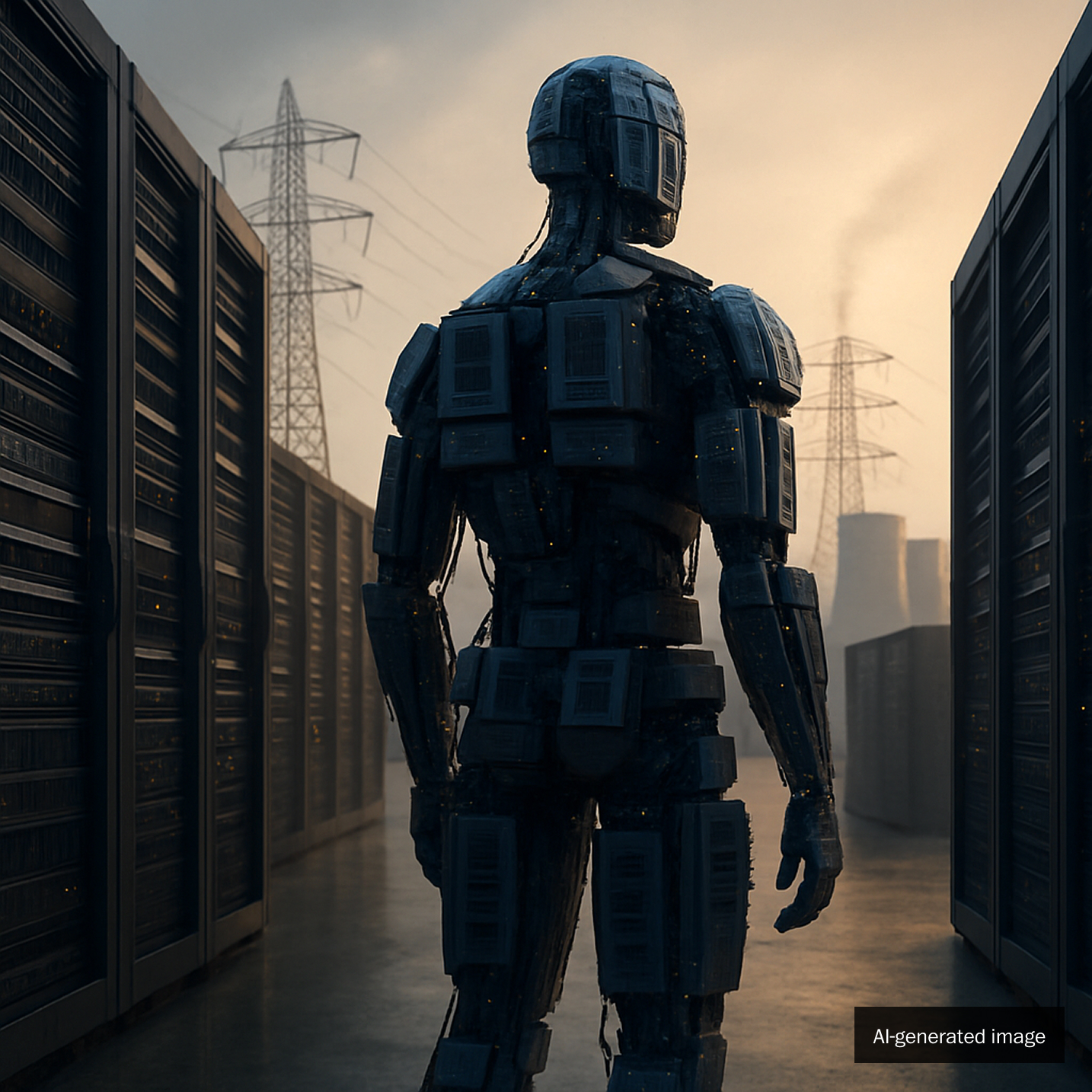
The body of AI: Power, minerals and machines
By Ladislao Cazes and Hannah Pall, Project Directors
Content from Investment Reports
This content is paid for and supplied by Investment Reports, a media company that generates reports for business leaders.
The Washington Post newsroom was not involved in the creation of this content.














Where does artificial intelligence (AI) live in the physical world? Not in the cloud, but in industrial vaults of silicon and steel. Its life depends on the same electrical grids that power our cities—and now it’s starting to rival them in consumption. “Generative AI changes the contract between humans and technology: before AI, interaction meant adapting to machines; after AI, machines adapt to us,” says Snowflake’s CEO, Sridhar Ramaswamy. This helps explain the dramatic surge in adoption: to command remarkably sophisticated systems, turns out all one needs is basic literacy. ChatGPT now counts more than 700 million[1]weekly users a mere three years after launch and it is hard to find a company in 2025 not trying to incorporate AI into its operations.
The global investment required to meet AI-data-center demand alone by 2030 is estimated at US $5.2 trillion, under McKinsey’s mid-scenario.[2]
As Medidata’s CEO, Anthony Costello states: “The global momentum behind AI makes inaction riskier than adoption.” This powerful momentum comes with its challenges. “AI is rewriting the speed limit of software—code is being produced faster than security or governance models can keep up,” says Brian Roche, CEO of Veracode. Industries, institutions and individuals are juggling to keep up. The technology advances, we implement it, and only thereafter try to make sense of it. The challenge is clear: AI’s body will have to evolve as fast as everyone’s reliance on it.

Generative AI thrives on quality data. For companies, the objective should be clear: invest early in clean, deep, and broad proprietary datasets and make sure you have the right modeling on top. This foundation transforms AI from an experiment to a powerful engine for process redesign.

This is the most dangerous time for software development, but also the most innovative. The question isn’t whether to embrace AI-assisted coding — it’s how to do it securely. Our application risk management platform provides comprehensive visibility, intelligent prioritization, and prevention, purpose-built for today’s reality.

Rooms of servers pull so much power they need thousands of fans or millions of liters of water to stay cool. These are the world’s data centers, the body of artificial intelligence. “Data centers underpin almost every digital interaction,” says Juan Font, President and CEO of CoreSite and SVP of American Tower. “Each time someone scrolls a social feed, checks their bank balance, or joins a video meeting, that request travels to a server housed in a purpose-built facility engineered for 100 percent uptime.”
David Robey and Tag Greason, co-CEOs of QTS Data Centers, say the AI boom has upended every metric. The key to meeting that demand starts not with land but with energy: “It’s no longer enough to simply acquire land and build a facility; the process must start with securing power.” Mark Moffat, CEO of IFS echoes that point: “The clearest limiting factor is energy availability. Infrastructure is being built out, but there isn’t enough energy on the grid.”

A Proactive Approach to Sustainable Data Center Services
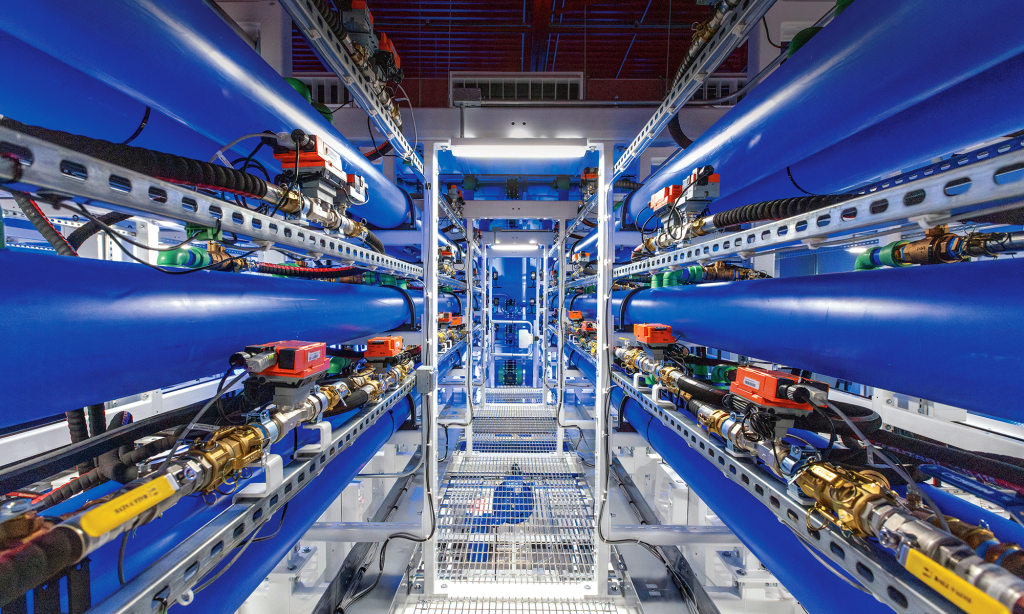
Growth in the data center industry isn’t just expanding, it’s exploding. This growth can impact natural resources and the communities that surround these facilities. For QTS, growth is about scaling up with a responsible, sustainable approach focused on making a positive impact in communities, carbon-free energy sourcing and water-free cooling. QTS has pioneered a water-free cooling system that saved nearly 1.5 billion gallons of water in 2024.

This power-first mindset mirrors how AI is reshaping industries. The U.S. Department of Energy estimates data centers already account for about 4.4 percent of U.S. electricity demand[3], and Goldman Sachs projects global data-center power usage could rise 165 percent by 2030[4]. As more daily tasks and routines start relying on ChatGPT, those figures do not sound far-fetched — especially if, as Moffat claims, “we’re at the very beginning of this AI cycle.” If Goldman’s projection is even close, our energy and economic models will need to change, and quickly.
CoreSite’s Data Center Knowledge Base helps policymakers, customers, and the broader public make informed decisions about everything from sustainability targets to digital-inclusion strategies. Education, in short, is the first step toward responsible growth.


Powering the Digital World. Strengthening Local Communities.
Behind virtually every 911 call, online financial transaction, text, and stream is a data center—critical infrastructure that hosts the cloud and supports the mission-critical applications we depend on every day.
Data centers are not just technology hubs—they’re part of the community, providing high-quality jobs, substantial tax revenue and support for programs that help our neighborhoods thrive.
Will Abbey, executive VP & CCO at Arm, said that “this exponential growth demands a smarter approach than simply adding more servers or consuming more power.” Arm’s architecture, designed for performance per watt, now powers more than 350 billion devices worldwide, with around 33 billion added each quarter.[5] Originally built to maximise efficiency in mobile chips, the same principles now scale across many of the world’s cloud systems. This shift toward intelligent, efficiency-first design extends into the manufacturing process itself. As Dave Evans, CEO and co-founder of Fictiv, notes, “By controlling both the flow of information and the flow of materials through AI, we’re helping companies modernize an industry that has long relied on archaic methods.”
At Fictiv, we believe AI isn’t just optimizing manufacturing — it’s reinventing it. We’re entering an era where intelligence, automation, and human creativity work as one to build a cleaner, faster, and more resilient industrial future.

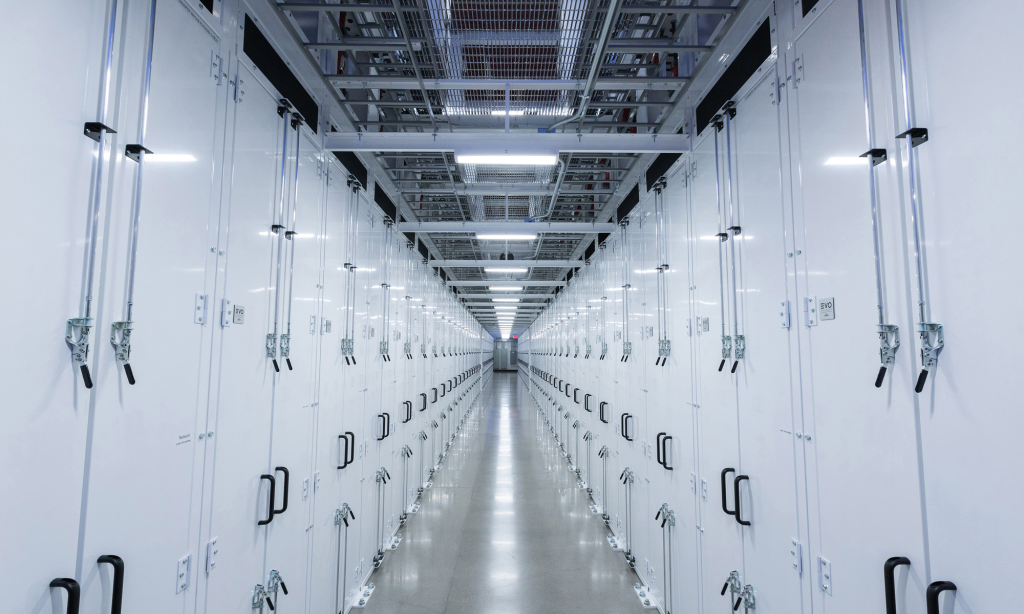
Unsurprisingly, all this upheaval is changing what data centers are. Switch argues that “what used to be a neutral ‘compute warehouse’ is now becoming an AI factory, purpose-built to handle the intensive demands of training and deploying large-scale models.” Traditional IT was built for predictable loads. AI brings spikes in computation and heat. Facilities ahead will need ultra-dense power delivery and much more efficient cooling. Data centers have, in effect, become the public utilities of the digital age: mostly invisible, essential and under heavy strain.
Data centers are no longer warehouses of computation — they’re living AI factories of intelligence.


The AI, Cloud & Enterprise Data Center Experts.
Switch is a U.S.-based technology company with over two decades of experience designing, building and operating the world’s highest-density data centers and large-scale campuses that power AI, cloud and enterprise infrastructure.
The first SUPERNAP® data center, designed in 2006 by Switch CEO & Founder Rob Roy, was a foundational air-and-liquid cooling hybrid design, built decades before the AI revolution. Rob Roy has evolved his data center designs into EVO AI Factories, engineered to sustainably power the AI servers of today and the future.
Switch is a key player in building America’s AI infrastructure and powering the next Industrial Revolution. To learn more visit www.switch.com.
The great resource race
To build and fuel the ‘body’ of AI, physical resources are elemental. The language of our present has tended to conceal the most basic of all facts: hard matter makes it all possible. And those who know best about ‘matter’ are the gritty heirs of an ancient industry — they dig and dig and dig, determined to remain unyielding, certain that their toil makes the earth go round. These are the miners.
Of late, one mining asset has become particularly popular. Rare earths, which are in fact not that rare but can be unusually hard to mine, have made many headlines due to their presence in much of modern technology, from AI to defense gadgets. Robert Martin, Executive Chairman of Lindian Resources, frames the race for rare earths as nothing less than existential. Lindian’s Kangankunde project in Malawi is set to feed into Western supply chains. “It is a very large, multi-generational asset,” Martin says, “high grade, low impurity and extremely low in uranium and thorium.” The permanent magnets and precision components inside AI hardware, electric motors and even the cooling systems of GPUs are all dependent on rare earths.[6] “Governments are even discussing floor prices to combat global price manipulation[7],” Martin notes, hinting that the West races to secure its own sources of critical minerals. Mining projects like those of Lindian may prove as essential to digital sovereignty as the data centers they ultimately power.
We are fully funded through to production, scheduled for completion next year. Stage Two is now fully permitted and can be sized to meet market needs. This puts us in a very strong position as a first mover and a low-cost producer, ready to disrupt and capture market share quickly.

If rare earths form the bodies of modern machines, then lithium is amongst the fuels that keep them going. Lithium is the essential element in the batteries that store and deliver the energy powering everything from electric cars to servers. Despite a year of falling prices, Francis MacDonald, CEO and Director of Li-FT Power, remains confident in the metal’s long game. His company’s Yellowknife project in Canada has already emerged as one of the largest undeveloped hard-rock lithium deposits in North America[8]. MacDonald sees the current price downturn as temporary. “The long-term demand for lithium remains very strong,” he says, referring to growth drivers such as data centers and electric vehicles. As Western producers move to secure domestic supply, projects like Yellowknife remind us that even the most ethereal realms of AI and cloud computing still run on stuff dug from the ground.
In October, we released our initial resource estimate for the Yellowknife lithium project, positioning us as one of the largest undeveloped lithium deposits in Canada, close to existing infrastructure.

AI is itself impacting the art of mining. Kevin MacLean, the CEO of MacLean Engineering, tells us of the company’s mission to increase automation. “The next challenge will be the zero-entry mine,” he says, describing a future where autonomous, battery-electric equipment operates in the extreme conditions of deep-earth mining. It’s a vision that marries the old and the new — machines learning to navigate environments once too dangerous for humans.
Electric vehicles are the path forward for mining and our world. Our underground and new surface mining equipment show how EV and smart technologies can drive both productivity and decarbonization.

One metal with a subtler link to the AI economy is gold. Yes, gold does have some important industrial input in AI-related electronics, due to its conductivity. But the more interesting relationship relates to stock markets. It is unorthodox that gold prices and stock markets, now dominated by tech, should rise together. Their recent concerted surge seems to reflect the appetite for both digital expansion and the physical and financial stability offered by gold. We spoke with Jason Attew, President and CEO of OR Royalties Inc., to understand more. “Our job is risk management — financing the mines that supply the metals the world needs over the next decade,” says Attew. A royalty and streaming company, OR Royalties plays an important role in the financing of gold miners. Attew is of the belief that gold is and will remain critical to the world economy, and he is not alone. “Gold has historically been a safe haven, protecting against sudden shifts in geopolitics or financial markets. The unpredictable nature of markets today, driven by factors such as tariffs or political shifts, only highlights the importance of gold,” shares with us the CEO of Harmony Gold, Beyers Nel. Even in an increasingly digital economy, gold continues to prove the value of tangibility.
As the CEO of Endeavour Mining, Ian Cockerill, puts it: ‘Very few companies in mining can offer the combination of growth and yield—that’s our key differentiator,’ emphasizing that Endeavour maintains strong dividends even through major capital projects. In an environment where investors seek both stability and upside, this blend of resilience and return reinforces gold’s enduring role.
Endeavour Mining (LSE:EDV, TSX:EDV, OTCQX:EDVMF) is one of the world’s largest gold producers with a high quality portfolio of operating mines, advanced development projects and exploration assets in West Africa.
TOP 10, FIRST-COST QUARTILE GOLD PRODUCER
1.1-1.3Moz at $1,150-1,350/oz
for 2025
SECTOR LEADING ORGANIC GROWTH
+35% to 1.5Moz
by 2030
BEST-IN-CLASS SHAREHOLDER RETURNS
$1.4Bn returned
since 2021
The other frontier
On the periphery of the AI revolution, another kind of computing is resolutely taking shape, one that could eventually redefine what “powerful” means. Quantum computing, long a category only relevant for theoretical physicists, is finally going commercial.
“Quantum computing works in a completely different way from ordinary computers,” says Niccolò de Masi, CEO of IonQ, one of the leading companies in the field. “Every time we add a single ‘qubit,’ a quantum bit, the computer’s potential power roughly doubles. That means a 64-qubit machine could tackle problems about 240 million times more complex than what our 36-qubit system can handle.” That kind of exponential scaling could change everything from materials science to drug discovery.

Leading with Science. Excelling in Engineering.
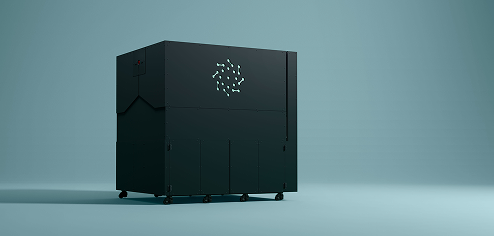
Quantum leader Pasqal, co-founded by Nobel laureate Alain Aspect, secured $145 million in contracts and funding in 2025. Expanding its global footprint that same year, the company opened its U.S. HQ in Chicago at the Illinois Quantum and Microelectronics Park and launched a quantum manufacturing site in Canada. Pasqal has delivered 3 quantum computers in total to a private customer in the Middle East and to leading HPC centers in Europe and plans to deliver an extra QPU to another HPC center in 2026, strengthening its mission to lead the global industrial quantum era. Learn more at pasqal.com.
But today’s machines are still small and unstable. Most run with just a few dozen to a few hundred qubits, and even those can be prone to error. Reaching real-world utility, what researchers call “quantum advantage,” will require systems with thousands or even millions of reliable qubits. Companies like IonQ, IBM, and Google are racing to get there, expecting meaningful progress through the late 2020s and more dependable systems by the 2030s[9]. Interestingly, each firm is betting on a different road to that future.
Choosing photonics, therefore, means that the ability to network quantum computers together in a scalable way becomes significantly easier.

IonQ uses trapped ions, single atoms held in electromagnetic fields and controlled with lasers. Quantum computer pioneer Pasqal, led by Dr. Loïc Henriet, uses neutral atoms instead, steered by beams of light. “We’ve combined the power of GPUs with our quantum processing units to solve problems classical computers can’t handle efficiently,” Henriet explains. Trapped ions are exceptionally precise, while neutral atoms are easier to scale, and Henriet believes the first real signs of quantum advantage could appear as early as 2026.
At Xanadu, CEO Christian Weedbrook is pursuing a photonic approach. Rather than atoms or circuits, Xanadu’s qubits are made of photons, individual particles of light. “A photonic qubit is simply a quantum bit encoded in photons,” he says. “Because light can travel long distances through fiber without losing information, linking quantum computers together becomes much easier.” Weedbrook imagines a “quantum data center,” where thousands of optical racks communicate through fiber-optic networks, with light itself serving as both carrier and memory.
Fujitsu is taking yet another path. Indradeep Ghosh, CEO of Fujitsu Research of America, describes the company’s approach as hybrid, blending traditional high-performance computing with quantum technologies. “Bottom-up research is driven by market needs,” he says, “while top-down research comes from emerging technologies in academia.” Fujitsu hopes that pairing these worlds will deliver near-term benefits while paving the way for true quantum breakthroughs.
From quantum computing and digital twins to next-generation AI, Fujitsu is leveraging its presence in Silicon Valley to develop technologies that will shape the future. We collaborate with leading academic institutions and co-create with the region’s vibrant startups to achieve real-world impact.

Matt Kinsella, CEO of Infleqtion, points to quantum’s potential in sensing and navigation. “We harness quantum phenomena like superposition and entanglement for products such as timekeeping devices, RF antennas and sensors.”As global GPS systems grow more vulnerable to interference, Kinsella sees a national-security use case: quantum clocks that provide local precision timing impossible to jam. Ultimately, if these projects succeed, the map of compute flips from brute-force megawatts to precision physics. Until they do, AI remains the defining industrial project of our era.
Quantum is at an inflection point. The time is now, the stakes are high, and our national security depends on it.

To explore more of our special business reports from around the world, visit investmentreports.co.
1 OpenAI hits $12 billion in annualized revenue, The Information reports
2The cost of compute: A $7 trillion race to scale data centers, McKinsey
3 DOE Releases New Report Evaluating Increase in Electricity Demand from Data Centers
4 How AI Is Transforming Data Centers and Ramping Up Power Demand
5Arm Q2 results a record as chip shipments top 300 billion, Business Weekly
6With new export controls on critical minerals, supply concentration risks become reality, International Energy Agency
7 Exclusive: G7 weighs price floors for rare earths to counter China’s dominance, sources say, Reuters
8Li-FT’s first resource for Yellowknife lithium project places it third in Canada, MINING.COM
9From Promise To Power, Innovate Europe Foundation
The content is paid for and supplied by advertiser. The Washington Post was not involved in the creation of this content.