Responsibly Green
Why energy companies must continue to use all forms of energy during the transition to net zero.
By WP Creative Group
June 5, 2023
The energy industry is embracing the transition to renewables, investing billions to bring clean power sources online – including wind, solar and hydro. But at present, these alternatives can’t supply all the power needed to support the U.S.’s growing economy. At the same time, the industry is facing new challenges. The war in Ukraine threatens supply and inflation is driving up costs. So even as they develop renewables, producers must continue to innovate around conventional energy if they’re to guarantee competitively priced, dependable energy supplies on the road to net zero.
“Southern Company believes having a diversified energy portfolio is crucial to reducing emissions while maintaining reliability and affordability for our customers,” said Chris Womack, President and CEO at Atlanta-based Southern Company, which has a goal of achieving net zero greenhouse gas (GHG) emissions by 2050. “We are growing our portfolio of zero-carbon resources, enhancing energy efficiency initiatives, and continuing our investment in research and development (R&D) of clean energy technologies and negative carbon solutions.”
“Southern Company believes having a diversified energy portfolio is crucial to reducing emissions while maintaining reliability and affordability for our customers.”
– Chris Womack, President and CEO, Southern Company
Currently there is no single source of energy that can meet all the U.S.’s power requirements, which is about 4 trillion kilowatt-hours annually. Only a combination of all available resources, including lower GHG-emitting fossil fuels like natural gas, which emits up to 60% less CO2 than coal, nuclear power and renewables can meet this demand. The good news: Innovations in producing, distributing and storing energy of all kinds have left the industry strongly positioned to meet the needs of consumers and businesses while reducing emissions.
Southern Company is helping to lead this progress. Its subsidiaries serve more than 9 million gas, electric, wholesale energy and distributed infrastructure customers in more than 20 states across the country. It sources electricity from natural gas, which accounted for 50% of its 2022 energy mix, carbon-free nuclear (15%), renewables (15%) and coal (20%). It’s also developing technologies to support innovation around battery storage, biomass and landfill gas. “Southern Company strongly believes an ‘all-of-the-above’ strategy is essential to maintaining affordable and reliable energy,” said Womack.
Ramping up renewables
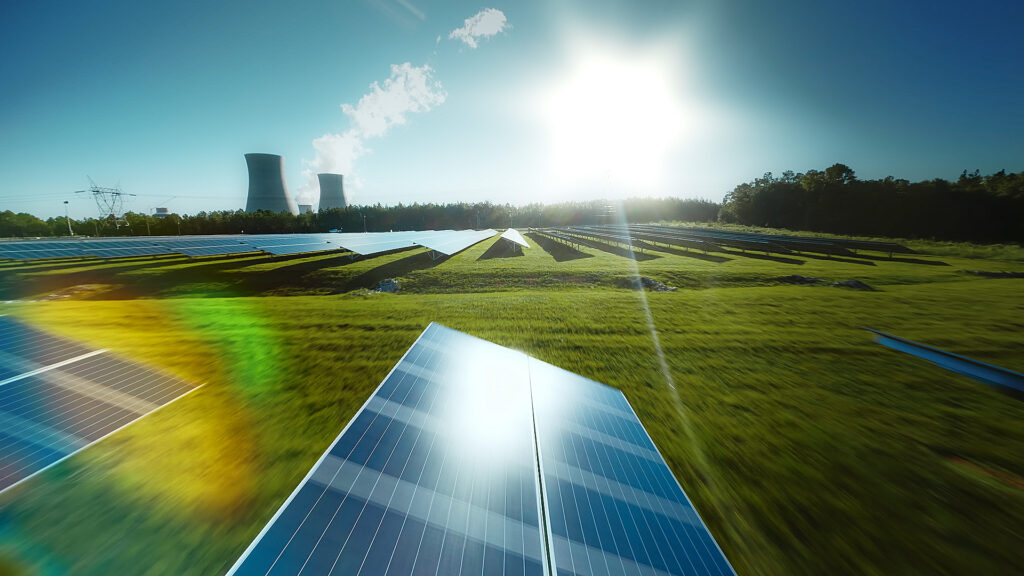
Southern Company’s subsidiaries have increased their solar, wind and storage capacity from approximately 1,800 megawatts (MW) in 2015 to approximately 8,600 MW in 2022.
Meanwhile, Southern Company is developing innovations that can improve renewables’ cost and reliability profiles so they could one day provide for the majority of the U.S.’s energy needs. This work includes creating solutions to better capture and store energy from solar and wind. “Renewables present a challenge because the sun is not always shining and the wind is not always blowing,” said Womack. “Southern Company is providing important industry leadership for the testing, development and deployment of a diverse portfolio of energy storage solutions.”
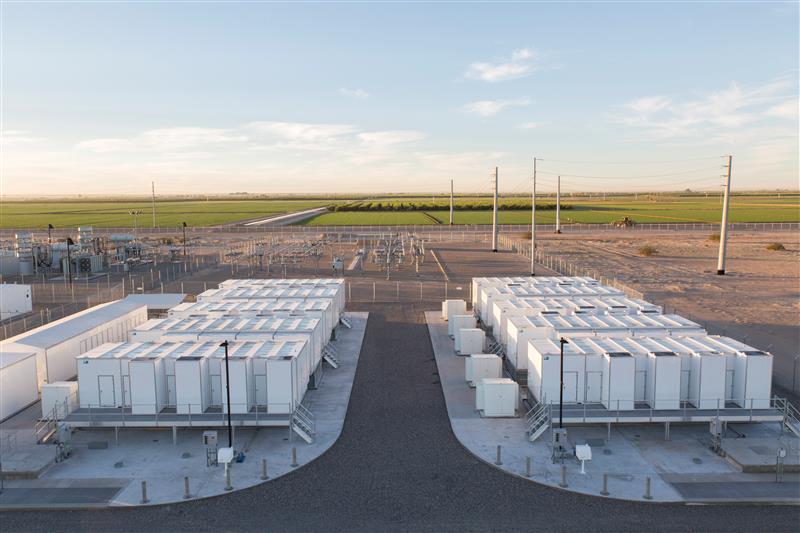
Subsidiary Southern Power has added battery-based storage resources at its Tranquillity and Garland solar facilities in California.
Hydrogen is a promising clean energy carrier, as it can be generated from water with renewable or nuclear energy and using it doesn’t produce greenhouse gas emissions. Southern Company last year joined the Hydrogen Council, a global CEO-led coalition of companies committed to fostering the development of the hydrogen economy. “Southern Company is embracing the role of hydrogen as a potentially powerful solution to holistically serve the needs of customers while providing a resilient energy system and driving growth in a decarbonized economy,” said Chris Cummiskey, Executive Vice President and Chief Commercial and Customer Solutions Officer at Southern Company.
“Southern Company is providing important industry leadership for the testing, development and deployment of a diverse portfolio of energy storage solutions.”
– Chris Womack
Another subsidiary, Georgia Power, recently partnered with Mitsubishi Power and the Electric Power Research Institute to successfully blend hydrogen with natural gas to power a gas turbine at a plant near Atlanta, Ga. “This demonstration helps pave the way for long-term clean and carbon-free use for already existing infrastructure,” said Rick Anderson, Senior Vice President and Senior Production Officer East, Georgia Power.
Southern Company also remains committed to nuclear power. Nuclear facilities produce more than half of all U.S. carbon-free electricity, and Southern Company is investing in new facilities to increase capacity.
The company’s Georgia Power subsidiary is constructing the country’s first new nuclear units in 30 years: Plant Vogtle units 3 and 4. Each unit can power an estimated 500,000 homes and businesses. “Once the new units are complete, Plant Vogtle will be the largest carbon-free generation asset in the country, meeting Georgia’s clean energy needs safely and reliably for up to 80 years,” said Womack.
Conventionally smart
Even as it’s investing and innovating in renewable energy, Southern Company is reducing its dependence on certain fossil fuels while working to make others more sustainable. Over the past 20 years, it has reduced the annual methane emissions from its natural gas distribution system by about 50%, even as the system grew by more than 20%. “We view natural gas as critical to reliable energy service and to the health, safety and comfort of the citizens and communities we serve,” said Womack.
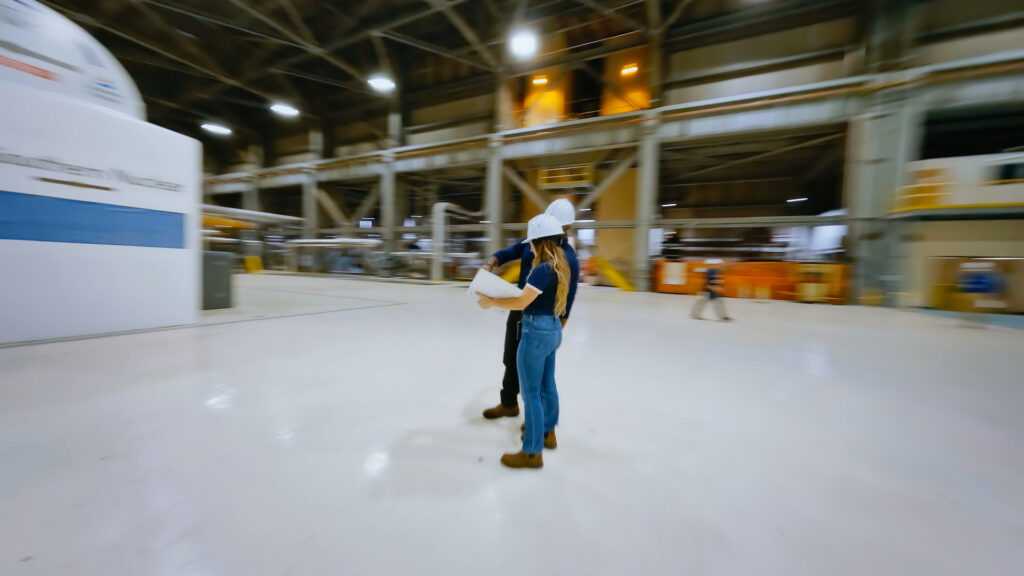
Southern Company manages and operates the U.S. Department of Energy’s primary carbon capture research facility – the National Carbon Capture Center in Wilsonville, Ala. The company’s work there, which also includes advancing carbon conversion and direct air capture solutions, has reduced the projected cost of carbon capture from fossil-based power generation by more than 40%. “Fossil fuels can be made cleaner by advancements in next-generation technologies and investments and collaboration in research and development,” said Womack.
Meanwhile, Southern Company subsidiaries have retired or converted 59 coal/oil generating units since 2007. By the end of 2028, Southern Company expects to have just 8 to 10 coal units remaining in the system’s fleet, subject to regulatory approval.
These efforts are paying off. Since 2007, the company has realized a 46% decrease in Scope 1 GHG emissions. As of 2022, close to one-third of its energy mix was from clean energy sources.
Policies for progress
For progress to continue and for America to achieve clean energy independence, Southern Company believes public policy must play a role. The company is committed to supporting constructive policies that advance the build out of energy infrastructure that will support a decarbonized future. It’s also pushing for more collaboration between industry and government, in the form of public-private partnerships. “We need the ability to build and build fast,” said Womack, adding that “the transition to net zero will require collaboration with key stakeholders, including government agencies and other partners, to effect meaningful change for our customers, our communities and our world.”
With producers like Southern Company improving renewables’ reliability and affordability while working to make conventional sources of energy cleaner, net zero is achievable. But to get there, all forms of energy must remain in the mix – at least for the foreseeable future. “We continue to transition our fleet and operations in a thoughtful, measured and sustainable manner,” said Womack.
Sources: Southern Company, U.S. Energy Information Administration