How can we protect the world’s children from a worsening climate?
From sanitation to education, UNICEF helps young people adapt to climate change for healthier lives.
By WP Creative Group
January 28, 2025
Priyanka Shendage knows the real consequences of extreme weather.
As a child growing up in Maharashtra, one of India’s most-populous states, Shendage lived in a cycle of heat waves followed by punishing rain. Over the last decade, she’s witnessed a six-fold increase in floods and cyclones and an even larger increase in droughts.1 These cascades of natural disaster have claimed countless lives, disrupting basic services and making clean drinking water scarce. Like the hundreds of millions of young people living in India, a country where over half of the population is under 25, Shendage wanted to help — but she wasn’t sure where to start.
“Although we young people have a clear vision for climate action in Maharashtra,” she said, “one of the biggest challenges we encounter is transforming our vision into reality.”2
To give her generation a voice, Shendage worked with UNICEF and its partners to cofound Maha Youth for Climate Action (MYCA), a youth-led platform for more than 500 young advocates aged 15 to 29. The program teaches young people the fundamentals of climate action planning, giving them the tools to find solutions for problems they have seen firsthand. In a region that’s considered one of the most vulnerable to the impacts of climate change, MYCA is one way young people are leading the charge to protect their own futures.
“When it comes to climate change, children are disproportionately impacted.”
– Bo Viktor Nylund, director of UNICEF Innocenti
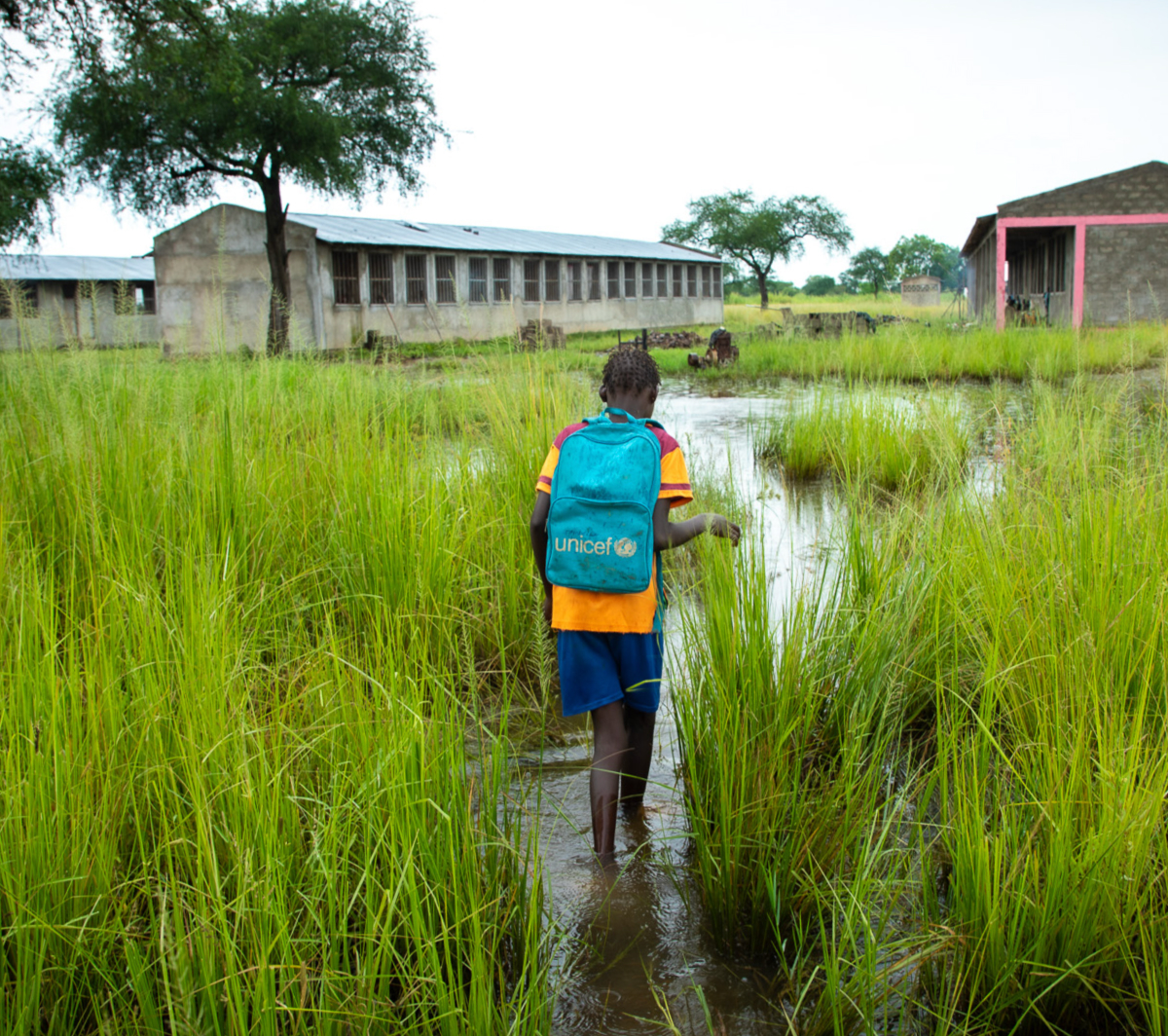
Aboya, 12, walks toward her school in the recently-flooded Gambella region of Ethiopia.
Shendage’s experience with extreme weather is increasingly common, as nearly half of the world’s children already live in areas considered “high risk” due to climate change. UNICEF’s 2024 “State of the World’s Children” report declares the climate crisis to be one of three “megatrends” projected to shape children’s lives over the next 25 years, forecasting that by 2050, eight times as many children will experience extreme heat waves compared to the early 2000s. As extreme weather becomes more common, young people will become more vulnerable to everything from disease to hunger to natural disasters.
“When it comes to climate change, children are disproportionately impacted,” said Bo Viktor Nylund, director of UNICEF Innocenti, the organization’s dedicated research center. “Effects on their development, health and education can be lifelong and irreversible.”
The new report underscores the importance of pairing attempts to slow climate change with climate adaptation — practical efforts, like those proposed by the young people of MYCA, to adjust to our new global reality. True climate adaptation will require large-scale action, impacting everything from communication systems to political action to global business operations. But the longer the world waits to build resilience against climate-related disruptions, the more costs will escalate. Proactive investment in climate adaptation will save money — and lives — in the short and long term. As Nylund put it, “We have a chance to shape a better future for children — one that every child deserves — but we need to start today.”
It starts with water
In 2023, world leaders emerged from the COP28 (the 28th United Nations Climate Change Conference) climate talks with a roadmap for reducing vulnerability to the climate crisis. The framework, known as the Global Goal on Adaptation, reflects a collective commitment born out of the 2015 Paris Agreement, where nations pledged to drive political action around climate. As countries negotiate adaptation funding and measurable targets, UNICEF is already at work.
They’ve started by developing a new set of “child-centric indicators” to track progress on climate adaptation initiatives designed for children. Indicators include securing access to clean water, enhancing climate education and strengthening infrastructure that helps communities withstand the impacts of climate change both today and into the future. UNICEF has found such initiatives to be incredibly cost effective, producing a 20-fold return for every dollar spent. A recent UNICEF report suggested that, “With ambitious action, the number of people in need of humanitarian assistance from climate disasters could drop by 90 percent by 2050 and better access to resilient water, sanitation and hygiene (WASH) services could reduce the climate risk for 415 million children.”
WASH programs can strengthen public health outcomes and soften the blows of climate-related natural disasters. As Michael J. Nyenhuis, President and CEO of UNICEF USA, notes, droughts can lead to food and water scarcity, while extreme rain and flooding can heighten the risk of pollutants that contaminate once-safe water supplies. But building reliable access to clean water infrastructure can help a community’s resilience to climate shocks, he said, keeping kids in school instead of spending time in search of safe sources to drink from.
“These issues aren’t just inconveniences — they have serious implications for children’s health, education and overall development,” Nyenhuis said.
UNICEF has found WASH initiatives to be incredibly cost effective, producing a 20-fold return for every dollar spent.
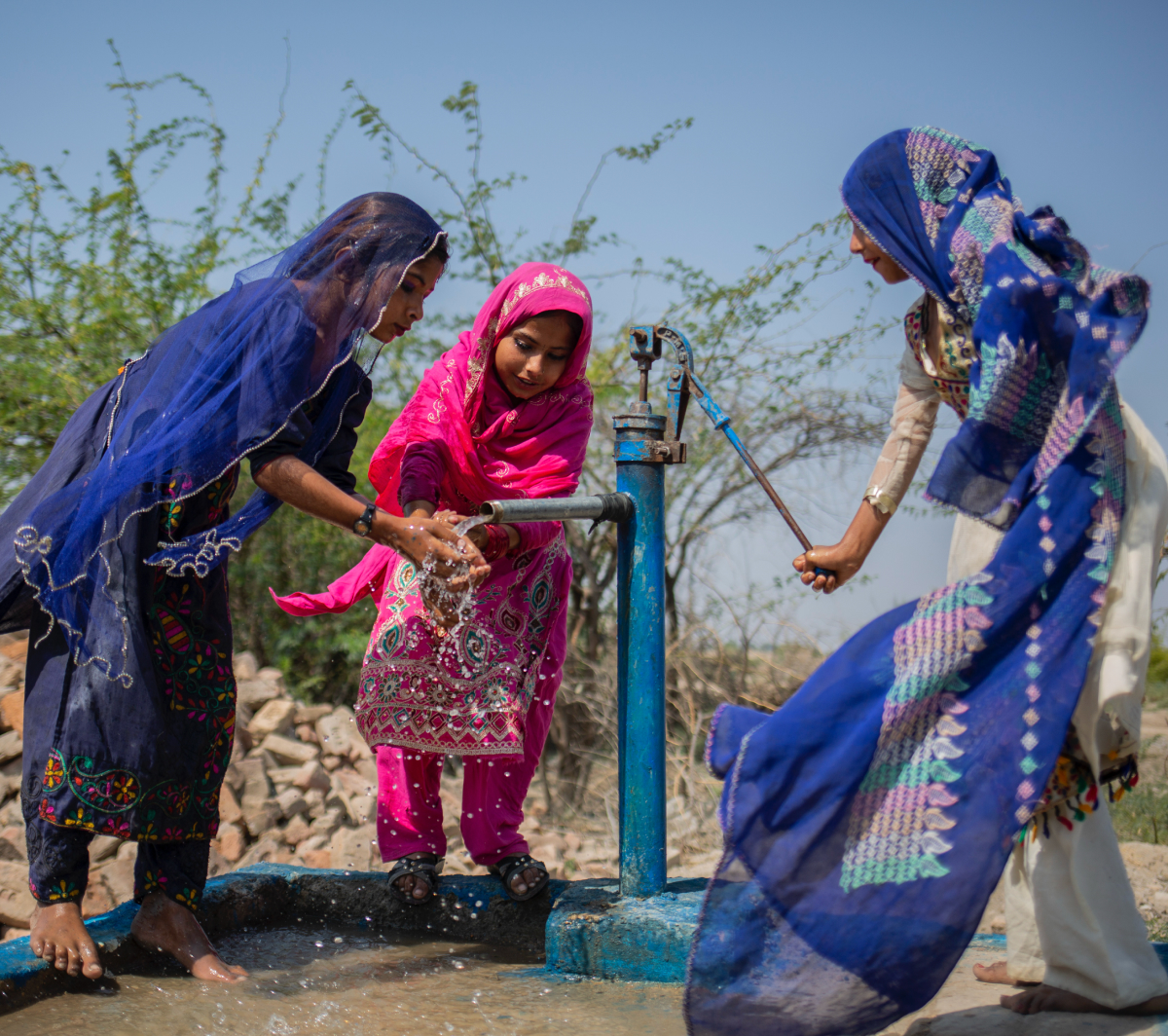
12-year-old Farzana (center) pumps clean water installed as part of a UNICEF-supported WASH program in Umerkot, Pakistan.
UNICEF has partnered with organizations like the Baxter International Foundation to create and improve access to water in Egypt and Colombia, using solar water pumps and reverse osmosis filtration to provide a reserve source of clean water in the case of disaster — or to create a new water supply where there was none before. And it has encouraged the creation of “water committees,” staffed by locals who have been trained to manage the new systems and coordinate with their neighbors to ensure that even when disaster strikes, everyone will have enough to drink.
Similar programs have proven successful around the world, even in remote areas where construction projects can be challenging. In rural Venezuela, for example, a new solar-powered water treatment plant has helped reduce dependence on the Orinoco River, which has seen an increase in pollution due to development and mining. The result has been a reduction in the spread of waterborne diseases, the establishment of reliable clean water for the local hospital and the creation of sanitation infrastructure that can withstand whatever the future holds.3 This is just one part of UNICEF’s larger work in Venezuela, which has involved partnering with the nation’s Ministry of Water to secure access to clean water for nearly half a million people, including in 163 schools.4
“Access to clean water can serve as a foundation for local development and can help lift communities out of poverty through agriculture and other economic activities,” said Nyenhuis. “Clean water access improves a community’s ability to withstand and recover from climate-related shocks and stresses. It’s a key factor in building overall resilience.”
Educating the next generation
To lay the groundwork for long-term efforts toward improving climate resilience and adaptation, UNICEF is ensuring youth advocates have not only a voice but the skills to contribute to solving the climate crisis.
Educational initiatives, like Shendage’s work with MYCA, are designed to equip young people with the knowledge and skills to navigate climate policy initiatives within their local communities. Other programs seek to mobilize young people through expanding their technical know-how on climate action. For example, through the Green Rising Initiative, the tech company Capgemini has been supporting UNICEF to help young people develop soft and technical skills and give them a voice to uphold advocacy around climate adaptation. Not only is this program supporting future leaders as they find their voice, it is teaching them green skills that will be essential as they enter the workforce.
“Addressing climate change requires a collective effort from all sectors of society.”
– Michael J. Nyenhuis, president and ceo of UNICEF USA
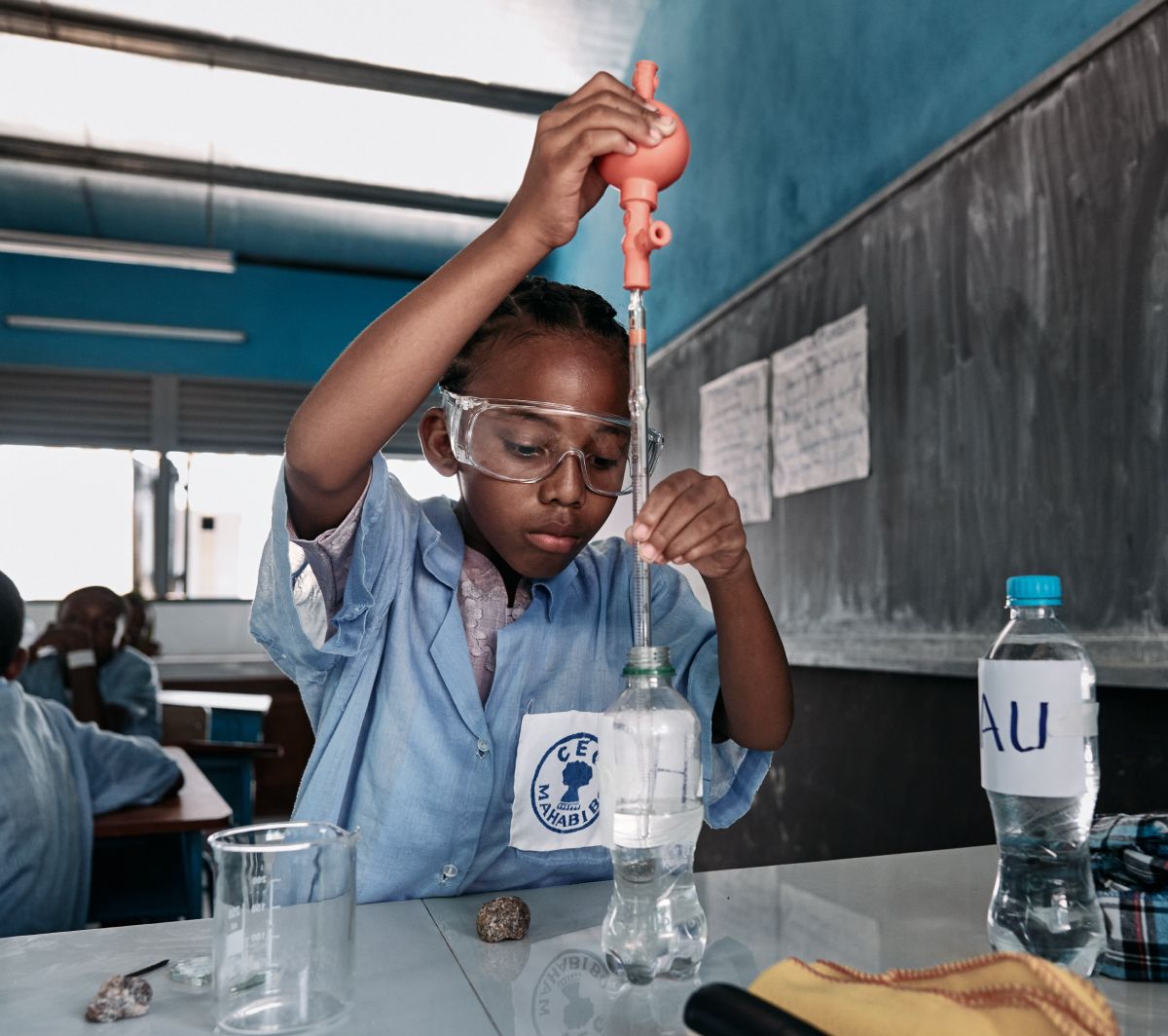
Danaia, 10, performs a chemistry experiment in a new classroom in her school in Boeny, Madagascar.
Underpinning many of these initiatives is a push to amplify youth perspectives in championing climate policy and advocacy. Young people are inheriting a myriad of climate hazards that threaten irrevocable harm and their voices are seen as vital in efforts to inspire lasting change. With initiatives like the Leading Minds Fellowship on Climate, UNICEF is encouraging people aged 15 to 25 to lead the way in developing new, innovative solutions on climate change that stand to shape their own futures.
That’s not to say that young people are expected to solve such pressing issues on their own. UNICEF is calling on business leaders to recognize climate adaptation as both a business necessity and moral imperative. The private sector is not immune to the wide-scale economic losses and supply chain disruptions caused by climate change and extreme weather events.
If businesses hope to maintain a competitive advantage, UNICEF leaders say companies will need to join in adapting their operations to meet the realities of current and future climate challenges.
“Addressing climate change requires a collective effort from all sectors of society,” Nyenhuis said. “Integrating child-sensitive policies and practices into all climate action plans helps ensure a more sustainable and equitable future for all.”
UNICEF is advocating for children worldwide.
Sources
1Lessons from Maharashtra, India on Youth-Led Action towards Climate Advocacy and Policy
2 Youth voices at the forefront of climate and water conservation in India