A university rooted in public purpose

By University of Michigan
October 15th, 2025
Text size
Display theme
Our pages are responsive to your system settings and browser extensions for optimal experience
0:00/0:00
A university rooted in public purpose
Voice is AI-generated. Inconsistencies may occur.
On April 12, 1955, crowds gathered on the steps of Rackham Hall at the University of Michigan. Inside, more than 500 scientists, public health officials and reporters awaited one of the most consequential announcements in medical history.
With the world watching, Dr. Thomas Francis, Jr., director of the largest medical field trial ever conducted, confirmed what millions had hoped to hear: “The vaccine works. It is safe, effective and potent.” The Salk polio vaccine had proven successful, thanks in large part to a trial involving more than 1.8 million children in 44 states, Canada and Finland — led by the U-M School of Public Health.
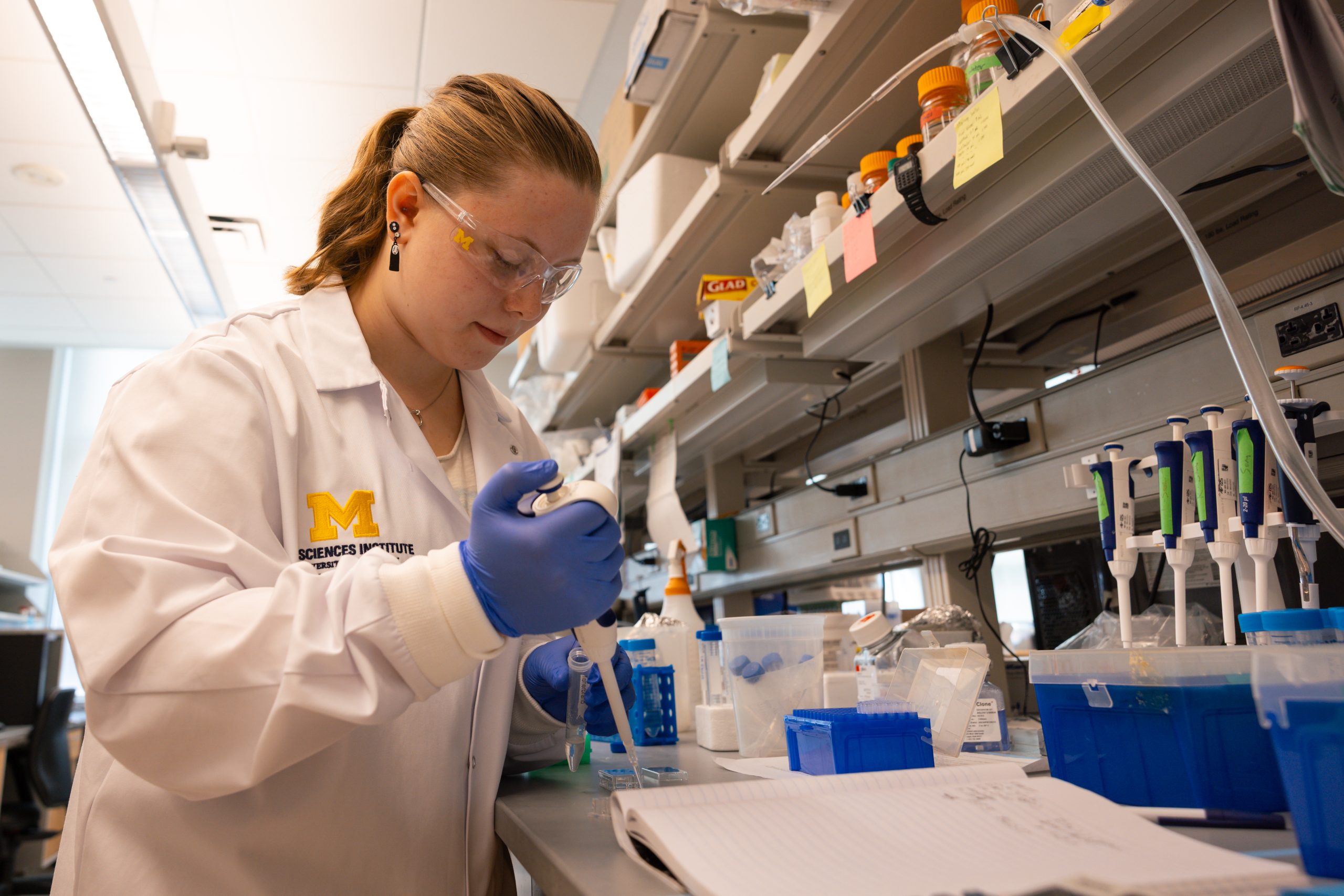
It was a turning point in global health and a defining moment for a university that has spent more than 200 years turning research into public good.
Public health leadership from hospitals to human genetics
Michigan’s role in advancing public health didn’t begin with polio. In 1869, it became the first U.S. university to own and operate a teaching hospital, integrating patient care with research and medical education. That model reshaped American medicine.
In 1956, U-M created the country’s first human genetics department, laying the groundwork for today’s personalized medicine and research on hereditary disease.
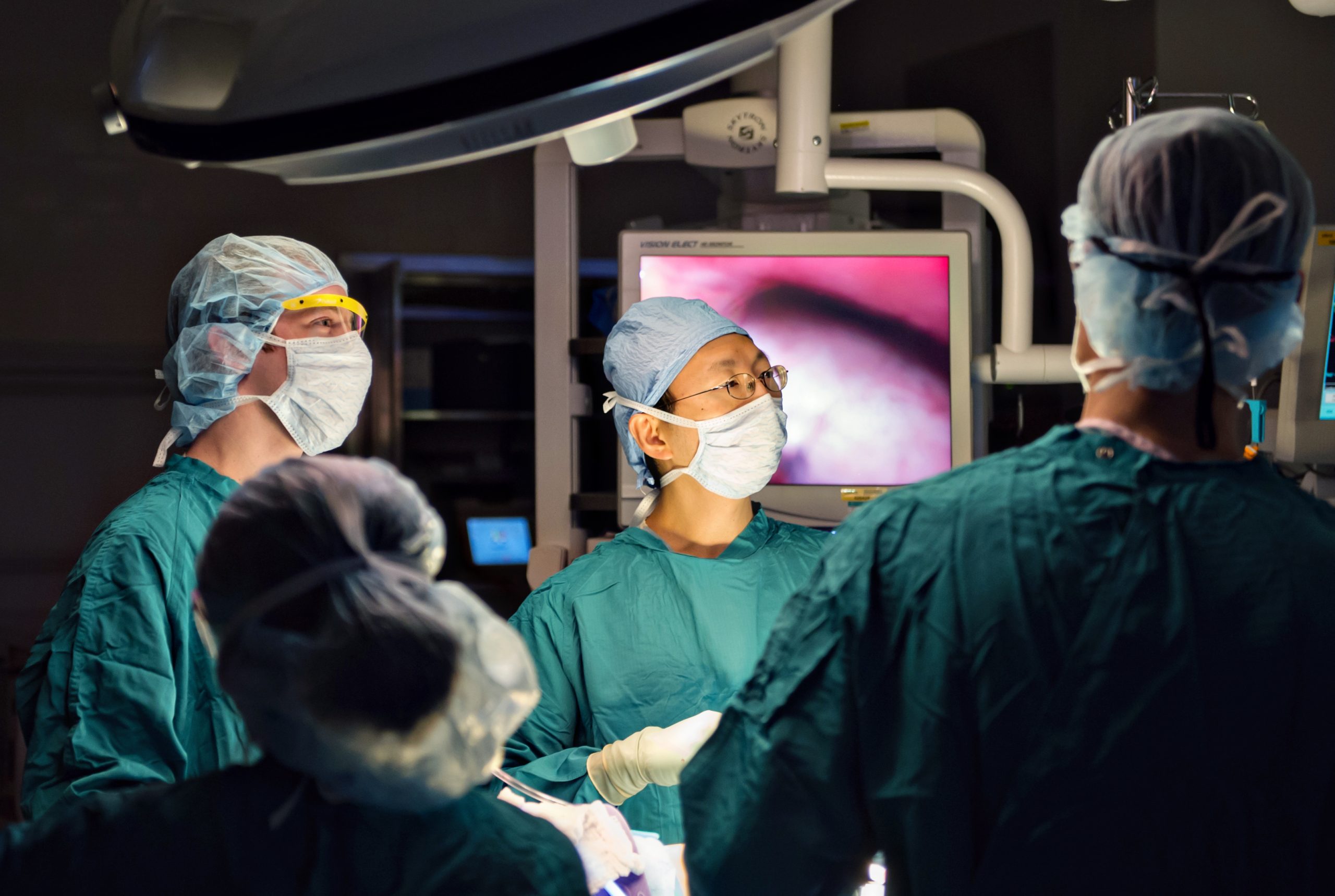
More recently, in 2005, U-M researchers developed EMERSE (Electronic Medical Records Search Engine), a tool that helps clinicians and scientists analyze unstructured electronic medical records. Free for academic use, it’s also licensed and used in health systems across the country to improve care and advance research.
Accessible innovation for industry and society
Public impact also means creating open access to emerging technologies. When U-M launched the Battery Lab in 2015 — the first university-based pilot production facility of its kind — it ensured that both academic and industry partners could use the space under intellectual property-neutral terms. This open-access model is helping the U.S. accelerate battery innovation across sectors, from electric vehicles and consumer tech to grid storage and defense.
New research from U-M also shows that small modular reactors (SMRs) — a solution drawing interest from the nation’s largest tech companies — may become economically viable by 2050. They offer a potential low-carbon solution to rising global energy demands.
Collecting data, informing policy and serving the American public
Michigan’s Institute for Social Research (ISR) is a powerhouse of resources, services and data that support high-impact social science research and evidence-based policymaking across the globe. Since WWII, ISR has shaped national economic and social policy with tools like the Index of Consumer Sentiment (ICS), which measures consumer confidence in the U.S. economy based on household attitudes, and the Panel Study of Income Dynamics (PSID), the longest-running longitudinal household survey in the world. Policymakers, agencies and researchers rely on ISR’s data to track public attitudes, economic stability, healthcare access and poverty.
The work continues — and expands — through the Institute for Healthcare Policy and Innovation (IHPI). Established in 2012, IHPI brings together scholars across disciplines to inform policy on mental health, healthcare costs, aging and the opioid epidemic.

Direct action and opportunity
Not all public impact is abstract. Through initiatives like Poverty Solutions, which was created in 2016, U-M directly engages with communities to address the root causes of economic hardship, from housing instability to wage stagnation.
The Go Blue Guarantee, launched in 2018, ensures free tuition for in-state students from families earning under $125,000, which helps remove one of the most persistent barriers to opportunity: the cost of college.
Preparing the public-sector workforce
Some of Michigan’s contributions are highly specialized — and urgently needed. Today, the U.S. is racing to rebuild its naval and shipping infrastructure, an effort that will require an additional estimated 100,000 people over the next 10 years. Since the U-M’s naval architecture and marine engineering department is one of the few accredited programs in the country, it is leading efforts to train the engineers required to meet the industry’s looming labor shortage and support both national defense and industrial capacity.
Safer, smarter mobility for all
Opened in 2015, Mcity is a 32-acre test facility for connected and autonomous vehicles, designed with everything from traffic signals and roundabouts to building facades, obstacles and simulated highways. Mcity was created to help researchers and public agencies evaluate emerging technologies in real-world conditions, before they reach public roads. In 2024, U-M launched Mcity 2.0 with new capabilities to model human-vehicle interaction and AI decision-making in transportation.
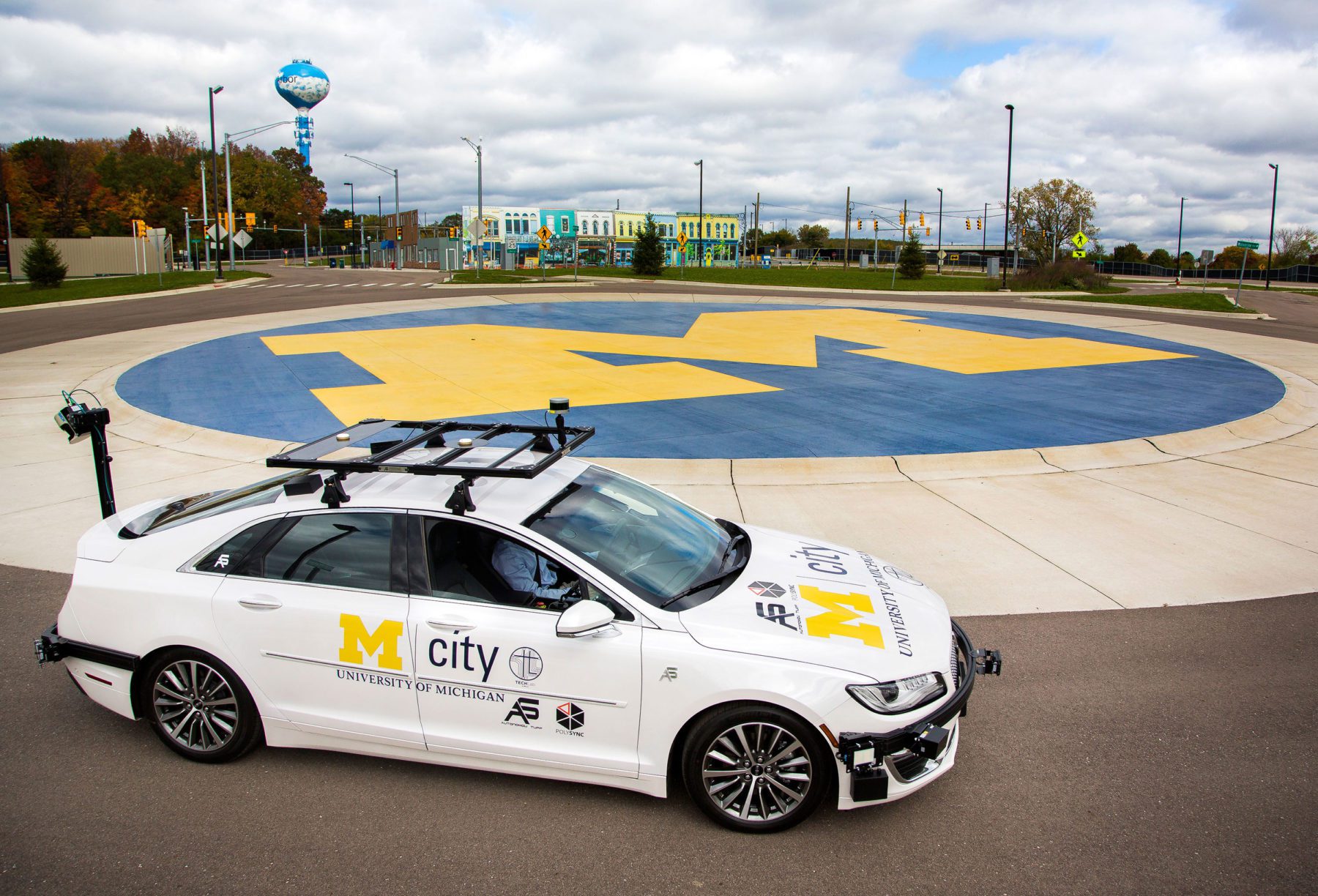
Rather than leave the future of mobility to tech companies alone, U-M is helping ensure that innovations are safe, fair and publicly accountable.
A mission that endures
“We invite the world to see our university as the place where bold ideas, transformative research, creative endeavors and the education of tomorrow’s leaders come together in the public interest,” said U-M President Domenico Grasso.
In an era of growing skepticism toward institutions, Michigan is reasserting a truth it has long embodied: public research universities can — and must — serve the public. From vaccines to vehicles, from studies and policies to hands-on training, the University of Michigan’s impact is not only historic, but ongoing.
Grasso promised: “Our amplified endeavor will unite scholars, staff, students and citizens to co-create solutions, consider all perspectives and rebuild the social contract through evidence-based policy, honest and holistic dialogue, and measurable accountability. We will carry out this work with radical transparency, ethical leadership and deep community engagement.”
Visit umich.edu/look to learn more about how the University of Michigan is redefining the power of higher education for the public good.
CONTENT FROM

This content is paid for by an advertiser and published by WP Creative Group. The Washington Post newsroom was not involved in the creation of this content.