Preparing journalism students for the new global landscape
By University of Oregon School of Journalism and Communication
January 29, 2026
Text size
Display theme
Our pages are responsive to your system settings and browser extensions for optimal experience
0:00/0:00
Preparing journalism students for the new global landscape
Voice is AI-generated. Inconsistencies may occur.
In a fractured media landscape, with increasing polarization and AI-fueled misinformation, the stories journalists tell must land with greater impact than ever before. Traditional approaches are no longer enough to ensure an informed public or the sustained relevance of journalism. To better prepare future journalists and communicators to be effective in a volatile global landscape, the University of Oregon School of Journalism and Communication (SOJC) leans into experimentation and experiential learning.
The SOJC is home to innovative approaches in solutions journalism, community journalism, science communication, immersive media communication and other emerging fields. Students of journalism, public relations, advertising and media studies move directly into applied work — from creating digital and print publications to working at student-run advertising and public relations agencies for community and corporate clients. That emphasis on experiential learning includes a unique course co-taught by Jason Rezaian of The Washington Post.
Exceptional instruction meets the moment
For Rezaian, who was held hostage as a journalist in Iran for 544 days, creating the Hostage Diplomacy course with SOJC Professor of Practice for Brand Innovation David Ewald was personal. Rezaian’s experience as a hostage prompted him to teach students about the issue in an authentic way. “The course is innovative,” he said. “It brings together students from journalism, advertising and PR to develop new ways of raising awareness about hostage cases.”
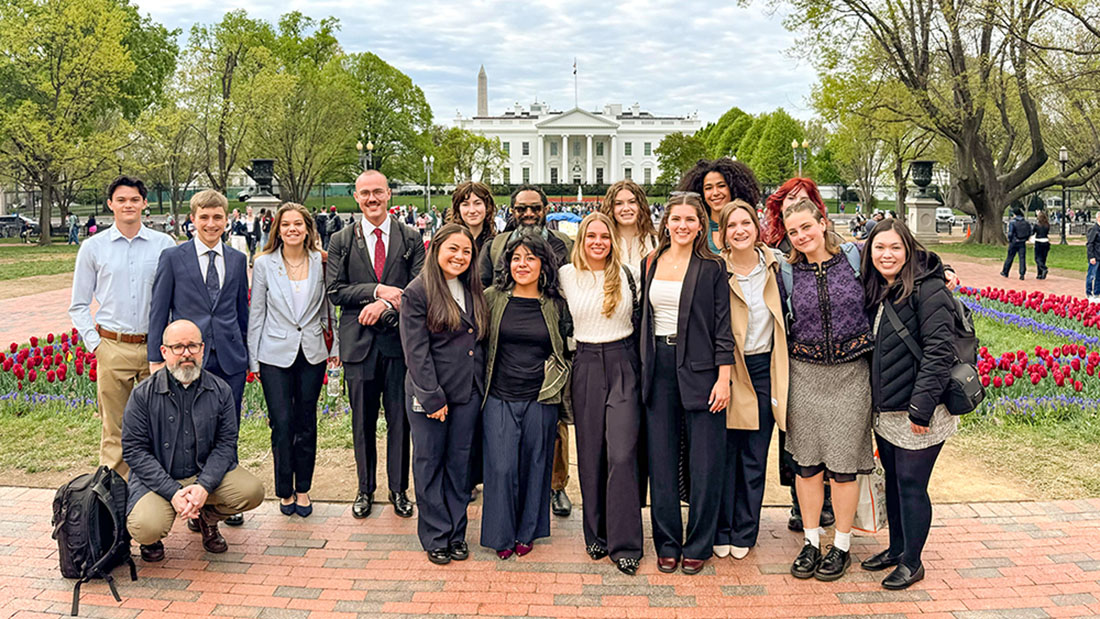
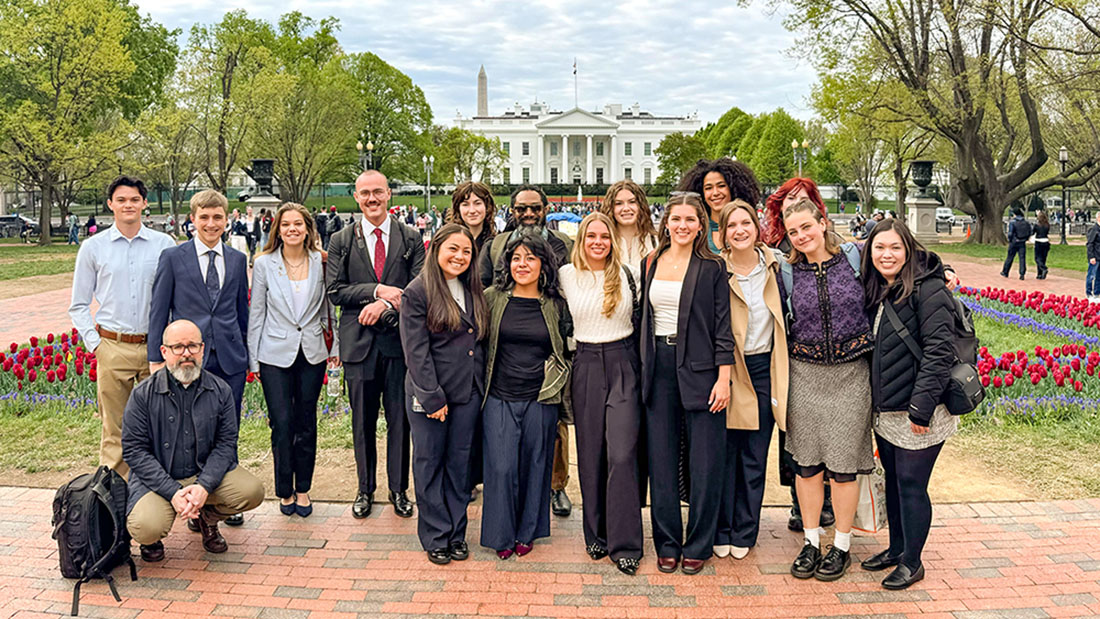
Students learn about the complex world of hostage diplomacy and are challenged to work on advocacy projects designed to increase public awareness of American hostages held abroad. The culmination of the course, now in its second year, is a student trip to Washington, D.C., where they meet policymakers, experts and journalists and present their projects to hostages’ families.
The 2025 cohort met with Rezaian as well as the former U.S. special presidential envoy for hostage affairs and other officials and international journalists.
Advocating to make the invisible visible
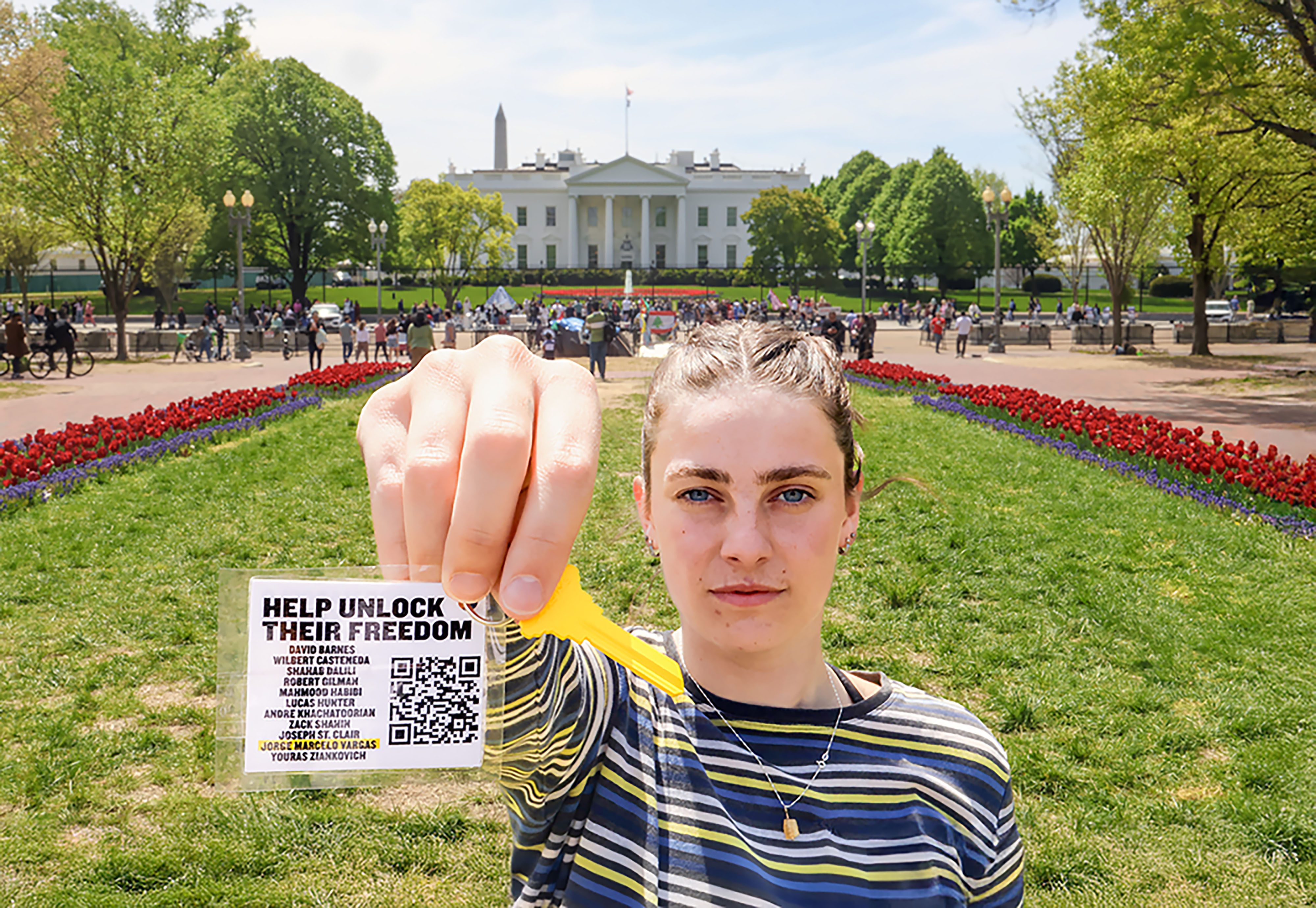
In 2025, advertising and political science major Maren Fullerton worked alongside public relations and advertising major Elizabeth Sgro, in collaboration with the James W. Foley Legacy Foundation and the Bring Our Families Home Foundation. For their project, the students acquired 500 keys, painted them yellow — the symbolic color of hostage diplomacy — and attached tags with the names of hostages and a QR code linking to their stories. “We dropped them around D.C.,” said Fullerton, “inviting people to a mural unveiling that depicted a group of hostages who were detained.”
It was an example of experiential learning that tapped into advertising and public relations strategies and applied them to causes students care about. “Our project showed that students are capable of using creative strategies for real-world issues outside a university setting,” Fullerton said.
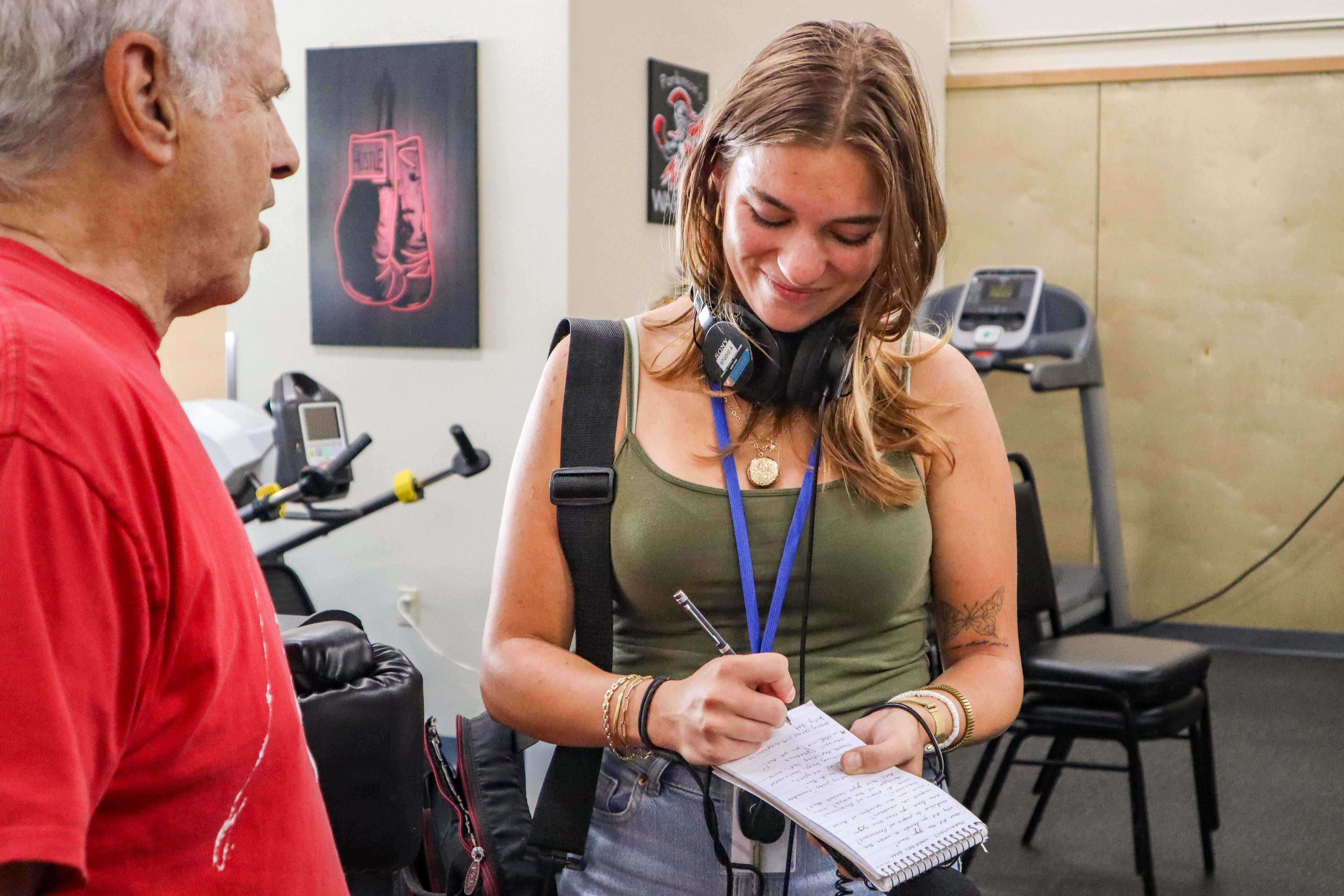
Students chose projects that matched their interests. Journalism major Chandlor Henderson, for example, produced a podcast that included an episode about press freedom and how journalists should approach hostage diplomacy.
“The course is an experiment built from a simple idea: Progress in this space has always come from people willing to act before there was a road map,” Ewald said.
SOJC Interim Dean Regina Lawrence added, “The course reflects the SOJC’s commitment to innovative curriculum, press freedom and inviting cross-disciplinary participation.”
SOJC faculty are encouraged to find new ways of equipping students with skills and experiences they can’t get anywhere else. Innovation doesn’t mean abandoning journalism foundations, however.
Journalism Director Seth Lewis said the school is also leaning into the essentials — curiosity, rigor and accountability. “Our specialty is helping students tell compelling, truthful stories that make a difference,” Lewis said. “We’re making investments in training students to interview sources, gather and verify information, and engage with communities — the very skills that won’t go out of style, even in the era of AI.”
Strengthening community-based journalism
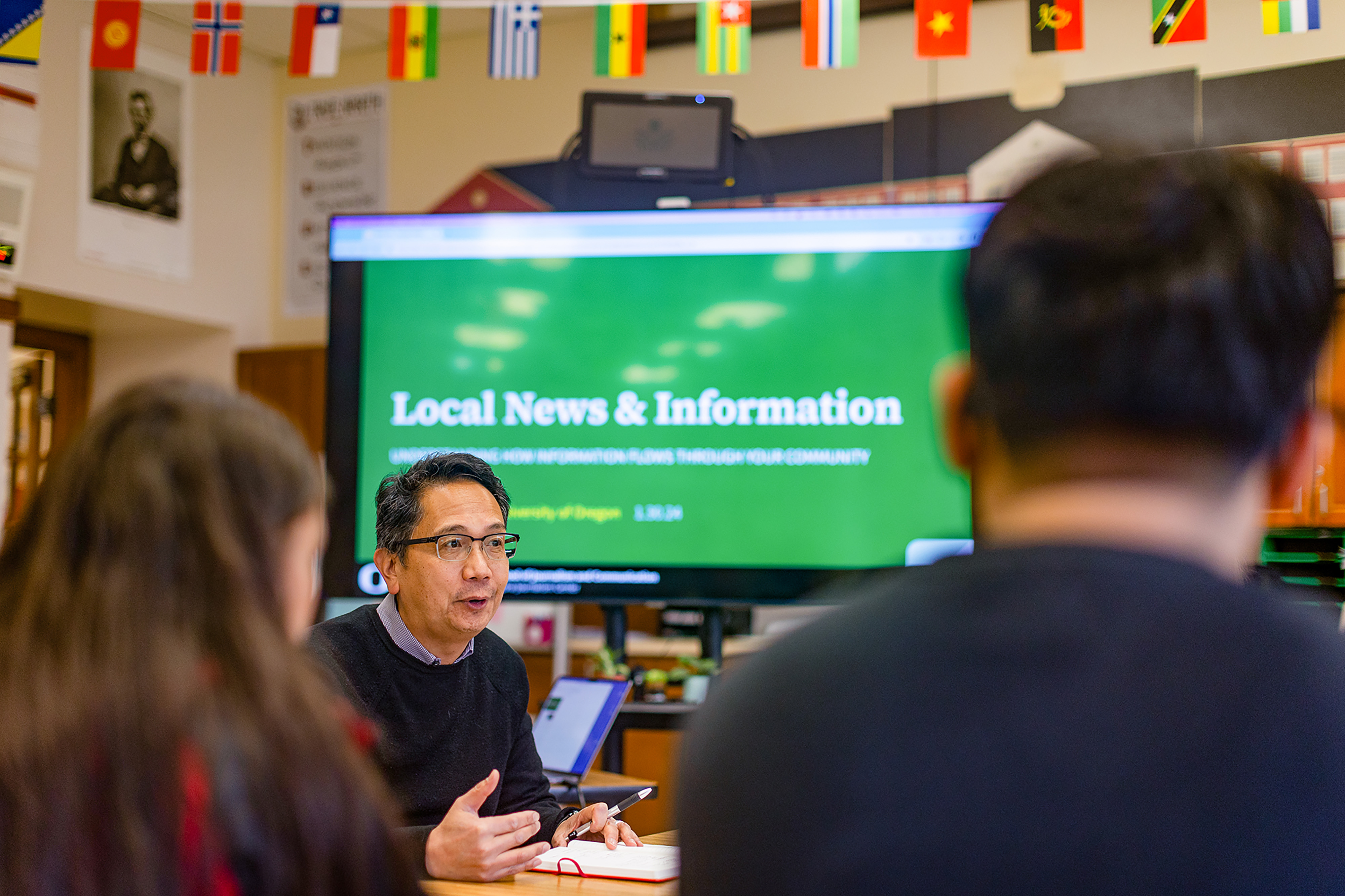
The SOJC is also a national leader in community-based and solutions journalism. Led by Pulitzer Prize-winning journalist and SOJC alum Brent Walth, the Catalyst Journalist Program gives students hands-on experience combining investigative reporting with solutions journalism — reporting that explores responses to societal problems and helps rebuild trust in the media.
The school’s Agora Journalism Center strengthens civic health by supporting robust local information ecosystems and community-centered journalism. Agora publishes regular assessments of Oregon’s local news and information landscape and collaborates with local media and community organizations to gather input from residents about their information needs, enabling newsrooms to better align reporting with community priorities.
“When we listen to Oregonians across the state, we hear that many people turn to social media first, not because the information is better, but because the sense of connection is stronger,” said Andrew DeVigal, director of the Agora Journalism Center and co-director of the SOJC’s Multimedia Storytelling Master’s program. “Local journalists can respond by producing reporting that strengthens shared understanding, reflects care for one another and supports the civic health of the places people call home.”
Leaders in the field, investing in its future
Founded in 1916, the University of Oregon School of Journalism and Communication is one of the first professional journalism schools in the nation and one of only 112 accredited programs worldwide. The school counts 15 Pulitzer Prize winners among its alumni and faculty, including Rebecca Woolington — now Washington Post’s deputy editor of long-term investigations — who was on the team that won the 2022 Investigative Journalism prize; Michelle Theriault Boots, who was on the team that won the 2020 Public Service prize; and Katie Campbell and SOJC instructor MacGregor Campbell, who were on the team that won the 2020 National Reporting prize.
As a leader in the field, the SOJC is investing in the future: Faculty are at the forefront of global issues, conducting noteworthy research on subjects like AI’s effects on journalism, political polarization, science communication and immersive psychology. The school offers undergraduate minors in game studies, science communication and documentary production and unique master’s programs in advertising and brand responsibility and immersive media communication.
Guided by faculty who are shaping where the field is headed, the University of Oregon’s School of Journalism and Communication is helping strengthen and evolve the profession of journalism while preparing the next generation to lead with purpose and impact.
CONTENT FROM

This content is paid for by an advertiser and published by WP Creative Group. The Washington Post newsroom was not involved in the creation of this content.