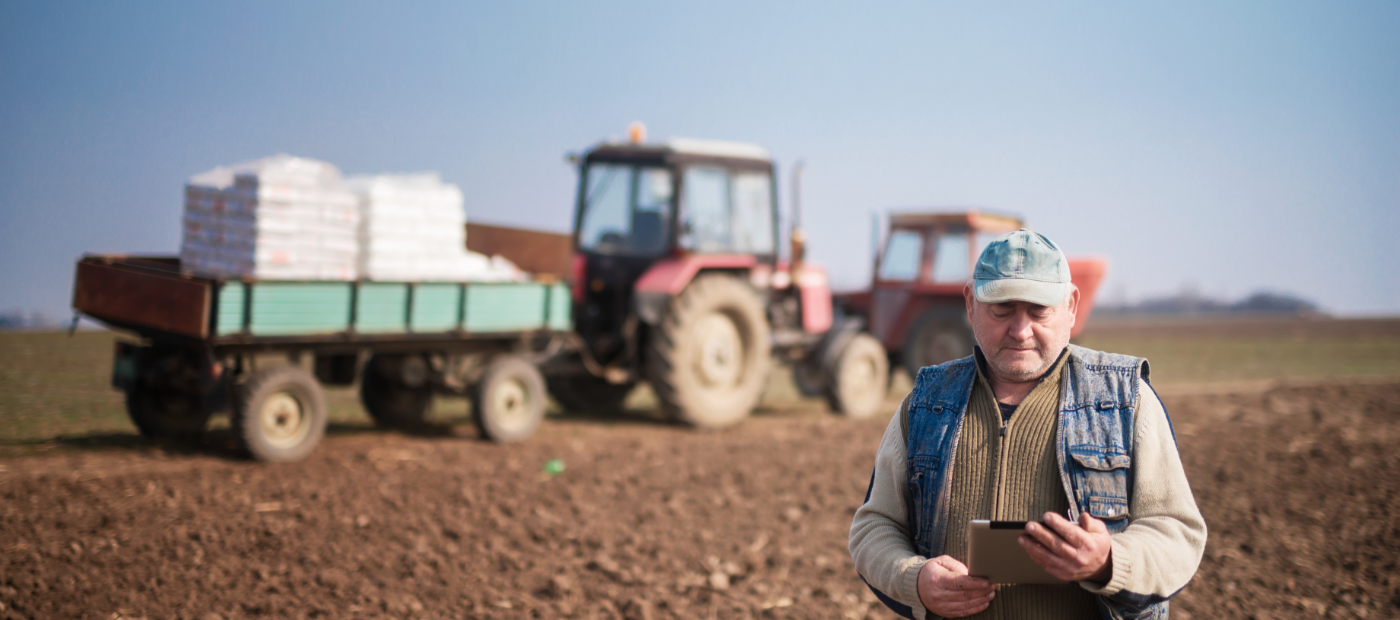
The power of connection: How broadband is strengthening rural communities

With greater access to the internet, Americans’ lives — and businesses —
are improving.
For years, Cheri Morton dreamed of opening a boutique in the small rural community of De Leon, Texas. When she opened Kindred Threads in 2019, Morton had plans for ongoing in-store activities to keep her customers engaged. Then Covid-19 hit. Morton quickly pivoted and invited her customers to Facebook Live events, but her Wi-Fi signal wasn’t strong enough to livestream. If she couldn’t reach their customers, she might go out of business, so Morton reached out to Totelcom Communications, who set them up with a fiber broadband connection.
“They were able to do the live online events they had hoped to do and make sales that way, and they’re still open today,” said Jennifer Prather, CEO of Totelcom Communications, a family-owned company that serves about 6,000 customers in rural Texas.
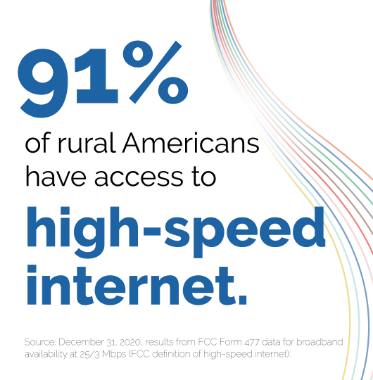
91% of rural Americans now have access to high-speed internet – and the story of Morton is illustrative of the increasingly important role broadband is playing in the lives of rural Americans in three key areas: small business, telehealth and farming.
Boosting small
businesses
The importance of small businesses to the U.S. economy cannot be overstated: They account for 99% of all businesses and employ over 47% of the country’s private workforce. When Covid-19 hit, businesses across the country were forced to reimagine their strategies. Instead of focusing solely on their local, in-person customers, many small business took their businesses online. While challenging, this pivot allowed small businesses to thrive and expand their customer base.
Rural small businesses going digital is a trend set to continue, and according to one recent study, could add $47 billion to the GDP annually and over 360,000 new jobs over the next three years.

Connecting
communities to
healthcare
According to the Centers for Disease Control and Prevention (CDC), people who live in rural areas are more likely than urbanites to die of the five leading causes of death: heart disease, cancer, unintentional injury, chronic lower respiratory disease and stroke. One way the CDC hopes to combat the problem is through telehealth services — which could more accurately be called videohealth — and this requires broadband.
One rural community where broadband has enabled the expansion of telehealth is Missoula, Montana. Two local hospitals serve the local population of about 75,000, along with residents in neighboring communities, who may live up to 90 minutes away.
“Our ability to provide high-speed connectivity to our consumers saves them from having to come into town for check-ups or a simple diagnosis.”
– Jason Williams, CEO of Blackfoot Communications
According to the Centers for Disease Control and Prevention (CDC), people who live in rural areas are more likely than urbanites to die of the five leading causes of death: heart disease, cancer, unintentional injury, chronic lower respiratory disease and stroke. One way rural communities hope to combat the problem is through telehealth services — which could more accurately be called videohealth — and this requires broadband.
One rural community where broadband has enabled the expansion of telehealth is Missoula, Montana. Two local hospitals serve the local population of about 75,000, along with residents in neighboring communities, who may live up to 90 minutes away.
“Our ability to provide high-speed connectivity to our consumers saves them from having to come into town for check-ups or a simple diagnosis,” explained Jason Williams, CEO of Blackfoot Communications, a cooperative serving about 7,000 square miles of western Montana and eastern Idaho. He added that healthcare personnel working in rural hospitals can serve local patients as well as those outside of their area.
While the pandemic certainly increased the use of telehealth, it is here to stay. “Telehealth is a two-way street,” Williams said. “It’s had a real positive impact on our rural communities.”
Improving farm technology
Today’s farmers are facing unprecedented challenges. As population growth is pushing demand for food upward, production costs are skyrocketing because of a variety of factors, including labor and supply shortages and environmental changes due to climate change. The result is thinning profit margins that were already on a razor’s edge. Again, broadband is playing a crucial role in both production and distribution.
The modern agriculture industry routinely uses sophisticated technologies such as robots, temperature and moisture sensors, aerial images, and GPS technology. These connected capabilities enable precision agriculture and robotic systems that allow businesses to be more profitable, efficient, safer and are environmentally friendly. For example, dairy farmers are using radio frequency identification (RFID) chips to track what the cows are eating and how much milk they’re producing.
“They can track so much data on each cow, and with enough of a broadband connection, the farmer has instant access to that data and can then upload information regarding the health of the herd and production levels directly to their vet for assessment of ongoing nutritional needs,” explained Prather.
“Broadband helps with the farmers’ efficiency, which makes them more productive and that just helps our entire area’s economy.”
– Jennifer Prather, CEO of Totelcom Communications
She added that crop farmers and wind and solar farms are also using technology to monitor crops and track data—all of which require broadband. “You can’t add more customers in the acres that it takes to produce a dairy or a wind farm, so there’s never going to be a really good market case to be here and to do this, but we’ve been building broadband in these rural areas fora long time,” Prather said. “Broadband helps with the farmers’ efficiency, which makes them more productive and that just helps our entire area’s economy.”
On the distribution side, ranches in western Montana are selling livestock through virtual networks, saving them long journeys.
“We’re able to bring the market locally, meaning that people can purchase livestock virtually over video, which is supported by a high-speed internet connection,” Williams said. “Our farmers are able to get better prices and save the expense of having to ship everything to market before it’s even sold.”
He added that ranchers are relying on mobile technology to track their herds and bring them to those virtual markets.
“A mobile wireless connection is only as good as the nearest cell tower, and the nearest cell tower isn’t going to do you any good unless it’s connected to fiber. Throughout large portions of Montana, Blackfoot is providing fiber-based connectivity to all of these rural mobile cellular sites,” Williams said.
Digital technology has become so important to agriculture that research from McKinsey & Company found that proper implementation of connectivity could add $500 billion to the global GDP by 2030.
Rise of broadband in
rural communities
Totelcom and Blackfoot have seen unprecedented growth in customer demand for broadband. In addition to increased demand by local residents, broadband is also enabling people who can work remotely to migrate to rural communities.
In short, broadband is no longer a nice-to-have; it’s now a must-have.
Connecting every American, especially those in rural areas, will require unprecedented collaboration across the private and public sectors. In November, Congress passed the Infrastructure Investment & Jobs Act (IIJA), which included a $65 billion investment in connecting unserved and underserved communities to high-speed internet. It’s now up to those communities to partner with experienced providers to ensure funds spent will not only complete a network build, but also continue to provide communities modern, reliable connectivity well into the future.
“When I go to rural communities and ask, ‘What does infrastructure mean to you?’ They all say, ‘Broadband, streets, bridges, schools,’” Williams said. “Having reliable connections to broadband really has become an essential part of the fabric of rural America.”

Connecting communities to
the power of broadband.
SHARE THIS ARTICLE
washingtonpost.com © 1996-2022 The Washington Post
Privacy Policy • CA Notice of Collection • Do Not Sell My Info • Terms of Service