The high cost of financial exclusion—and Wells Fargo’s plan to minimize it
When over seven million American households are unbanked, the entire economy pays the price.

By WP Creative Group
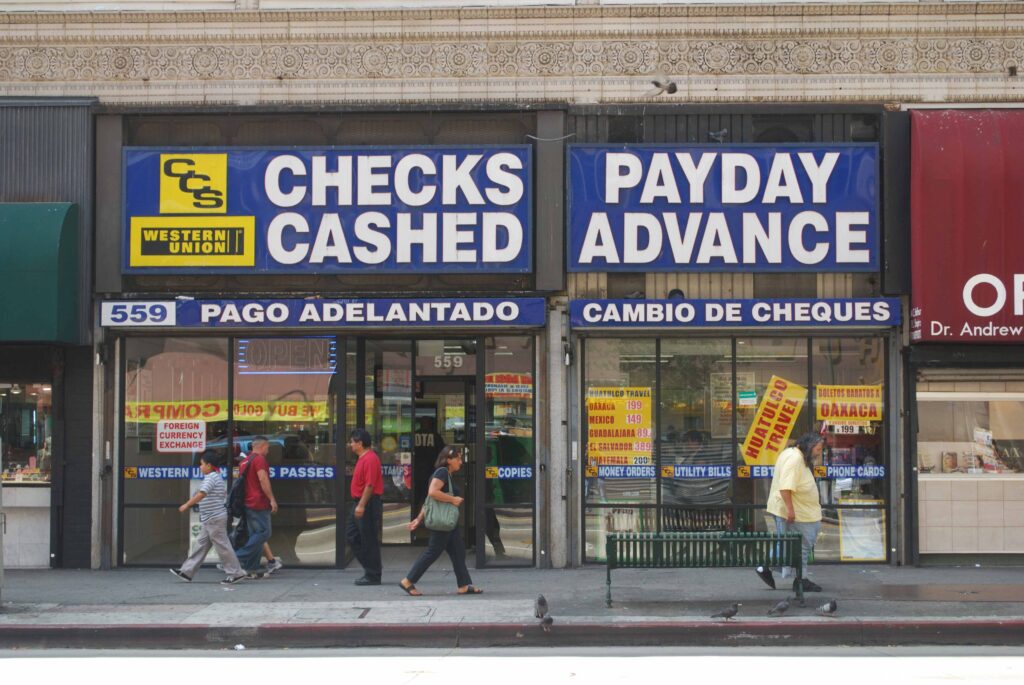
In March 2020, $271 billion in stimulus was distributed to Americans as part of the CARES Act. Millions of recipients relied on high-cost check cashing services instead of banks to access their payments and cumulatively paid an estimated $66 million in fees.
It’s a massive figure that indicates just how costly it is to be unbanked. Wells Fargo is endeavoring to address these costs with its ambitious Banking Inclusion Initiative. Launched in 2021, the initiative is a 10-year plan to proliferate access to mainstream, low-cost banking for the over seven million unbanked households across the nation.
“Unfortunately, that unbanked population is disproportionately Black and African American, Hispanic and Native American,” Darlene Goins, executive vice president at Wells Fargo and head of its Banking Inclusion Initiative said, explaining the initiative’s focus on these underserved communities. In fact, 50 percent of unbanked households are Black, Hispanic, Native American or Alaska Native.
“We are still grappling with the historical deep-rooted systemic racial and ethnic inequities and barriers to financial inclusion,” said Goins.
The personal and national costs of exclusion
Unbanked individuals often struggle to build credit, prepare for emergencies and save for long-term goals. In day-to-day spending, they are less able to use ride-sharing apps or patronize cashless establishments. The unbanked don’t have access to basic financial services like free bank transactions and payments, meaning they rely on high-cost alternatives like check cashing, money orders and payday loans.
The implications of financial exclusion go far beyond individual costs; they affect the entire economy. If Black customers were able to access financial products at the same rate as white customers, for example, the annual revenue growth for financial institutions is estimated to be about $2 billion. Black Americans’ exclusion from banking loses the U.S. economy an estimated $1 trillion annually. These are significant amounts of money being left out of the national economy.
Black Americans’ exclusion from banking loses the U.S. economy an estimated $1 trillion annually
A multi-faceted solution
Addressing these financial disparities will involve creating quality products, of course. But, a true solution will go much further, forging new relationships and changing commonly held perceptions.
“As an industry, we’ve made a lot of progress over the past several years to create low-cost banking products,” said Goins. “These products have predictable fees and create guardrails to help people that are new to banking,” such as Clear Access Banking, a Bank On certified account. Wells Fargo also plans to give its consumer customers flexible options, like early access to direct deposits.
Goins goes on to explain one of the Banking Inclusion Initiative’s most pressing tasks is establishing “trust in financial institutions,” and piercing the “perceived barriers about financial products being too expensive.” The bank is redesigning its branches in areas with historically high concentrations of unbanked households to best enable education and outreach. These updated branches have spaces dedicated to financial health seminars and multigenerational consultations as well as large screens with financial literacy content.
“Giving people choices and making them aware that these choices exist—and that they are designed to support them—is really going to have the greatest impact,” Goins said.

Action centered on collaboration
“We know that this is a longstanding complex problem that we can’t solve on our own. It’s going to take the collective efforts of a number of organizations collaborating together to really drive change,” Goins said, touting the bank’s long list of national and grassroots partners.
For example, the outreach-focused branch redesigns were designed with the input of Wells Fargo’s National Unbanked Task Force, which includes the National Association for the Advancement of Colored People (NAACP) and National Urban League, to name a few.
Operation HOPE, another Banking Inclusion Initiative partner, is a nonprofit with the goal of empowering people financially through education and coaching and boasts a 72 percent success rate helping clients raise their FICO scores. Wells Fargo is working with Operation HOPE to deploy financial wellness coaches into select Wells Fargo branch locations in key markets, and by the end of 2023, there will be financial wellness coaches in 20 markets serving as many as 150 branches.
“One of our HOPE coaches is working with a client who’s seeking advice on how to improve his credit and refinance his home at a lower interest rate,” Goins shared. “We expect we will be celebrating the success with that client in a few months.”
To address the digital banking gap, Wells Fargo has engaged MoCaFi, a fintech company that leverages government-to-people payments as an on-ramp to financial inclusion. Through MoCaFi, municipalities can distribute money via debit cards and Wells Fargo has enabled ATM cash withdrawals without Wells Fargo fees for users of these debit cards.
The impact of this program has already been significant. “MoCaFi estimates that access to Wells Fargo’s ATM network for cash withdrawals in Los Angeles alone has saved its customers a couple hundred thousand dollars in banking fees annually,” Goins said.
Goins is proud of the broad cohort of partners the initiative has attracted and the work they have accomplished, which includes launching Our Money Matters, a financial wellness initiative with HBCU Community Development Action Coalition, expanding relationships with several Black-owned minority depository institutions and collaborating with the Cities for Financial Empowerment Fund. “[These partners are] sitting at the table with us so that we can collectively come up with new solutions and strategies.”
Goins summarizes the Banking Inclusion Initiative’s goals as offering target communities financial knowledge, security and ultimately the tools they need to build wealth.
“Once we get people into the system,” she said, “their opportunities are endless.”
Learn more about Wells Fargo’s Banking Inclusion Initiative here.
Wells Fargo Bank, N.A. is a member of the Federal Deposit Insurance Corporation.