How today’s teenagers can use YouTube to prepare for the future
From the arts to STEM, online learning can help high schoolers get on the path to turning their passions into careers

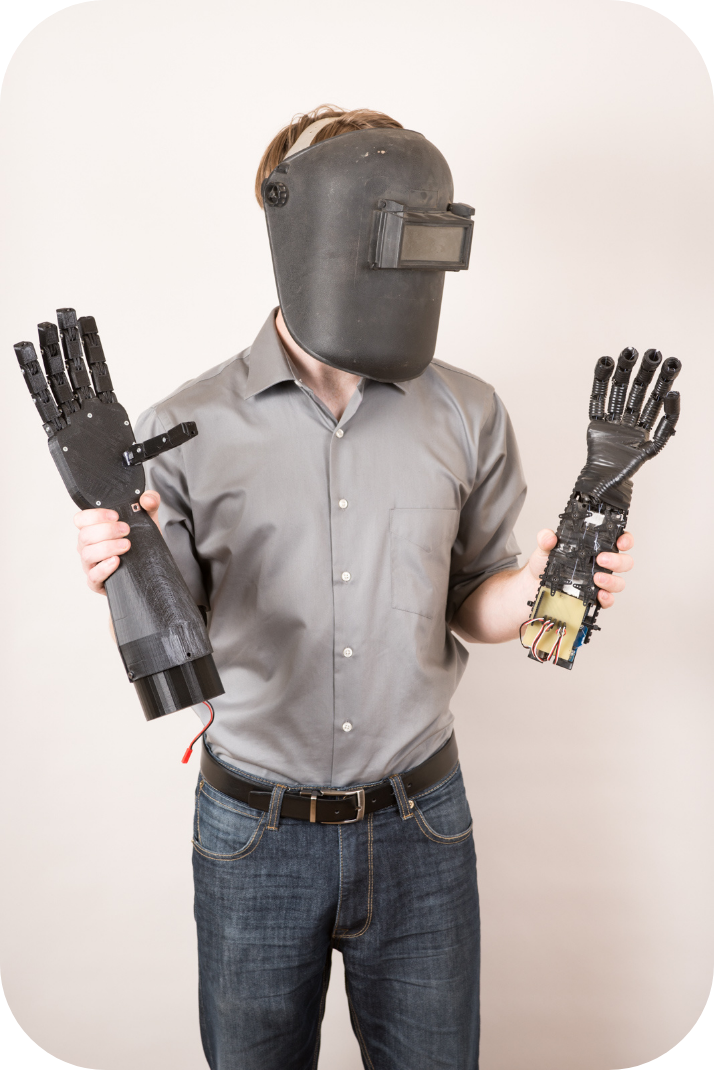
When he was 14, Easton LaChappelle built a robotic hand. He made it in his bedroom out of toy blocks and electrical tubing, using fishing wire for ligaments and a telerobotic control glove to make it move. At first, it was just a project for a science fair — but then LaChappelle met a 7-year-old girl at the science fair whose $80,000 prosthetic lacked some of the functionality his homemade model provided. In a flash, he saw the transformative power affordable prosthetics could have for people with limb differences all over the world.
Easton
LaChapelle
CEO, Founder of
Unlimited Tomorrow

Easton
LaChapelle
roboticist
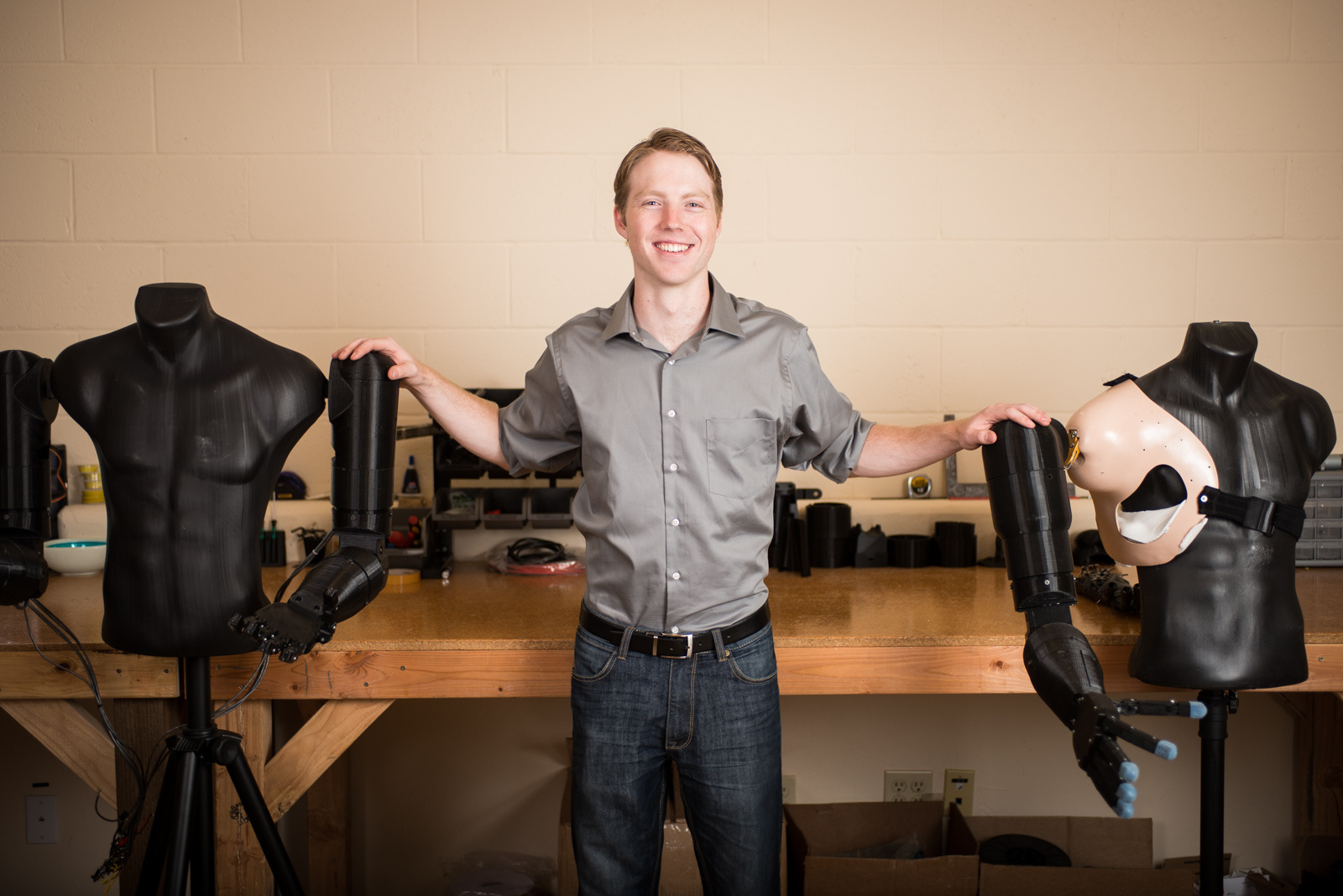
As he refined his design, he wanted to learn more about 3D modeling, 3D printing and Robotics — and so he turned to YouTube, watching videos from creators like James Bruton to learn the electrical engineering he needed to bring his creation to life. LaChappelle founded his company, Unlimited Tomorrow when he was 18 and found YouTube to be a resource for business advice and practice. Now, Unlimited Tomorrow, uses 3D scanning and printing to create the next generation prosthetics for people like the girl he met at the science fair.
“YouTube has always been my go-to for finding inspiration, problem-solving and learning foundational skills,” he said. “As a teenager, I found YouTube to be a gateway to seeing what is possible.”
LaChappelle credits his success to an inquisitive mindset, citing “Learn something new every day” as one of his mantras. Today, watching videos on YouTube continues to be one of his favorite ways to learn.
“Whether I’m looking for broad videos about a skill or very specific videos to overcome a challenge, when I hit a wall, I turn to YouTube,” he said.
A personal path to higher ed
YouTube can become an invaluable resource for young people who, like LaChappelle, hope to follow their passion to professional success. From the arts to STEM, students are finding channels that supplement what they’re learning in the classroom, giving them the kind of detailed instruction that was once only accessible through private tutoring. Many parents have been impressed by the results. A 2022 report1 found that 75 percent of parents whose children use YouTube agreed that the platform helps tackle gaps in education by providing a way to access quality information. This can allow students to pursue their passion however they see fit — and maybe, like LaChappelle, unlock the skill that will change their life.
For Stephanie, a mother of four and founder of Bizzie Mommy, YouTube is where her teenage children, who have asked to be identified as Leo and Rachel, go to learn about math, science and everything the universe has to offer. Long passionate about outer space, 14-year-old Leo has taken his interest to the next level by following creators like MinutePhysics, whose breezy animated videos range from the complexities of quantum mechanics to answering a question that generations of children have debated: Is it better to run or walk in the rain? (MinutePhysics says run.) Leo has found that exploring these topics on YouTube reinforces what he’s learning in science class, while allowing him the freedom to dive deeper in new and engaging ways. If his science teacher makes a passing reference to Einstein’s theory of relativity, for instance, Leo can use MinutePhysics’ eight-part series on special relativity to learn the true meaning of E=mc2. Stephanie believes this kind of self-directed learning “will guide him to find his calling,” drawing him into the kinds of extracurricular activities that are not just important in applying to college but in preparing students for their professional futures.
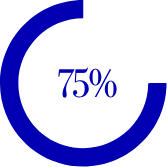
75% of parents who use YouTube agree that YouTube helps to tackle gaps in education by providing a way to access quality information.
“He’s directly reinforcing what he learns and has been blessed to have had some great teachers that have inspired him to want to continue learning outside of class,” she said. “YouTube has allowed him to ‘experiment’ with that formal learning from class and see the real world applications of it.”
Leo’s older sister Rachel, 15, is also passionate about the sciences — specifically the human body, which she’s learned about in biology class and hopes to study further as a medical student, leading eventually to a career as a surgeon. Like her brother, Rachel uses YouTube to deepen what she’s learning about in school. Her mother said that videos about biomimicry — the idea that medicine, engineering and science draw inspiration from nature — changed the way both kids look at the world.
“That was the first time I saw the lights turn on in their brains about the interconnectivity of nature and human life,” said Stephanie. “It was all we heard about in the house for a long time and it sparked both of their curiosities to explore.”
As Rachel begins planning to apply to college, she and her mother have been watching videos about undergraduate pre-med programs, as well as med school itself, and they plan to continue using the platform to aid her in the application process. Stephanie values YouTube, she said, not just because it’s “like having a tutor available 24/7” but because the platform helps her children imagine all the different shapes their higher education journey could take.
Learning to soar
For one 13-year-old artist, the passion she’s pursuing started with dragons. The artist, whom we’ll call Ella, is a fan of fantasy novels about heroic dragons. After years of practicing the fundamentals of drawing in her school art classes, she got her father’s permission to learn more using YouTube. She used video tutorials to master a complex digital art program that she now uses to create elaborate drawings of her favorite dragons — translating the magical world of her imagination onto the screen. Now, according to her father, Chris, she races home every day eager to combine what she’s been taught in art class with what she’s learned from YouTube.
When Ella digs into a YouTube tutorial, he says, “she watches, occasionally rewinds, then once she’s grasped the skill, she moves on.” And she practices with the seriousness of someone who wants to turn her passion into a career. Ella plans to study graphic design in college, and the skills she’s learning — as well as the portfolio she’s building — are creating a strong foundation for an application to art school. Even more important, her father believes, is the spirit of exploration instilled by learning on YouTube.
“I’m encouraging her to learn as much as she can in order to grow her skills but mostly for her to exercise her brain and become stronger creatively,” he said.
Bringing learning home
To see the next generation using the platform to follow their own passions is inspiring, whether they’re learning to play music or draw, how the body works or the nature of the universe. LaChappelle advises them to follow their curiosity wherever it leads.
“Start with a strong foundation of knowledge, then build on that.”
YouTube is a video platform, not a formal educational institution.
Related content from YouTube


Read more on YouTube’s principled approach for children and teenagers