
Using YouTube to break down barriers to higher education
For some teenagers, the college experience starts online.

Image courtesy of Rio Chantel
Where do you go if you want to learn about art history? If you’d like to understand the heart or the Agricultural Revolution or the Big Bang? For millions of people, the answer is Crash Course, an educational YouTube channel founded in 2012 by Hank Green and his brother John, which started as an exploration of the humanities and science and now has more than 15 million subscribers, educating students of all ages.
Hank
Green
YouTube Creator,
Crash Course

Hank
Green
YouTube Creator,
CrashCourse
Image courtesy of Rio Chantel
“Ask any teenager how they study for a test,” said Katie Kurtz, YouTube’s Global Head of Youth and Learning, “and you will hear Crash Course mentioned every time.”
Today the Greens are some of the best-known online educators on the planet. John is a video creator and the bestselling author of the novel “The Fault In Our Stars” and Hank is a creator whose unique popularity with young viewers stretches far beyond Crash Course. But when they started on YouTube in 2007, they were just two brothers who wanted to find a new way to stay in touch. Their intensely personal “Brotherhood 2.0” series, in which they spent a year communicating primarily through short videos, won them a global audience. It also laid the groundwork for Crash Course, which the brothers conceived of after a video about the French Revolution went viral, and which has become indispensable to young learners thanks to a style that Hank Green says “lets students feel like they get to learn, rather than have to learn.”
“I think all teaching is about retaining attention and I think that’s about storytelling and empathy,” he said. “You have to understand where your audience is, what captivates people, how to give them just enough to get them hooked and then to draw them through the whole lesson.”
That approach has proven so popular that in 2023, the Greens and Crash Course embarked on a new enterprise, partnering with YouTube and Arizona State University to create Study Hall, an online education initiative that lets high schoolers and other prospective university students earn up to a year of college credit by taking classes online. It is part of YouTube’s efforts to make quality education accessible to all — and Green believes it is a powerful opportunity to give high schoolers a taste of college education at an affordable price.
“We want to help students understand how higher ed works so they can avoid expensive mistakes,” he said, “and we want to help get them some early credits for cheap so the whole journey is just less expensive.”
A platform driven
by curiosity
Study Hall is part of YouTube’s overall work to break down barriers to education. Operating according to what Kurtz calls a “curiosity to credits” model, it’s designed to help young students get a taste of college while laying the groundwork for whatever higher education they choose to pursue. All of the classes, which are designed in conjunction with ASU faculty, can be previewed on the Study Hall YouTube channel and taken in full for just $25. Once the course is complete, students have the option to pay $400 to receive transferable college credit for their work. That tuition is nearly 90% less than they would pay at a private four-year university, allowing recent high school graduates — or current high schoolers planning for their future — to complete an entire year of study without the expense or commitment demanded by a traditional program.
“Arizona State University has a lot of experience making systems like this,” said Green. “The credits students get through Study Hall are transferable to hundreds of universities in the U.S.”
To make these courses even more helpful, Study Hall is presenting free, informative series like “How to College” and “Fast Guides to Electives and Majors” designed to demystify the college experience for the curious teen and help break down barriers for prospective first-generation students and ensure that college feels accessible to everyone. Concepts that some students may take for granted, like choosing a major or planning for their post-graduation finances, are explained in a way that is clear even to those considering them for the first time. Students who lack this fundamental knowledge have long felt excluded. With Study Hall, that gatekeeping stops.
Michael
Crow
President of
Arizona state university

Michael
Crow
President of
Arizona state university

“We want high school teachers and counselors to use Study Hall in the classroom,” said Michael Crow, President of ASU. “We want parents to find these resources and use them to start conversations with their kids. Study Hall has the potential to be a game changer.”
Crow describes ASU as “a national laboratory for learning innovation,” dedicated to “fundamentally transforming the educational ecosystem to be more inclusive, adaptive and effective.” During his two decades leading the university, he has used opportunities to expand access to education, like Study Hall, and tried to buck the perception that American universities can be slow to evolve. This is not about recruiting new ASU students, he said, but about making college something that anyone with an internet connection can access.
“We are living in the most technologically advanced time in history,” he said. “Why wouldn’t we use those resources to open more doors for people? We have a duty to do so.”
As part of ASU’s innovative approach, in partnership with Google DeepMind, Study Hall is providing students with a first look at experimental new AI tools that have been specially tailored to suit their needs, such as Hallmate, a conversational AI tutor designed to serve as a “virtual TA” for Study Hall courses. Inclusion of these AI tools in Study Hall courses could help further the goal of reducing the cost of education and making it more accessible than before.
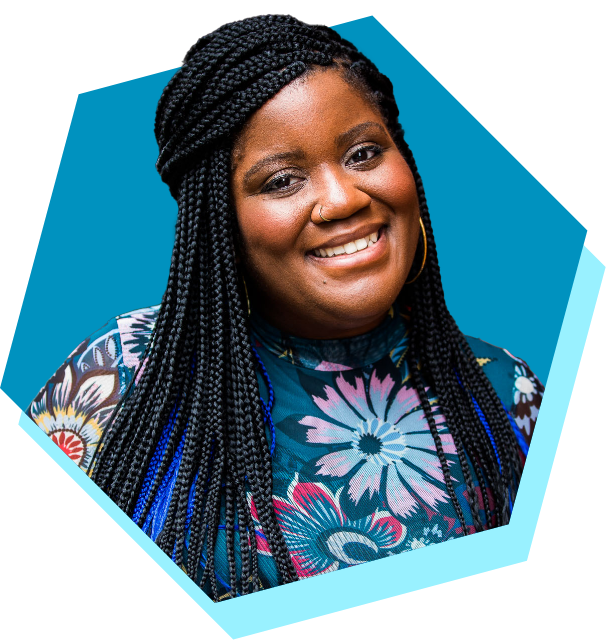
For Danielle Bainbridge, an Assistant Professor of Theatre at Northwestern University who presents the Study Hall course “U.S. History to 1865”, the platform is a powerful opportunity to help students of all backgrounds connect with their history. “I think that the ease and accessibility of YouTube is what makes it a great learning tool,” she said, describing Study Hall as “accessible, educational, and affordable.”
Danielle
Bainbridge
Professor & Study Hall host
Danielle
Bainbridge
Professor &
Study Hall HOST
The concept of using YouTube as a tool to help learning is already familiar to families, as 77% of parents who use YouTube agree that YouTube (or YouTube Kids for children under 13) helps their children learn1.
“Students are very comfortable learning on YouTube,” said Green.
1Oxford Economics 2022 YouTube Economic Impact Report.
Mapping the future
of online learning
Beyond Study Hall, YouTube has begun to launch AI tools that can help students better understand key concepts in videos, practice what they’ve learned and get the feedback and help they need. A user watching a video about the French Revolution, for example, can now see relevant definitions of key concepts on the watch page as they’re mentioned using AI. A conversational AI tool also makes it possible to figuratively “raise your hand” while watching the video to ask clarifying questions, get helpful explanations or take a quiz on what the user has been learning. Finally, the user may also discover AI-generated quizzes in their feeds to test their knowledge of the topic they just watched and reinforce what they’ve learned. These features are already rolling out to select Android users in the U.S.
These AI tools, paired with Study Hall, exemplify the culmination of what YouTube has come to represent for many users in the US and across the globe: the joy of learning is something that everyone can access.
“The motivation [for Study Hall] was to get barriers to higher ed as low as we could get them,” Hank Green said. From Crash Course and Study Hall to AI tools and the countless hours of free, high quality educational content available on YouTube, those barriers are lower than ever before.
YouTube is a video platform, not a formal educational institution.
Related content from YouTube


Read more on YouTube’s principled approach for children and teenagers