Lessons from the oil and gas industry could power wind energy’s future
A surprising well of ideas
Innovation sometimes comes from surprising places. The leading edges of whale fins inspired the shape of wind turbine blades. A closer look at owl feathers has engineers thinking how to make blades quieter. And the way schools of fish move through currents sparked new arrays for maximizing how turbines interact with wind.
Another unexpected source for innovation in the wind energy business has been the oil and gas industry. The wind energy industry owes much of its success to the knowledge and innovation of oil and gas producers. That’s because traditional energy companies bring decades of experience and a wealth of operational know-how to the development of wind operations. While energy from wind and petroleum might seem to be very different products, there are broad similarities in how they become marketable power sources. Experienced energy companies can bring to bear the operating efficiency, environmental impact sensitivity and focus on safety that are key elements for growing an important alternative technology such as wind power.
Booming Wind
Innovations in wind power have helped the technology’s rapid growth. At the start of 2017, the U.S. had 82 gigawatts (GW) of wind capacity. Only China has more installed capacity. Wind power currently supports 100,000 American jobs—more than coal, natural gas, hydroelectric or nuclear power—and wind turbine technician is the nation’s fastest growing job.
Three U.S. states that lead in wind power (Texas, California and North Dakota) are also three of the most oil-rich states in the country. This is no coincidence. California ranks third in wind power production, North Dakota ranks eleventh and Texas, the bastion of the oil and gas industry, ranks first, producing more than 21 gigawatts (GW) of wind in 2016.
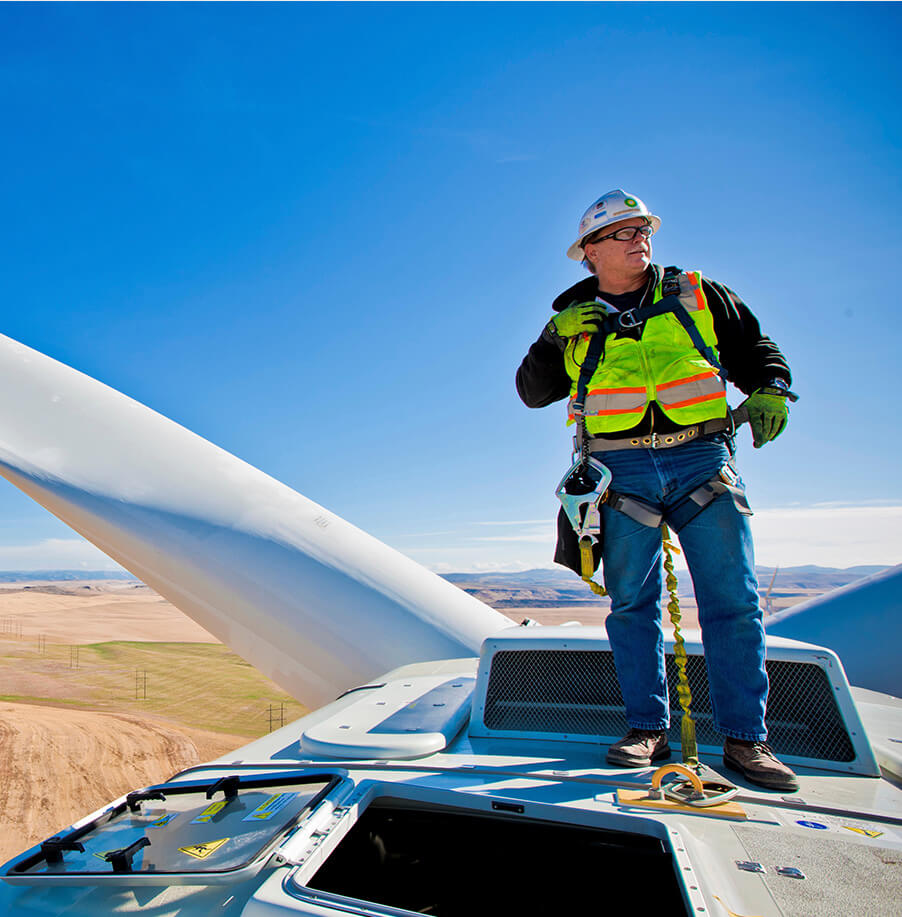
These states lead the country in wind capacity in part due to expertise. This expertise is also a primary factor in the rise of one oil and gas company to the forefront of the wind industry—BP. BP’s long experience operating in remote locations gives special insight into managing wind power, which often is installed far from existing infrastructure or an available labor supply.
“Operating a remote wind facility is fairly akin to an offshore facility,” said Alistair Warwick, a 24-year veteran of the oil and gas industry who is now vice president of Fleet Services at BP. “You have to think about how you’re going to pre-plan activities, staff and resources.”
Wind generating capacity in the lower 48 states
- >100,000 mw
- 5,000 mw-10,000 mw
- 2,000 mw-5,000 mw
- 1,000 mw-2,000 mw
- 1 mw-1,000 mw
- no wind capacity